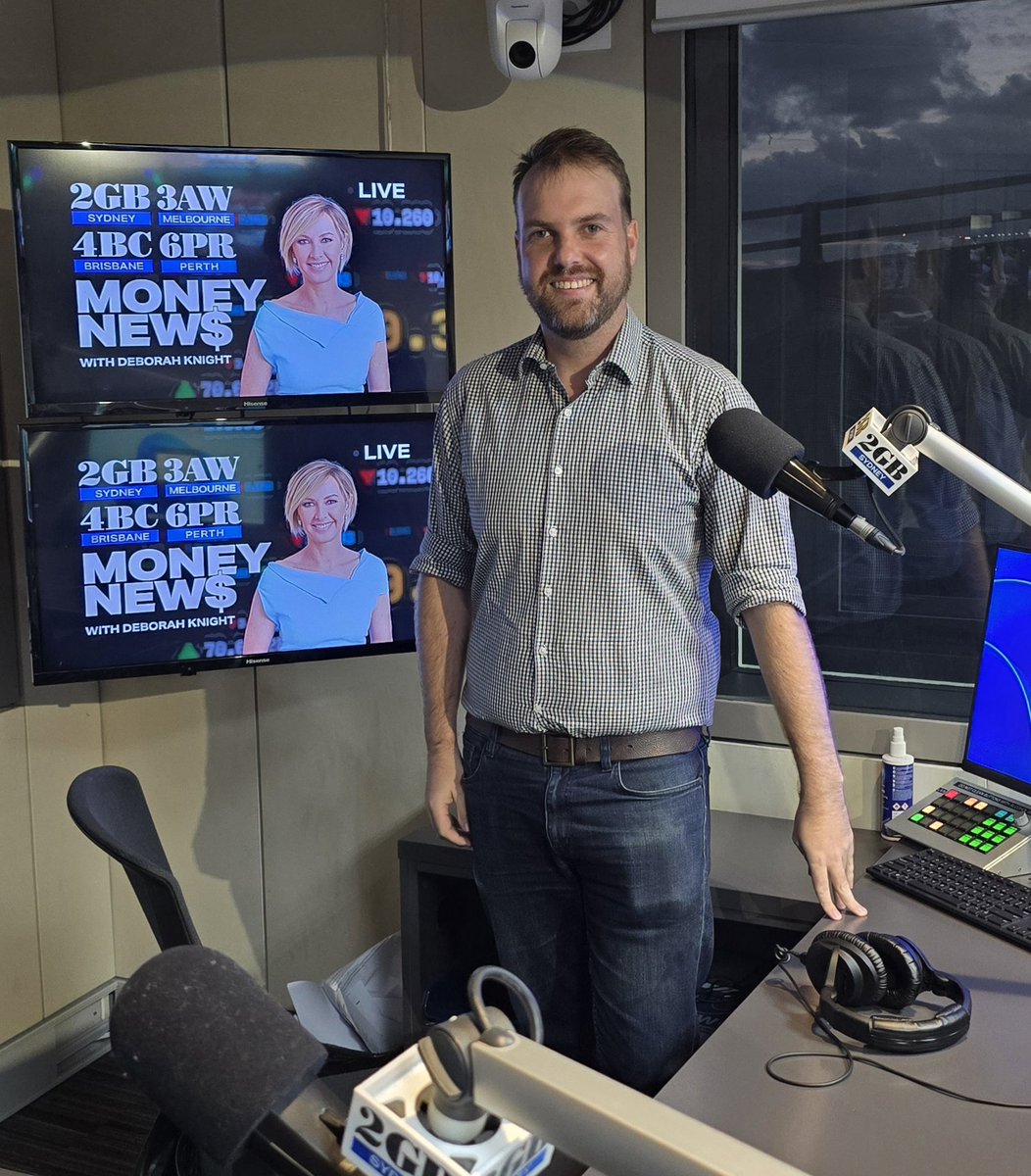
That's a wrap! After almost four years, more than 700 shows, 6 different hosts, daily market podcasts, and many updates about the Aussie Dollar, it's the end of my time on Money News.
Thanks to everyone who has helped along the way, both on air and off.
🗓️ On this day in 2010, Wolves secured a 3-2 against Sunderland with goals from Kevin Foley, Stephen Hunt and a last winner winner from Sylvan Ebanks-Blake. 🔥 🐺
#WWFC | #Wolves
Extremely sad news. Bill Evans was always a fantastic guest to have on when producing Money News, and made the nerdy world of economics accessible to so many. He will be missed.
https://t.co/vq7KFrihGH
I consider this a severe problem in Australia. Culturally drinking a bit of beer has lots of positives. In Australia it is part of the general easy going nature. Pricing people out of their evening beer is doing more social harm than health (and tax) good. Beer must become cheaper again! HT @IFM_Economist
@timrosen35 The game against the Dogs at the G was the first ever Saints match I had seen in Melbourne! Was 15 and went with my Dad. What an unreal period for Kosi.
The most tax effective investments in Australia for individuals are now family homes and superannuation. The government says young people can’t afford homes and if you put money in Super you can’t touch it until you are in your 60s. So what is a young person actually supposed to invest in?
Two ways gov can help get Aust inflation down
1/slow grth in administered prices (utilities,council rates, etc) as they are running ~6%yoy
2/cut public spending (now a record 28% of GDP) back to more normal levels (22.5% avg in 1990-2019) to make room for private sector spending
CANBERRA, WE HAVE A PROBLEM
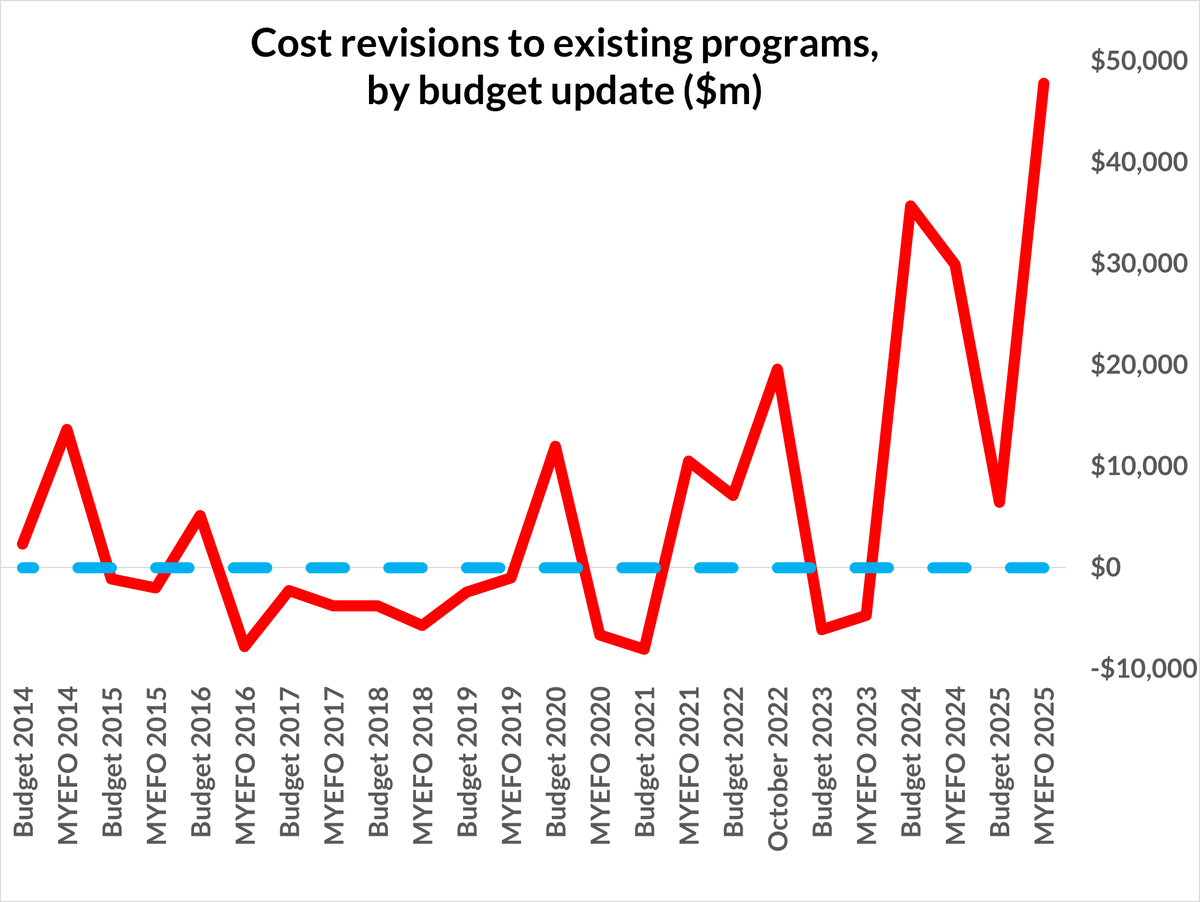
The cost forecasting in the budget is getting a lot worse.
How bad is it? The budget update issued just ahead of Christmas added another $47.8bn to government spending.
That is the equivalent of doubling last year’s NDIS costs. We’re talking really big bucks here.
That $47.8bn wasn’t because the economic or revenue forecasts had been revised. The cost estimates are separately updated for new forecasts for jobs and joblessness, prices and wages, interest and exchange rates, and also for new GST estimates (because any changes there are passed onto the states).
And nor was it because of new policies – they’re also separately accounted for.
Rather, the extra $47.8bn that we’re spending is simply because existing policies are now expected to be more expensive than earlier thought.
The cost forecasts of the feds used to be pretty accurate. In the six years before COVID these revisions averaged $0.7 billion.
Then COVID threw a spanner in the works. Every time the government updated the budget, it added an average of $3.0 billion to expected costs.
Still, the ravages of COVID are long since in the rearview mirror, so you’d hope those forecasting errors shrunk again.
But, as the chart shows, they didn’t. There have been seven budget updates since late 2022, and they’ve revealed errors that average $18.4 billion. And now the latest cost revision has weighed in at $47.8 billion more than had been expected at the 2025-26 budget.
The bottom line? It is long past time for an overhaul of our budget rules, reporting and forecasting. They are all being badly abused: we’re being taken for mugs.
And unless and until we hold our politicians to a higher standard, then maybe we deserve to be …
why do boomers hate air conditioning so much - it's so insanely cheap to run, it benefits *everybody*, particularly running it off solar in the middle of the day - it just baffles me
Modelling from economists at Melbourne University and ANU found Albo's 5% deposit scheme
"could leave home prices 10-20% higher over the coming decade"
https://t.co/hEBwMQCwXa