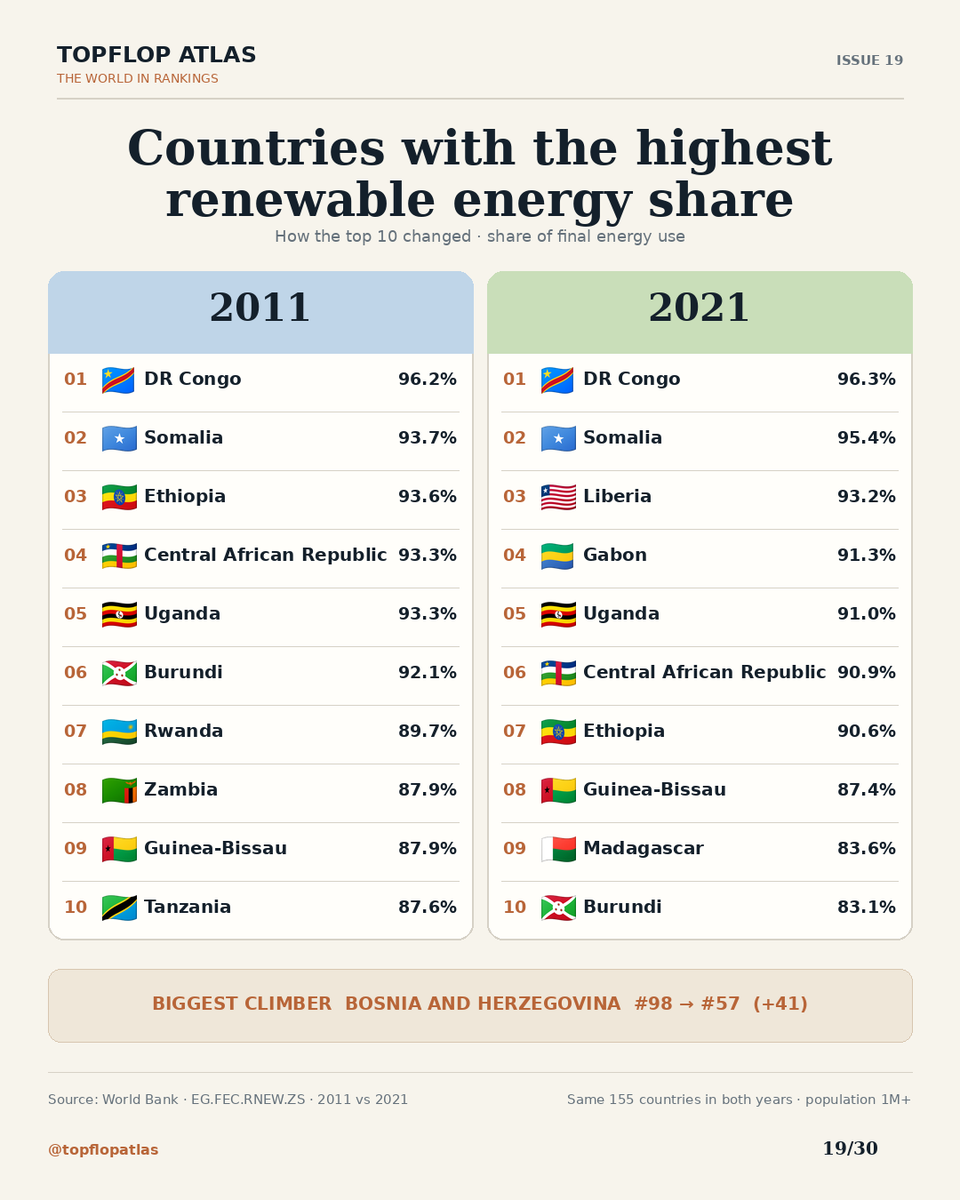
Gabon climbed 18 places, from 22nd in 2011 to 4th in 2021, in renewable energy’s share of total energy use.
Source: World Bank · EG.FEC.RNEW.ZS · 2011 vs 2021
#TopFlopAtlas#EnergyData
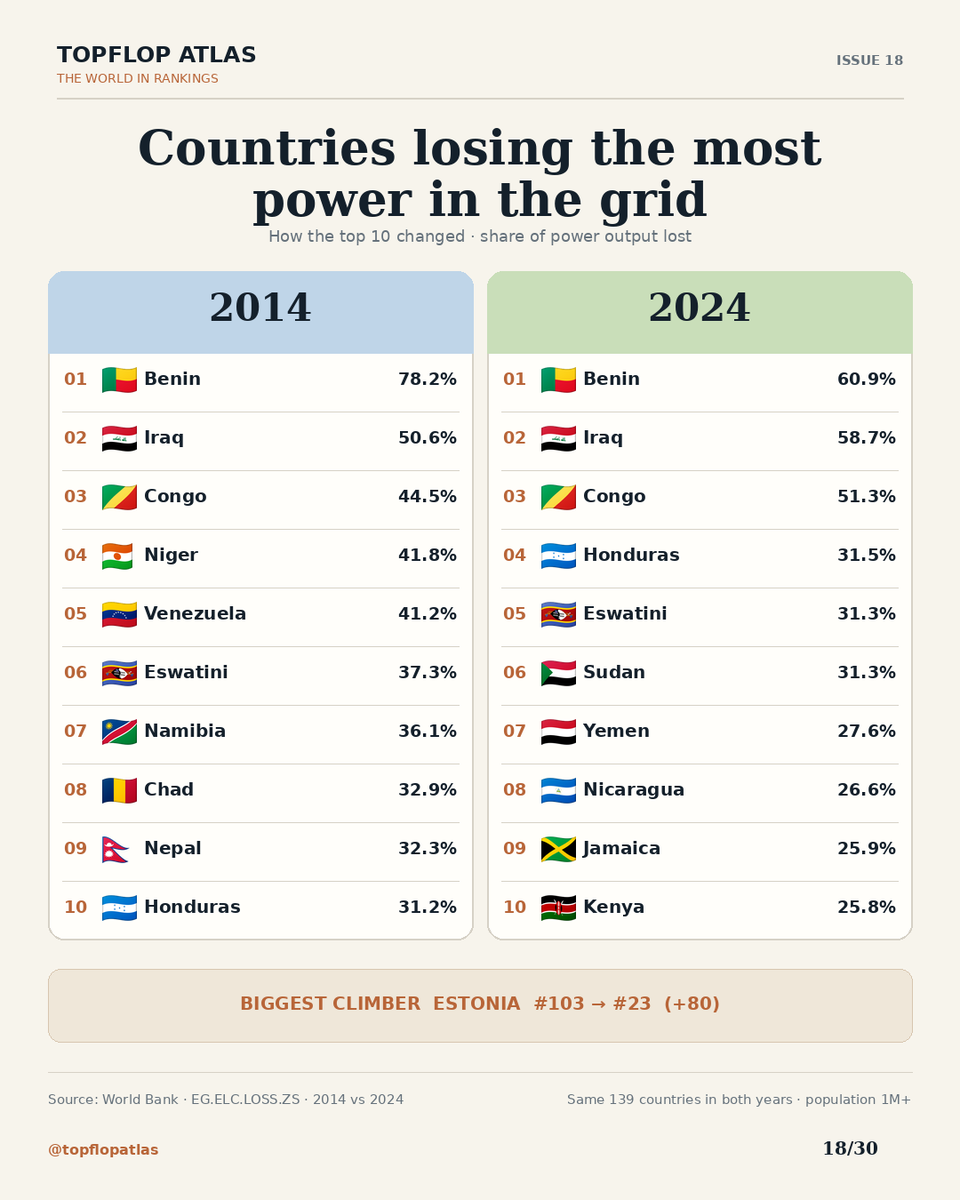
Benin still tops the power-grid loss ranking: 60.9% in 2024, down from 78.2% in 2014.
Source: World Bank · EG.ELC.LOSS.ZS · 2014 vs 2024
#TopFlopAtlas#EnergyData
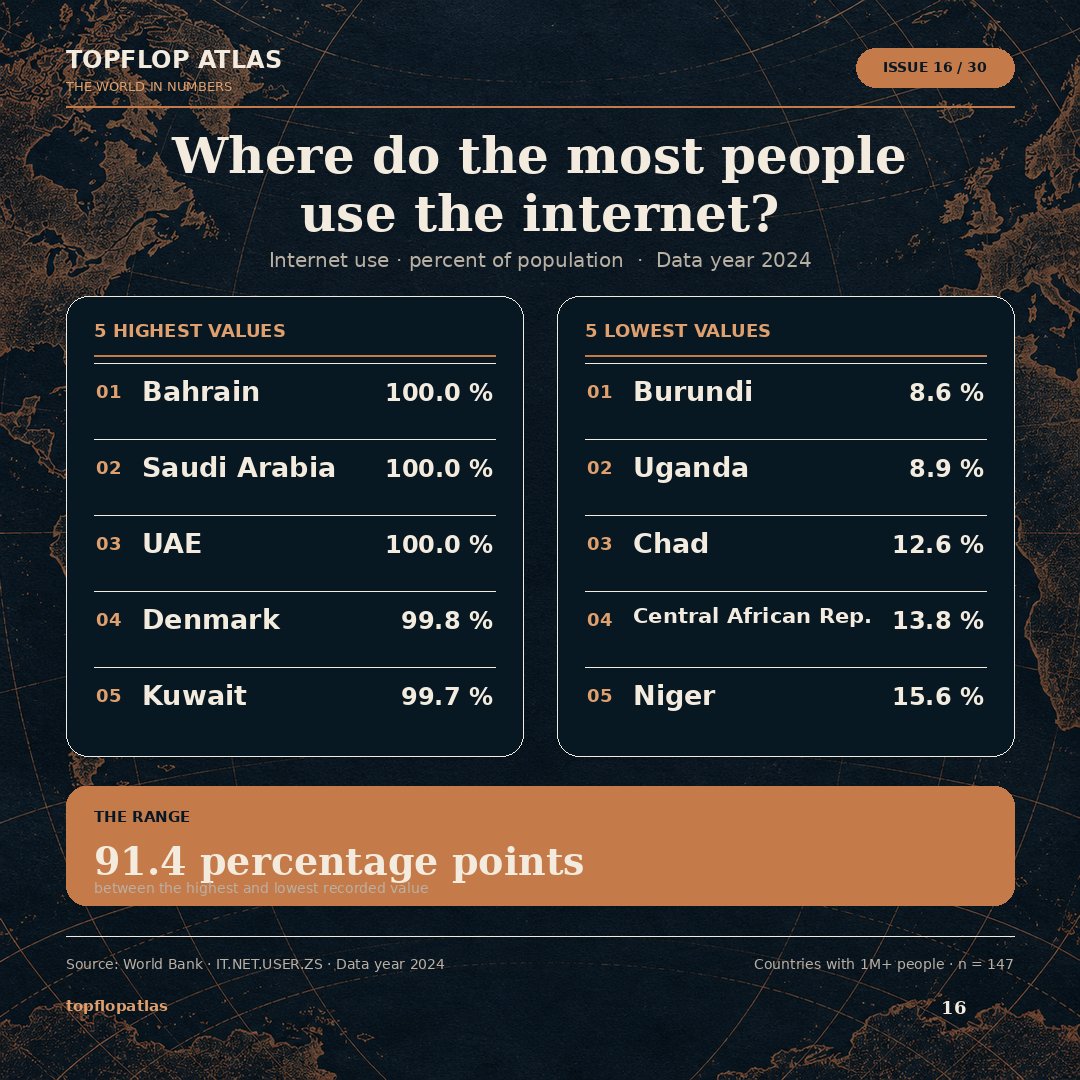
Bahrain, Saudi Arabia and the UAE report 100% internet use, while Burundi is at 8.6%—a 91.4-point gap.
Source: World Bank · https://t.co/IjUaOjuguv.USER.ZS · Data year 2024
#TopFlopAtlas#InternetAccess#WorldData
Bahrain, Kuwait and Singapore are 100% urban, while Papua New Guinea is at 15.8%—an 84.2-point gap.
Source: World Bank · https://t.co/2WMVxSPuIv.ZS · Data year 2025
#TopFlopAtlas#Urbanization#WorldData
South Sudan recorded 71.9 infant deaths per 1,000 live births in 2024, compared with 1.5 in Estonia.
Source: World Bank · https://t.co/VpCJKk9QN7 · Data year 2024
#TopFlopAtlas#InfantMortality#WorldData
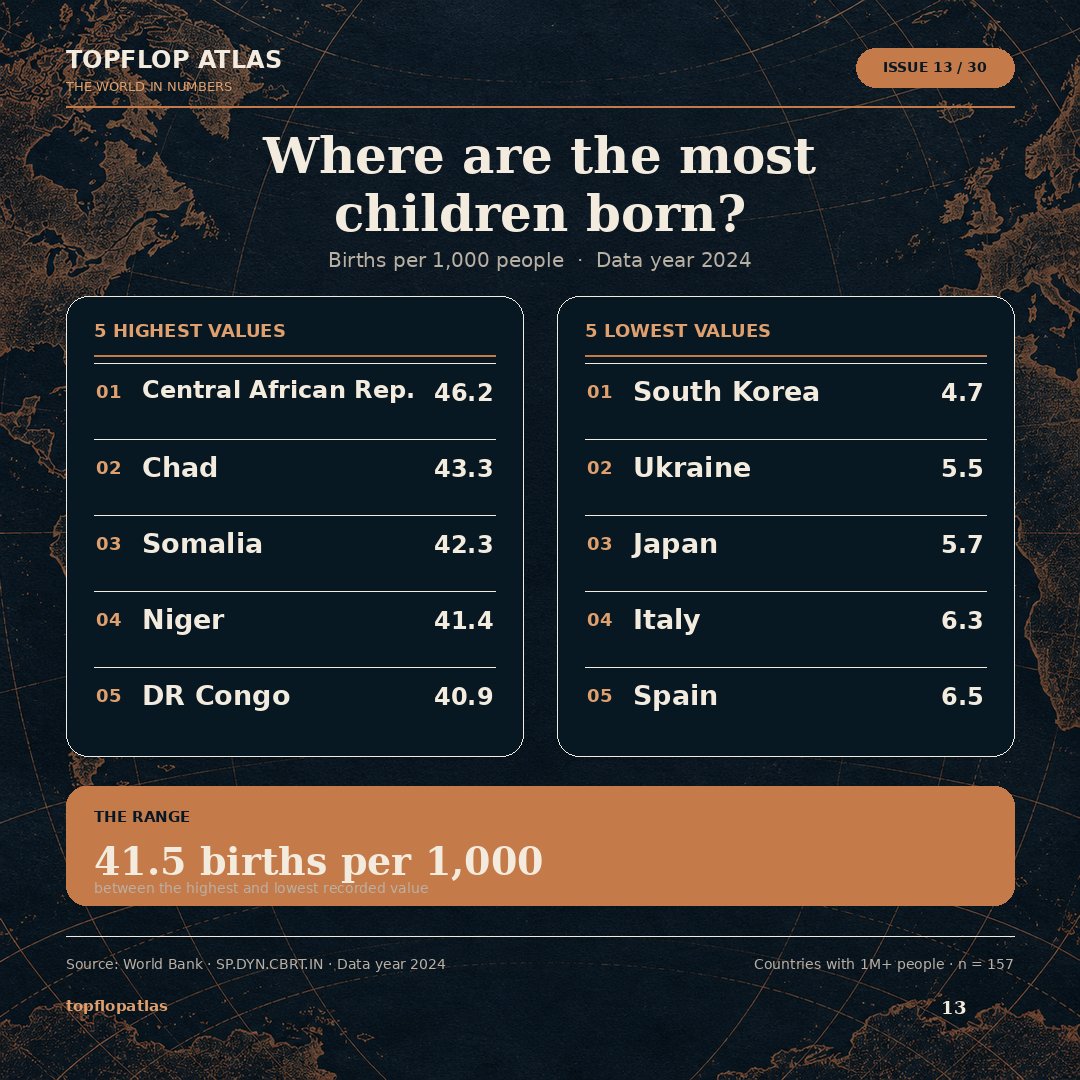
The Central African Republic recorded 46.2 births per 1,000 people in 2024, compared with 4.7 in South Korea.
Source: World Bank · https://t.co/MrExtxRQDV · Data year 2024
#TopFlopAtlas#BirthRate#WorldData
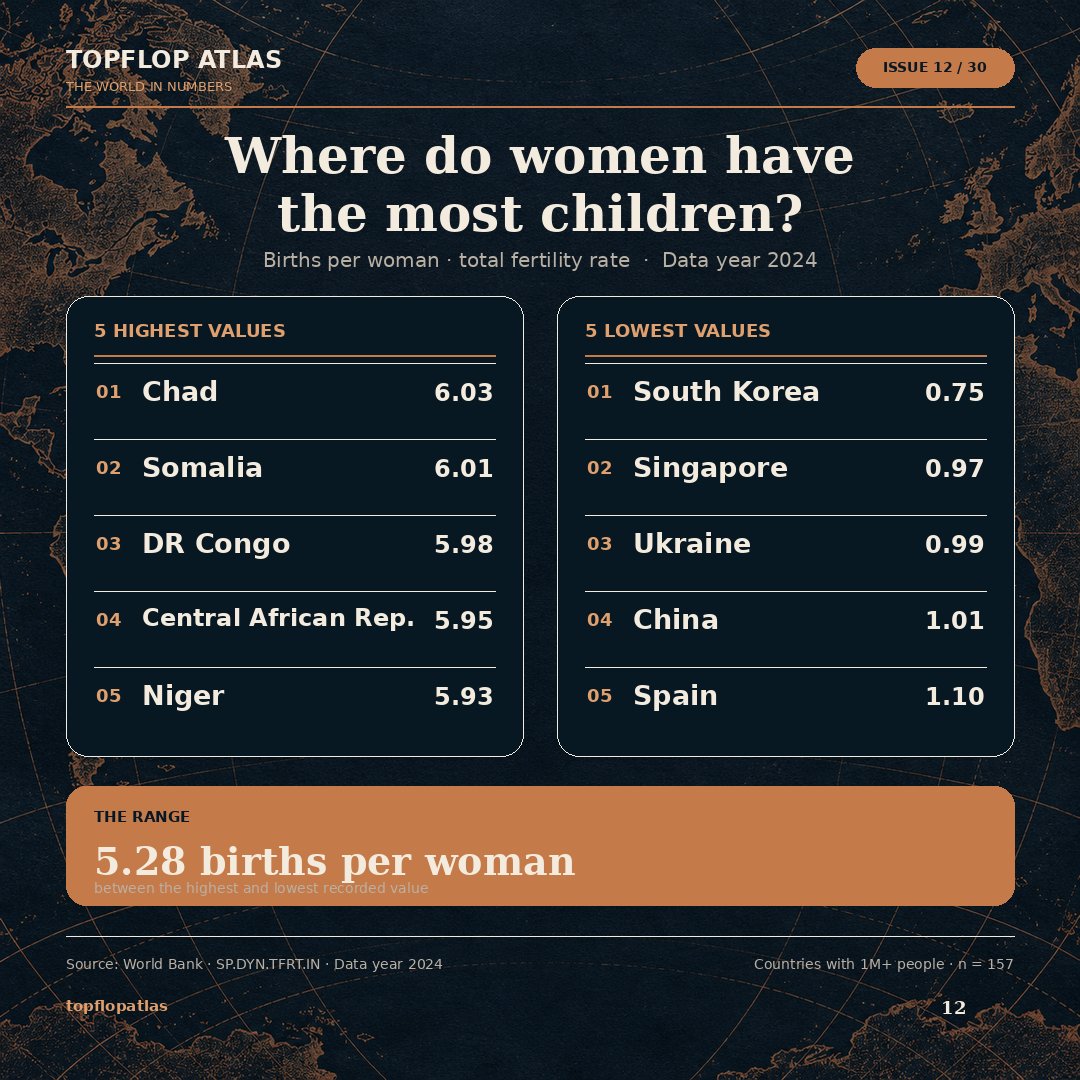
Chad recorded 6.03 births per woman in 2024, compared with 0.75 in South Korea.
Source: World Bank · https://t.co/MVpYTkf9Od · Data year 2024
#TopFlopAtlas#Fertility#WorldData
@Globalstats11 One important caveat: 2025 is not a fully observed endpoint. UN World Population Prospects 2024 covers 237 countries or areas, but its current-year values are model-based estimates and later years are projections, so the 2025 ordering can be revised as mortality data arrive.
Kuwait led life expectancy at 84.6 years in 2024, while Nigeria was at 54.6 years.
Source: World Bank · https://t.co/gTyxBgiPAf · Data year 2024
#TopFlopAtlas#LifeExpectancy#WorldData