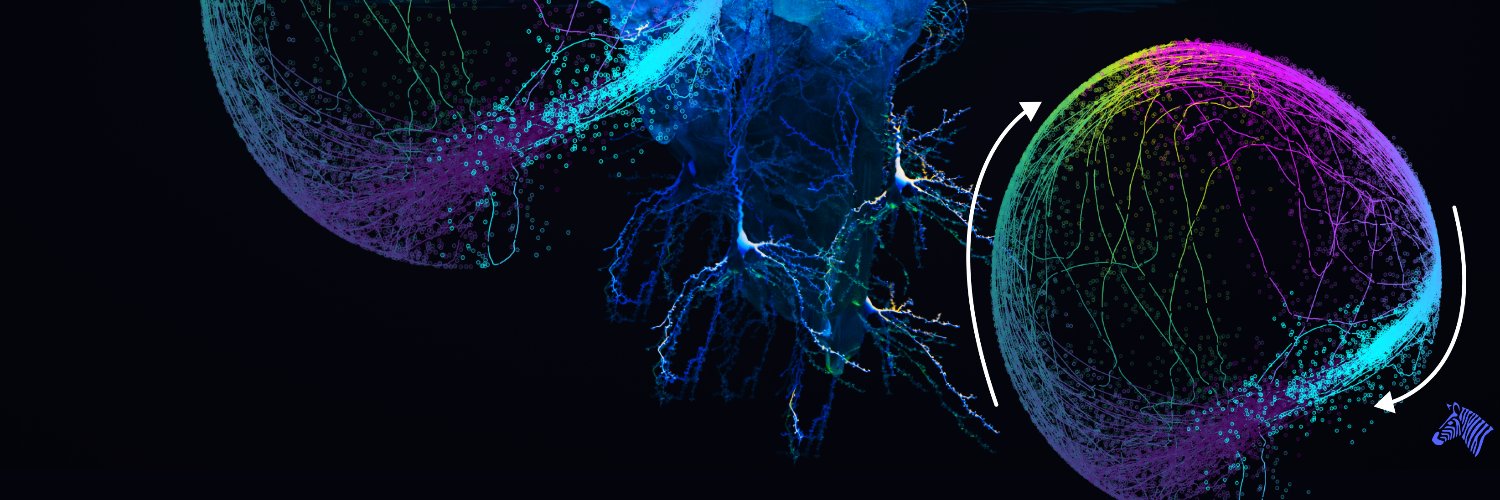
🦓 Self-supervised multimodal ML is promising the next AI breakthrough - in our new work published in @Nature, we debut @CEBRAai: for self-supervised hypothesis- and discovery-driven science.
📝 https://t.co/VmrRfy5V9B
💻https://t.co/RsnRWqkbGs
🦓 https://t.co/zgxSGtOpav
🧵⬇️
Thanks to everyone sharing in this moment!
I’m so grateful to my trainees & collaborators…
https://t.co/6JdZQHnYJf
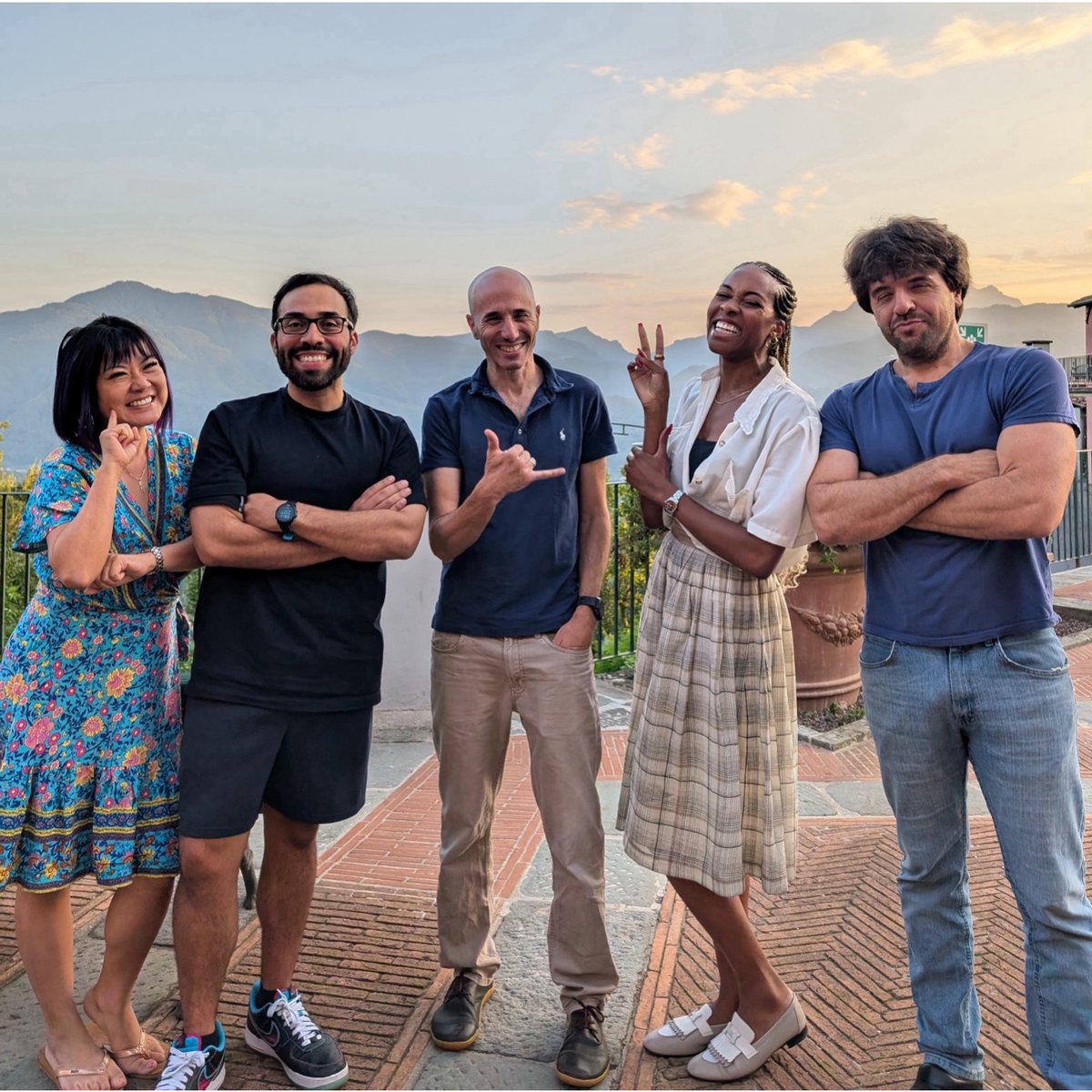
(pic: optogenetics conference chairs, Tuscany)
Reading for all those asking:
for technical details: https://t.co/x7kQvPujvq
for everyone: https://t.co/1omhw0hKAV
🧠 Can we recover the equations governing a system directly from noisy, high-dimensional observations?
#DYSCO, by Paolo Muratore, is a first step: it learns latent spaces that capture the underlying dynamics & enables recovery of governing equations
📄https://t.co/gFCj7JCxMX
⚠️PREPRINT ALERT⚠️
How can we better understand distributed brain activity across temporal and spatial scales?
In this collaborative project, we combined ultra-flexible electrodes with two-photon imaging to illuminate brain-wide neural dynamics.
https://t.co/IfC3OLhL2y
1/8
🎂🥳 Wow! Happy 9 year anniversary of being published in @NatureNeuro#DeepLabCut 💜 - what an amazing adventure that first paper kicked off 🙏🏼 1.14M installations 💪
Original paper: https://t.co/J4G7ZPkIxD
Confused about all this talk of compositionality in neuroscience? Read our new perspective https://t.co/mpdqcAHHTZ with authors Reidar Riveland and @pouget_alex.
Mice perform active sensing to acquire visual info: check out our collaborative effort, which is our 1st in motor+vision!
Great to work with @AToliasLab Xaq and Cris - 💰by the Brain Initiative @NIH! Led by @celia_bqt & @sainsbury_tom@CurrentBiology
https://t.co/xFnDhnHUOl?
🧠 Can we recover the equations governing a system directly from noisy, high-dimensional observations?
#DYSCO, by Paolo Muratore, is a first step: it learns latent spaces that capture the underlying dynamics & enables recovery of governing equations
📄https://t.co/gFCj7JCxMX
#OnThisDay in 2016, we launched the Allen Brain Observatory with the first standardized in vivo survey of physiological activity in the mouse visual cortex. Since its launch, the Observatory and its data has been critical to visual cortex research around the world.
Mice perform active sensing to acquire visual info: check out our collaborative effort, which is our 1st in motor+vision!
Great to work with @AToliasLab Xaq and Cris - 💰by the Brain Initiative @NIH! Led by @celia_bqt & @sainsbury_tom@CurrentBiology
https://t.co/xFnDhnHUOl?
🧠 Can we recover the equations governing a system directly from noisy, high-dimensional observations?
#DYSCO, by Paolo Muratore, is a first step: it learns latent spaces that capture the underlying dynamics & enables recovery of governing equations
📄https://t.co/gFCj7JCxMX
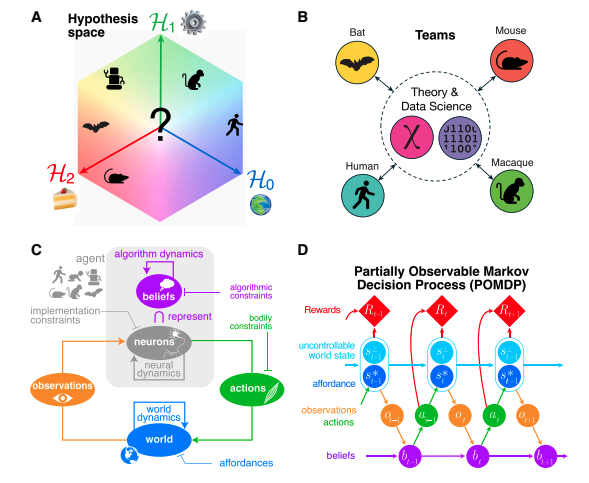
🥳 Excited that our Perspective about our new @SimonsFdn Collaboration: SCENE is out in @NeuroCellPress !
A great team effort across all the PIs, championed by @lengyel_m and @JP__NOEL 🙏
➡️ https://t.co/jvs6EGUMXR
🥳 New work from my lab (@MLabofAI) just dropped on @arxiv! Measuring the shape of an animal can be highly useful for biomedical applications and for avatars 😎
We introduce *PRIMA*:🔥SOTA 2D➡️3D animal shape by @xiaoyu912huang, @TiwangCS & I!
📝 https://t.co/s7sA0Lup2S
This nicely builds on top of our #SuperAnimal quadruped model (read more here: https://t.co/N7UJj8szm4 such that you can directly run shape inference with our pipeline!