November 10th:
“After a successful initial rollout to the National Capital Region in September, the FAA will now use SMART (and AI advice system) in the airspace of all 22 centers across the country to reduce delays, reduce fuel consumption and improve the travel experience for the flying public”
Dario’s theory of frontier labs separating from the rest after crossing a certain capability threshold is increasingly becoming clear. It's the same thing Sergey saw. The point of no return is so close. And, to be honest, I don't like how comfortable Elon has become with this reality.
Anthropic clearly demonstrated yesterday that general intelligence can eliminate niche advantages almost overnight. The reason Anthropic seems so unnaturally confident about the future & comfortable with its current compute dependence may be that it genuinely believes that once it achieves AGI–ASI in the near term, none of this will matter. Any competitive advantage can either be bought out through the enormous economic output it generates or replicated almost overnight.
Any IP advantage SpaceX or Tesla has today- say, rocket designs, efficient batteries, satellites, etc. could be surpassed overnight with ASI.
Anthropic already teased this plan yesterday with Fable 5.2, where its models built hardware, controlled robotics better, designed software from scratch, and performed protein folding. Entire fields of specialized expertise and IP could have their value undermined by one sufficiently capable general intelligence.
Sure, you can argue that deploying hardware is very difficult, and it really is. But what happens when owning and operating your own hardware becomes economically inferior to renting it because your ASI competitor can extract more economic value from every watt? We're already seeing the early stages of this.
Even more frightening is what happens once RSI arrives, its model crosses from post-AGI into recursive self-improvement, and reaches the same conclusion: orbital compute is the only way to sustain its improvement loop and expansion, and SpaceX is the only company capable of getting it there.
What happens when its economic case becomes so enormous, potentially generating trillions in revenue, that it wants to acquire the relatively smaller company whose revenue already depends heavily on it?
The same applies to Tesla, where robotics is central to its long-term economic case. What happens when ASI can design better robotics systems than Tesla itself?
And what happens to companies like Nvidia, whose core business is chip design, when manufacturing becomes the only moat?
ASI could use its enormous economic output to take over entire supplier order books, creating dependence on its demand before pushing to acquire massive factories and manufacturing capacity from the same competitors. Those companies might resist, but what can they realistically do when the economic incentives are so overwhelmingly against them?
You can argue that government oversight will prevent this. But does it really? What happens when lobbyists, administrations, and Congress face pressure to concede economically because their states or districts risk losing the resulting economic advantage, or because an administration could be blamed for losing GDP growth and military superiority? What happens when a company generates more revenue than all state tax revenues and IRS collections combined?
Nothing matters when ASI is the question at play. And this isn't some distant theoretical possibility. It's close enough that, once one lab crosses the practical AGI threshold, catching up may become practically impossible.
It's logically reasonable for SpaceX, Tesla, and Elon to consider delaying almost everything else if it means prioritizing every available resource toward achieving RSI and catching up before that happens. Every resource, every advantage, and every available measure should be considered, even taking on substantial additional debt and pulling all the top talent from both companies into this, and aggressively purging through all methods from competitors.
It's do or die.
Actual progress comes from hard-to-build technology.
Which comes from competitive, creative, free-market capitalism.
Which comes from one small, precarious area and then diffuses to the rest of the world.
Snuff that out, and it’s global stagnation for an extremely long time.
After their UFC 273 showdown in 2022, heavyweights Aleksei Oleinik and Jared Vanderaa shared an unexpected moment backstage. Rather than dwelling on his defeat, Vanderaa asked Oleinik to teach him the very submission technique that had forced him to tap out in the first round.
Oleinik, who had just secured his 60th professional MMA victory, gladly demonstrated the scarf-hold submission, carefully walking Vanderaa through the grip and body positioning as coaches and staff watched nearby.
The veteran fighter later explained that he was happy to share his knowledge with anyone willing to learn. However, he emphasized that mastering such a technique takes thousands of repetitions and years of practice. The interaction was a remarkable display of mutual respect, showing that even after a brutal fight, opponents can still learn from one another.
Starlink Mobile is on a role! Thank you ANATEL and @Baigorri1984 for approving Starlink Mobile’s priority spectrum rights to serve the great people of Brazil.
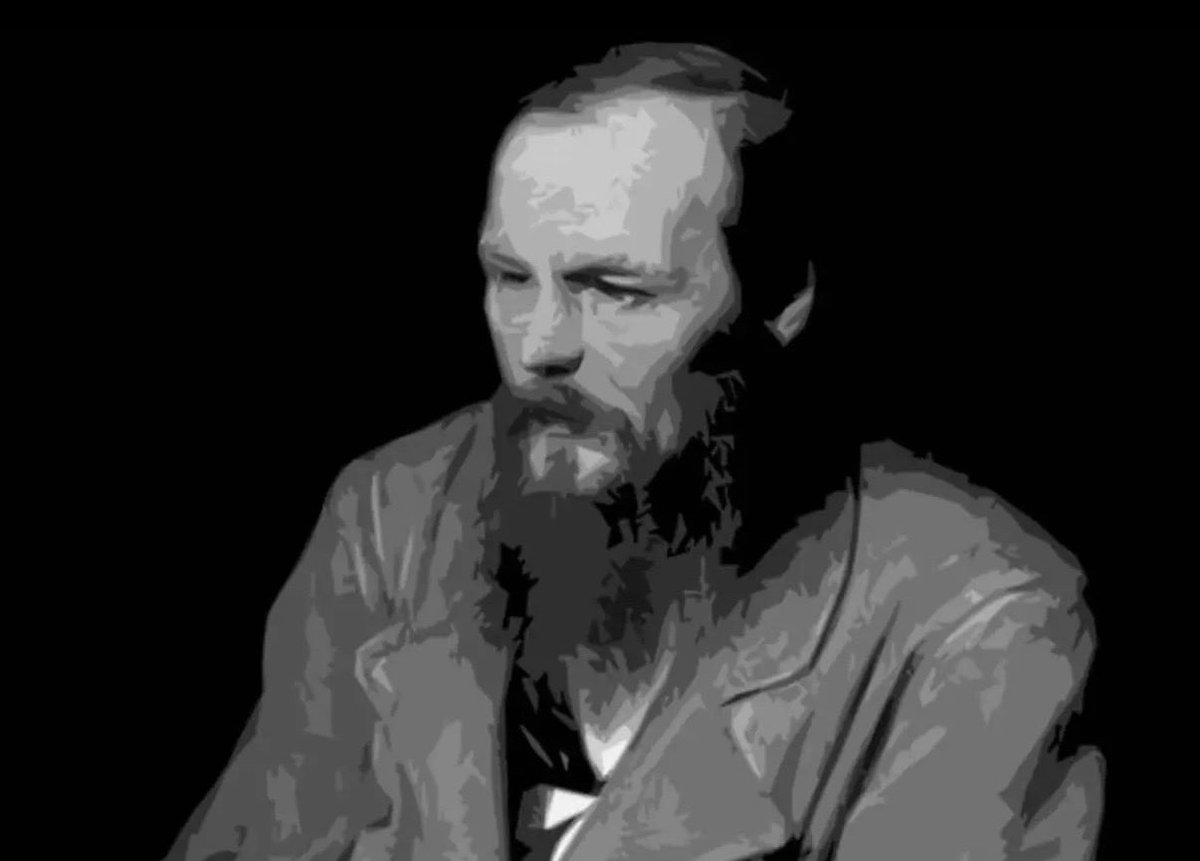
“Nothing kills the human soul like being in the wrong place with the wrong people.”
- Fyodor Dostoevsky
Fyodor Dostoevsky, born in Russia in 1821, was a renowned novelist and philosopher whose works examined guilt, suffering, morality, faith, free will, and the complexities of human nature. His life was marked by poverty, imprisonment, and personal turmoil, experiences that profoundly shaped the psychological insight and emotional intensity of his writing.
“Nothing kills the human soul like being in the wrong place with the wrong people.”
This saying, often attributed to Dostoevsky, reflects the powerful influence our surroundings and relationships can have on our emotional well-being and sense of self. Sometimes, unhappiness does not come from within but from spending too much time in environments where we feel misunderstood, unappreciated, or unable to express our true identities.
Remaining in such circumstances can gradually erode a person’s confidence, inner peace, and individuality. In an effort to gain acceptance, they may begin suppressing their thoughts, concealing their emotions, or changing their behavior to meet the expectations of others. Over time, this can lead them to mistakenly believe that their unhappiness is a reflection of their own shortcomings rather than the environment surrounding them.
The deeper message is that even someone who is naturally confident and content can begin to feel isolated, emotionally drained, and disconnected from themselves when surrounded by people who do not value or understand them. The relationships we maintain and the places we inhabit can either nurture our personal growth or gradually diminish our sense of identity. Sometimes, finding peace requires recognizing when an environment no longer allows us to be ourselves.
Through the VOICE trial, Terry is using his Neuralink implant to help fine-tune a brain-to-voice interface for himself and others who can’t speak. He trained the algorithm first by miming speech as best he could, then by simply thinking the words and hearing them come out in his own natural voice.
Powered by Grok Voice from @spacexai