PhD student at @KU_Leuven x @FWOVlaanderen Fellow | Large-scale modelling of sediment dynamics in the Anthropocene | Hydrology and geomorphology | she/her
Congratulations @messamat for this incredible work mapping the global distribution of intermittent rivers!
These findings are a game-changer. We need to rethink the importance of flow intermittence in fluvial processes and river science.
Would you believe that, for half the world's population, the closest river dries up every year?
New work w/ @INRAE_France shows that intermittent streams exist in all climates, biomes.
How do we manage rivers that sometimes cease to flow?
In @Nature:
https://t.co/qMDDPskz5s
Can global researchers protect one river?
Researchers from HydroLAB worked on companion papers on aquatic areas of ecological importance in Zambia.
The biggest takeaway? The Luangwa River is the highest ranked candidate for river protection.
/1
Photo by Pim GMX (CC BY 2.0)
The #cgu 2021 June-July Annual Meeting is currently accepting abstract submissions! Deadline May 17. @_peripatetic_ , @heloisaemacedo and I will be leading a session on global water data. 10- or 20-minute presentations (incl. Q&A) are welcome. More info on https://t.co/LSgVHRuAAB
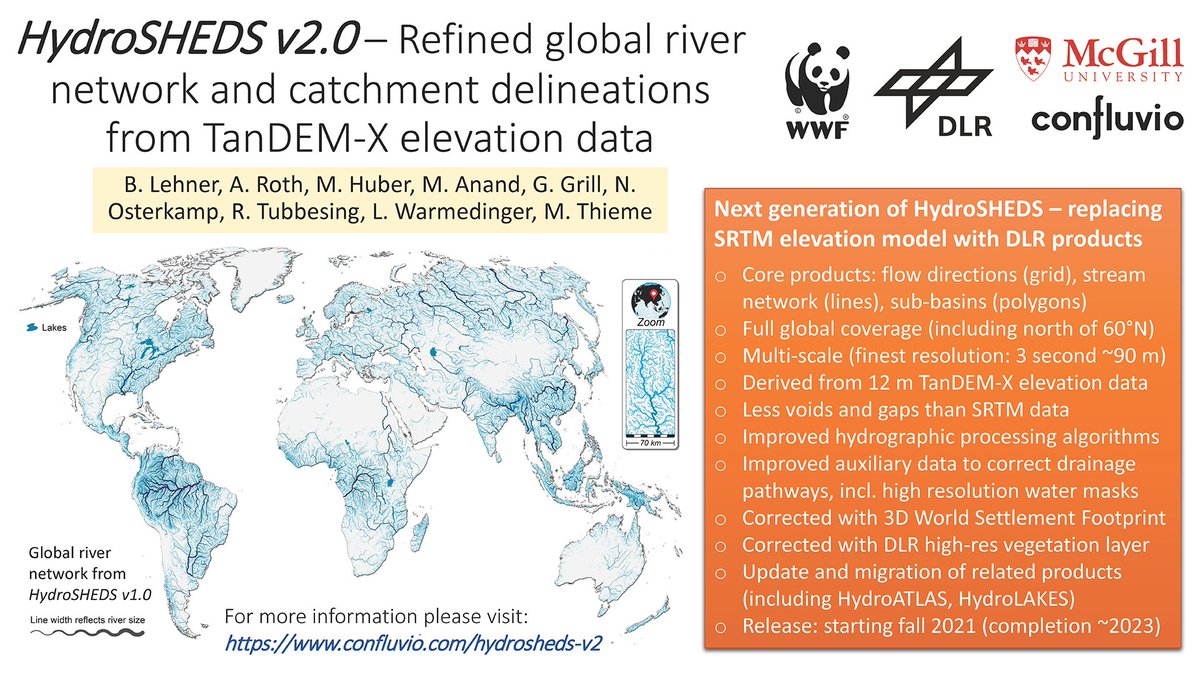
In an #egu session today, @Global_HydroLAB announced that HydroSHEDS v2.0 is now in production: https://t.co/LbMSh3YzRa
Based on high-resolution TanDEM-X elevation data, the new data product is a collaboration between @Global_HydroLAB@WWFUS@DLR_en and @confluvio.
Stay tuned!
Academics in the introduction: "This paper fills the gap in the field."
Academics in the conclusion: "with the limitations mentioned here, further research is still needed"
Catchment science enthusiasts, don't miss the @CUAHSI cyber-seminar series on experimental catchment research at sites across the globe (Wednesdays from Feb10- Mar31 @ 1 ET). Join for the discussion & networking, or watch later. Free registration here: https://t.co/Uiz8375XGh
MORE OF THIS!
Women Advancing #River Research.
Check out this awesome group of scientists being highlighted though a multi-journal collaboration. This is a can't miss line-up of top scientists in our field.
First lecture is 25-Feb and then approx. monthly thereafter.
Huge celebrations as the Zambian government halted plans to build a megadam on the Luangwa river, keeping it one of the longest remaining free-flowing rivers in southern Africa! 💧💧💧 https://t.co/qjVjwSUWdt via @Mongabay
An outstanding review of our paper. Thank you, LeRoy Poff! A river that flows free connects up in 4D https://t.co/m9v69DumTL https://t.co/IgwMoKCfDI @LeroyPoff@Global_Hydrolab
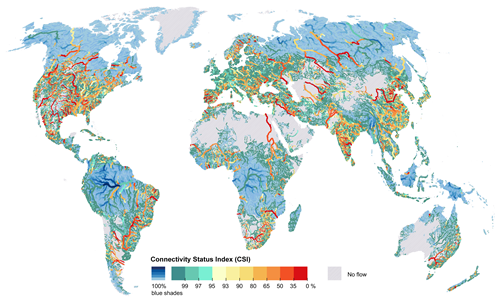
Global HydroLAB led a team of 34 international researchers to produce the first ever assessment of the location and extent of the planet's remaining free-flowing rivers. Among the longest rivers, just over 1/3 remain free-flowing. Find them on the map:
https://t.co/v37MuQInho
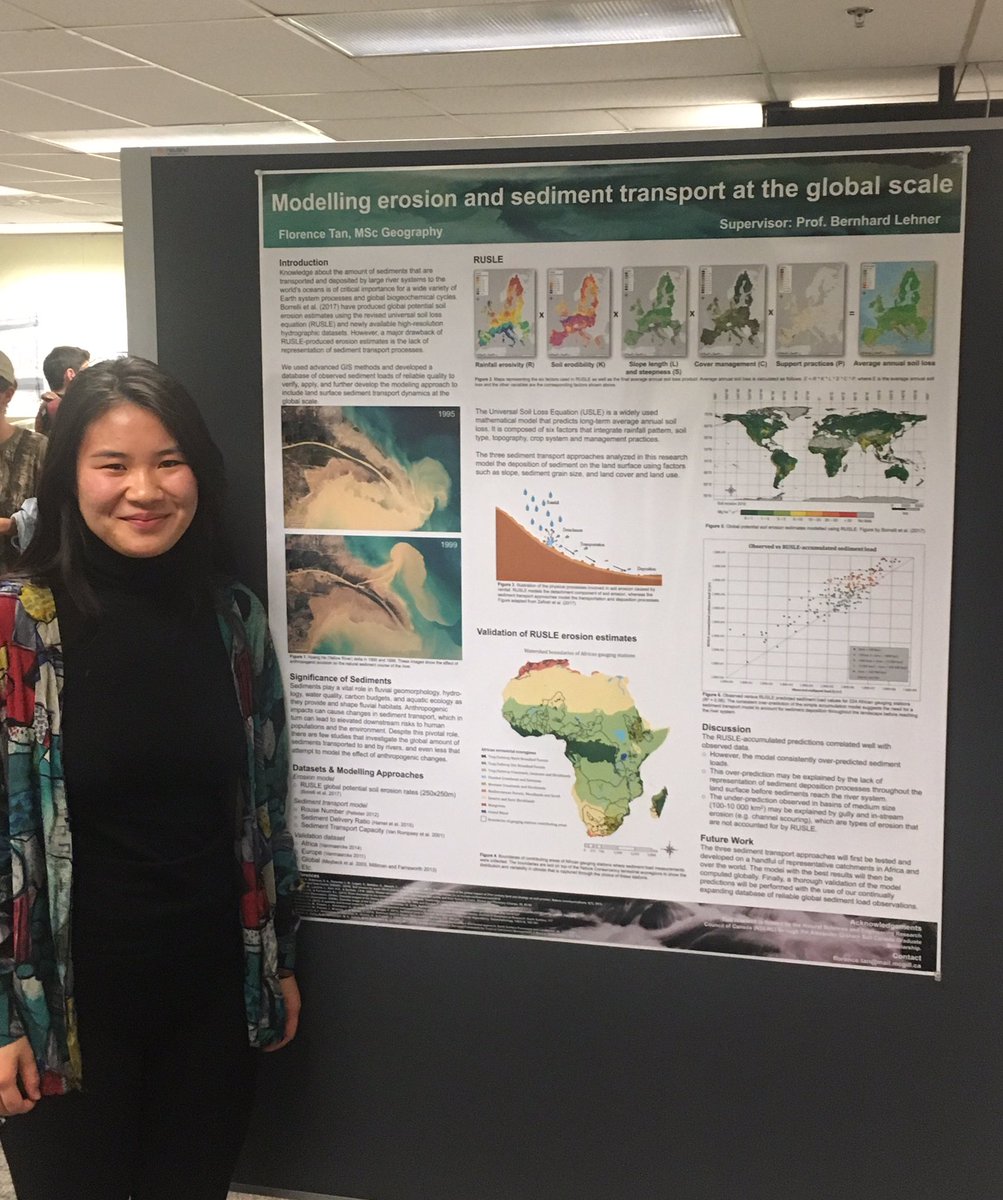
Very excited to have had the opportunity to present my on-going work on #sediment connectivity at #EGU19 ! Room was packed and overflowing — the #soil community is only getting bigger and bigger! #EGU19SSS#EGU19HS#EGU19GM
Global HydroLAB's Florence Tan (@turbulentflo) presenting at #EGU2019 on her Master's work:
"From soil erosion to sediment load: Modelling land surface #sediment transport using global high-resolution datasets for river routing applications"
Cómo la erosión y la #erosión de la lluvia pueden cambiar la cantidad de carbono que se liberará en la atmósfera en la UE para 2100? Flujos de C debidos a la erosión estimados a 0.92-10 Tg por año de los suelos agrícolas de la de la Unión Europea. Science: https://t.co/jbcGT5qzId