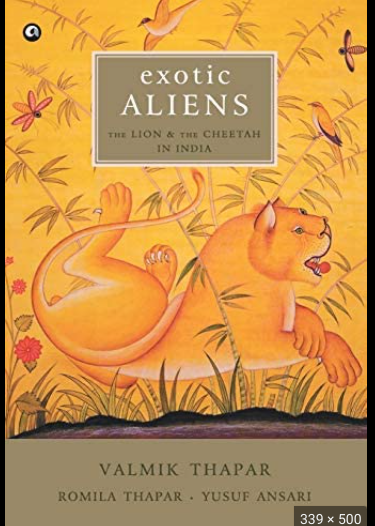
In 2014, a naturalist and two historians posited a theory about a major zoological motif of the Indian subcontinent.
....that the Lion was a exotic alien brought to India around the time of Alexander's invasion over the Iranian Plateau.
They published a book about it.
qpADM model for CHG. In addition to Iranian, they score 11% EHG and 26% Anatolian-like ancestry (Kotias UP was similar to Anatolian). I won't share my outgroups because I don't want competitors making models like this aswell.
@SignalNScaleAI Independent of IE origins, we have clear evidence of two zones (Zoller) in the Indo-Aryan world - which seems to be the consequence of a differential in development. Any graphic has to explain it.
An archaeological niche of estimating early agriculture is to look for signs of land management. "Parali burning" creates microscopic charcoal that is stored away in sediment cores securely. How old? - you might ask. Large-scale (1000s of hectares) burning commenced in -
Thar region - 4000 BCE
Gangetic basin - 6000 BCE
Additionally winds spread the smog to mountain peaks very far away from the source. At Nilgiris, carbon peaks start registering from 1500 BCE.
Linguistics has yet to develop a general short answer to why "how old is this language" is meaningless. One that could have some traction is: "language is the substance, not the container". You could ask how old is a river; you cannot ask how old is the water in it.
Mallory used a significant criterion to identify the PIE lexicon count -
"existing in one Asian branch and one European branch" (or) "in Anatolian and one another IE branch (Asian or European)"
Any followers who know joint PMFs can work out the implications.
Ancient genome of the burial warhorses of the Shatuo leader Li Keyong
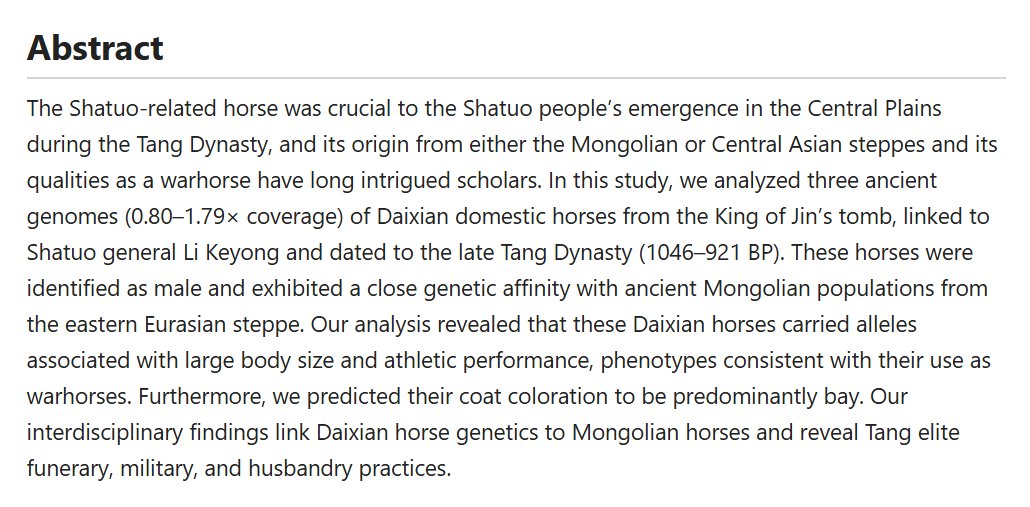
These horses were identified as male and exhibited a close genetic affinity with ancient Mongolian populations from the eastern Eurasian steppe
https://t.co/qOrBO2bRz1
Terrific @TheAtlantic piece on archaeologists' and anthropologists' slowly dawning realization that now-submerged areas on the coastal shelf--swathes of land drowned when the glaciers melted--may be where much of our species' early history took place. (Link in reply)
"Redating the Inca Empire" | AAAS https://t.co/uMb91cbGTk
Much of this sounds weird to a specialist in the Aztec Empire. Most "Aztec" remains (things from the imperial core found in provincial areas) actually pre-date the formation of the Triple Alliance Empire 1/
Around 2100 BCE, a king in the Third Dynasty of Ur was described as "til-lu-ug", which is an elephant - but the literal meaning is 'lion-killer'. Across the seas, in India - the lion was known as gajāri (गजारि), literally "enemy of elephants". The inver-recur-sion on this....
This is a stellar example of a Type II harpoon with an eyelet visible on the lower half (right-bottom). A string was threaded through the eyelet to trace the wounded animal as it sped through the jungle's undergrowth. A bell or a plank was tied to sound hunters and to slow down the animal. This is significant as we know of only one Vedic weapon whose iconography includes a "strange" bell whose meaning evades modern viewers.
@muratkaryan Proto-Dravidian does not have a word for bricks, camel, wheat, rhinos and a hundred other concepts endemic in North West India. It does not have a word for snow or an endonym for the Himalayas.
But it does have a word for the Ship's Master and other maritime concepts.
Some followers have expressed the impracticality of attaching tiny bells to weapons. Animal hunts and chases lasted for as long as a week when the prey was injured non-fatally. Bands of hunters on foot chased the quarry. Blood trails and scents were the primary markers for hunting dogs. The weapon was designed to stay stuck in the body, emit sound or leak more blood. The harpoon (vajra) did all three in tandem.
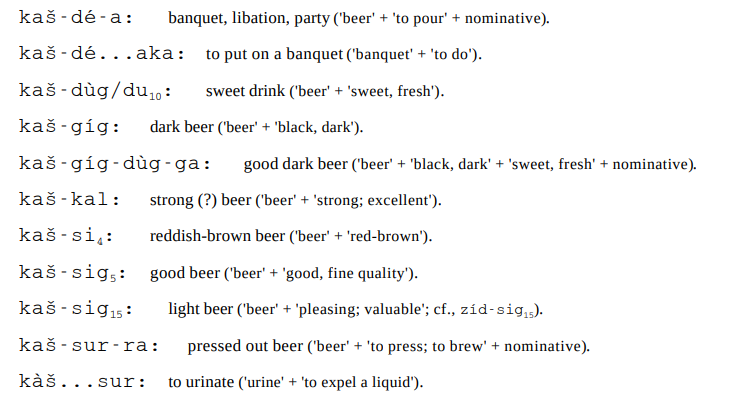
The Sumerians (2000 BCE) were the ultimate beer connoisseurs. So much so that, they economized their vocabulary for partying, various kinds of beers and pissing with the same phoneme unit.