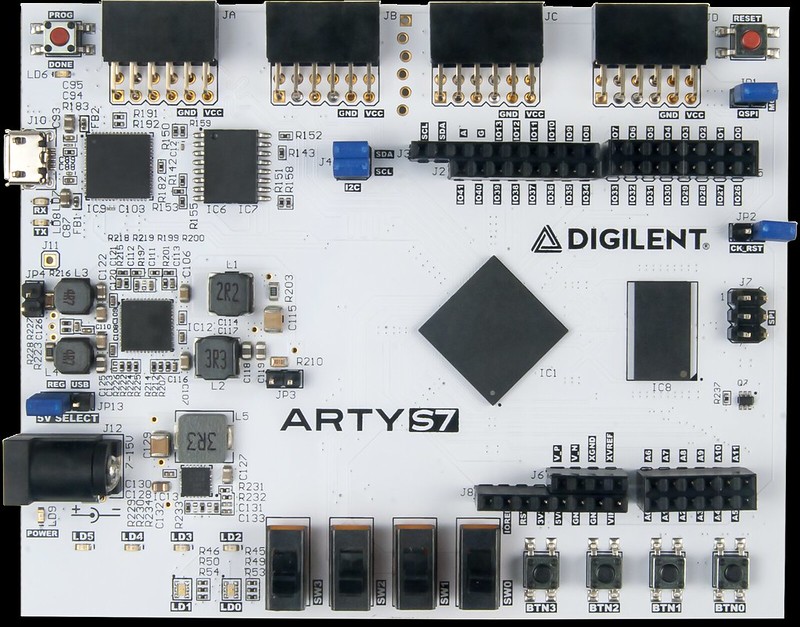
I think I've built myself an HD (720p50) video player out of an #FPGA, #RISCV, #MJPEG and 27,000 lines of Verilog! Going from 800x600 -> 1280x720 just worked with 10 more MHz! I actually plan to sit down and watch a movie on this one evening! https://t.co/TTG7huzyZW
@wren6991 I treat them as a pipeline flush/fence and hold a global pipeline lock blocking new issue until they complete. Simplifies things a bit, but makes them slower.
@wren6991 I put another ALU in the LSU just for the AMO ops. It’s quite an annoying extension to implement, esp when mixed with an MMU, precise faults, etc.
@jonmasters@Arm Unmistakable reminder of a UK 80’s class room there. I seem to remember more ribbon cables being involved though. I owe a lot to my Acorn Electron 😀
Tuesday's #CyberWeek2021 deal is a doozie - we're giving 50% (yes, half off) of ANY Arty board featuring @XilinxInc tech. We call it "The Arty of the Deal".
https://t.co/kGG9Die97r
@arjenroodselaar@GregDavill@PaulStoffregen Implementing the PCIe link is definitely non-trivial, with the ‘reward’ for all that effort being a single supplier proprietary protocol Ethernet PHY...
@mntmn These printfs look sort of familiar! It’s a ULPI setup isn’t it? If you DM me some more details / source versions used, I might be able to take a look tomorrow night.
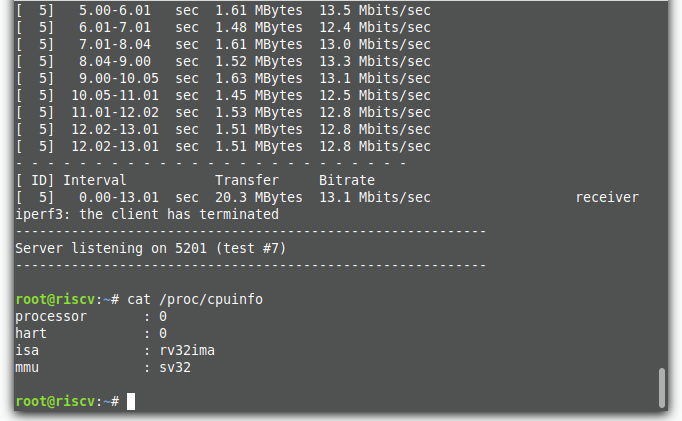
Running iperf on Linux on my RV32IMA RISC-V CPU core. 13Mbit/s TCP perf is not impressive. Investigating why. Hmm.. 950K instruction cache refills per second causing the CPU to stall 35% of the time! Need more size/ways/levels, or maybe I could implement compressed ISA extension!
@MoonbaseOtago Yes, and Verilator is indispensable for this kind of stuff for speed reasons. I found snapshots (saved from a c model, restored in RTL sim) really useful to reduce the Linux boot debug time too. I’d be interested to hear about your design flow for something meaty like your CPU.