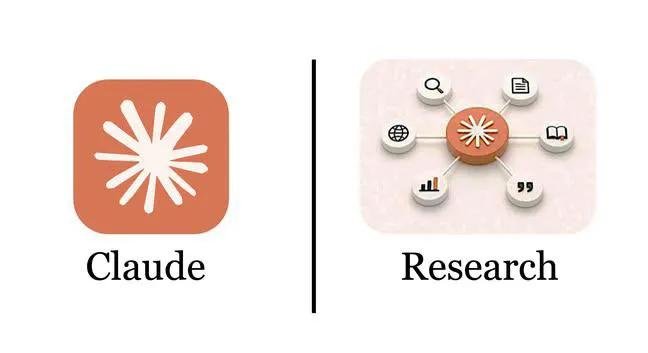
🚨 BREAKING: Claude can now help you do academic research like a professional research assistant. For free.
Here are 10 prompts to review literature, find research gaps, analyze papers, and build stronger research.
(🔖 Save this.)
Most people want to become AI Engineers
Very few know what to learn next
That's why I'm giving away one of the best Agentic AI Engineer Roadmaps for FREE to the first 4500 people only
Inside you'll learn
✅ Python Fundamentals
✅ LLM Fundamentals
✅ LangChain LangGraph CrewAI AutoGen
✅ LCEL Runnables & Workflows
✅ Memory Systems
✅ Tool Integrations
✅ RAG Systems
✅ Multi Agent Systems
✅ Real World AI Projects
✅ Interview Questions & Answers
72 Hours Only
How to get
Follow me (so I can DM you)
Like + RT
Comment "ROADMAP"
Once the limit is reached I'll stop sending it.
Andrej Karpathy just explained the 5 shifts turning LLMs into agentic systems.
00:00 - Memory turns chat into personal AI
06:41 - Multimodal AI reads the world
16:58 - Thinking models solve harder tasks
24:51 - Search makes LLMs live
30:58 - Tools turn LLMs into workers
Most people are still treating LLMs like chatbots.
Karpathy is showing the full stack:
Memory → Vision → Reasoning → Search → Tools
Prompting is the old workflow.
Agentic systems are the new one.
This 40-minute talk is worth more than most paid AI agent courses.
Bookmark and watch it before everyone catches up.
Then read how to turn LLMs into self-improving agent loops below
An Anthropic engineer showed me why prompting isn't enough.
2:47am. He dropped a video in a Claude dev Discord.
36 minutes long. 290 views.
He explains how to build a loop so your agent can fix itself and finish without you.
Watched it at 3am. By 3:20 my terminal was open. By 3:40 I was already rewriting how I work.
The video disappeared the next day. I kept the mp4. It's below.
LLM Knowledge Bases
Something I'm finding very useful recently: using LLMs to build personal knowledge bases for various topics of research interest. In this way, a large fraction of my recent token throughput is going less into manipulating code, and more into manipulating knowledge (stored as markdown and images). The latest LLMs are quite good at it. So:
Data ingest:
I index source documents (articles, papers, repos, datasets, images, etc.) into a raw/ directory, then I use an LLM to incrementally "compile" a wiki, which is just a collection of .md files in a directory structure. The wiki includes summaries of all the data in raw/, backlinks, and then it categorizes data into concepts, writes articles for them, and links them all. To convert web articles into .md files I like to use the Obsidian Web Clipper extension, and then I also use a hotkey to download all the related images to local so that my LLM can easily reference them.
IDE:
I use Obsidian as the IDE "frontend" where I can view the raw data, the the compiled wiki, and the derived visualizations. Important to note that the LLM writes and maintains all of the data of the wiki, I rarely touch it directly. I've played with a few Obsidian plugins to render and view data in other ways (e.g. Marp for slides).
Q&A:
Where things get interesting is that once your wiki is big enough (e.g. mine on some recent research is ~100 articles and ~400K words), you can ask your LLM agent all kinds of complex questions against the wiki, and it will go off, research the answers, etc. I thought I had to reach for fancy RAG, but the LLM has been pretty good about auto-maintaining index files and brief summaries of all the documents and it reads all the important related data fairly easily at this ~small scale.
Output:
Instead of getting answers in text/terminal, I like to have it render markdown files for me, or slide shows (Marp format), or matplotlib images, all of which I then view again in Obsidian. You can imagine many other visual output formats depending on the query. Often, I end up "filing" the outputs back into the wiki to enhance it for further queries. So my own explorations and queries always "add up" in the knowledge base.
Linting:
I've run some LLM "health checks" over the wiki to e.g. find inconsistent data, impute missing data (with web searchers), find interesting connections for new article candidates, etc., to incrementally clean up the wiki and enhance its overall data integrity. The LLMs are quite good at suggesting further questions to ask and look into.
Extra tools:
I find myself developing additional tools to process the data, e.g. I vibe coded a small and naive search engine over the wiki, which I both use directly (in a web ui), but more often I want to hand it off to an LLM via CLI as a tool for larger queries.
Further explorations:
As the repo grows, the natural desire is to also think about synthetic data generation + finetuning to have your LLM "know" the data in its weights instead of just context windows.
TLDR: raw data from a given number of sources is collected, then compiled by an LLM into a .md wiki, then operated on by various CLIs by the LLM to do Q&A and to incrementally enhance the wiki, and all of it viewable in Obsidian. You rarely ever write or edit the wiki manually, it's the domain of the LLM. I think there is room here for an incredible new product instead of a hacky collection of scripts.
RIP McKinsey.
You don’t need a $300k consultant anymore.
You can now run full competitive market analysis using Gemini 3.0 Pro.
Here are the exact 3 mega-prompts I use to replicate McKinsey-style insights for free:
2/ The Competitive Deep Dive
Prompt: "Act like a senior consultant preparing a competitive market analysis deck for a $10B strategy client.
Your task:
- Analyze the overall landscape of the [INDUSTRY] industry.
- Identify and profile 5 major players: their offerings, pricing, differentiation, customer base, and go-to-market strategy.
- Use comparison matrices to highlight competitive positioning.
- Reveal where gaps or white space exist in the market.
- Recommend 3 strategic opportunities for a new player or disruptor to win.
Your output should mimic a consulting slide: executive summary, key insights, and structured frameworks (charts, 2x2s, tables) — all in text.
Industry: [INSERT MARKET NAME OR NICHE]"
99% of the AI agent tutorials on YouTube are garbage.
I’ve built 47 agents with n8n and Claude.
Here are the 3 prompts that actually work (and make agent-building simple).
Bonus: comment "Agent: and I’ll DM you AI agent system prompt + full guide ↓
At the start of this year, I took the biggest risk of my life. I dropped out of @UWaterloo and moved to San Francisco without knowing a single person in the city.
The first time I applied to YC, I got rejected. They told me to go do co-founder matching. I didn’t.
Fast forward a few months Automax now powers thousands of property valuations every single month, we’ve raised over $1 million pre-seed from some amazing people at @AforeVC , @ycombinator , @alifdotbuild and are grinding through the F25 YC batch moving faster than ever.
If you told Humza from 3 years ago this story I’d laugh out loud in your face. I was about to go into mechanical engineering, deadset to become an astronaut, all my focus on top internships, and not the faintest idea what a B2B AI SAAS even does.
There is no better time to learn, to grow, and to take risks than your 20s. Worst case, you learn. Best case, it changes your life.
Ibn al-Qayyim رحمه الله on the Effects of Zina:
“Zina encompasses all the characteristics of evil: lack of religious commitment, loss of piety, loss of chivalry, lack of protective jealousy (gheerah). You will not find any adulterer who is pious, or keeps his promises, or speaks truthfully, or is a good friend, or has complete protective jealousy towards his family. Treachery, lying, betrayal, lack of modesty, lack of awareness that Allaah is always watching, lack of chivalry, loss of protective jealousy from the heart – these are the effects and implications of zina.
One of the effects of zina is that it earns the wrath of Allaah because His sacred limits are transgressed. If a man were to do such a thing to any king, he would meet the direst consequences.
Another effect of zina is the darkening of the face, and the grimness and misert of face that are apparent to other people. Another effect of zina is darkness of the heart and the extinguishing of its light, which is what causes the extinguishing of light in the face and the darkening thereof.
Another effect of zina is the poverty that it leads to. Another effect of zina is the loss of respect towards the one who does it, and the lowering of his status in the eyes of his Lord and in the eyes of His slaves.
Another effect of zina is that is causes him to lose the best of attributes, namely chastity, goodness and righteousness, and it earns him their opposites, namely immorality, evildoing, adultery and betrayal.
Another effect of zina is that it causes him to lose the title of believer, as it was narrated in al-Saheehayn that the Prophet ﷺ said:
“No adulterer is a believer at the moment when he is committing adultery.”
Another of the effects of zina is that it exposes one to the possibility of being one of the inhabitants of the oven (tannoor) in which the Prophet ﷺ aw the adulterers and adulteresses.
Another of the effects of zina is that it takes away the goodness which Allaah described as the attribute of those who are chaste, and replaces it with the evil which Allaah described as the attribute of the adulterers, as Allah says,
“Bad statements are for bad people (or bad women for bad men) and bad people for bad statements (or bad men for bad women). Good statements are for good people (or good women for good men) and good people for good statements (or good men for good women)”
[Al-Noor 24:26]
Allah has forbidden Paradise to every evil person, and He has made Paradise the abode of the good, and no one will enter it but those who are good. Allah says,
“Those whose lives the angels take while they are in a pious state (i.e. pure from all evil, and worshipping none but Allaah Alone) saying (to them): Salaamun ‘Alaykum (peace be on you) enter you Paradise, because of that (the good) which you used to do (in the world)”
[Al-Nahl 16:32]
“and its keepers will say: Salaamun ‘Alaykum (peace be upon you)! You have done well, so enter here to abide therein”
[Al-Zumar 39:73]
So they will deserve the greeting of the angels and admission to Paradise because of their goodness. But the adulterers are among the most evil of creation, and Allaah has made Hell the abode of evil and its people. When the Day of Resurrection comes, the evil will be distinct from the good, and the evil will be piled up together, then it and its people will be thrown into Hell. No one who is good will enter Hell and no one who is evil will enter Paradise.
Another of the effects of zina is the sense of alienation which Allaah instills in the heart of the adulterer, and this is like the alienation that shows on his face. For the one who is chaste has sweetness in his face and contentment in his heart, and whoever sits with him feels at ease with him. But the adulterer has signs of alienation in his face and whoever sits with him will feel uneasy.
Another of the effects of zina is lack of respect, as his family, friends and others lose respect for him, and
@Muhammad1041448@Parizad__Oslo Tu phir hajj per log jahaz per kyun jatay hen pahlay ki tarhan paidal ya kisi janwar per beth ker kyun nahi jatay. . ik tu gareen uper say Dimagi mareez