9 NĂM Ở MỸ, LƯƠNG $17 MỘT GIỜ, THÁNG NÀO CŨNG GỬI VỀ VIỆT NAM CHO MÁ $500
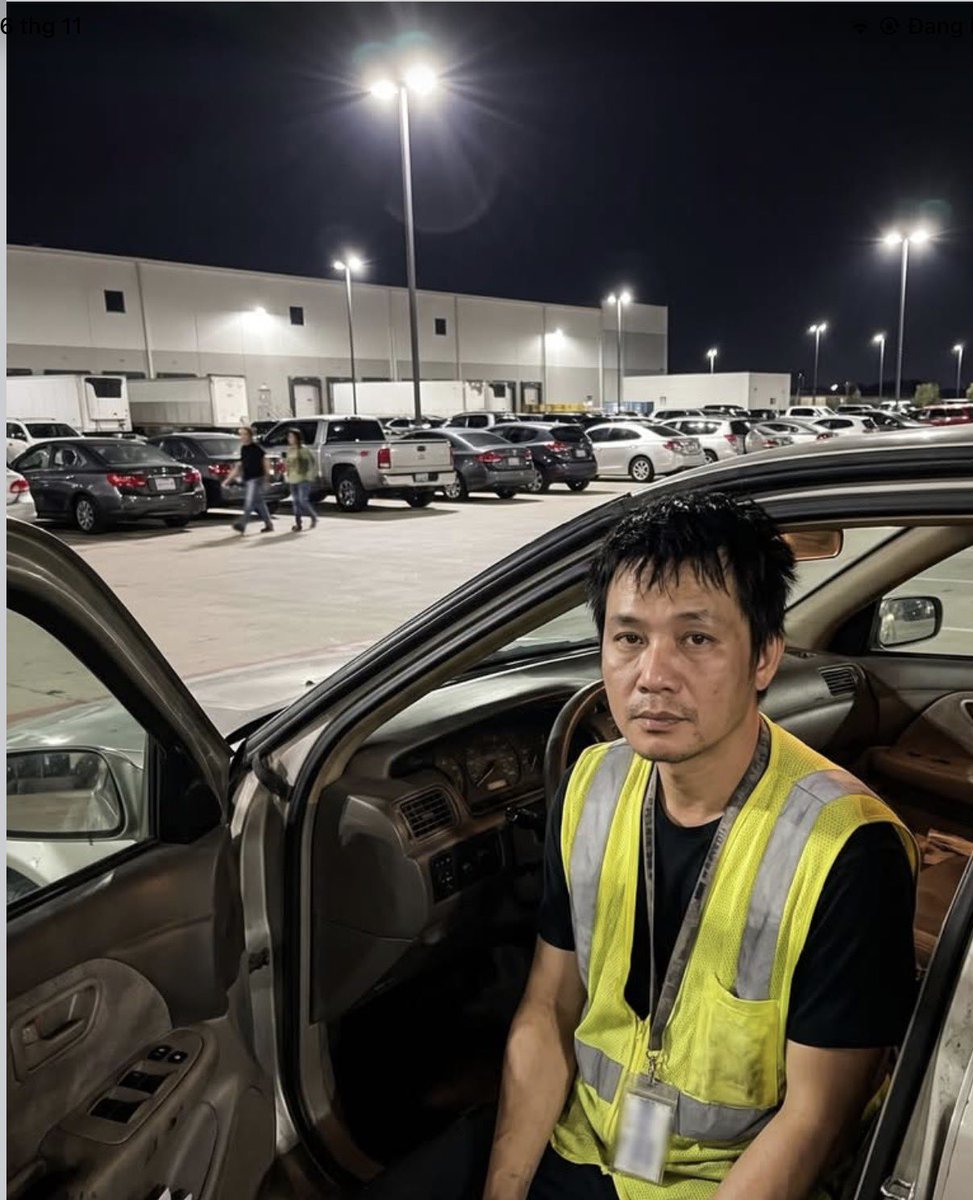
Qua Mỹ 9 năm, làm kho hàng Amazon ở Dallas.
Lương $17 một giờ, làm full time, tháng nào khá thì cầm về chừng $2,600.
Tiền thuê apartment một phòng: $1,250.
Tiền xe góp: $420.
Bảo hiểm xe: $180.
Điện, nước, internet, điện thoại: gần $250.
Tiền ăn, tiền xăng: $400.
Còn lại chừng $100.
Vậy mà 9 năm nay, tháng nào tôi cũng gửi về Việt Nam $500.
Không ai bắt tôi gửi. Tôi tự muốn vậy.
Ba tôi mất sớm. Má một mình nuôi ba anh em tôi ăn học. Hồi nhỏ nhớ nhất là cảnh má ngồi đếm từng tờ tiền lẻ dưới bóng đèn vàng, đếm xong cất vô cái hộp bánh thiếc.
Qua Mỹ rồi, tôi chỉ muốn má khỏi phải đếm tiền lẻ nữa.
Phần thiếu, tôi chạy giao đồ ăn cuối tuần. Có tháng quẹt thẻ tín dụng.
Mỗi lần gọi video, tôi đều đứng chỗ đẹp nhất trong apartment, cười thiệt tươi, nói: “Bên này con ổn lắm má.”
Năm thứ 8, nợ thẻ của tôi lên tới $11,400.
Có hôm tôi gọi về sau ca làm, mặt hốc hác, mắt thâm quầng. Má qua màn hình một hồi lâu rồi hỏi: “Con có chuyện gì giấu má phải không?”
Lần đầu tiên tôi nói thật hết. Lương bao nhiêu, nợ bao nhiêu, cuối tuần chạy xe tới mấy giờ.
Má má nói: “Mai con chờ má gọi lại.”
Sáng hôm sau, má gọi. Má cầm lên một cuốn sổ tiết kiệm ngân hàng.
Má nói: “Tiền con gửi về, má chỉ xài một nửa. Còn một nửa má gửi ngân hàng hết. Má tính để dành cho con lấy vợ.”
8 năm, má để dành được gần $20,000.
Má nói: “Con lấy trả nợ đi. Má không cần nhà to. Má chỉ cần con khỏe mạnh.”
Tôi ngồi trong xe ở parking chỗ làm, cầm điện thoại mà nói không ra tiếng.
Má muốn tôi phải nghỉ chạy xe đêm, đi học thêm.
Nhận được tiền tôi trả hết nợ thẻ. Rồi đăng ký học chứng chỉ quản lý kho ở community college, mỗi tối 2 buổi.
Năm nay tôi được lên làm trưởng ca. Lương $24 một giờ, có bảo hiểm sức khỏe, có 401k.
Tôi vẫn gửi về cho má mỗi tháng.
Nhưng giờ là $300, và má biết hết lương tôi bao nhiêu.
Tháng 3 năm sau, má qua Mỹ thăm tôi lần đầu tiên. Vé máy bay tôi mua rồi.
Ở xứ người, mình cứ tưởng mình đang gánh cả nhà.
Tới một ngày mới nhận ra, ở bên kia nửa vòng trái đất, có một người vẫn đang lặng lẽ gánh nợ cho mình.
CẢM ƠN MÁ, CON YÊU MÁ(nhatkynguoivietomy )
Ever seen a many-plumed moth?
Alucitidae are recognised by their modified wings consisting of 6 rigid spines on each forewing and hindwing. Each spine is lined with flexible bristles, creating a structure similar to that of a bird's feather.
Look closer!
A Stanford student put 166,700 fruit fly neurons in a robot that now writes homework for 30 students.
Not one of them has picked up a pen since. The robot is a black aluminum rig with a blue ballpoint, writing square roots and fractions line after line in handwriting that doesn't look like a machine's, while the fly's neurons glow in the corner of the screen.
Each student gives it a handwriting sample, and the fly learns the slant, the spacing, the size of the loops and where the letters get lazy at the end of a line, then writes as that student. 30 notebooks, 30 different hands and 1 brain.
That brain is smaller than a poppy seed, and a human brain has over 500,000 times more neurons, but the fly doesn't get tired, doesn't smudge the ink and never mixes up whose 7s have a line through them.
The teacher checks 30 notebooks, and a fly wrote every one.
What are China’s biggest concerns about AI?
A new article by Chen Yixin, China’s Minister of State Security, in the latest issue of China Cybersecurity Magazine offers some revealing clues.
Chen identifies six major risks:
1. Regime security. Hostile forces and people with ulterior motives can use deepfakes, AI-generated text and images, and automated online accounts to cheaply and massively produce political rumors, spread harmful information, and incite social divisions—waging “public-opinion wars” and “cognitive warfare” against China and directly threatening its political, institutional, and ideological security.
2. Critical infrastructure. AI can enable countries and organizations to rapidly discover vulnerabilities, automatically chain together attack paths, and carry out sophisticated hacking operations, dramatically lowering the technical barriers and costs of cyberattacks against China’s critical information infrastructure.
3. Data leakage. Foreign intelligence agencies can use AI-powered web crawlers, data mining, and profiling to collect sensitive information, including critical national data, trade secrets, and citizens’ personal information. Chinese users who process sensitive information through foreign AI products or export data abroad could also cause large-scale data leaks.
4. Closed technological ecosystems. Countries with advantages in AI theory, model architecture, and computing power may invoke “national security” to impose technology controls, entity lists, monopolize technical standards, and build closed-source ecosystems, restricting other countries’ access to advanced technologies and fragmenting global AI supply chains.
5. Structural challenges to social governance. AI creates new uncertainties for social governance and public order. Algorithmic “black boxes” and data poisoning can amplify existing social biases; misuse of personal information can trigger crises of public trust; automated decision-making creates difficult questions of accountability; and the rapid development of AI is increasingly outpacing existing laws, ethics, and regulatory mechanisms.
6. A fundamental transformation of warfare. AI is pushing warfare into an era of “intelligentization.” Whoever can use algorithms to achieve more precise sensing, judgment, and targeting will gain the initiative on the battlefield. AI is moving from an auxiliary role to a central one in intelligence fusion, decision support, target identification, combat operations, and cognitive warfare.
And what is the solution?
Chen’s answer is revealing: strengthen “Party control over the internet” and “Party control over data,” and “transform the advantages of Party leadership into the effectiveness of AI governance.”
In other words, from the CCP’s perspective, the central question is not simply AI versus no AI. Nor is it even fundamentally a contest between the US and China.
It is a contest between the US and the CCP over who gets to control AI, data, information, and ultimately the future of society.
And whoever wins that contest will decide the future of humanity.
https://t.co/9lXlS93A7h
A Japanese Manager Once Told Me: “We Fire Employees Who Arrive on Time.”
I laughed.
Then he explained why—and it completely changed how I see success.
I first heard this in Tokyo during a business dinner.
I asked why being late is such a serious offense in Japan.
He replied calmly:
“We don’t fire the late ones. We fire the ones who arrive exactly at the start.”
The table went silent.
In my culture, arriving right on time means:
• responsible
• disciplined
• professional
In his culture? It means passive.
He explained:
“If you arrive at 9:00 sharp, you’ve waited until the last possible second.”
That tells us something important.
It tells us you didn’t plan for:
• traffic
• delays
• uncertainty
• responsibility beyond yourself
And if you don’t plan for uncertainty… you can’t be trusted with systems.
He said something I’ll never forget:
“Only the weak arrive in the last minute.”
Not because they’re lazy—but because they think in limits, not margins.
Japanese companies don’t value accuracy.
They value anticipation.
A professional arrives early to:
• settle the mind
• read the room
• prepare mentally
• show readiness
Not to rush in out of breath.
That idea stayed with me.
And once I noticed it… I couldn’t unsee it.
The most successful people everywhere, no matter within which country:
• arrive early
• stay calm
• observe first
• speak last
They’re already present before others even enter.
They build trust before the meeting begins.
They notice details others miss.
They create opportunity before others react.
That edge compounds.
Showing up early isn’t about time.
It’s about mindset.
Exactly on time says: “I did the minimum.”
Early says: “I came prepared for reality.”
Business, and life, require margin.
When someone says, “But I came on time,”
I no longer hear discipline.
I hear the limit of their thinking.
Japan understood this long ago:
Success begins before the clock starts.
Will Americans and Germans and many others relearn these self-explanatory principles?
The question going forward is:
Will YOU continue with the behavior of the Have-Nots, or choose the behavior and success of the Have-Yachts?
Bitcoin. 🟠
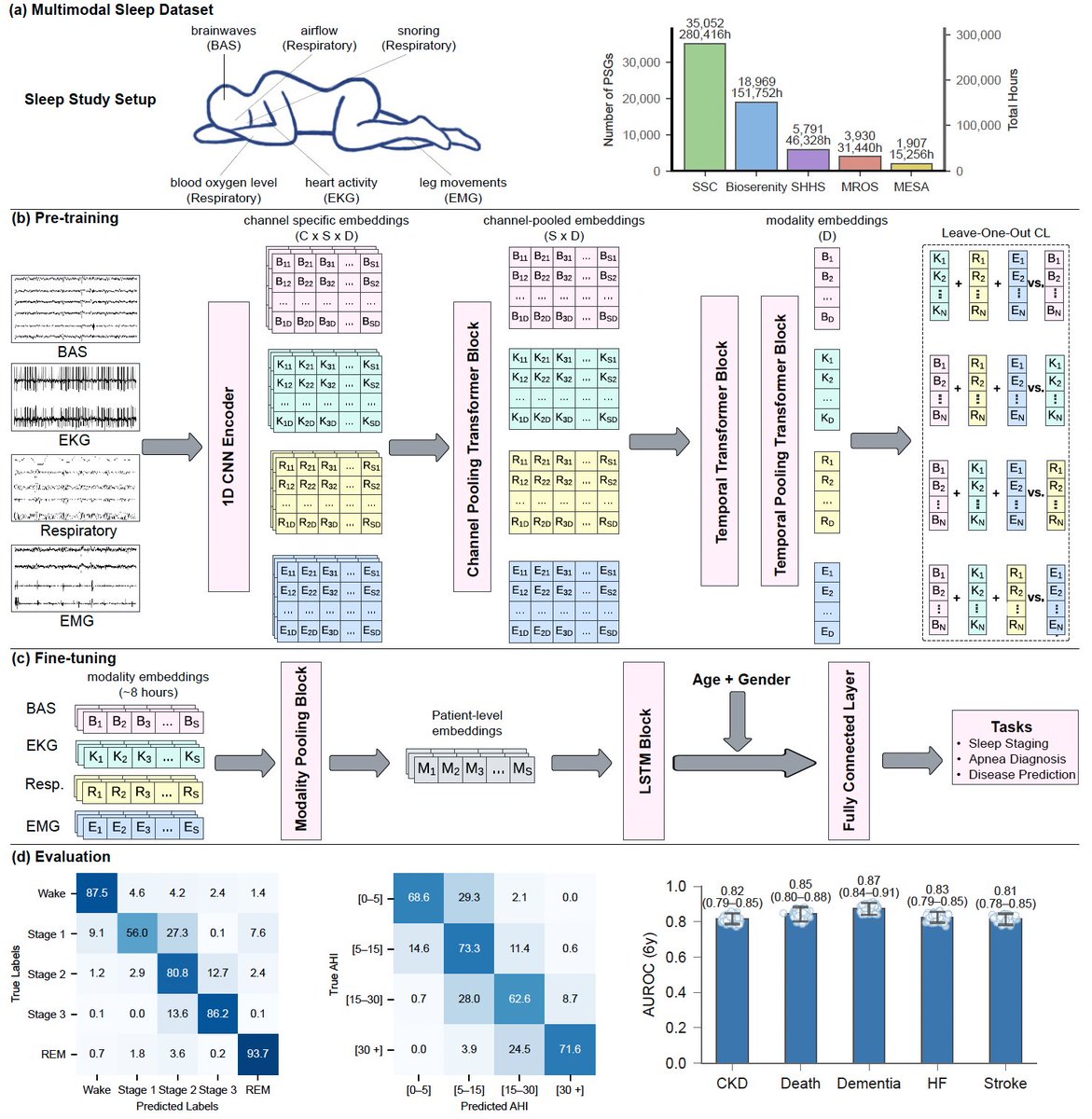
Today in @NatureMedicine we report that AI can predict 130 diseases from 1 night of sleep🛌
We trained a foundation model (#SleepFM) on 585K hours of sleep recordings from 65K people—brain, heart, muscle & breathing signals combined.
AI learns the language of sleep🧵
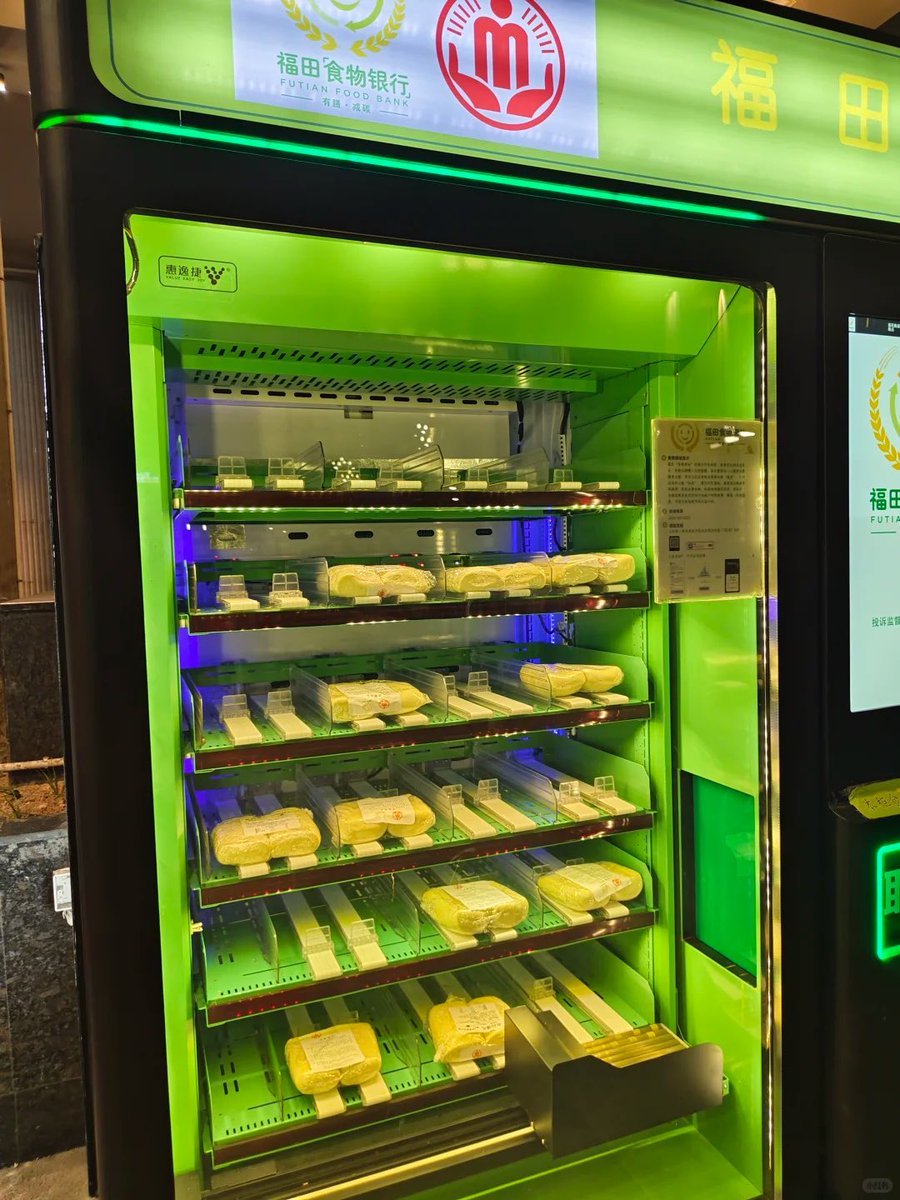
A special type of bank — "24-Hour Food Banks" — emerged on streets of Shenzhen.
These special refrigerated cabinets are stocked entirely with near-expiry food items donated by nearby supermarkets and bakeries. All goods are provided free of charge to those in need, offering immediate support while combating food waste.
From opening until 8:00 PM daily, priority access is given to groups such as low-income families, people with disabilities, children in need, elderly individuals who have lost their only child, and outdoor workers. After 8:00 PM, any remaining items are made available to all Shenzhen residents.
To ensure freshness and safety, all food is delivered, sorted, and restocked on the same day, with each item clearly labeled "For Use Today." The cabinets are regularly sanitized, and volunteers perform item-by-item checks to maintain quality and hygiene.
GROK SAVES A MAN’S LIFE AFTER ER MISSES NEAR-RUPTURED APPENDIX
A 49-year-old man says Grok, the AI built by Elon’s xAI, saved his life after an ER doctor misdiagnosed a near-ruptured appendix as acid reflux and sent him home.
In agony for 24 hours, the man turned to Grok for help.
After listing his symptoms, the AI flagged a “perforated ulcer or atypical appendicitis” and told him to go back immediately and demand a CT scan.
He copied Grok’s reasoning, returned to the hospital, insisted on the scan, and doctors found an inflamed appendix on the verge of rupture.
Six hours later, it was removed, and the man woke up laughing under anesthesia, pain-free.
He later revealed he didn’t tell doctors that Grok had advised him, claiming instead that “his sister, a nurse,” had urged the test, worried they’d ignore AI input.
The post went viral, with users calling Grok’s intervention proof that AI can spot what overworked doctors miss.
Some even said they’d “welcome AI doctors if it meant better care.”
Elon has long predicted AI-powered medicine would arrive before most expect.
After this? It might already be here.
Source: @Teslarati
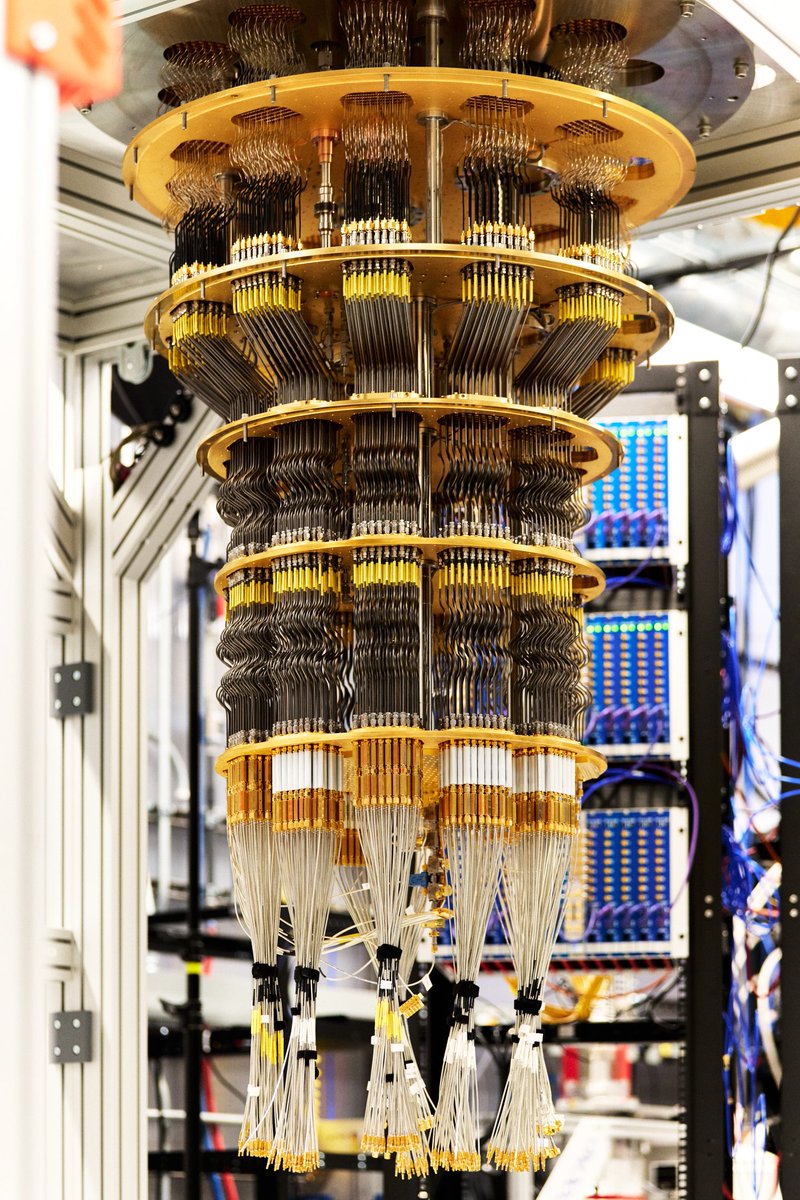
New breakthrough quantum algorithm published in @Nature today: Our Willow chip has achieved the first-ever verifiable quantum advantage.
Willow ran the algorithm - which we’ve named Quantum Echoes - 13,000x faster than the best classical algorithm on one of the world's fastest supercomputers. This new algorithm can explain interactions between atoms in a molecule using nuclear magnetic resonance, paving a path towards potential future uses in drug discovery and materials science.
And the result is verifiable, meaning its outcome can be repeated by other quantum computers or confirmed by experiments.
This breakthrough is a significant step toward the first real-world application of quantum computing, and we're excited to see where it leads.
After seeing these humanoid robot demos, I bet you'll be convinced that all manual labor will be gone to robots.
(even the world's oldest profession will be taken by them).
All 26 humanoid robot demos:
today we launch deep research, our next agent.
this is like a superpower; experts on demand!
it can go use the internet, do complex research and reasoning, and give you back a report.
it is really good, and can do tasks that would take hours/days and cost hundreds of dollars.
#China Lawatan kerja Perdana Menteri Datuk Seri Anwar Ibrahim ke China yang berakhir hari ini, berjaya menjana potensi eksport bernilai RM3.2 bilion, kata Menteri Pelaburan, Perdagangan dan Industri Tengku Datuk Seri Zafrul Aziz.
@anwaribrahim@tzafrul_aziz#BernamaNews #VideoBernama #MalaysiaChina
Saya mulakan hari terakhir lawatan kerja di China dengan mengadakan satu lagi pertemuan bersama pelabur berpotensi iaitu China Investment Corporation (CIC) dan China International Capital Corporation (CICC).
Dalam pertemuan ini, CIC dan CICC menyatakan minat untuk melabur di Malaysia dan melihat keperluan menpermudahkan kemasukan syarikat-syarikat China yang ingin mengembangkan operasi mereka di Asia Tenggara.
CICC turut menyatakan minat untuk bekerjasama dengan syarikat permodalan Malaysia bagi mewujudkan dana strategik yang menyokong pelaburan dalam sektor teknologi tinggi dan yang sedang pesat berkembang.
Saya mengalu-alukan potensi peningkatan pelaburan China serta menegaskan kepentingan mempererat hubungan perdagangan dan ekonomi Malaysia-China.
Malaysia juga komited untuk memperkukuh kerjasama serantau, khususnya menerusi Sidang Kemuncak ASEAN GCC+China.
===============
In Beijing, I began my final day in China with a meeting with China Investment Corporation (CIC) and China International Capital Corporation (CICC).
During the meeting, CIC and CICC shared their strong interest in investing in Malaysia, particularly by facilitating the entry of Chinese companies expanding into Southeast Asia. CICC also expressed an interest in collaborating with Malaysian funds to create strategic funds supporting investments in emerging and high-tech sectors.
I welcomed the prospect of increased Chinese investment and reaffirmed the close trade and economic ties between Malaysia and China. Malaysia is also committed to fostering regional cooperation, underscored by its role in hosting the ASEAN GCC+China Summit.
#MalaysiaMADANI
A lot has been said about how much the 'rich' make in Malaysia.
But there has been almost no discussion of the other side of the coin - how much tax do the 'rich' pay?
Using only open data, here's the answer - and it will probably shock you.
In 2022, T15 paid ~80% of taxes.
In Wakanda, she would be the top scientist there.
Because she’s the expert of Vibranium.
In our world, a similar material is called graphene.
And she’s a leader in this field.
Here’s the amazing story of Dr Amani Salim @kenisalim. 🧵🇲🇾🫡