We're giving away $10,000 for your savings.
Why? To celebrate.
We built the first proactive AI Financial Advisor. So you can stop thinking about your money.
To enter:
1️⃣ Repost this
2️⃣ Mention @useorigin
3️⃣ Include #OriginGiveaway
Prize varies by Origin membership status. Official rules here: https://t.co/huLn9uTpir #OriginGiveaway
@btimothy67 Hi there,
Thanks for reaching out!
Happy to help here, but before I cancel your subscription, I wanted to offer you another option. Since you’ve already paid $99 for the year, I can refund $50 of that payment and keep your annual membership active, bringing your cost down to...
Investing is more popular than ever, and the world seems to think America is uniquely positioned to benefit from the current boom cycle. Investors would rather own the upside with downside risk than a fixed-rate return.
US equity ETFs have pulled in roughly ~$880 billion in inflows year-to-date, including foreign buying. That already beats every full-year total on record except 2025 itself — and we're not even through Q3 yet. At the current pace, 2026 looks to finish north of $1.4 trillion, roughly $500 billion above last year's record of $920 billion.
These inflows also align with foreign investors shrinking their U.S. bond exposure: Foreigners now hold $24.5 trillion in U.S. equities against just $9.3 trillion in Treasuries — more than 2.6 times as much. The foreign share of publicly held federal debt has fallen from 49% in 2008 to roughly 30% today. And, on top of that, overall global equity exposure is at an all-time high. That aligns perfectly with this broader narrative here.
Full deep dive below ⬇️
https://t.co/vQgujWxodQ
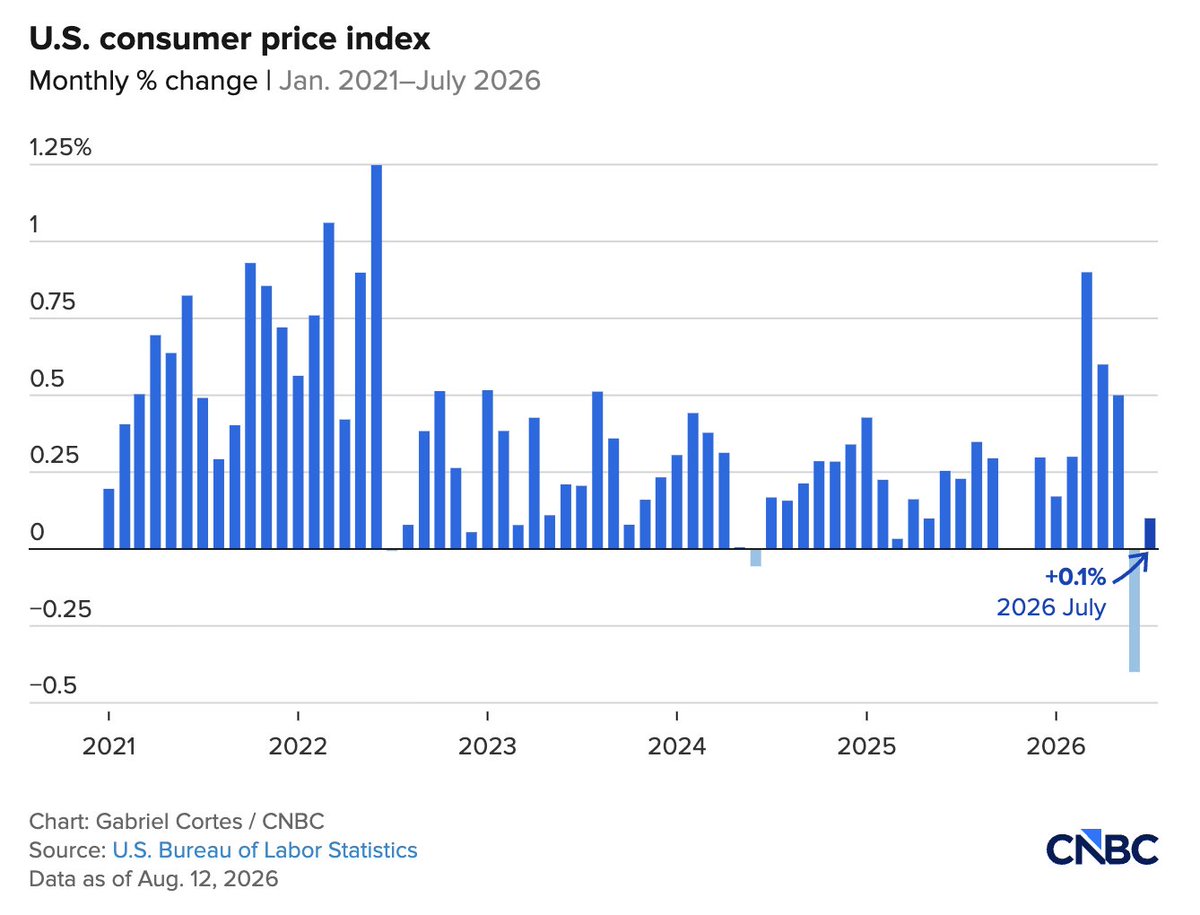
July’s inflation report just dropped, and it may have given the Fed another alibi to avoid a rate hike next month.
July’s year-over-year inflation rate came in at 3.4%, continuing the downward trend from the prior month (June), when it came in at 3.5%.
June's inflation report was too good to be true
Literally, perhaps the most awkwardly timed inflation improvement we’ve seen in recent years.
CPI fell 0.4% last month — which is the biggest monthly drop since April 2020 — bringing headline inflation down to 3.5% from May's 4.2%.
Economists had expected a 0.2% decline and a 3.8% annual rate, but the actual number came in well below that.
We can thank the energy index for this. It had risen precipitously in March (10.9%), April (3.9%), and May (3.9%), and then subsequently fell by 5.7% in June as tensions with Iran seemed to ease, delivering relief to oil prices.
Core CPI, which strips out food and energy, came in flat for the month, cooling to 2.6% annually from 2.9%.
Sounds like good news on all fronts, but instead it’s more like a reprieve with a catch.
The energy relief came from a lull in the Iran conflict — a temporary de-escalation drove oil prices down roughly 25% during June.
Except…last week, tensions re-flared, and Trump declared that ceasefire over. Both sides exchanged attacks; oil predictably spiked on Monday and then rose again on Tuesday — the same day this report dropped.
The U.S. added 57,000 jobs in June, well below the ~115,000 economists expected — and not only that, but April and May got hit with downward revisions.
April got revised down by 31,000 and May by 43,000, so the spring hiring streak we've been celebrating was actually 74,000 jobs smaller than advertised.
Some have made the case that the spring spike was actually a World Cup hiring spree head fake of sorts, especially after the leisure and hospitality sector added 61,000 fewer jobs in June.
Check out the deep dive here ⬇️
https://t.co/iSzOQ8Lmau
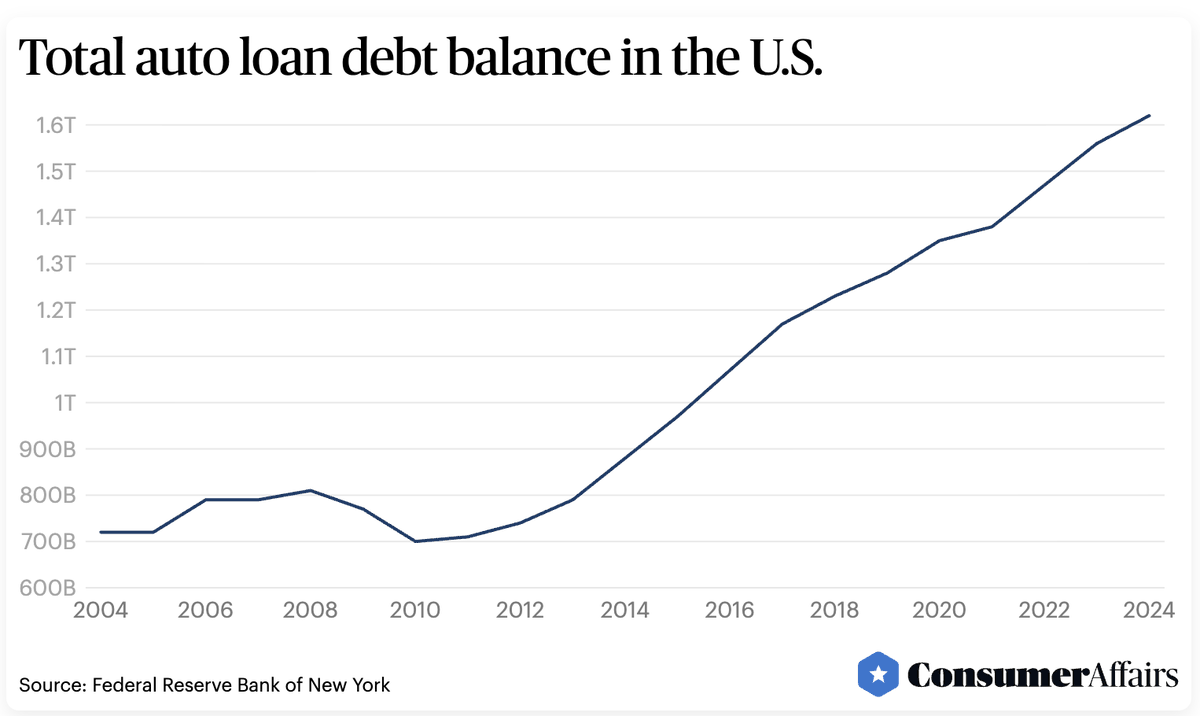
Car loans are quietly starting to look a lot like home loans — just without the appreciation.
Over the past few years, the math of buying a car has broken. New vehicle prices are up roughly a third since 2020, pushing the average sticker north of $50,000. Monthly payments, of course, have followed suit.
What used to be a $300–$400 obligation now averages $760, and nearly one in five loans now clears $1,000 a month.
In true Gen Z fashion, the college class of 2026 is pessimistic about their job prospects — and that’s kind of fair, because they’re entering a genuinely rough job market.
Unemployment among 22-27-year-olds with bachelor's degrees hit 5.6% in March—up from 3.6% pre-pandemic. Employers have pulled back. AI anxiety is real. Commencement speakers got booed. This is not the vibe.
But the unemployment rate is a pretty narrow lens, so let’s zoom in (and out).
Less-educated young people are faring worse. The overall unemployment rate for that age group is 7.2%, which sounds only slightly higher on the surface, but dig deeper, and you’ll see it’s because less-educated workers are dropping out of the labor force entirely — for college grads ages 22-27, the employment-to-population ratio is sitting at 82.4% — basically flat with pre-pandemic levels.
For high school through associate degree holders? 70.5%, down from 71.8%.
Forget looksmaxxing, credit score maxxing is the new optimization fixation.
The number of Americans with “super prime” credit scores (780+) has surged by roughly 15 million over the past six years, with younger consumers playing a surprisingly big role in the growth.
More than 41% of consumers now fall into that upper tier, up from 37% back in 2019.