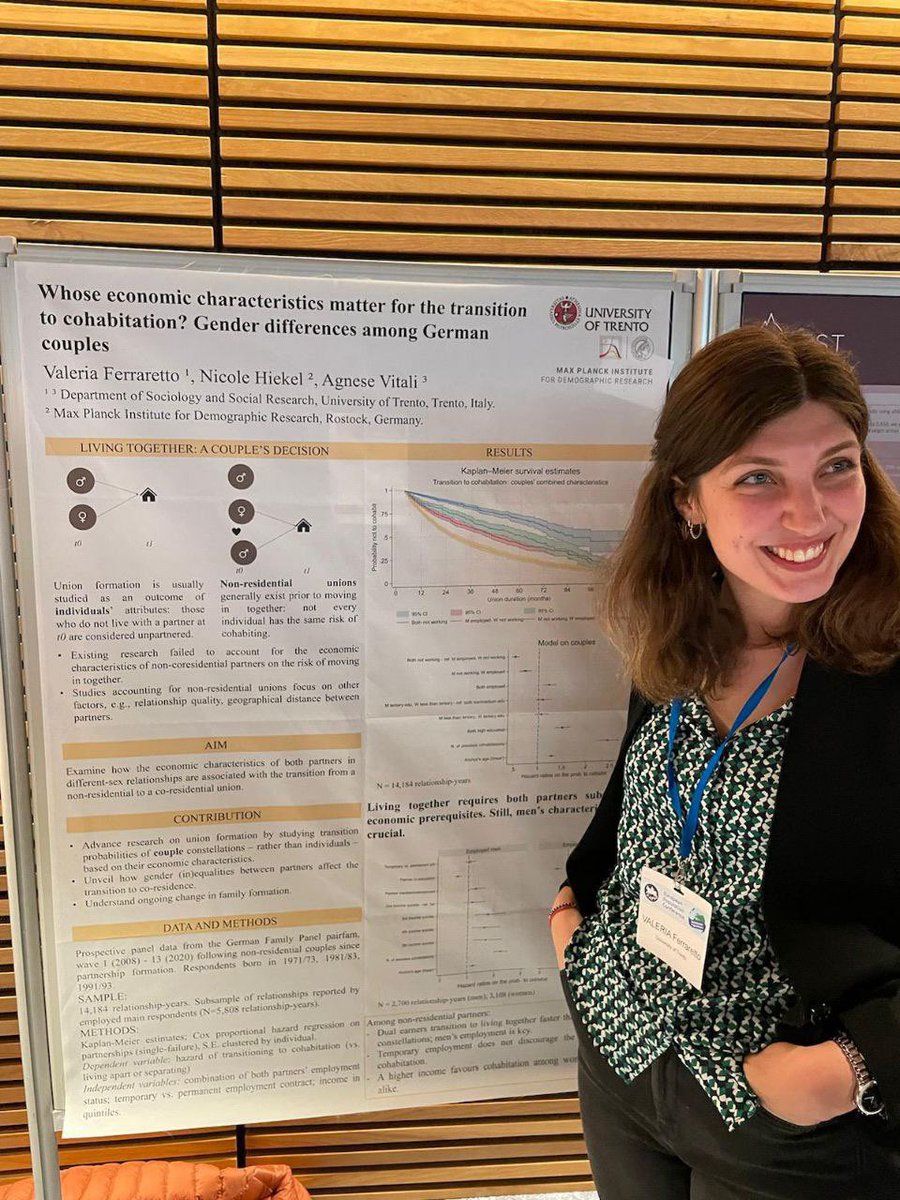
We have been working on this study since the early days of my PhD, and I am so happy to see it published!
Some changes are impressive: among the 1980s cohort, the probability of not being parent by age 35 is 44% among men and 26% among women (all over EU).
3 main findings below.
Are young Europeans equally postponing their transition to adulthood? A comparative study by @v_ferraretto@agnevitali (@CSIS_Unitn) shows the pivotal role of gender and parental SES and the importance of considering multiple events. https://t.co/pP0dBL4kv4
No time for reading an entire paper but curious about our latest works?
Indulge in this - short but insightful - article by @v_ferraretto (w/ @agnevitali ) and read about what “becoming adults” is like in Europe!
https://t.co/Q463Gb4anW
New paper with @marcotosi16 in @JMF_NCFR about how parental separation affects digital and non-digital contact with children in Italy
Both parents' and children's gender matter!
https://t.co/hyapLHnCZI
📣Call for Papers‼️
Gender Inequalities, Fertility, and the Future of Family Demography: Intersectionality in an Era of Family Complexity
🗺️ @MPIDRnews
📅 March 19–21, 2025
Submission Deadline: October 18, 2024
https://t.co/dRHNiLVCDo
#CallForPapers#poptwitter#socialscience
Two-fifths of #millennials in England want children – or more children, if they are already parents – but only 1 in 4 are trying to conceive, finds new #NextStepsStudy research by @UCL researchers @AlinaPelikh@alice_goisis 1/2
@gulczynskim Indeed, the problem in ESS is the small N by country, so it's not very reliable to break them down by cohort. But with "bigger" countries or country groups it could be feasible. Thanks for the hint and for your interest! :)
We have been working on this study since the early days of my PhD, and I am so happy to see it published!
Some changes are impressive: among the 1980s cohort, the probability of not being parent by age 35 is 44% among men and 26% among women (all over EU).
3 main findings below.
Are young Europeans equally postponing their transition to adulthood? A comparative study by @v_ferraretto@agnevitali (@CSIS_Unitn) shows the pivotal role of gender and parental SES and the importance of considering multiple events. https://t.co/pP0dBL4kv4
@gulczynskim Not in the paper, but I can extract them if you need them. In the paper, you can find the median ages at first child by broad country groups.
3. Women experience events earlier than men, also among younger cohorts; gender differences reduce among the offspring of tertiary-edu parents. Women with low-edu parents are those who experience events earliest.
@ESS_Survey conference has been great! Apart from the delicious sweets, it was a chance to discover other fields of research, new items, analytical strategies, and colleagues. A great tool for comparative research and for social sciences in Europe (and for my PhD thesis!)
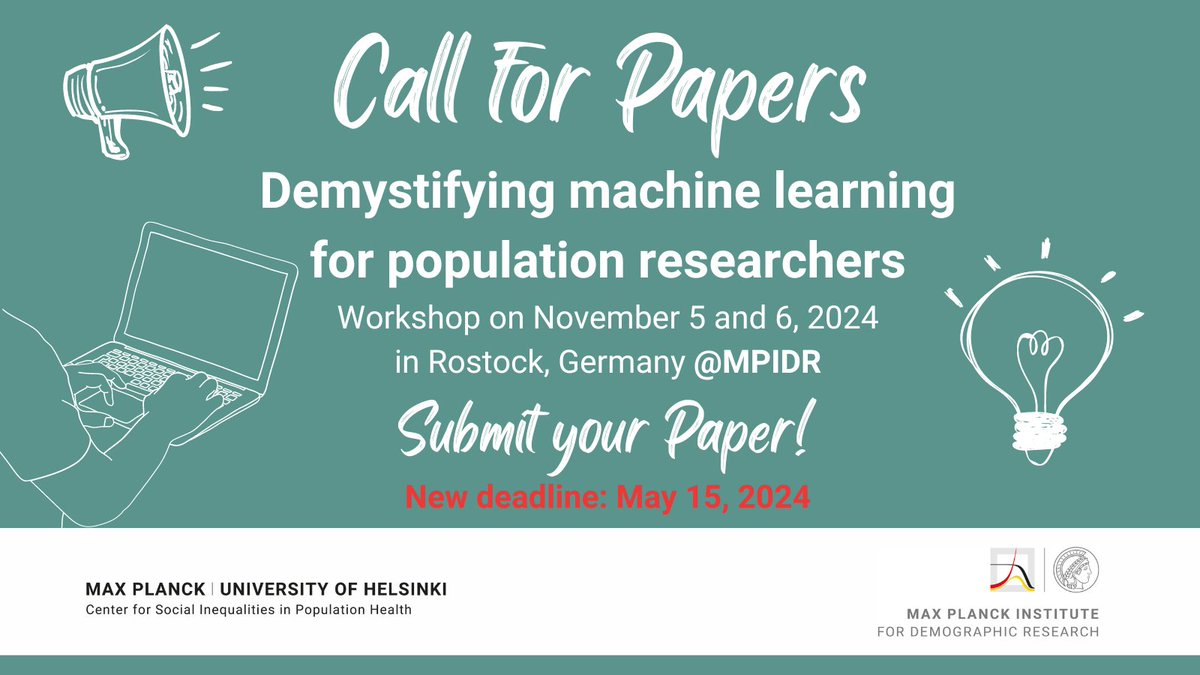
📣𝘾𝙖𝙡𝙡 𝙛𝙤𝙧 𝙋𝙖𝙥𝙚𝙧𝙨 𝙚𝙭𝙩𝙚𝙣𝙙𝙚𝙙‼️ @AngelaCarollo89 @waapol & M.Myrskylä still invite submissions for the workshop "Demystifying #machinelearning for population researchers" which aims to clarify #ML methods for population research. https://t.co/43hW9PJ0HL
Life Course Lab (LC3) kickoff meeting sparked engaging conversations on the future of #lifecourse research! Big thanks to all participants for sharing their insights and to keynote speakers Anette Fasang @never_minded @Vandecasteele_L @JuhoHarkonen
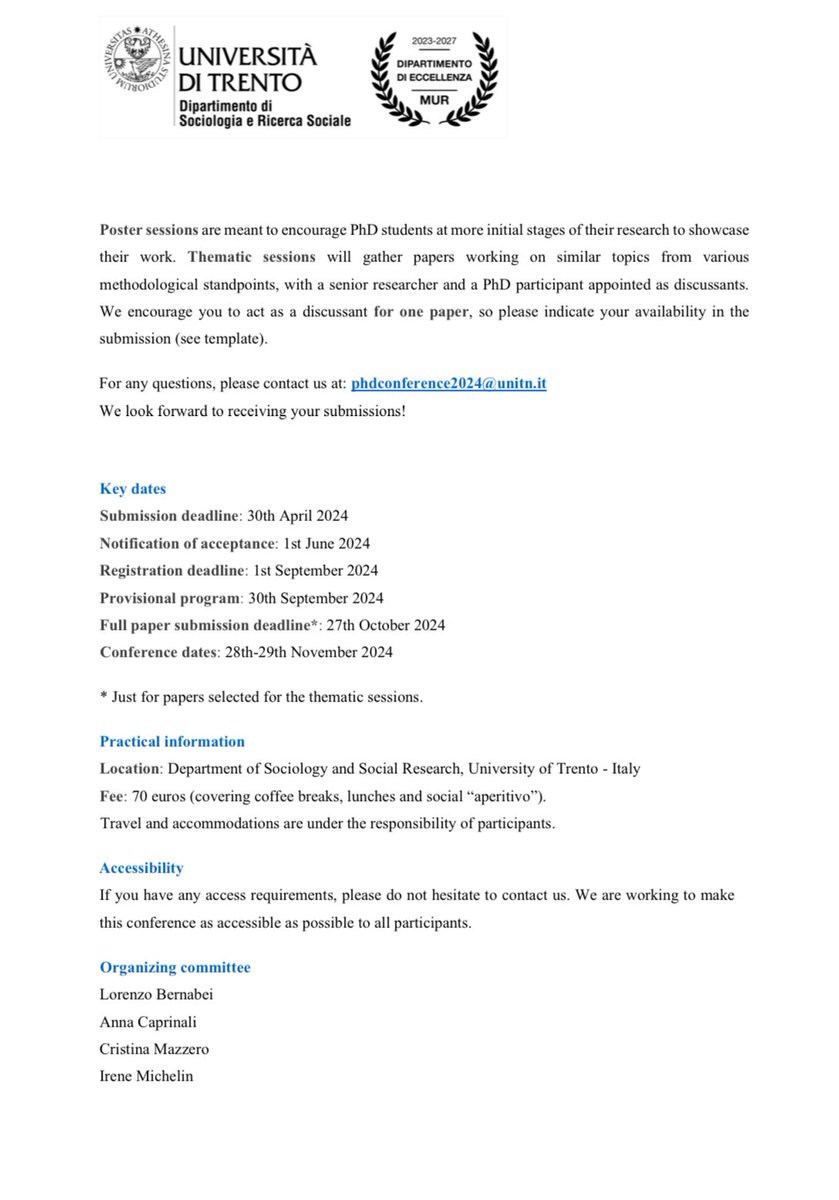
Are you a PhD student in any field of sociology? Would you like to share your work with peers and get useful feedback? 💡
Don't be shy and apply to our Doctoral Conference at the Dep. of Sociology and Social Research at @UniTrento! ↘️
⏳Few weeks left to apply for the Joint Doctoral Conference on Sociology 📚 to be held in Trento (Italy) on November 28th-29th, 2024 🗓️
We welcome contributions from PhD students at any stage of their work.
🚨The call for papers closes on April 30th, 2024
🏔️ See you in Trento