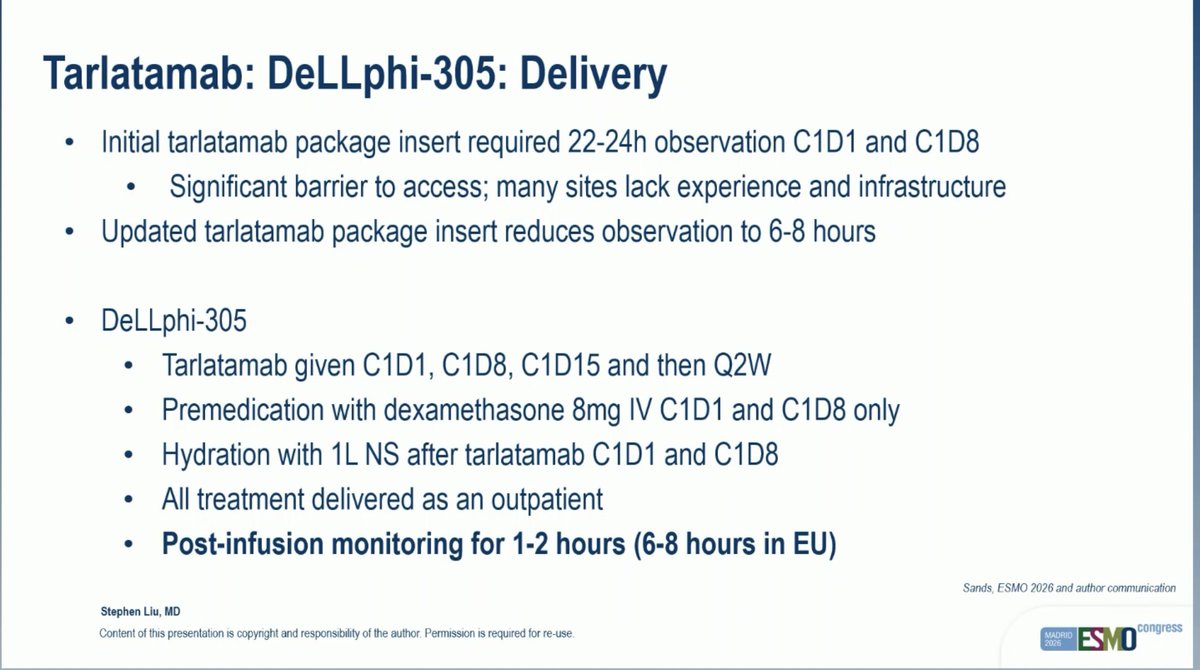
Pivotal #DeLLphi305 data @sands_jacob 👏, w/ a phenomenal discussion by @StephenVLiu w/ two standout quotes:
⭐️ "Innovation loses impact if it doesn't reach the patients who need it most"
⭐️ "It is not enough to know if the drugs work or how well they work, we need to know why and in whom they work to make better individualized decisions"
We join the oncology community in mourning the passing of Dr. Rachna T. Shroff, a renowned GI cancers expert and a dedicated ASCO volunteer. We are humbled by her dedication and strive to honor her legacy of commitment and altruism.
Read more: https://t.co/yNlVhoASQi
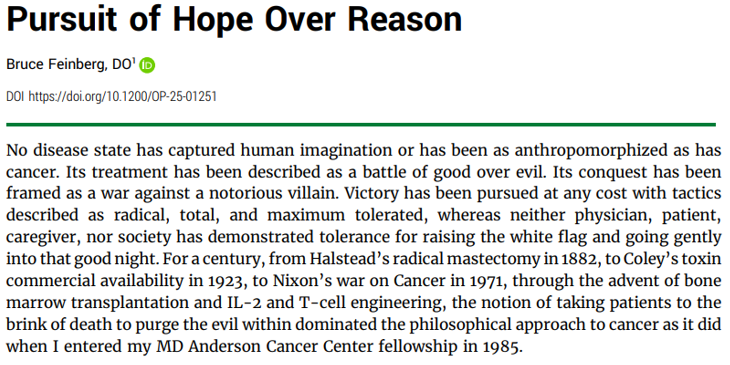
Every cancer organ gets the same sequence: surgery is the standard, then trials show you often don't need it, then surgery becomes the salvage.
Breast, larynx, limb, rectum, esophagus, mesothelioma.
Bladder is next. Patients want their organs. 🧵
Highlighted Studies at #WCLC26
1️⃣ HARMONi-2
In treatment-naïve, advanced NSCLC with PD-L1 ≥1%, ivonescimab improved PFS (11.1 vs 5.8 months; HR 0.51) and OS (30.8 vs 22.6 months; HR 0.73) compared with pembrolizumab.
This is a genuinely positive trial, but it does not tell the same story for all PD-L1-positive patients. The OS benefit was clear in the ≥50% subgroup, whereas the HR was 0.85 with a confidence interval crossing 1 in the 1–49% subgroup. Moreover, pembrolizumab monotherapy is not the real comparator for most patients in this group; chemo-IO is.
2️⃣ SWOG S1827/MAVERICK
In patients with SCLC who had completed initial treatment and had no brain metastases, MRI surveillance was compared with MRI plus PCI. MRI alone reduced the risk of cognitive failure or death (HR 0.60); grade ≥3 toxicity was 0.8% vs 7.9%. Interim OS and brain metastasis-free survival were not different.
The study does not show that MRI prevents brain metastases more effectively. It shows that adding PCI has so far caused cognitive and serious toxicity without demonstrating a survival benefit. If regular MRI and prompt salvage treatment can be provided, routine PCI is now difficult to justify. Still, it is too early to say that PCI is completely dead before the final OS analysis.
3️⃣ TAISHAN-302
In relapsed SCLC, the B7-H3 ADC Tam-Peli improved OS from 9.4 to 13.3 months versus topotecan (HR 0.46); PFS was 7.4 vs 2.8 months and ORR was 59% vs 10%. Grade ≥3 treatment-related toxicity was also lower.
ARTEMIS-008
In relapsed SCLC, another B7-H3 ADC, Ris-Rez, also outperformed topotecan: OS was 18.5 vs 10.3 months (HR 0.46), PFS was 7.2 vs 3.0 months, and ORR was 58% vs 13%.
Together with TAISHAN-302, this result strongly confirms that B7-H3 is a genuine target in SCLC. However, the median OS figures from the two trials cannot be used to conclude that Ris-Rez is better. The choice between the two ADCs may be determined more by ILD, hematologic toxicity, and ease of administration than by efficacy figures. The efficacy of either agent after tarlatamab maintenance also remains unknown.
5️⃣ EVOKE-03/KEYNOTE-D46
In metastatic NSCLC with PD-L1 ≥50%, sacituzumab govitecan plus pembrolizumab increased ORR compared with pembrolizumab (%56 vs 44%) and numerically prolonged PFS, but the prespecified statistical threshold was not met. OS was 21.5 vs 22.8 months, duration of response was almost identical, and grade ≥3 toxicity was 56% vs 17%.
Adding the ADC shrank tumors in more patients but did not change the natural course of the disease. Considering the similar duration of response, lack of OS benefit, and substantial toxicity, this combination has no place in clinical practice.
@avataram@RudraVS Tapeworm is almost nonexistent outside of india/ Mexico. >99% this is from her trip to India in 2007 even if it became apparent much later.
Value of immunotherapy is the long tail to the OS curve, but what about the other side of the KM? Report of CheckMate 227 (NSCLC) @CCR_AACR noted rapid progression with 1L nivo/ipi in 40% (vs 26% with chemo). Associated with high neutrophil:leukocyte ratio, low TMB, PDL1 0%, low albumin, higher-than-median baseline monocytic myeloid-derived suppressor cell (M-MDSC). Increased early detriment not seen with nivo/ipi plus chemo (CheckMate 9LA).
https://t.co/VAb19CwY5n
This graph tells a better story than the average.
Almost immediately after graduation, doctors start quitting, and it drops at a continuous pace for 25 years.
No plateau. Just continuous decay.
Looks as bad as some of the survival curves in oncology!
20% are gone in 5 years! 5 years!!
They train for 7 years after college and quit in less than that. They get out as soon as they can!
That says one thing clearly - Graduating doctors are realizing that this is not what they signed up for
The gaslighting during med school and residency fades fast in private practice. Doctors are not dumb.
Suicide is now the LEADING cause of death for US medical residents.
We are losing 500 physicians a year. That is an entire med school class. Stop demanding "resilience" from doctors and start fixing the system.
Tie executive bonuses to wellness, not just RVUs.
Link to the recent episode is in the comments 👇
I have spent twenty years as a cardiologist. I have held dying patients’ hands at 3 a.m. I have delivered news that shattered families. Through all of it, I have clung to one simple belief: doctors exist to protect people, especially the vulnerable.
Then I read the Jeffrey Epstein files. And I felt something I rarely feel in my profession: SHAME.
The documents reveal that Dr. Peter Attia—a physician, longevity expert, bestselling author, and host of one of the most popular health podcasts in America—maintained a close friendship with Epstein for years after Epstein’s 2008 conviction for procuring a minor for prostitution. The emails between them are jarring. Crude jokes. Plans to meet. A relationship so important to Attia that, according to the files, he once prioritized a New York meeting with Epstein over returning to his infant son’s bedside in the ICU.
His wife had begged him to come home. He chose Epstein.
Let me be clear about what we already knew in 2008. Jeffrey Epstein pleaded guilty to crimes involving a child. He was a registered sex offender. This was not a rumor. It was not gossip. It was a matter of public record.
And yet, from 2014 to 2019, Attia maintained this friendship. He joked in emails about having “JE withdrawal.” He expressed concern about Epstein’s “legal troubles”—not about the victims, the girls, the children whose lives Epstein destroyed.
In his public statement this February, Attia framed his choices as naivety. He claims he saw Epstein’s crimes as “prostitution-related” until a 2018 Miami Herald exposé revealed the full horror. He calls his emails “juvenile.” He says he has grown.
Maybe he has. People can change.
But here is what troubles me as a physician: Where was the instinct to protect?
Every doctor in America is trained as a mandatory reporter. The American Medical Association’s code of ethics is explicit: if we have “reasonable cause to suspect” child abuse, we must report it. We do not need proof. We need suspicion. The law exists because doctors have access to information and influence that ordinary citizens do not. We are positioned to notice what others miss. We are trusted to act.
Now, mandatory reporting typically applies to clinical settings—a child who shows up in your office with suspicious bruises, a patient who discloses abuse. Attia was not Epstein’s physician. He was his friend.
But ethics do not stop at the clinic door.
When a physician knows someone is a convicted child sex offender and chooses to maintain that friendship—to joke around, to share meals, to prioritize that relationship over his own family—what message does that send? What does it say about our profession’s values?
Some have called for Attia’s medical license to be revoked. I understand the impulse. But I think the problem is bigger than one doctor.
Jeffrey Epstein did not just befriend physicians. He bought access to science itself.
Between 1998 and 2008, Epstein donated over $9 million to Harvard University. He funded a program in evolutionary dynamics. He gained an office on campus. He became a “visiting fellow” in the psychology department—despite having no academic credentials whatsoever.
After his 2008 conviction, Harvard officially stopped accepting his money. But the relationships continued. Former university president Lawrence Summers kept meeting with him, reportedly soliciting advice and indirect donations. Faculty members attended Epstein’s now-infamous dinner parties, gatherings that were notably all-male, where conversations veered into pseudoscientific musings about eugenics and “improving” the human race.
Epstein understood something that the rest of us are only beginning to reckon with: money opens doors that should stay closed.
He used his wealth to position himself as a “patron of science.” He cultivated relationships with Stephen Hawking, with geneticists, with AI researchers. He hosted conferences. He funded research. And in return, he got something priceless: legitimacy.
When a predator can sit at dinner with Nobel laureates, when he can stroll across Harvard Yard with an office key in his pocket, when leading physicians call him a friend—he becomes harder to see as a monster. The credentials of the people around him become his camouflage.
This is how institutions fail.
It is not dramatic. It is not a single corrupt decision. It is a thousand small compromises. It is a grant application that needs funding. It is a dinner invitation that seems harmless. It is the thought: He already served his time. Who am I to judge?
It is, as geneticist George Church put it, “nerd tunnel vision”—the tendency to focus so intensely on research that ethical questions blur into background noise.
But there is another name for this: complicity.
When MIT’s Media Lab was revealed to have accepted hidden donations from Epstein, the director resigned. The institution launched investigations. There was accountability, however belated.
In medicine, we have been slower to reckon.
Attia is not an outlier. He is a symptom. He represents a growing class of “influencer doctors” whose brands depend on access, on elite networks, on proximity to wealth and power. His practice reportedly charges clients $150,000 a year. His podcast reaches millions. His bestselling book promises to help readers live longer.
None of this is inherently wrong. But when the model rewards networking over service, when career advancement depends on who you know rather than who you heal, the profession drifts from its purpose.
And when the people you know include convicted child sex offenders, the drift becomes a fall.
Public trust in medicine is fragile. We have spent years watching it erode—through pandemic misinformation, through pharmaceutical scandals, through a healthcare system that often seems to value profit over patients.
We cannot afford to give people more reasons to doubt us.
The Epstein files are a gift, in a way. They are a mirror. They force us to ask uncomfortable questions: What are we willing to overlook for funding? For access? For prestige? Where do we draw the line between professional ambition and moral compromise?
And they demand that we answer.
Here is what I believe we must do.
First, we need stronger ethical guidelines. The AMA should clarify physicians’ responsibilities when they encounter evidence of abuse outside clinical settings. Mandatory reporting should not be a technicality we hide behind.
Second, institutions must vet their donors. Harvard, MIT, and countless other universities accepted Epstein’s money with minimal scrutiny. After the scandals broke, they scrambled to distance themselves. This is backwards. Transparency should come first, not last. Anonymous donations to research institutions should be banned. Donor backgrounds should be reviewed before checks are cashed.
Third, we need to diversify how science is funded. When researchers depend on wealthy individuals for grants, they become vulnerable to manipulation. Public funding, foundation support, and transparent giving structures can reduce this dependency.
Fourth, and most importantly, physicians must hold ourselves accountable. We cannot wait for institutions to act. Each of us must decide what we stand for.
I am not calling for perfection. We are all flawed. We all make mistakes. But there is a difference between a mistake and a pattern. There is a difference between ignorance and willful blindness.
When a man is convicted of crimes against children, you do not joke around with him. You do not make him a priority. You do not choose him over your own family.
You walk away.
I became a cardiologist because I wanted to heal. I wanted to be there for people in their most frightening moments. I wanted to live by the oath I took: first, do no harm.
That oath means nothing if we harm by association. If we give cover to predators. If we let ambition eclipse integrity.
Peter Attia may have changed. I hope he has. But the profession’s reckoning cannot depend on one man’s growth.
It depends on all of us.
It depends on choosing patients over prestige, service over access, and conscience over convenience.
It depends on remembering why we became doctors in the first place.
Among patients with immune checkpoint inhibitor–related cutaneous adverse events, dupilumab therapy was associated with lower 5-year mortality compared to no dupilumab or systemic corticosteroids.
https://t.co/7SaH03bhCb
Is it sexy? No.
Is it incredibly important for how we treat patients? Absolutely 🧠🧬
For over 20 years, 6 months of oxaliplatin plus a fluoropyrimidine has been the default for stage III colon cancer, and often high-risk stage II and rectal cancer. The cost has always been cumulative neuropathy that can follow patients for life ⚡️🖐️
The SCOT trial, the largest study in the IDEA collaboration, gives us long-term clarity with nearly 6,100 patients and more than 6 years of follow-up:
📊 5-yr DFS identical with 3 vs 6 months: 72.9% vs 72.9%
📈 5-yr OS identical: 82.4% vs 82.4%
✅ Noninferiority for OS formally met for 3 months
Where this really matters clinically:
🟢 CAPOX clearly supports 3 months
🟢 Low-risk stage III shows no OS penalty
🟡 Even high-risk disease sees only tiny absolute OS differences
⚠️ Meanwhile, neuropathy nearly doubles when oxaliplatin is extended to 6 months. Many patients pay a lifelong price for minimal benefit.
SCOT also uniquely included rectal cancer patients treated with upfront surgery, and here too, 3 months held up. This fits perfectly with modern TNT strategies 🧩
Takeaway:
This isn’t flashy, but it’s foundational. For most patients with localized colon or rectal cancer, 3 months of adjuvant CAPOX is enough. Six months should be the exception, not the rule, and always a shared decision 🤝
Sometimes the most important advance is knowing when to stop.
@OncoAlert@TheGutOncLab
#GI26
https://t.co/geX09H4ltq
Dr Rajkumar I respect you for all you have done (way more than me for field of myeloma by a billion) but strongly disagree. If the care in a control arm in a clinical trial strongly deviates from standard of care then we cannot follow a positive result as a new standard of care.
🚨 FDA Approval Alert: this 🧵 represent my opinion:
On Nov 6, 2025, the FDA approved daratumumab high-risk smoldering multiple myeloma (SMM).
🧬 First therapy approved for this stage of disease based on AQUILA study
#Myeloma#FDA
1/I agree with treating patients with high-risk SMM, but I prefer using a validated SMM risk score tool—more precise than the traditional 20/20/2 model—to identify truly high-risk patients. Highly recommend it. #Myeloma
#USMIRC @USMIRCNEWS@US_FDA@OncoAlert #mmsm #MedEd #MedTwitter @Larvol@SaudiMyeloma
After moving beyond anthracyclines, we’re now moving beyond carboplatin for HER2+ disease.
We now know that:
- THP x4-6 leads to pCR 50-60% of pts
- adding T-DXd x4 further boosts pCR in high-risk pts
- in case of RD, two ADCs can optimize outcomes
Here’s my future algorithm:
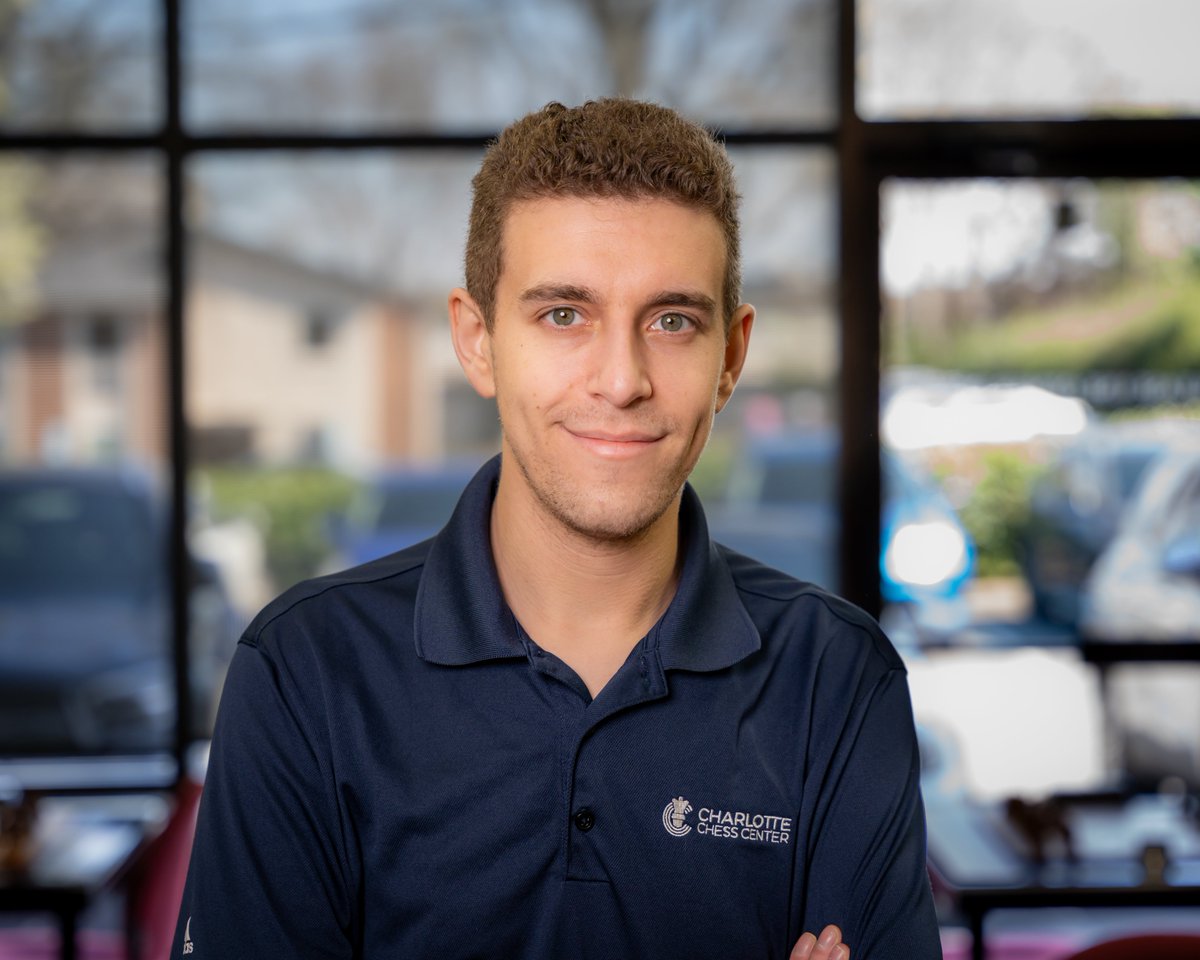
I first met @GmNaroditsky Daniel Naroditsky, “Danya,” in 2008 on a cruise ship, of all places. He was the reigning World Under-12 Chess Champion and was on the front page of Chess Life. My mom, who can’t tell a knight from a bishop, pulled me aside after randomly passing the Naroditsky family and said, “Isn’t that the boy from your chess magazines?” and quickly ran to introduce us. Danya was probably already twice my rating despite being a couple years younger, and that may have been the last time that I was taller than him.
As two introverted boys (some things never change), we let our parents do all the talking, and soon said our goodbyes. I’ve never told anyone this cruise story until now. I’d always assumed there would be a time and place to laugh about it with him. Or maybe I was too shy to admit that someone who was such a hero to me would become one of my best friends more than a decade later.
Fast forward to 2015, when Jennifer Christianson had the brilliant instinct to bring Danya on as an instructor at the Castle Chess Camp, which I had attended for years. Watching Danya teach chess was something like watching Mozart in front of a piano. He was simply the most talented and passionate chess educator I’ve ever seen – generous with his time, and so damn thorough.
Over the next couple years, my future boss @PeterGiannatos also started teaching at the camp, and we all became great friends (shoutout to Magesh Panchanathan too). We were all obsessed with chess, food, jokes, politics, ping pong, and staying up late. Danya taught at Castle Chess annually since 2015 until he took a break this year. He had promised me to return in 2026, and a promise from Danya is worth its weight in gold.
Peter stayed in touch with Danya, always asking him whether he was going to attend grad school after Stanford or pursue chess in some way, shape, or form. To make a long story short, Danya was torn, but he eventually made the decision that we all love him for today. It was courageous of him to turn his back away from academia and the “traditional route” to which he had already devoted so many resources (and he was equally talented there as well), especially as the Charlotte Chess Center was much less of a powerhouse institution than it is today. And what a decision it was - everyone in Charlotte was so thrilled that he had chosen to move here, but no one was happier than I was.
During COVID, Danya’s decision and subsequent hard work paid off in ways no one could have imagined. Not only was he a top online chess player, but his talent in teaching and speaking about chess led him to build a very successful brand with Twitch streaming, Youtube content, and Chesscom commentary. Meanwhile, he became an integral part of the Charlotte Chess core friend group during those unique lockdown days when us young professionals really needed each other socially. Danya was America’s childhood chess sweetheart, all grown up and succeeding in all walks of life - playing online blitz vs. Magnus and Hikaru by day, and watching “Billions” with his buddies and some Thai food in Virginia's apartment by night.
After the pandemic, Danya’s trajectory kept climbing, as he did everything from writing a New York Times chess column to being the “go-to” commentator, along with inseparable content partner Robert Hess, on elite World Championship events. His family was proud. His friends were proud. The Charlotte Chess community was proud. He loved his life in chess and everyone around him.
Through it all, the most impressive thing to me is how genuine Danya remained considering his fame. If anything, his success made him value his family, friends, and relationships even more. He was so down to earth – the most willing Grandmaster to host a party at his place or go on a coffee run for his colleagues. Though he remained an introvert throughout his life, he still loved coming to all of our homes for dinner or to the CCC to play in a Blitz tournament no matter the level of competition – 800, 1800, or 2800.
When Danya would leave a party early, it would be to go play some online blitz and bullet – he loved chess more than anyone, and played virtually every day of his adult life. We all loved him for that and loved following his career. I remember walking into a movie theater when Danya had an advantage against World #3 Fabiano Caruana at the 2021 U.S. Championship, and could not put my phone down during the movie. He won that game. I also remember texting @MayaBMyers for minute-by-minute updates on Danya during the American Cup Blitz in which he had incredible results in his favorite format, over-the-board blitz. Finally, I remember calculating tiebreaks for him during the recent World Blitz Championship in New York – I informed him that he should play for a win to have a shot of qualifying to the final stage, but he secured an early draw to ensure a strong tied-for-first result to appease certain prying eyes of the chess community.
Danya confided many things to me, and one that I can share is that he had concrete plans to make a return to classical chess in the next year and push towards the top 50 players in the World. He had just played the U.S. Open, and had his eyes on the 2026 Reykjavik Open and other events. For a player of his talent not to achieve his full potential had always nagged him, and to me, there was little in the way of him achieving his goals.
All of these friendships, memories, and chess goals are what makes it so hard to say goodbye to you, Danya. No more fireside chats. No more blitz battles with @BortnykChess or time odds with Dominique. No more all-nighter ping pong duels.
To those who have reached out with heartfelt condolences and questions about the circumstances of his passing: no one has answers for you right now. Please stop asking. Any speculation is likely far from the truth. I implore everyone to trade their curiosity in for compassion, and sincerely think of those most affected by Danya’s passing. The Naroditsky family needs privacy, and I urge everyone to honor that.
I can tell you two things with absolute certainty: 1) Danya’s support group never faltered. We loved him for every moment of his life, and will continue to love and miss him forever. 2) There will be time in which we, amongst others I’m sure, take concrete steps to forever enshrine Danya’s legacy in the chess world. There will be a time and place to show your support. When that time comes, actions will speak louder than words.
It is beautiful to see the countless articles, posts, and messages celebrating Danya’s life. Have you ever seen someone so universally loved by millions of people? I wish he could have understood that when he was still with us. He admired his colleagues in the professional chess world and sought the validation and respect of his fellow Grandmasters in an obsessive but endearing way. To those who seek retribution against certain members of the chess community, I personally ask you to remember that this time is about Danya Naroditsky and no one else. Over the past few days, I have found that positivity, however impossible, is what gives me solace during this time. Danya would never want such negative energy expelled on his behalf. Savor your favorite memories of him.
Over the past few days, I’ve found myself asking myself the same questions repeatedly: How is it fair for such a beautiful family to endure such a painful loss? How is a young friend group supposed to heal after having a key member cruelly taken at the age of 29? How will the Charlotte Chess community ever recover from this? Why was Danya not at least able to enjoy the fruits of marriage and things outside of chess before departing? When will I wake up from this nightmare and have one more Barbecue or Mediterranean dinner with him? Of all the paths that fate could take, why this one? I’ve come to realize that I simply have no answers to these questions.
Many of you will remember Danya as an eloquent commentator, passionate teacher, and formidable opponent. Of course, you’d be right about all of that. But I will remember him differently. Danya, you were an amazing friend and the best person I've ever known. I’m so sorry it ended this way. I am truly thankful that you chose to do what your heart wanted to do during your short life, and that you were able to find true love in your final years.
I’ve always tried to keep emotion to a minimum. I now realize how stupid that is, and today, it is simply not possible. Today, I am simply broken. Today, I don’t know how to say thank you to you enough, Danya. Today, I hope that this goodbye will suffice. A huge part of me, of us, of chess, is gone forever.
Rest in peace, Danya Naroditsky. I know you are already up there blitzing with the legends. Hope you brought your chess clock.
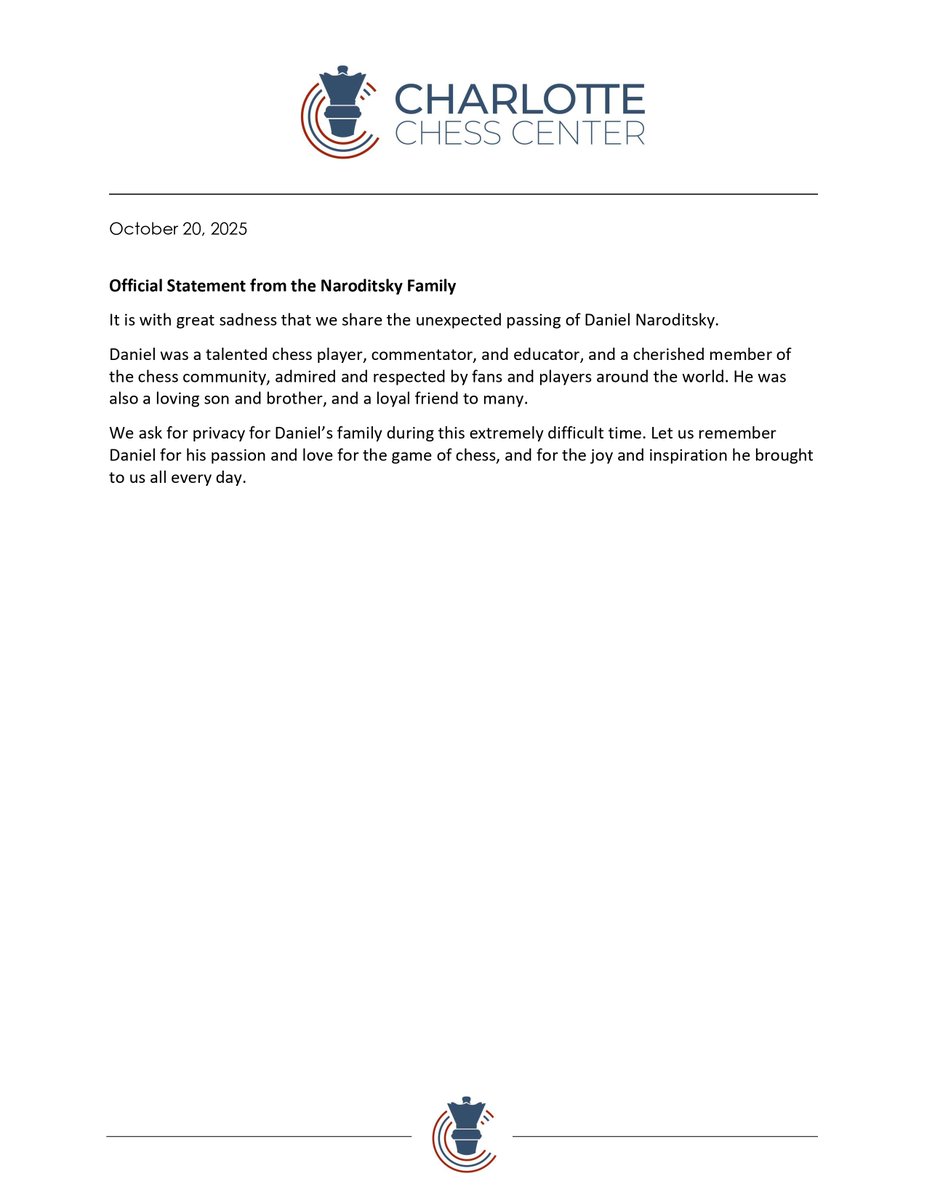
The Naroditsky family shares the sad news of Daniel’s unexpected passing. Daniel was a talented chess player, educator, and beloved member of the chess community. We ask for privacy as the family grieves.
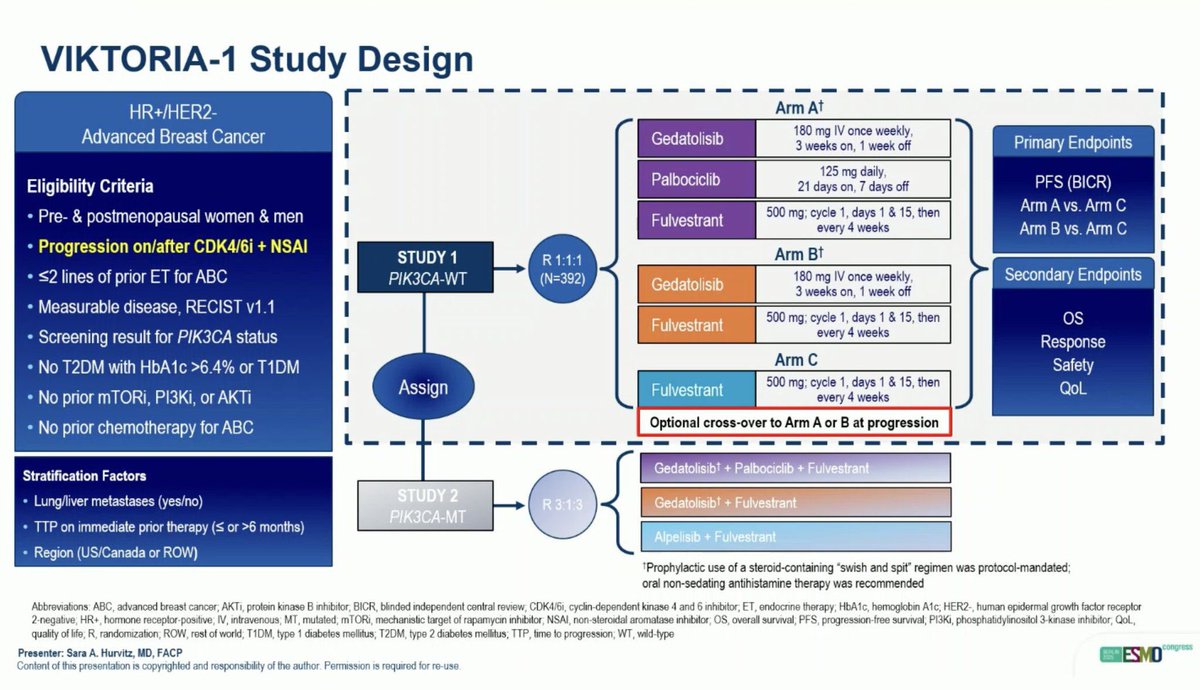
4. #VIKTROIA1: PhIII, Gedatolisib (IV, PI3K/mTORi) + Fulv +/- Palbo vs. Fulv in HR+ after CdK4/6i
- mPFS 9.3mos vs. 2.0mos triplet vs. Fulvestrant in WT (Fulv alone is not what we do today in our practice)
- Main AEs were Gr1/2. Hyperglycemia 9.2% and diarrhea 16.9%.
6/13
3. #evERA Breast Cancer: PhIII, Giredestrant (oral ER antagonist + degrader) + everolimus vs. ET + everolimus in HR+ after CDK4/6i:
- mPFS ~10mos vs 5.5mos (HR: 0.38) in ESR1m pts
- OS immature (HR: 0.62)
- Combos to likely become SoC for ESR1m
5/13