As the second Trump-Xi Summit approaches, it's important we understand the exact nature of the CCP's threat. It isn't merely political, economic, or military - it is civilizational.
The Vandenberg Coalition's latest video features leading experts @BerkowitzPeter, @marykissel, Elliott Abrams, @michaelsobolik, and @GraceJDrexel on why the ideological battle with China is the most important, and why preserving freedom is central to our victory.
https://t.co/y6Xc3AJRUS
Finishing our 2026 National Security Fellowship strong with a great panel on defense policy! Is the United States strong enough? @Tim_Morrison, @MarkCMontgomery, and @Brad_L_Bowman go in depth in an insightful conversation, moderated by Policy Fellow Darcy Weber!
Takeaways:
- American power abroad is critical for delivering on economic prosperity for Americans at home.
- The United States isn’t facing a problem of overcommitment—we’re facing a problem of being under resourced. We cannot build a military on continuing resolutions alone, which fail to change spending levels.
- Our adversaries know the value of having and leveraging partners. The United States must learn lessons from, and communicate with, Ukraine, Israel, and Taiwan to bolster our own defense.
Day Two of our 2026 National Security Media Fellowship is off to a great start with an engaging conversation between three of the sharpest minds focused on Europe! Vandenberg Coalition Chief of Staff Sydney Novak is moderating as @SethGJones, @mobbs_mentality, and @peterrough explore whether Europe and America are aligned!
Takeaways:
- While there are tactical divergences between Europe and the United States, we are still very much aligned on our principles, values, and shared interests. NATO is stronger today than ever before when it comes to cooperation.
- Policymakers should not mistake activity for progress in Ukraine. Russia will ramp up its attacks against Ukraine’s economy, infrastructure, and demography as we go into winter. Russian leadership views the United States as an adversary.
- Europe must build up deterrence in its territory to hold off Russia so America can better use resources to deter China. The United States must do a better job communicating the threat posed by our adversaries collectively. Currently, U.S. adversaries are winning the information war, undermining Western resolve to fight back.
Next up: Is America Strong Enough?
Wrapping up Day One of our 2026 National Security Media Fellowship with another all-star panel, moderated by Senior Policy Director @CorbanTeague! @RHFontaine, @continetti, and @michaelallenJMA tackle a central question of today’s political world: “Is MAGA foreign policy making us safer?”
Takeaways:
- The world is better off without Maduro and an emerging Iranian nuclear program, but America remains too weak in the Indo-Pacific.
- America’s Middle East presence makes sense, given the administration’s focus on energy, foreign capital, and AI investment, but it must continue to work on “job-selling” and messaging.
- Tariffs on China are very helpful to protect our critical supply chains and preventing China from swamping our markets, but we must be careful about applying them more broadly.
- The administration deserves tremendous credit for the Europeans increasing their share of the defense burden, but the continued ragging of our allies may force them to question our reliability as an international partner.
- Two groups make up the MAGA base: longtime Republicans who believe in a nationalistic and hawkish foreign policy and the low propensity voters who came out for President Trump in 2024 with a “Come Home, America” mindset.
Happening now: Vandenberg Coalition Chairman Elliott Abrams and @AmbNathanSales discuss the lay of the land in the Middle East with Policy Manager Ethan Minkoff at our 2026 Media Fellowship! Nobody better to give our fellows the top line on the region leading the headlines!
Takeaways:
- American interests in the Middle East are more secure today due to the demolition of Iran’s nuclear program, the weakening of the Iranian economy, and reduced Chinese and Russian presence in the region.
- Any deal between the United States and Iran should focus solely on the Strait of Hormuz because Iran cannot be trusted to uphold a nuclear agreement. However, we do not need a deal to curtail Iran’s ability to threaten U.S. interests—this can be achieved through narrow military operations and economic measures.
- There is a scarcity problem in the Middle East when it comes to military resources. The solution is alliance building, not American retrenchment.
- The terrorism landscape has changed over the past 25 years. Terrorist organizations are now more fractured, diffused, and reliant on spin-off groups, homegrown individual actors, and Iranian and Russian state sponsorship.
Next up: Is MAGA Foreign Policy Making America Safer?
The second panel of our 2026 Media Fellowship just wrapped! @ConnorPfeiffer and @JuanCru56225365 took on the Donroe Doctrine’s impact in Latin America in a great conversation with Executive Director Carrie Filipetti!
Key takeaways:
- Our advantage over China in Latin America is private investment. It’s on the US government to incentivize it.
- The Chinese are transforming the lives of Latin American citizens by providing them with Chinese-made goods. The United States needs to find a way to feed consumerism in Latin America.
- Above all else, Venezuela needs to restore the political rights of the opposition and journalists for a return to democracy to be possible.
Next up: Are American Interests in the Middle Finally Secure?
The Vandenberg Coalition’s 2026 Media Fellowship opened with a strong start this morning! @CraigMSingleton, @tozzi_piero, and @DavidFeith gave their takes on whether the Pivot to Asia is dead.
Takeaways:
- The AI race is central to our strategic competition with China.
- America’s “Pivot to Asia” is not dead, merely stalled.
The CCP is exploiting gaps in U.S. export controls to fuel its AI and military ambitions. Congress must pass the MATCH Act to stop enabling the CCP’s access to critical compute power. Stronger export controls are a national security imperative.
A Chinese university with deep ties to the Chinese military purchased NVIDIA’s advanced H200 AI chips last month despite being on the U.S. export blacklist, exposing gaps in efforts to prevent the CCP from accessing critical American technology.
Congress must close these gaps and secure American AI dominance by advancing stronger bipartisan export controls in the year-end NDAA. https://t.co/4t6VnOYks0
The U.S. cannot let China dominate the AI race. Congress must pass bipartisan export control legislation to protect American innovation and sustain our national security.
For Veterans Day @TheFP, I wrote about the extraordinary story of Army veteran Hans Kasten, whose refusal to betray the Jewish American POWs imprisoned with him to the Nazis gives an opportunity to reflect on the nature of moral courage, and what it can and cannot accomplish...
On November 11, 1918, the guns of World War I fell silent.
For nearly 2 million American Soldiers still in France, the fighting was finally over.
But their journey home would help shape a tradition that continues more than a century later: Veterans Day. (1/6)🧵
This Veterans Day, Veterans on Duty honors the men and women who have answered our nation’s call to serve. For more than 250 years their courage, sacrifice, and commitment to something greater than themselves have helped preserve the freedoms we enjoy today. 🇺🇸
🎯 Senator @TimSheehyMT “History often vindicates difficult decisions that were deeply unpopular in their time. Our fight against Iran will prove no different. This isn’t a fight for Israel or Saudi Arabia. It is a fight for Western civilization and the security of American families.”
https://t.co/KIkUpIv3LP
We must continue to remind ourselves of WWII and the sacrifices it took to win it.
Read @annetlord's reflection on 'Band of Brothers': https://t.co/mwajxRHuks
VOD Board Member and @USMC Veteran @Exner_Garrett explains how he was called to serve in the wake of the September 11 attacks, and why he decided to join the Marine Corps in the early days of the GWOT.
Watch the full conversation here: https://t.co/63BCTiuym7
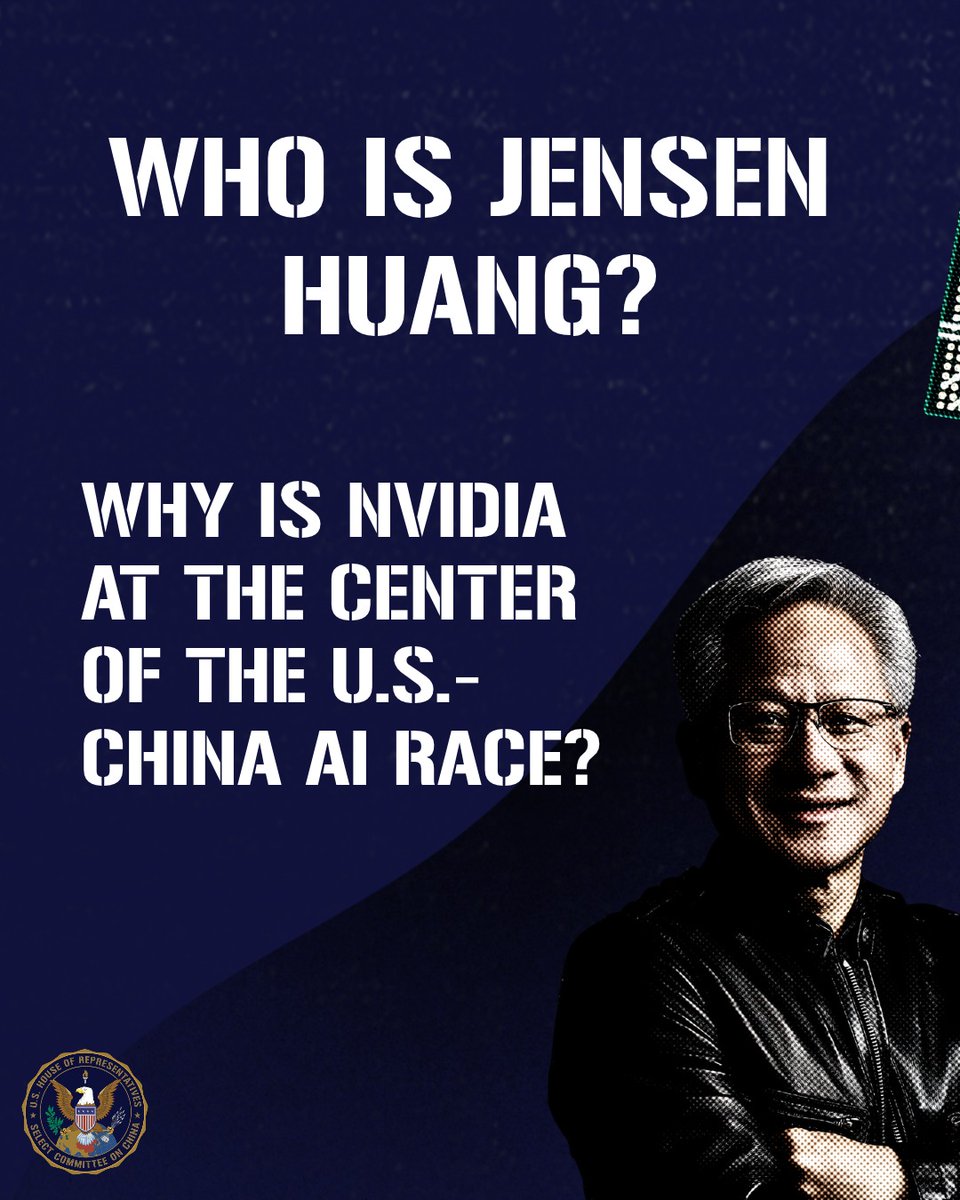
Chairman @RepMoolenaar said it best: “We have basically a Cold War race with technology. We cannot allow the premier company at the forefront of this to, in some way, be irresponsible.”
Moolenaar, Chairman @RepBrianMast, and Chairman @RepRickCrawford have sent a letter to NVIDIA CEO Jensen Huang requesting he appear before their three committees amid reports raising serious national security concerns about the PRC’s access to sensitive U.S. technology and information. https://t.co/Irqlw2JVYQ