A German psychologist proved in 1885 that cramming erases what you learned within 48 hours. He published the fix in the same book. Almost no school on Earth has adopted it in 140 years.
His name was Hermann Ebbinghaus.
He had no lab. No funding. No colleagues.
He worked alone in a room in Berlin and ran every experiment on himself. He spent years memorizing thousands of nonsense syllables — made-up combinations like DAX and BUP, strings with no meaning — so that prior knowledge could not contaminate the results.
Then he tested his own recall at intervals. Twenty minutes. One hour. Nine hours. One day. Six days. Thirty-one days.
What he found became one of the most replicated findings in the history of psychology.
Two-thirds of everything you learn is gone within 24 hours if you do not return to it. Within a week, the curve flattens near zero. The brain does not store what it does not revisit. It treats unused information the way it treats everything else it does not need. It discards it.
He drew this curve in 1885 and called it the forgetting curve.
Then he found something else in the same data.
Students who spread their study sessions over multiple days retained far more than students who spent the same total hours studying in one block. Not slightly more. Dramatically more. The brain needed time between exposures to consolidate the material into something durable.
He called this the spacing effect.
Same information. Same total hours. Completely different outcome depending on when you spread the hours out.
The finding has been replicated over 250 times. A 2006 meta-analysis in Psychological Bulletin covered 254 studies across every age group and every subject. The effect held every time.
A German journalist named Sebastian Leitner built a physical flashcard system around it in 1972. An open source app called Anki turned that system into software in 2006. Medical students who use Anki to pass board exams are not working harder than everyone else. They are working in the only pattern the brain actually responds to.
The most uncomfortable part of all of this is what happened after Ebbinghaus published.
Educators read the research. They understood what it showed. They kept the cramming.
The school calendar was already built around it. Semester exams. Finals week. One concentrated block of review before the test and then nothing. The entire architecture of how most schools schedule learning is optimized for the forgetting curve, not against it.
The lesson is not that you need more time to study.
It is that the same time, distributed differently, produces a completely different brain.
Ebbinghaus proved this in 1885 with no budget and no institution. He ran the experiment on himself because no one would run it for him.
The fix has been available for 140 years.
Almost nobody who designs schools has used it.
Athletes, politicians, CEOs, and podcast guests, many high-profile people seem to do it instinctively.
It’s known as the “steeple gesture”, pressing the fingertips of both hands together while speaking, listening, or thinking.
According to body language experts and psychologists, this gesture is strongly associated with confidence, authority, concentration, and a sense of control in conversation. People often do it subconsciously when they feel calm, self-assured, or intellectually dominant in a situation.
That’s why it frequently appears during interviews, political speeches, negotiations, debates, and podcasts. Unlike more aggressive hand movements, the steeple projects quiet, composed confidence rather than force.
Of course, the internet took things further. Online conspiracy theories started claiming the gesture was a secret “elite signal” used by powerful figures to show membership in hidden groups or signify control. There is no credible evidence to support these claims.
In reality, psychologists explain that symmetrical hand positions like this are a natural human behavior when someone is concentrating or trying to appear poised and thoughtful.
Still, once you start noticing the steeple, you see it everywhere. And that’s what makes body language so intriguing: small, unconscious movements can powerfully shape how others perceive confidence, intelligence, and authority, even without a single word being spoken.
I have seen Appeals dismissed not because the case was weak, but because the Grounds were drafted like Arguments.
The core strategic difference is that grounds are the foundational basis for why an adjudication order is flawed, whereas arguments are the specific points built upon those grounds during the hearing.
In the larger context of litigation strategy, your grounds must never be argumentative. For example, instead of arguing exactly how the officer misinterpreted a specific contract clause, your ground should broadly state that the order is "contrary to facts" for failing to derive facts from the contract and introducing alien facts.
Strategically, you should also avoid citing specific case laws in your grounds. If a cited precedent is overturned before your hearing date, you could be left without grounds to argue. By keeping your grounds broad, such as simply stating the order is "contrary to judicial authorities", you retain the flexibility to argue the most current, binding precedents during your oral submissions.
In 2021, scientists strapped wrist trackers on 88,026 adults and watched when they fell asleep for nearly six years. The bedtime with the lowest heart disease risk was 10 to 11 PM. Going to bed past midnight raised heart disease risk by 25%, and falling asleep before 10 PM was almost as bad at 24% higher. The numbers held even after they adjusted for total sleep duration, smoking, weight, and cholesterol.
The reason only got figured out in the last 15 years. In 2012, scientists found the brain has its own overnight cleaning crew, called the glymphatic system. While you sleep deeply, it washes out the day's waste. Part of that waste is amyloid beta and tau, the same gunk that builds up in the brains of people with Alzheimer's.
Miss a night and the cleaning stops. In 2018, a team at the NIH made 20 healthy people stay up all night, then scanned their brains the next morning. The amyloid had visibly risen. From one bad night. In 2026, a bigger study with 39 people in Nature Communications confirmed the same clearance system in healthy humans.
The metabolic hit shows up just as fast. Back in 1999, researchers at the University of Chicago put 11 healthy young men on 4 hours of sleep for six straight nights. Their bodies stopped handling sugar the way they should, in a range that looked like early diabetes. Their insulin response dropped about a third. These were 20-something guys in great shape.
The population-level numbers are uglier. RAND put the US cost of bad sleep at $411 billion a year, around 2% of the entire economy. People sleeping under 6 hours die 13% more often than people sleeping 7 to 9 hours. AAA found that close to 1 in 5 deadly US crashes between 2017 and 2021 involved a sleepy driver. Roughly 6,400 deaths a year. People die because somebody else stayed up too late.
And then there's alcohol. Stay awake for 17 hours, and your reaction time matches someone at 0.05% blood alcohol, the legal driving limit in most of Europe. At 24 hours awake, you match 0.10%, above the US drunk-driving limit. The CDC has been publishing this for 20 years. People who would never drive after two drinks regularly drive after 17 hours awake.
So Bryan's one-line tweet is backed by 25 years of medical research that all says the same thing. The actual window is 10 to 11 PM.
At this U.S. visit to China dinner banquet, the most eye-catching figure in the prime center seat between Musk and Cook was Lansi Technology founder Zhou Qunfei—from a rural factory girl to China's richest woman, with absolutely no background to rely on, building everything from scratch through her own grit. She was born in a small village in Hunan Province. At age 5, her mother passed away, and her father became disabled and blind from a work injury, leaving the family in dire poverty with nothing to their name. At 16, unable to afford school fees, she was forced to drop out and head to Guangdong to work in a factory, grinding glass on the assembly line—working days away during the day and furiously self-studying at night, earning certifications in accounting, computer operations, and other skills. That's how she spent a few years, until she scraped together 20,000 yuan from her wages, rallied eight relatives including her brother, sister, sister-in-law, and brother-in-law, and started a small workshop in Shenzhen doing watch glass processing. She handled machine repairs and sales runs single-handedly, grinding away like that for another four years.
By the 2000s, the mobile phone industry began booming on a massive scale. By a stroke of luck, her watch glass factory landed an order for TCL phone screens. She spotted the huge potential in the phone glass market and quickly founded Lansi Technology, specializing in the production, R&D, and sales of phone glass. At first, they only handled domestic phones and knockoffs, but everything changed when she went after a Motorola order—foreign companies had insanely strict quality standards. She bet nearly all her resources to meet Motorola's demands and snagged the V3 order, which sold over 100 million units worldwide, catapulting Lansi Technology straight to industry leadership. From there, she smoothly secured deals with Nokia, Samsung, and other foreign giants.
The pivotal turning point hit again in 2007, when Jobs unveiled the first iPhone, revolutionizing phones toward full-glass touchscreens. Jobs' obsessive craftsmanship demands left the whole world scrambling for a supplier that could meet them. Zhou Qunfei keenly sensed this was another massive opportunity, so she led her team in a three-month joint push with Apple engineers, breaking through key processes to mass-produce the first-generation iPhone glass panels. That locked in a long-term Apple contract, and soon after, nearly all Apple gear—from iPads to MacBooks—went to Lansi Technology for production. It also propelled Lansi to become the world's top player in touch glass panels.
That's why she got to sit next to Cook. But why was Musk right there beside her too?
After dominating global glass panels, Lansi Technology branched into more diverse smart devices, including car cockpits and robots. In autos, they've already locked in deals with 30 carmakers like Tesla, BMW, Mercedes, and Li Auto for windows, center consoles, and more. In robotics, they handle joints, sensors, and other components—areas with deep overlap in Musk's businesses.
A girl who dropped out at 15 with just a junior high diploma, emerging from rural Hunan to build an empire from nothing and become China's richest woman—forty years later, stepping into U.S.-China talks, seated between Musk and Cook. That's Zhou Qunfei's story.
- @hihongjie
The Ironman is widely regarded as one of the toughest endurance events in the world. It is a grueling single-day test of stamina and determination. Participants must complete a 3.8 km swim, a 180 km cycling ride, and a full 42.2 km marathon, all back to back.
On 10 May, my son Nandil, currently in his fifth year at the National Law School of India University in Bengaluru, took on this extraordinary challenge at Ironman Vietnam. After just 7-8 months of preparation, he completed the challenge in approximately 16 hours.
As a father, it fills me with immense pride to see his discipline, determination and perseverance. I wish him the very best for the journey ahead and for many more milestones in life.
Whether we like it or not, India and Indians all across the globe (this means NRIs) will need to combine their might to survive the storm ahead for India:
- Rising import bills (Energy shock)
- Weaker remittances (Middle east)
- Exports under pressure (AI pressurizing services model)
- The worst El Nino year in decades!
There are multiple priorities to be managed. While the Center is at it, we cannot miss the AI wave - probably the biggest paradigm shift of our times. Missing it would be akin to missing the Industrial Revolution wave, that left India with no manufacturing prowess.
I am both hopeful and cautious. I believe in the collective might of "India", but it would take something more this time. Youngster on Instagram are oblivious to most of it, living Western aspirations in their head, with Indian realities. And most importantly without the will to put their head down and build. Ten years of focus will change the path forever for India, but the time is now.
India has 10-15 years to escape the middle income matrix towards developed economics, before we pass the narrowing window that our demographics offer to us. It will take all our efforts, resources, focus - it won't be easy, but it will be worth it. I dream of this India and I am willing to do my bit.
If the Women's Reservation Bill had been passed, there would have been 307 more Blood Sucking VIPs just like this.
They would still draw hefty pensions, salaries, and perks from your taxes & you would remain poor.
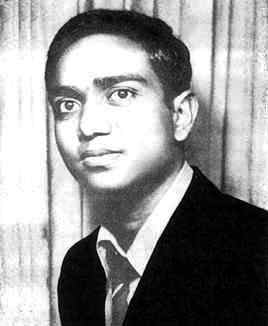
Next in who after the Ramanujan Series? His story is 1 of the most poignant in Indian science. He arrived at the Tata Institute of Fundamental Research (TIFR) as a shy, young man from Gwalior &, in just a few yrs, fundamentally altered the course of global geometry. Vijay Kumar Patodi (1945-76) found the soul of shapes using the laws of the physical world.
Born in 1945 in Gwalior, Madhya Pradesh, Patodi did not start as a child prodigy. His father was a businessman. Patodi studied in local schools & moved to Banaras Hindu University for his Master's. When he joined TIFR for his PhD, he was not yet the supernova. However, within a yr, his mentor, M.S. Narasimhan, realized that Patodi possessed an uncanny ability to simplify incredibly dense problems using physics-based intuition.
The Heat Eqn Before Patodi, the Atiyah-Singer Index Theorem (which links the number of solutions to a differential eqn to the shape/topology of a space) was proven using extremely abstract, high-level tools. Patodi realized that if we treat a geometric shape as a physical object & study how heat flows across it, the remnants of that heat as time approaches zero would reveal the shape's fundamental geometric properties (like its curvature).
When he sent his paper to Michael Atiyah, the world's leading geometer at the time, Atiyah was stunned. Patodi had replaced 100s of pages of abstract K-theory with a few pages of elegant Heat Kernel calculations. Patodi’s work was so revolutionary that he was invited to the Institute for Advanced Study (IAS) in Princeton: the intellectual home of Einstein & Oppenheimer.
He collaborated with Michael Atiyah & Isadore Singer. Together, they discovered a new mathematical constant called the Eta-invariant. Most math at the time dealt with closed shapes (like a ball). The APS (Atiyah-Patodi-Singer) Theorem solved how math behaves on shapes with boundaries (like a cylinder with open ends). This work is the backbone of Anomaly Cancellation in String Theory & explains how Topological Insulators (the future of super-fast computing) work today.
Patodi’s life was a race against his own failing body. He suffered from severe renal failure. At a time when dialysis was primitive & painful, Patodi would often be seen in his hospital bed at Jaslok Hospital (Mumbai)/in the US, surrounded by stacks of research papers. Even when he was so weak he could barely hold a pen, he was finalizing the Path Integral approach to the Index Theorem. His colleagues noted that for Patodi, math was more than a career; it was a form of Tapas (Austerity) that allowed him to transcend physical pain.
He passed away in 1976, just before he was scheduled for a kidney transplant. He was only 31 years old. In his short life, he was elected a Fellow of the Indian Academy of Sciences. Today, every major textbook on Index Theory/Differential Geometry has a chapter dedicated to the Patodi Method. In the mathematical world, Patodi is often mentioned in the same breath as Galois, Abel, & Ramanujan, the geniuses who died young but left enough work to keep the world busy for a century.
There's a physicist at Stanford named Safi Bahcall who modeled this exact principle and the math is wild.
He calls it "phase transitions in human networks." When you're stationary, your probability of a lucky event is limited to your existing surface area: the people you already know, the places you already go, the ideas you've already been exposed to. Your opportunity window is fixed.
When you move, your collision rate with new nodes in a network increases nonlinearly. Double your movement (new conversations, new cities, new projects) and your probability of a serendipitous encounter doesn't double. It roughly quadruples. Because each new node connects you to their entire network, not just to them.
Richard Wiseman ran a 10-year study at the University of Hertfordshire tracking self-described "lucky" and "unlucky" people. The single biggest differentiator wasn't IQ, education, or family money. Lucky people scored significantly higher on one trait: openness to experience. They talked to strangers more, varied their routines more, and said yes to invitations at nearly twice the rate.
The "unlucky" group followed the same routes, ate at the same restaurants, and talked to the same 5 people. Their networks were closed loops. No new inputs, no new collisions.
Luck isn't random. Luck is surface area. And surface area is a function of movement.
The lobster emoji is doing more work than most people realize. Lobsters grow by shedding their shell when it gets too tight. The growth requires a period of total vulnerability. No protection, no armor, soft body exposed to the ocean.
That's the cost of movement nobody posts about. You have to be uncomfortable first. The new shell only hardens after you've already moved.
This is awesome. For a few, the clock might feel different to look at.
Modern clocks use a base 60 system (Babylonian). The Vedic clock uses a base 30 system (Muhurtas). A Muhurta is precisely 1/30th of a day & exactly 48 mins.
Human biological cycles, including the well-known 90 min ultradian rhythm, do not align perfectly with the artificial 60 minute hr. Living by the Vedic clock creates a different rhythm. When we align our day with the natural 48 min Muhurta cycles instead of the standard hr, our body flows more naturally with the Biological Pulse of the Sun.