The pterygoid muscles:
-Determine jaw mechanics (TMD, retracted mandible)
-Are key for proprioception and balance
-Can change cranial and facial bone position/behavior via their connections to the sphenoid bone
Train them via practicing protraction and lateral translation.
@RasputinKaiser@OpenAI they just dont make a product of paranoia for marketing. see for price drop after opensource. then u see who cares for humanity but not for money or power
Everyone should pay attention to their mineral intake in general.
Here’s why.
Minerals orchestrate thousands of functions, including:
-Tens of thousands of enzymatic reactions that rely on minerals as cofactors (magnesium activates 300+ enzymes for ATP production, zinc a few hundred as well like carbonic anhydrase).
-Nervous system regulation: Sodium, potassium, and calcium maintain nerve impulses and muscle contractions via ion channels.
-Detoxification: Selenium and zinc support liver enzymes like glutathione peroxidase for example.
-Energy production: Iron in hemoglobin and cytochromes for example and magnesium in mitochondria fuels ATP production.
-Blood cell production: The go-to examples for these are copper and iron for red blood cells and zinc for white blood cells.
-Oxygen metabolism and vitamin utilization/metabolism: Minerals like zinc are crucial for vitamin A metabolism for example and manganese and copper are crucial for superoxide dismutase (SOD).
-Blood sugar/insulin regulation: The go-to examples are that magnesium improves insulin sensitivity, zinc modulates glucose uptake and chromium enhances insulin signaling.
-Gut Health: Zinc aids hydrochloric acid (HCl) and enzyme production, copper has antimicrobial properties, chloride supports HCl as well.
-Hormonal support: Iodine and selenium for thyroid hormones T4/T3, boron, zinc and magnesium for steroid hormone metabolism.
-Oxidative stress defense: Selenium, zinc, copper, and manganese are crucial for antioxidant enzymes like GPx and SOD.
-Immune function: Zinc boosts T-cells and NK cells for example.
-Cholesterol conversion.
-Hydration: Electrolytes such as potassium, sodium, magnesium, and chloride regulate fluid balance through the Na/K-ATPase pump.
The list is endless.
Minerals are also crucial for bone health, joint health, DNA repair, skin health, brain development, detoxing and more.
This is why deficiencies create so many issues.
Some classic examples include:
-Low calcium (macro): Muscle spasms, osteoporosis (via parathyroid hormone dysregulation).
-Low magnesium (macro): Cramps, arrhythmias, anxiety (affects GABA receptors).
-Low potassium (macro): Fatigue, arrhythmias (disrupts cardiac action potentials).
-Zinc deficiency (micro): Gut permeability (”leaky gut”), low libido, acne/eczema.
-Iodine shortage (micro): Goiter, hypothyroidism.
Copper deficiency (micro): Anemia (impairs ceruloplasmin for iron mobilization), premature gray hair (reduces tyrosinase for melanin, lowers SOD activity, increasing oxidative damage), sun sensitivity (impairs collagen and melanin synthesis).
-Molybdenum deficiency (micro): Sulfur intolerance.
And mineral deficiencies become more and more common since compared to the 1950s, the food mineral content has been reduced by 20-50% (depending on region/type of mineral).
But that’s not all.
As it was indirectly stated in the post belown an industrialized world, we are all exposed to heavy metals that compete with both macro and micro minerals for absorption, transport and binding sites.
This “molecular mimicry” occurs because many metals are divalent or trivalent cations (for example Pb²⁺ mimics Ca²⁺ or Zn²⁺), hijacking transporters like DMT1 (divalent metal transporter 1 for Fe, Zn, Mn, Cd, Pb), ZIP (zinc-regulated transporters for Zn, Ni, Cu) or calcium channels.
They also bind proteins like metallothioneins (MT, which sequester Cu, Zn, Cd), transferrin (Fe carrier), or calmodulin (Ca-binding protein).
Let’s put in perspective the importance of these nutrients by talking about lithium.
Just one trace mineral that most people never even think about.
Lithium is often misunderstood, conjured up as a heavy-duty drug for bipolar disorder with a laundry list of side effects but lithium is just a naturally occurring trace alkali metal.
Our bodies contain about 7 mg of lithium, and while it’s not officially classified as an essential nutrient (yet), animal studies suggest that a lithium-deficient diet can lead to problems in the spleen, immune system, reproduction and the brain.
Lithium orotate, the form that will be in your trace mineral supplement, combines lithium with orotic acid, a compound involved in DNA and RNA synthesis.
Unlike lithium carbonate, the pharmaceutical form used in high doses (400–1200 mg/day) to treat bipolar disorder, lithium orotate is typically taken in much smaller doses (5–20 mg/day), delivering elemental lithium in the range of 0.2–1 mg per dose.
Why the difference?
Lithium orotate is thought to cross the blood-brain barrier more efficiently, meaning you need less to achieve therapeutic effects in the brain.
Fun fact: A study found that lithium orotate (1.5 mg/kg) was more effective than lithium carbonate (15–20 mg/kg) at blocking amphetamine-induced hyperlocomotion, a model of mania.
This suggests lithium orotate punches above its weight due to its superior brain penetration.
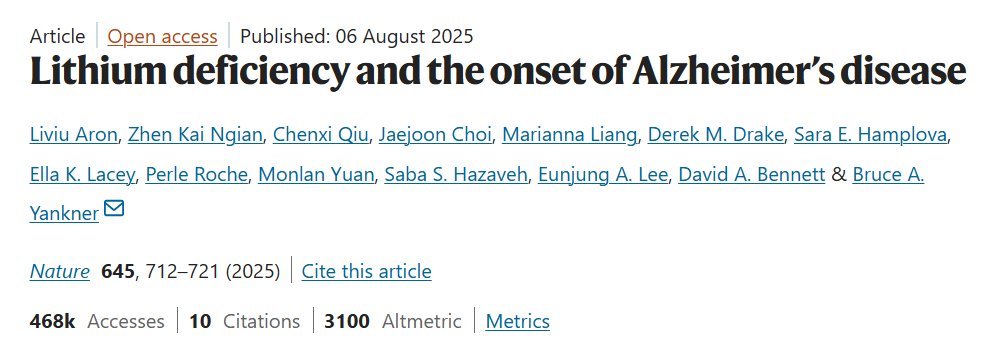
Here’s why this matters: lithium deficiency, even at subtle levels, may contribute to mood instability, cognitive decline and even neurodegenerative diseases.
A 2018 study in Nature found that, out of 27 metals analyzed, lithium was the only metal significantly reduced in the prefrontal cortex (PFC) of patients with mild cognitive impairment (MCI) and Alzheimer’s disease (AD).
This same study showed that lithium orotate reduced amyloid-beta (Aβ) plaque burden by ~70% and tau phosphorylation in AD mouse models.
Lithium’s effects on the brain are multifaceted, influencing neurotransmitters, enzymes, inflammation and even the brain’s ability to repair itself.
Here are some examples/MOAs:
1. GSK3β inhibition.
Glycogen synthase kinase-3 beta (GSK3β) is a serine-threonine kinase that plays a central role in several brain disorders, including Alzheimer’s, bipolar disorder, and depression.
Overactive GSK3β promotes amyloid-beta aggregation, tau protein phosphorylation and neuroinflammation.
2. IMPase inhibition
Inositol monophosphatase (IMPase) is an enzyme in the phosphoinositol cycle, which regulates inositol levels.
Dysregulated inositol is implicated in bipolar disorder, where mania is associated with elevated inositol and depression with reduced levels.
Lithium inhibits IMPase, which helps stabilize our mood.
It’s also great for reducing IP3-mediated calcium release from ER stores.
A word of caution: combining lithium with inositol supplements can be tricky.
In unipolar depression, inositol may enhance lithium’s antidepressant effects, but in bipolar disorder, it could trigger mania if taken during a manic phase.
Always consult a healthcare provider before combining these.
3. General anti-inflammatory effects.
Lithium orotate reduces neuroinflammation by modulating microglial function—the brain’s immune cells.
In the Nature study, lithium deficiency increased microglial expression of pro-inflammatory markers like CD68, Apoe, and GPNMB, impairing Aβ clearance.
Lithium supplementation reversed this, enhancing the brain’s ability to clear toxic proteins.
Lithium also:
Lowers cytokine levels: It reduces IL-6, TNF-α, and other inflammatory molecules, creating a less hostile environment for neurons.
Protects against oxidative stress: Lithium counteracts oxidative damage, which is linked to neuronal death in conditions like Alzheimer’s and Parkinson’s.
4. Neurotransmitter modulation.
Serotonin: Lithium enhances serotonin receptor sensitivity.
Dopamine and Norepinephrine: Lithium stabilizes these neurotransmitters, boosting them during depressive phases and dampening them during mania.
GABA: While lithium may enhance GABA activity, its effects on anxiety are less pronounced in clinical practice.
5. Boosting neuroplasticity.
*Mainly BDNF.
And of course we can add more niche effects such as reduced suicidality where:
A 1990 study in Texas found significantly higher suicide rates in counties with low or no lithium in drinking water.
A 2013 follow-up confirmed these findings across 226 counties.
A 2017 study of 51,000 patients showed a 14% reduction in suicide-related events in bipolar patients treated with lithium compared to other drugs.
Or improved B12 absorption (some individuals with high B12 blood levels despite not supplementing may have a lithium deficiency, as lithium appears to facilitate B12 transport into cells).
Now keep in mind that this is just one trace mineral.
Let’s take silica as another example.
Silica is also a natural mineral that can:
Assist in aluminum detoxification since it competes with aluminum for binding sites in the body, mobilizing it from tissues like the brain and kidneys.
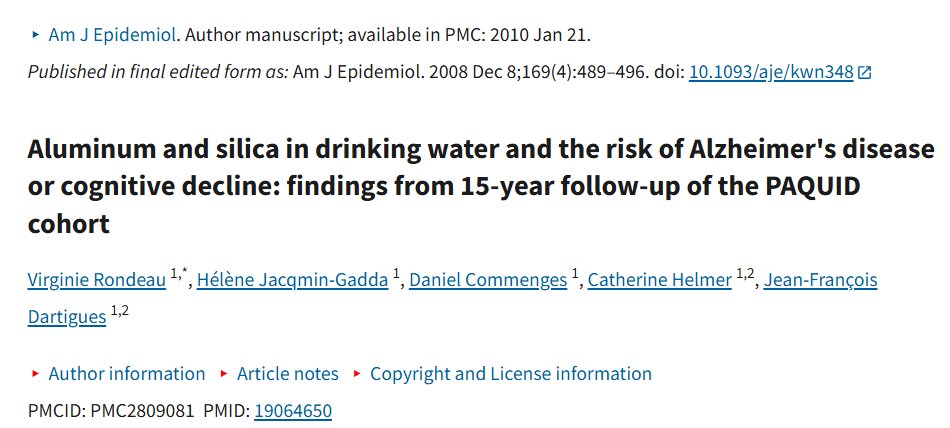
Protects against alzheimer’s risk, a 2008 study found that consuming 10 mg/day of silica from drinking water was associated with a reduced risk of dementia, counteracting the effects of aluminum-rich water.
Supports skin and hair health since it is essential for collagen formation.
There are, of course, many more points to be made, but you get the idea.
Nutrition mog: https://t.co/XL0eghwaje
Your attention is hijacked the moment you wake up.
What you find important (what you care about) even what you believe is being co-authored by systems optimized not for truth or wisdom...but for engagement and profit.
You are embedded in a vast informational environment that overwhelms your inherited systems of sense-making (bombarded by competing claims on your attention, your identity, and your value structure) absorbing the judgments, values, and perspectives of a collective cognitive apparatus that is not under your conscious control.
And there is more:
When you used to ask “What should I do?” or “What does this mean?”, you might have turned to an elder, a pastor, a sacred text.
Now you might ask an AI.
AI is now mediating your agency...sometimes before you even reflect on it.
Infuse energy into a conductive system, and energy drives organization.
Quite similar to what happens in biological system with their metabolic circuitry. The flow of energy doesn’t just keep the lights on, it organizes life.
There is nothing supernatural about the process of self-organization to states of higher entropy; it is a general property of systems, regardless of their materials and origin. It does not violate the Second Law of thermodynamics since the decrease in entropy within an open system is always offset by the increase of entropy in its surroundings.
- Ervin László
Excited to introduce Nativ 🚀
Run frontier open models locally on your Mac. No accounts, no subscriptions, no cloud.
⚡ Built on mlx-vlm — multimodal + fastest on Apple Silicon
🔒 100% private — every token generated on your machine
🛠 Plug your coding agents into a local endpoint
📊 Live telemetry — tokens/sec, memory, usage
🆓 100% open source, MIT licensed, free forever
Your Mac is more capable than you think. Stop renting intelligence.
Download for macOS 👇
https://t.co/JoWC2hLXYA
Github repo 🌟
https://t.co/ZXxv58SoWu
One of the reasons SIBO can be so difficult to get rid of is the effect SIBO has on thyroid hormones.
> less nutrients available (Zinc, Iron, B vitamins) required for Thyroid production/ conversion
> LPS binds to TLR4 on thyroid follicular cells reducing T4
> Inflammation (IL-6) raises hepicidin, lowering free iron for the body to utilise for thyroid function
This becomes a self-perpetuating cycle as active thyroid hormone is needed to cause gastric emptying, MMC stimulation via the Enteric Nervous System and differentiation of progenitor cells into specialised cells like enterocytes.
So the defences that prevent, or get rid of SIBO are the same ones that are limited by the negative effects of SIBO on the thyroid itself.
Black seed oil, aloe Vera, Zinc and Selenium cover both SIBO and thyroid aspects - but both (especially SIBO) will need more interventions to resolve.
In some cases beef spleen and lactoferrin can be helpful to raise iron when very low.
@DeryaTR_@OpenAI it is a product. to make money. to scale, to buy gpus. when it reaches a significant point you wont have all that ass licking adjectives. They wont care.
Suffering is largely caused by resistance to the flow of reality.
I think we can learn something about resistance to reality - and how to release it - by understanding the equivalent qualities in electrical engineering.
In electrical engineering, the opposite of resistance is conductance.
Resistance is the measure of an opposition to the flow of electric current.
Whereas conductance measures the ease with which an electric current passes through.
This applies too in the realm of emotions and sensations etc.
When we are trying to let go of resistance to the flow of eg pain or a difficult emotion, we can also frame it as cultivating an ability to conduct pain and difficult emotions.
We are trying to cultivate the ability to let these currents pass through us with ease.
It may seem strange to think we might want to become a conductor for pain and difficult emotions.
But it is actually this openness to these experiences that allows them to flow through us more smoothly.
And it is allowing them to flow through us more smoothly that allows us to feel more electric and alive.
Our pain and our suffering is actually a gateway to energy and flow if we learn how to conduct it without resistance.
jhana is related to jhayati "to burn" in a steady way. the burning of an ordinary fire flickers and flares, but jhayati describes the burning of an oil lamp—so steady you can read by it...to enter jhana is to steadily read what's going on in the mind