Life advice nobody told you: Violent consistency is the only path to achieve what you want.
It's not going to be pretty. It's not going to draw oohs and aahs from the crowd. Because it looks messy in the days. It's getting out of bed when you don't want to. It's sitting down at your desk when you're tired. It's pounding your head into a wall one more time. It's ugly. It's unimpressive. But it works.
Quantity is a necessary precursor to quality. You cannot create once and hope for it to be perfect. You have to create a lot. Every single day.
I recently came across a story in Art & Fear that I love:
A ceramics teacher split a class into two groups. One would be graded on the quantity of their output, the other would be graded on the quality of their output. On the final day, the first group would have their total output of pots weighed, while the second group would have one pot judged.
When grading day arrived, something fascinating happened:
"The works of highest quality were all produced by the group being graded for quantity. It seems that while the 'quantity' group was busily churning out piles of work—and learning from their mistakes—the 'quality' group had sat theorizing about perfection, and in the end had little more to show for their efforts than grandiose theories and a pile of dead clay."
Quality is a byproduct of quantity. Violent consistency. That's the real recipe.
Best advice I got in my 20s: Nobody cares. When you’re winning, nobody cares. When you’re losing, nobody cares. It doesn’t mean nobody loves you, it just means nobody cares about your life as much as you do. You are in control. It’s on you. Nobody cares. Go do the thing.
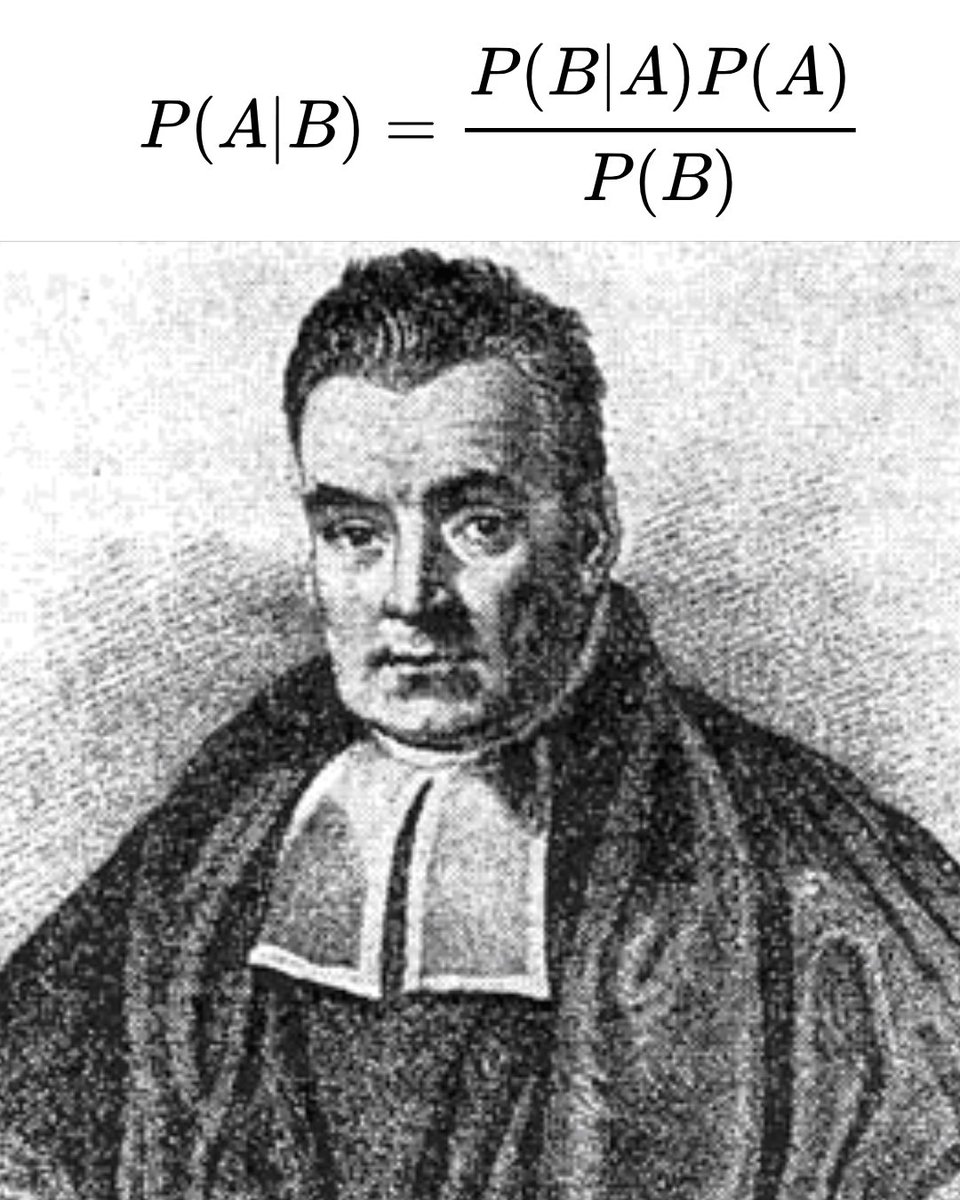
Bayes’ theorem is probably the single most important thing any rational person can learn.
So many of our debates and disagreements that we shout about are because we don’t understand Bayes’ theorem or how human rationality often works.
Bayes’ theorem is named after the 18th-century Thomas Bayes, and essentially it’s a formula that asks: when you are presented with all of the evidence for something, how much should you believe it?
Bayes’ theorem teaches us that our beliefs are not fixed; they are probabilities. Our beliefs change as we weigh new evidence against our assumptions, or our priors. In other words, we all carry certain ideas about how the world works, and new evidence can challenge them.
For example, somebody might believe that smoking is safe, that stress causes mouth ulcers, or that human activity is unrelated to climate change. These are their priors, their starting points. They can be formed by our culture, our biases, or even incomplete information.
Now imagine a new study comes along that challenges one of your priors. A single study might not carry enough weight to overturn your existing beliefs. But as studies accumulate, eventually the scales may tip. At some point, your prior will become less and less plausible.
Bayes’ theorem argues that being rational is not about black and white. It’s not even about true or false. It’s about what is most reasonable based on the best available evidence. But for this to work, we need to be presented with as much high-quality data as possible. Without evidence—without belief-forming data—we are left only with our priors and biases. And those aren’t all that rational.
The Crypto Apocalypse
Out of 20k ICOs:
80% of them (16k) were a total criminal scam in the first place - steal the money and run - based on results of an academic research paper.
Another 18% of them (3.6k) went to zero and collapsed .
Of remaining 2% (400) that survived those below the top 10 have lost on average over 90% of their value since their peak .
Of the top 10 : Bitcoin is down 45% from peak, Ethereum is down 55% from peak, XRP is down 60%, Solana and Dogecoin are down 65%, Cardano is down 75%.
“Stablecoins” like Tether are now breaking the buck and trade below par. While dozen of “stablecoins” went totally bust in last decade.
Memecoins - including $Trump and $Melania - are down 95% .
NFT indices are down 95%.
Pump & Dump, Wash Trading, Ponzi Schemes were 99% of crypto standard operating procedure.
Now this whole Ponzi scheme house of cards is unraveling . Read my recent column on why and how:
https://t.co/ju7HIqPOgW
Advice for my 20-year-old self: Life is full of problems. Wisdom is realizing you don't have to solve every single problem that comes your way. It's focusing your energy on the problems that are actually worth solving.
152 years of S&P 500 returns, where will 2026 land? 📈
Based on forecasts from 2,000+ specialists, most expect the S&P 500 to rise again in 2026—potentially creating the longest run of gains in almost 20 years.
Explore the full outlook for the economy, markets, geopolitics, technology and more in our 2026 Global Forecast Series, presented by @Inigo_Insurance: https://t.co/XX2gUZOsqI #2026GFS
Do hard things. Because there’s nothing better than a hard-earned win. The pain. The struggle. The grit. And then, the reward. The feeling of knowing that you paid the cost of entry for the thing you wanted to achieve. Hard things are good for the soul.
"Never, ever, think about something else when you should be thinking about the power of incentives."
-Charlie Munger
He said he'd been in the top 5% of his generation at understanding incentives his entire adult life. Yet he still underestimated their power every single year.
If one of the smartest investors in history kept underestimating incentives, what chance do the rest of us have?
In 1995, Charlie Munger gave a speech at Harvard identifying 24 psychological tendencies that systematically fool us, starting with the power of incentives. He used these patterns to help build one of history's greatest investment records.
Ten years later, Munger rewrote the entire speech from memory and added a 25th tendency. One he said academic psychology had completely missed.
The most dangerous pattern in his opinion wasn't any single bias. It was when multiple tendencies combined and reinforced one another.
He called it the Lollapalooza Effect.
When three, four, five of these tendencies are working together, they turn the human brain into absolute mush. It's these combinations that destroy companies, build cults, or change history.
This wasn't in any textbook. Munger figured it out by watching the world his entire life. And it's at work in yours every single day.
As Richard Feynman said: "You must not fool yourself, and you are the easiest person to fool."
Use this episode to be a little less foolish.
https://t.co/Kzp4o3eLKC