Google Deepmind argues that LLMs can never make real scientific discoveries.
They published a paper breaking down Albert Einstein’s private view of scientific discovery.
In a famous letter to his friend Maurice Solovine, Einstein drew a diagram of how science actually happens.
It is a cyclical loop.
First, you experience raw sensory data. Then, through a mysterious, non-logical act of intuition, you make an intuitive "jump" to abstract axioms. Finally, you use strict logical deduction to derive consequences from those axioms.
Generative AI has completely mastered two-thirds of this loop.
• Induction: Statistical pattern matching across billions of tokens.
• Deduction: Formal proof generation, like AlphaProof solving complex math Olympiads.
AI can crunch data and it can prove theorems.
But it cannot make the jump.
The paper argues that AI completely lacks Abduction, the generation of novel explanatory hypotheses when observational data is scarce.
The prevailing tech myth says that "creativity is just data compression." That if you feed an LLM enough text, scientific breakthroughs will naturally pop out.
Einstein’s formulation of General Relativity proves that is a delusion.
When Einstein formulated relativity, the observational data didn't demand a new physics framework; classical mechanics was still massively successful. The breakthrough required a conceptual rupture. An intuitive leap from physical reality to a brand-new set of foundational axioms.
An LLM can execute the math once the axioms are given. But it is structurally incapable of formulating those premises on its own.
It can interpolate inside existing human thought, but it cannot transcend it.
The translation of physical reality into formal axioms remains the absolute, hard bottleneck of artificial scientific invention.
We can build models with trillions of parameters. We can scale compute into the stratosphere.
We can make the calculator infinitely fast.
But until we solve grounding, the machine can process all the data in the universe.
It still can't make the jump.
Cómo el cerebro mantiene recuerdos estables cuando las neuronas que los representan cambian continuamente?
Yo no lo conocía, pero este fenómeno se conoce como "representational drift", donde diferentes conjuntos de neuronas pueden codificar la misma información en distintos momentos sin afectar el comportamiento
Los autores proponen que la estabilidad de la memoria no depende de neuronas específicas, sino de los campos eléctricos que emergen colectivamente de la actividad neuronal... 🤔
Idea muy provocativa que me hace pensar entonces en si la información está en los campos eléctricos, cómo accedemos a ellos?
Es que en realidad lo que proponen los autores es que no accederíamos directamente a los campos eléctricos, sino a las propias neuronas generan y, loss campos eléctricos actuarían como un mecanismo que organiza y estabiliza la actividad neuronal, en lugar de ser un "almacén" independiente de información. Como un campo de contención.
Para demostrar esta hipótesis, los investigadores realizaron registros de "local field potentials" (LFP) en monos durante una tarea de memoria espacial.
Los autores crearon un modelo matemático que aprende a identificar los patrones fundamentales de la actividad cerebral asociados a la memoria. En lugar de centrarse en neuronas individuales, el modelo extrae variables latentes que representan la información relevante y permite reconstruir cómo se comunican entre sí las distintas poblaciones neuronales para mantener esa información activa.
Posteriormente, aplicando modelos biofísicos del electromagnetismo, los autores calcularon los campos eléctricos generados por dichas poblaciones neuronales.
Los resultados muestran que los campos eléctricos son altamente consistentes entre ensayos que representan el mismo recuerdo, mientras que las configuraciones neuronales específicas cambian considerablemente.
Además, estos campos eléctricos contienen suficiente información para distinguir diferentes ubicaciones recordadas durante la tarea de memoria, lo que sugiere que constituyen una representación más estable y funcional que la actividad de neuronas individuales... pero vuelvo a decir, esto no quiere decir que lo almacene, sino que lo entiendo como un "espejismo" con información funcional de la representación codificada en las neuronas
Ya más concretamente a lo que dicen los autores, estos plantean que los campos eléctricos actúan como "guard rails" que restringen la dinámica neuronal dentro de trayectorias funcionales estables.
Esto permite que diferentes conjuntos de neuronas produzcan la misma representación cognitiva, resolviendo la aparente contradicción entre la alta variabilidad neuronal y la estabilidad del comportamiento y de la memoria
Como conclusión, y aquí discrepo un poco, se dugiere que la unidad funcional relevante para la cognición podría encontrarse en propiedades emergentes de la actividad colectiva (como los campos eléctricos) más que en neuronas individuales... y sí creo que esté en la actividad colectiva, pero creo que la unidad mínima ses la integración y sincronización de los "spike trains" neuronales, siendo estos campos eléctricos un producto de esta integración, y que a su vez, permite estabilizar la propia actividad neuronal...
No os parece maravilloso? 😍
Fuente: https://t.co/FbAzvvN81Z
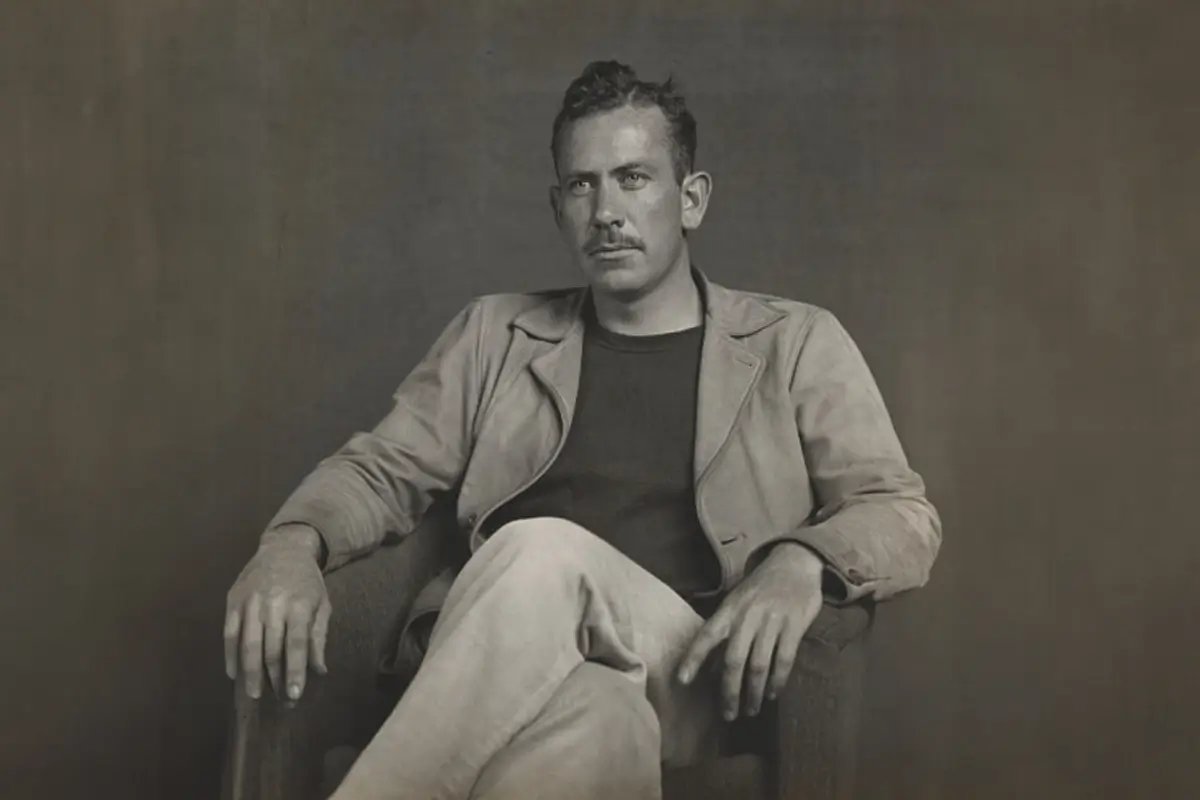
“I have always lived violently, drunk hugely, eaten too much or not at all, slept around the clock or missed two nights sleep, worked too long and too hard in glory, or slobbed for a time in utter laziness. I've lifted, pulled, chopped, climbed, made love with joy and taken my hangovers as a consequence, not as a punishment.”
— John Steinbeck
A Stanford psychiatrist says modern anxiety is not caused by danger.
It's caused by tiny habits that teach your body to panic when nothing is actually wrong.
You do them every day.
And you call them normal.
6 normal habits quietly teaching your nervous system to panic:▼▼▼
1/ Reaching for your phone the moment you feel uncomfortable.
Fascinating summary of 40 years of psychotherapy outcome research- massive effort that confirmed efficacy/guaranteed insurance coverage.
But a very bad side effect: specific techniques were placed in artificial competition rather than integrated into 1 coherent/unified therapy.
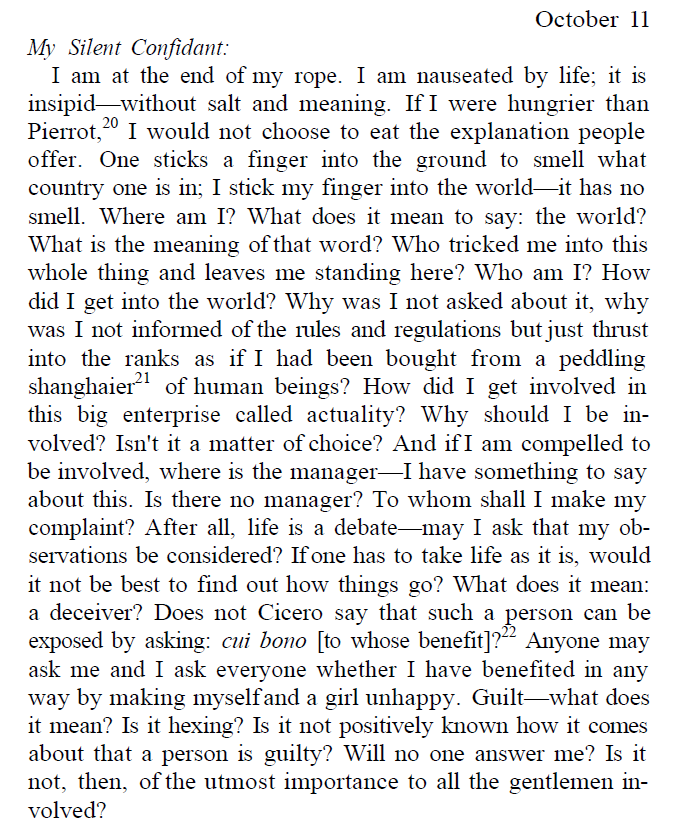
'I am at the end of my rope. I am nauseated by life; it is insipid - without salt and meaning ... Where am I? What does it mean to say: the world? What is the meaning of that word? Who tricked me into this whole thing and leaves me standing here? Who am I?'
Søren Kierkegaard
“Sometimes, I wonder if I would know a beautiful thing / if I saw it.”
— Megan Fernandes
.
.
.
This poem appeared in The American Poetry Review, Volume 50, No. 03, 2021. Shared here with deep gratitude.
What if depression isn’t just a mood disorder, but a disorder of prediction? 🧠 New research highlights how EEG reveals rigid belief updating in depression—where positive information is registered by the brain, but carries too little weight to revise expectations about the self and world. https://t.co/TlSPhKHFyg
#ComputationalPsychiatry #PredictiveProcessing #Neuroscience #EEG #DepressionResearch #MentalHealth Trends in Neurosciences
Jung said if you really want to know anything about the psyche leave the classroom & walk out into the world. He said that you need to attend union meetings--[go to] pubs & prisons & you'll walk away with a deeper understanding of the psyche than books will ever tell you~Hollis
Seriously, you need to listen to Baroque music.
It is the pinnacle of music achievement.
Start with Telemann.
Then Vivaldi, Bach, Handel, and Purcell.
Then Monteverdi to understand the transition from Renaissance to Baroque.
Then Hadyn to understand the transition from Baroque to Classical.
Veracini to add some spontaneity.
Pachelbell to add some serenity.
This will undoubtedly improve the quality of your life in every way imaginable.
In 3 years, come back and thank me for improving your life by imparting this wisdom to you.
You’re welcome in advance. ❤️
✍️ From my ongoing series on the craft of psychotherapy (3 min read)
“If you’re a psychotherapist, there are three things you need to find out in the first meeting with a new patient.”
Read free 👇
https://t.co/yKY0hEkDO8
People whose brains do not oxidize glucose well tend to be overly serious. I noticed this about myself as I begin to eat more fruit as well as when I took thiamine for the first time. I regained my ability to engage in wordplay, my ability to be amused by things that once annoyed me, my ability to understand sarcasm, and my ability to move quickly past difficulties. A brain with excess energy notices opportunities to perceive abundance that other brains miss!
Many “personality” issues are metabolic issues in disguise!!
WHEN GOD DECIDES TO MAKE YOU A KING, HE WILL:
1) Give you repeated failures.
2) Takes away the people you thought were permanent.
3) Makes you struggle financially.
4) Breaks your heart.
5) Lets you to face betrayal.
6) Keeps delaying your success.
7) Put you in the darkest nights.
God doesn’t prepare kings in comfort.
He forges them in fire, struggles, and silence.
If you’re going through hell right now, it’s because God is preparing you for something much bigger.
Keep going, King.
Your throne is being built through these struggles.