3 decades in Asset Management. Now steering virtual digital assets into their next chapter as the Chief Executive Officer of BitDelta
Views expressed are my own
Thanks so much @MFBALA and all my colleagues at AMFI for acknowledging me and my team's contribution to the MF industry, especially the ETF segment. It's a very nice gesture indeed...
My mind is blown away reading the 109 page SEBI order on Rajesh Exports… not that its surprising given some in last few yrs had called it a fraud but shocked on the size of it and how a Rs 3,000 crore market cap company may potentially be heading towards ZERO.! 😲
This is not a normal accounting issue. This is SEBI practically alleging that out of nearly Rs 15.45 lakh crore consolidated revenue reported over 5 years, close to Rs 15.15 lakh crore revenue itself may have been misrepresented. Yes, you read it right - lakh crore.
And the most shocking part?
The core operating subsidiary, Valcambi SA, whose numbers supposedly drove the entire global scale of the group, reportedly showed only a few hundred crores of standalone revenue annually in audited Swiss accounts. Meanwhile, the holding structure above it magically showed revenues running into several lakh crores.
SEBI’s allegation is brutally simple in layman terms: A refining business which allegedly earned only processing charges/value addition was shown at group level as if the company owned and traded the entire value of gold flowing through the system.
Imagine a toll booth operator claiming ownership of every car crossing the highway and booking the value of all cars as its own revenue. That is broadly what SEBI is questioning here.
The order repeatedly mentions:
• No proper invoices
• No customer/vendor level breakup
• No ERP access
• No journal dumps
• No confirmations
• Missing subsidiary financials
• “Swiss confidentiality laws” being cited to deny information
SEBI has also highlighted that even the forensic auditor BDO India faced severe non cooperation.
What makes this even more serious is that this is an ex parte interim order. Meaning SEBI has passed the order based on its own investigation and material gathered, without relying on cooperation from the company side. Regulators generally do not go this aggressive unless they believe the findings are extremely serious.
The statutory auditor named in the order is BSD & Co, a mid sized Bengaluru based audit firm along with P V Ramana Reddy & Co. SEBI has specifically mentioned non submission of working papers and missing subsidiary records.
Another fascinating angle:
The annual reports reportedly show borrowings of around Rs 1,000 crore, but there is very limited clarity on which banks gave these loans and against what underlying audited cash flows.
This may go down as one of the most dramatic accounting fraud allegations ever seen in Indian capital markets post Satyam..
If even a fraction of SEBI’s findings sustain, this is not just a corporate governance failure. This is a complete collapse of reported financial reality.
Absolutely insane reading.!
You can read the order here - https://t.co/RWP594BT2r
#Rajeshexports
During the crisis, 99% wealth destroyed.
A journalist becomes a fund manager.
A forgotten corner of the market becomes India's favourite investing category.
Kenneth Andrade, from Old Bridge Mutual Fund, on mid-caps, market cycles, bubbles, and conviction.
Full episode of MF Chronicles is now live.
Watch it HERE - https://t.co/ZInXXnKdGz
@Chetanas_inst
Good development.
Key thing is to now involve housing societies near which most of these hawkers squat and ply their business illegally
Footpaths are virtually gone due to this.
One small step for @mybmc , one giant leap for open spaces
@Dev_Fadnavis@mayor_mumbai@AshwiniBhide
Interesting to see how quickly stablecoins have moved from being viewed as a niche crypto product to becoming part of a larger global financial infrastructure conversation. For years, the digital asset ecosystem tried to get traditional finance interested in blockchain. Today, traditional finance itself seems to be reading the blockchain handbook more closely.
At the same time, developments like SEBI exploring tokenisation frameworks for corporate bonds indicate that conversations around tokenisation and digital infrastructure are beginning to move closer to mainstream financial markets.
Am I surprised by this convergence? Not really.
https://t.co/7HX4XX0Kxy
Dear @sundeepsikka,
Your line - "Profit is a byproduct." was not just a simple line but an important lesson too.
Thanks for the perspective.
– Vikaas
If anyone haven't watch the episode, please do. It has got many pearls of wisdom.
Watch it here - https://t.co/l7sxRjO3OS
@NipponIndiaMF
“Businesses obsessed with profit usually make expensive mistakes.”
One of the strongest takes from @sundeepsikka from @NipponIndiaMF
The episode is really about how long-term businesses are built.
Watch it now - https://t.co/ibopxL2Jdp
“If we had done a SWOT analysis, we probably wouldn’t have backed ETFs.”
Wild line from @sundeepsikka from @NipponIndiaMF
Our conversation is really about conviction - backing something before the market believes in it.
Watch it now - https://t.co/ibopxL2Jdp
“ETFs in India took off when institutions made them trustworthy.”
Sundeep Sikka @sundeepsikka - ED & CEO of Nippon India Mutual Fund @NipponIndiaMF explains why EPFO entering ETFs became a turning point for passive investing in India.
Watch here - https://t.co/ibopxL2Jdp
📈 “In India, we are still far away from the debate of active vs passive. It needs a decade to settle down.”
One of the most balanced takes I’ve heard from Sundeep Sikka @sundeepsikka from @NipponIndiaMF connects ETFs, investor behaviour, risk, and India’s evolving investing culture really well.
Full conversation is out.
Watch here: https://t.co/l7sxRjO3OS
@Chetanas_inst
https://t.co/YEI08ZeVac
This is on the front page in the @timesofindia today. Such a sad way to start the day.
Is this not culpable homicide? I wonder if there is a conscientious law firm out there who can push for stringent action to be taken...
In any case, How much effort does it take to impose hefty fines on wrong side drivers? With cctv cameras and alert cops, why is this not being pushed through? @Dev_Fadnavis@MTPHereToHelp ?
I wonder if enough reposts of this message forces the authorities to take action....or is there another way to do it?
It could be my life on the line next, or someone you know...do we have to wait for that to happen?
Couple of years ago, I was knocked over by a bike coming in from the wrong direction behind me. This was in Goregaon, mumbai. No response ever from @MTPHereToHelp when i complained
This video just hit a nerve...hope there are severe punishments for such callous vehicle owners
The name sounds British, but it is actually a purely Indian acronym. In 1952, a 55 yr old grocery store owner from Nagpur named Keshav Vishnu Pendharkar decided to shut down his shop, pack up his family of 10 children, & move to Bombay. He wanted to create a chemical-free, swadeshi alternative to the foreign cosmetic brands that were ruling post-independence India.
He started his business in a tiny, cramped godown in Parel, Bombay. He named his company after his father: Vishnu Industrial Chemical Company. V-I-C-C-O. There was no British Lord or foreign laboratory. It was just a middle-aged Marathi man & his sons working out of a shed with a dream to revive ancient texts.
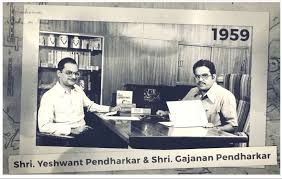
Keshav Pendharkar’s brother-in-law held a basic degree in Ayurveda. Together, they huddled over ancient scripts & formulated a tooth-cleaning powder made from 20 rare herbs & barks (including Babool, Bakul, & Neem).They called it Vajradanti.
In the 1950s, urban Indians were rapidly switching to chemical, white, sweet-tasting toothpastes imported by MNCs like Colgate. When the Pendharkers tried to sell a brown, astringent Ayurvedic powder, shopkeepers laughed them out of their stores. Keshav & his sons refused to surrender. They literally walked the streets of Bombay, going door to door to hand out samples, educating people on how chemical foam was destroying their gums, & manually building their empire 1 household at a time.
In 1971, Keshav passed away, & his son, Gajanan Pendharkar, took over. Gajanan looked at the skincare market & saw it was utterly dominated by colonial-legacy snow creams like Afghan Snow, Pond's, & Nivea. All of them were stark white. Gajanan decided to launch a face cream containing Turmeric (Haldi) & Sandalwood oil. When the product launched, shopkeepers panicked. They screamed, "Baap re! If women put this on their faces, it will turn them yellow!" Nobody wanted to buy a yellow cream because the world had been conditioned to believe that beauty products had to be white.
The Pendharkars weaponized the traditional Indian wedding ritual of Haldi-Chandan. They sent salesmen into the markets armed with handheld mirrors. The salesmen would manually apply the cream onto the shopkeepers' faces right then & there to prove it absorbed completely into a vanishing base, leaving a glow w/o any yellow stains. If you remember the iconic jingle: "Vicco Turmeric, Nahi Cosmetic, Vicco Turmeric Ayurvedic Cream"... you should know that those words were not just a clever marketing tagline. They were a battle cry born from a massive legal warfare.
In 1975, the Central Excise Department of India dropped a bombshell on Vicco. They insisted on classifying Vicco Turmeric & Vajradanti as "Cosmetics." If classified as cosmetics, the govt could levy a crippling 105% luxury tax on the products, which would have priced Vicco completely out of the market & forced them into bankruptcy. The Pendharkars refused to pay. They argued that their products were manufactured under a formal Drug License & were Ayurvedic Medicines (Drugs), which attracted significantly lower taxes.
This was not a minor dispute; it turned into a historic, grueling 25 yr legal battle. The case climbed all the way up to the Supreme Court of India. While battling global giants in the market, the family spent their resources fighting their own govt in courtrooms for ~3 decades. Finally, in the 2000s, the Supreme Court ruled in favor of Vicco, legally decreeing that their products were indeed medicinal, cementing the truth of their tagline forever.
How did a homegrown brand from a Parel godown become globally famous? Through sheer marketing brilliance before the internet existed. In the 1980s, South Asian immigrants abroad were obsessed with watching Bollywood movies on rented VHS video cassettes. Gajanan Pendharkar realized this & started buying ad space directly inside the video cassettes distributed globally.
Long before foreign networks recognized Indian brands, families in the US, UK, & Middle East were singing along to the Vajradanti jingle before their favorite movie started.
Despite controlling a multi-million dollar empire, the house had only 1 giant mega-kitchen. Every single meal was cooked in massive industrial-sized pots, & the entire family sat on the floor together to eat. Gajanan believed that if the family broke bread separately, the business would fracture into pieces.
In the early decades, the sons & grandsons who worked for Vicco did not get individual corporate salaries/luxury allowances. The company took care of all household expenses centrally. If a family member needed a car/a dress/a medical trip, it was cleared by the family elders, ensuring that personal greed could never overtake the company's mission.
Vicco did not survive because it was backed by British capital/Western tech. It survived because an Indian family was willing to go door to door with brown tooth powder, rub yellow cream onto skeptical faces, & spend 25 yrs in court defending the scientific validity of Ayurveda. The name might sound like a colonial legacy, but the blood inside the tube is Sampoorna Swadeshi.
While the world was busy watching other geopolitical fires burn, PM Modi quietly made five of the most important stops on the planet in five days.
UAE. Netherlands. Sweden. Norway. Italy.
Read that list again slowly. Because each one of those countries holds a key to something India desperately needs right now and cannot afford to get wrong.
Here is the context most people are missing.
Hormuz just got choked. Energy routes that the world treated like guaranteed infrastructure for decades suddenly looked fragile. Supply chains that took forty years to build started wobbling in weeks. Every government that was paying attention started asking the same uncomfortable questions at the same time. Where does our energy actually come from. Who really controls our access to technology. And which trade corridors are still going to exist in five years.
PM Modi clearly got the memo before most.
The UAE is the first stop and energy is the entire reason. The Gulf has been disrupted. Hormuz is under pressure. And the UAE just made a decision that changes everything about how it operates. It stepped outside the OPEC framework. It can now pump freely without anyone's permission. And it has a pipeline that moves oil completely around the Strait. For India that is not just useful. That is survival infrastructure. This meeting is about securing that relationship before the rest of the world wakes up and starts competing for the same thing.
Then comes the stop that will look most important in hindsight.
The Netherlands. Specifically a small city in the south of the country that most people have never heard of. The semiconductor war between America and China is not slowing down. It is accelerating. And India knows that if it is not inside that ecosystem now, it will be buying chips on someone else's terms for the next thirty years. The conversations happening there are not about trade statistics. They are about whether India gets to be part of the supply chain that decides who wins the technology race of this decade.
Sweden is quieter but the signal is loud.
When three leaders stand together in front of Europe's top industrial decision makers, that is not a photo opportunity. That is India saying directly to European capital, you have been talking about reducing China dependency for years and we are the answer you have been looking for. Sweden's industrial companies represent exactly the manufacturing sophistication India needs as it tries to move beyond being a cheap labour destination and become a genuine industrial power.
Most people will skip over Norway entirely. That would be a mistake.
No Indian Prime Minister has made this trip in 43 years. Norway runs the largest sovereign wealth fund on earth. It is patient, long-term, and looking for exactly the kind of growth story India represents. The numbers being discussed are not small. And beyond the capital, Arctic shipping routes and green energy corridors open up a completely different geography for Indian trade. The quiet stops are usually the most deliberate ones.
Italy lands the plane on something much bigger than it appears.
The corridor connecting India to Europe through the Middle East needs a European endpoint and Italy is it. When that corridor is fully operational, Indian goods reach European consumers faster and cheaper than they ever have before. Without passing through the chokepoints that everyone just watched become weapons. Add the India-EU free trade negotiations running in parallel and you are looking at a structural shift in how India plugs into the global economy.
Here is the honest truth about what this week actually means.
The world is being reorganised right now. Not gradually over decades the way it usually happens. Rapidly. In months. And the positions countries lock in during this window will determine where they sit in whatever order emerges on the other side.
India is not sitting still waiting to see how things shake out.
Five countries. Five days. Energy security, chip access, European industrial integration, sovereign capital, and a trade corridor that rewires the map.
PM Modi is not touring the world.
He is building a different India for what comes next.
1987. A room in New Delhi is thick with the smell of old files & cold tea. The United States has just delivered a stinging slap to the face of the Indian Republic. They have officially refused to sell India the 'Cray X-MP' Supercomputer, the most powerful machine on Earth, claiming that India would use it for nuclear weapons.
The American officials mockingly suggest that India does not even have the electricity to keep such a machine running. In the middle of this national humiliation, a young, soft-spoken engineer named Vijay Bhatkar is asked by then Prime Minister Rajiv Gandhi: "Can we build our own?" Bhatkar does not hesitate. He looks at the No of the West & says: "We will not just build it; we will build it faster than you can ship it."
The Americans did not just stop at refusing the sale; they actively lobbied other nations to ensure India remained digitally blind. They believed that w/o their Logic Gates, India would remain a 3rd world backwater.
Bhatkar realized he could not replicate the Single-Processor behemoth of the Cray. Instead, he turned to Parallel Processing. He decided to stitch together 1000s of low-cost, off-the-shelf microprocessors. It was like building a giant's brain out of the neurons of ants.
In 1991, while the West was still celebrating its monopoly, Bhatkar unveiled the PARAM 8000. It was not just a computer; it was a Gigaflop monster.
To prove the PARAM was real, Bhatkar ran a standard global benchmark test. The results were sent to an international conference in Zurich. The PARAM 8000 was ranked as the 2nd most powerful supercomputer in the world, behind only the American machines. But there was a twist: the PARAM cost a fraction of the Cray, performed better in tropical heat, & was built in just 3 years.
When the PARAM 8000 was 1st turned on, the team did not have a high-tech cooling system like the Americans. They used industrial-grade desert coolers & adjusted the airflow manually. It was the ultimate Jugaad that defeated the most sophisticated tech embargo in history.
A major US newspaper ran a story with the headline: "Denied supercomputer, Angry India does it!" The ghost of the Native Engineer had officially entered the silicon temple. Vijay Bhatkar’s history is the story of how India became the IT Capital of the world.
Bhatkar founded the Centre for Development of Advanced Computing (C-DAC). He did not just build a machine; he built an ecosystem. Every software engineer in India today stands on the shoulders of the man who proved we did not need the West's permission to compute. Bhatkar was the 1 who realized that if computers only spoke English, 90% of India would be left behind. He led the development of GIST (Graphics & Intelligence Based Script Technology), allowing computers to work in Indian languages. He gave the Machine a local tongue.
Today, Bhatkar is a Padma Bhushan awardee, but he lives a life of deep spirituality & simplicity. He vanished from the corporate headlines to become a philosopher of the digital age.
The West thought they could freeze India’s future by withholding a single machine. They forgot that the Indian mind does not need a 'Cray' to think; it only needs a 'No' to ignite. Forget building a supercomputer; Bhatkar built a mirror, & for the 1st time, the West had to look into it & see that the primitive colony had become the master of the code.