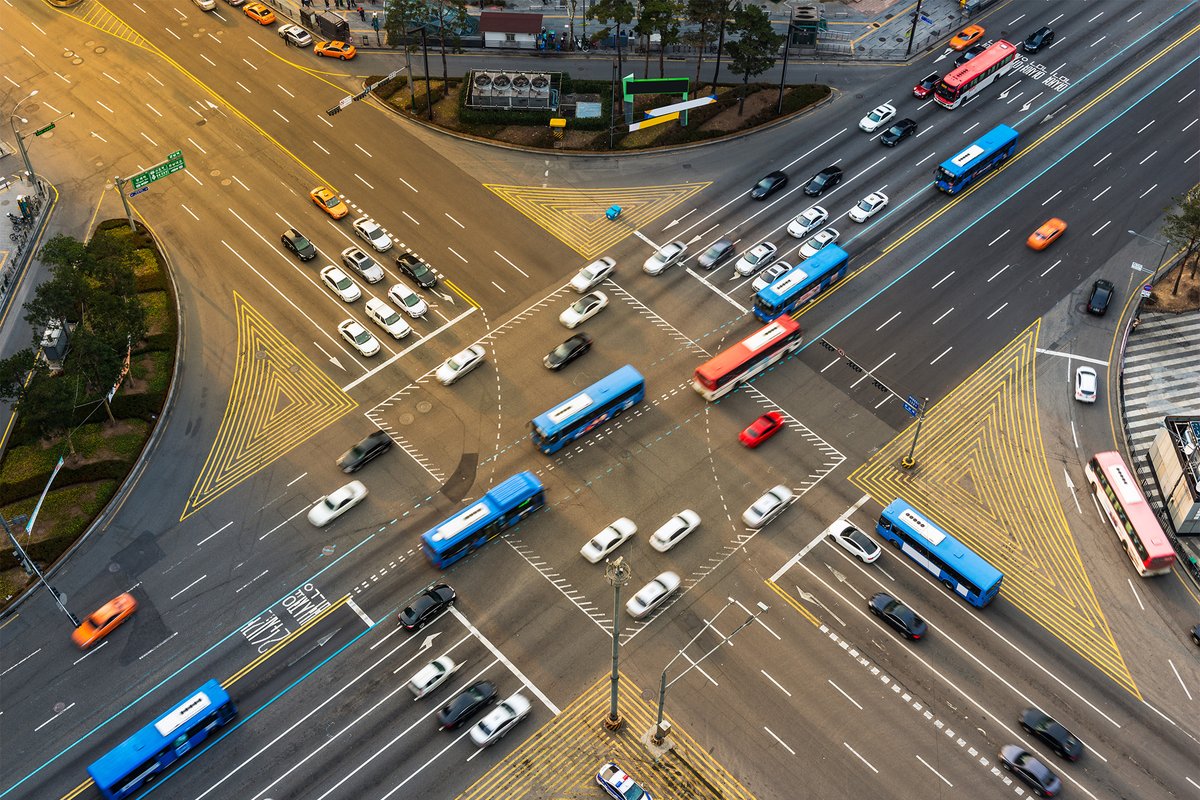
No one likes sitting at a red light, or wasting fuel and producing emissions while idling. What if motorists could pace themselves to arrive when the light is green? A LIDS team’s new machine-learning approach could keep traffic flowing smoothly. https://t.co/LLIk1iVA5b
meet @mostik_ai!
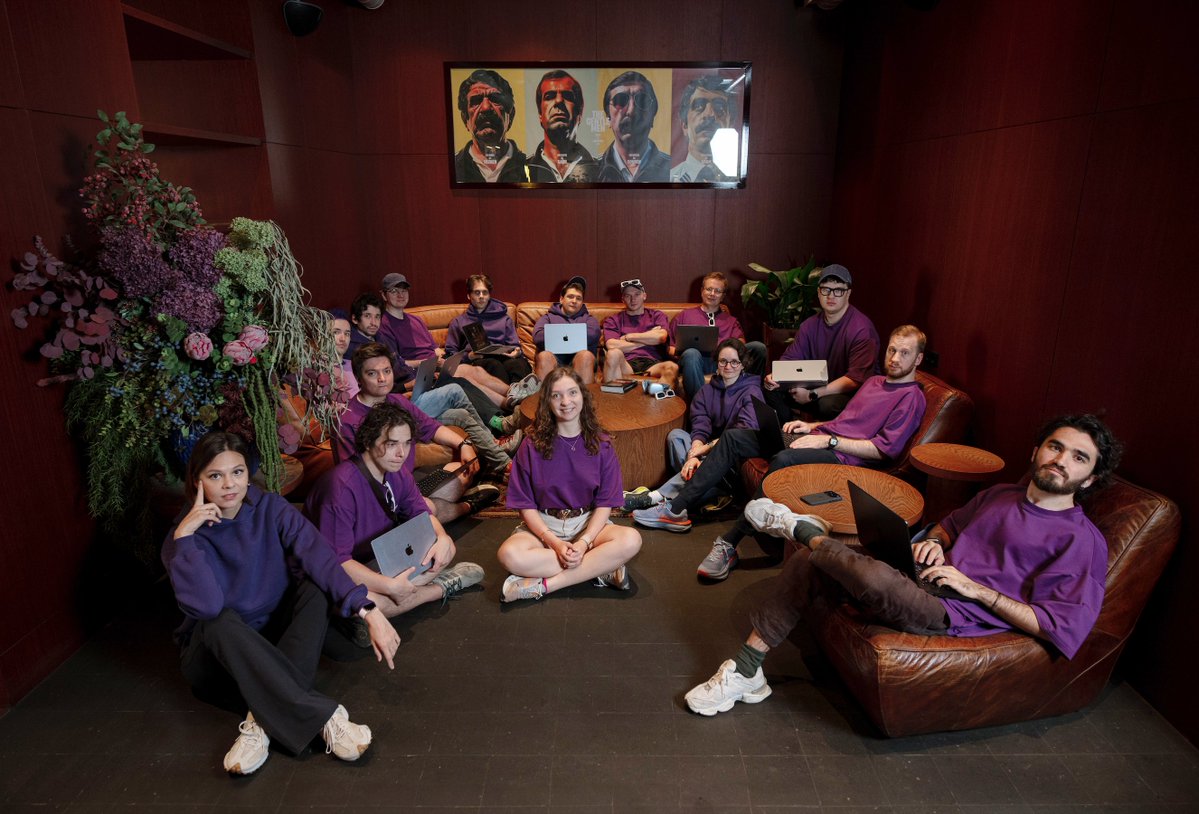
what happens when you put 12 PhDs in one room for four months? first place on the ARC-AGI leaderboard, which I can't say much about while the competition is still running. and this, which I can.
everyone's arguing about whether open models will catch up to frontier models. we think it's the wrong question. here's the one we pose: why does a frontier model have to generate your answer at all, when the only thing you need from it is the reasoning?
we do this by enabling models to communicate in latent space. through our protocol, hidden states pass straight from a frontier model into a small one running on your infrastructure -- no text between them, and neither model is fine-tuned. two models from different families, sharing reasoning, both left untouched.
how do we know it works? we tested it on a setup where a 753B model reads the problem, and a 4B edge-class model writes the answer. with this approach, we get results 80% as accurate as the frontier model, but at 20x faster performance.
we're committed to preventing frontier model lock-in and are already partnering with inference providers to accelerate open-weight adoption. we've done this between 15 of us, in four months, 12 PhDs and a Fields medalist, backed by @generalcatalyst
WIRED has the first external account of the company and the work: https://t.co/tP8nItCsDl
full writeup, the setup, and all the numbers: https://t.co/C9NZ5vtV1V
We upgraded Tabracadabra 🎉 to bring an entire context-aware assistant (not just tab to autocomplete!) to any textbox. It's pretty great if you hate switching between the chat interface and what you're working on. We're also open-sourcing, so you can try it out!🧵
Meet the recipients of the 2024 ACM A.M. Turing Award, Andrew G. Barto and Richard S. Sutton! They are recognized for developing the conceptual and algorithmic foundations of reinforcement learning. Please join us in congratulating the two recipients! https://t.co/GrDfgzW1fL
👼 As an applied RL researcher, this is the most optimistic I have been about RL in years. It feels like seeing the light at the end of the tunnel when RL training starts working reliably. Without a ton of compute or tuning. Very excited for what is to come. Here is what we did👇
Reinforcement learning (RL) is surprisingly brittle to contextual variations in tasks. Our new method (NeurIPS 2024) for solving contextual RL problems achieves 5-50x better sample efficiency on standard & traffic benchmarks. Featured today by MIT news! https://t.co/dR1xK5tgoT
A simple driving choice when approaching traffic intersections could save a significant amount of carbon emissions (and fuel).
This can be programmed into driverless vehicles or cars with adaptive cruise control - but drivers can also manually do it!
https://t.co/vASgNJ1qkU
Like many of us, you may be speeding up to intersections then slamming the brakes – but you can help greatly reduce carbon emissions by gliding up slowly
https://t.co/3YgmIIJfyv
We deployed 100 deep RL cruise controllers into rush-hour highway traffic to smooth traffic flow and reduce everyone’s energy consumption. Our AVs were decentralized and used standard radar, making our controllers deployable on most cars
1/n
I will be presenting my summer internship research with @Toyota at @ieee_ras_icra 2024. Grateful to my hosts Yashar Farid and Kentaro Oguchi at @Toyota and my collaborators @SiruiLi01 and @wucathy at @MIT.
@Toyota@ieee_ras_icra@SiruiLi01@wucathy@MIT In this work, we present a new learning framework to learn vehicle control policies that generalize across problem variations. For more details, check out our paper and the website below.
Paper: https://t.co/OaUuXszjew
Website: https://t.co/X62mMswads
The 𝐀𝐮𝐭𝐨𝐧𝐨𝐦𝐨𝐮𝐬 𝐕𝐞𝐡𝐢𝐜𝐥𝐞𝐬 𝐀𝐜𝐫𝐨𝐬𝐬 𝐒𝐜𝐚𝐥𝐞𝐬 (𝐀𝐕𝐀𝐒) 𝐖𝐨𝐫𝐤𝐬𝐡𝐨𝐩 at RSS 2024 is seeking submissions! We will bring together researchers across the three ‘scales’ of AV research – ego vehicle, traffic, & network. Deadline is May 24th (4-8 pages).