#BOOM Ryan Day, Larry Johnson and the Buckeyes land their second five-star defensive lineman in the 2027 class as Marcus Fakatou commits to Ohio State. https://t.co/ENj66OylIU
Lt. Governor, Jim Tressel Set to be Enshrined in Ohio Stadium Ring of Honor 🏟️
Tressel, Will be honored at Ohio State's season opener on Sept. 5 inside Ohio Stadium 🌰
@LtGovJimTressel | @OhioStAthletics
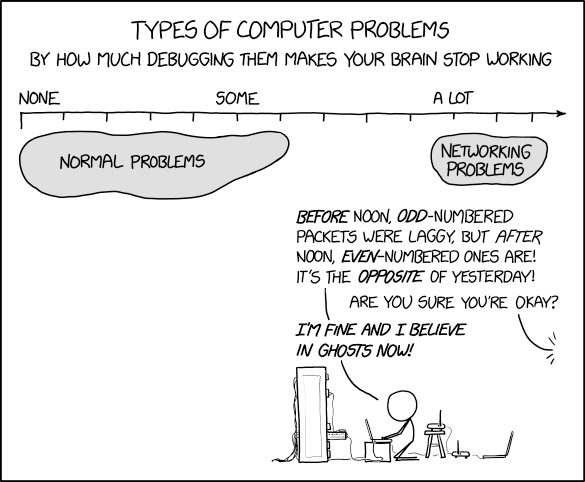
The best teams solve problems nobody notices. Ravi Nagayach, Prashant Singh, Kshitij Gupta, and the Lambda networking team have been doing exactly that for about a decade. Read their story here: https://t.co/TTPUuxxpAV
You would hate PostgreSQL if you have an update-heavy use case because every update writes a brand new tuple, and the old one does not go away.
This is MVCC (Multi-Version Concurrency Control) - when you update a row, PostgreSQL does not modify it in place. It creates a new tuple with the updated values, sets the old tuple's `xmax` field to the current transaction ID, and leaves the old row sitting on disk.
The old tuple is now "dead" - invisible to new transactions but still consuming physical space. Thus, a single logical update effectively doubles the storage for that row until vacuum reclaims it.
For read-heavy or mixed workloads, autovacuum handles this quietly in the background. But for update-heavy workloads - think session stores, order pipelines, leaderboards, or counters - dead tuples can pile up faster than autovacuum can clean them.
The default autovacuum triggers after roughly 20% of a table has changed. On a table with 500 million rows, that means you could have 100 million dead tuples accumulating before cleanup even starts.
The performance impact is not just storage. Bloated tables also affect sequential scans, which now have to read significantly more pages from disk. Index scans slow down because index entries still point to dead tuples and must be resolved.
By the way, there is an escape hatch for this called Heap-Only Tuple updates. When the updated row fits on the same page, and the changed columns are not indexed, PostgreSQL can skip creating new index entries. Cheaper, but the dead tuple on the heap still builds up.
If you are running a genuinely update-heavy workload on PostgreSQL, just make sure you tune your autovacuum really well.
Hope this helps.
For two decades, S3 has been an object store, but today it's something broader. S3 Files lets you mount any bucket as a filesystem—no copies, no sync scripts, no choosing between file and object. @andywarfield tells the full story, including the "filerectories" that almost made the cut. https://t.co/zrkLOZS5Qe
Postgres is using 80% of RAM, and that's a good thing.
But what's it actually doing with all that memory? At what point should you take action to mitigate usage?
Our latest blog breaks it down.
https://t.co/gZ5tYJB5nR
@TheByteRacoon@BenjDicken RDS Proxy will also hold connections from the client and queue requests during a DB failover, further improving availability!
This is why you avoid direct connections to Postgres.
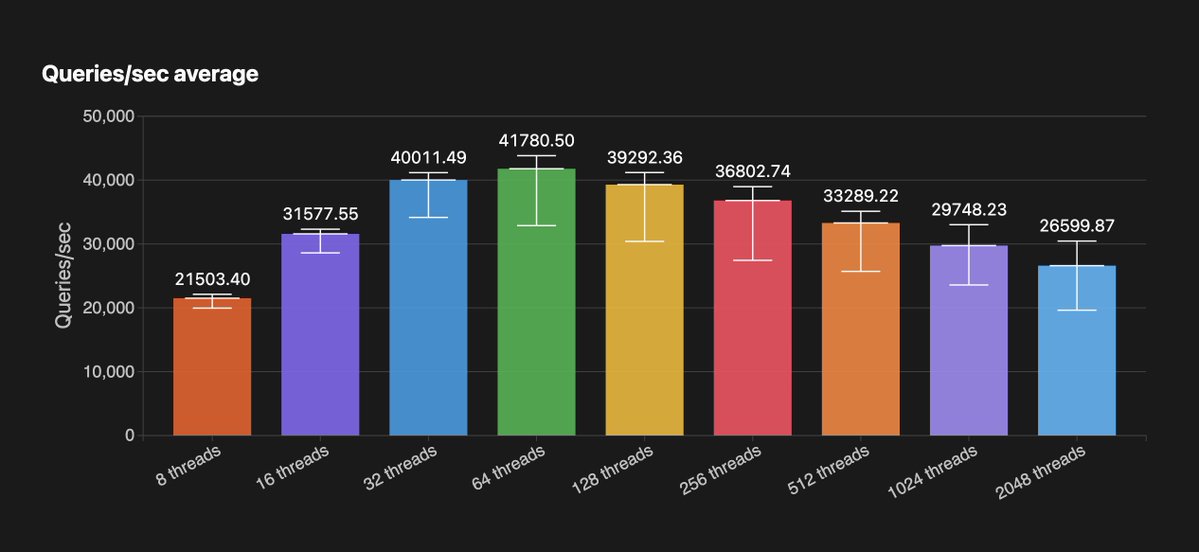
Benchmarked PG running on a r8g.2xlarge (8 vCPU + 64GB ram) with connections ranging from 8 → 2048. Clearly a sweet spot at 64 with degrading perf thereafter.
Apps often need 1000s of connections. Scale with a proxy!
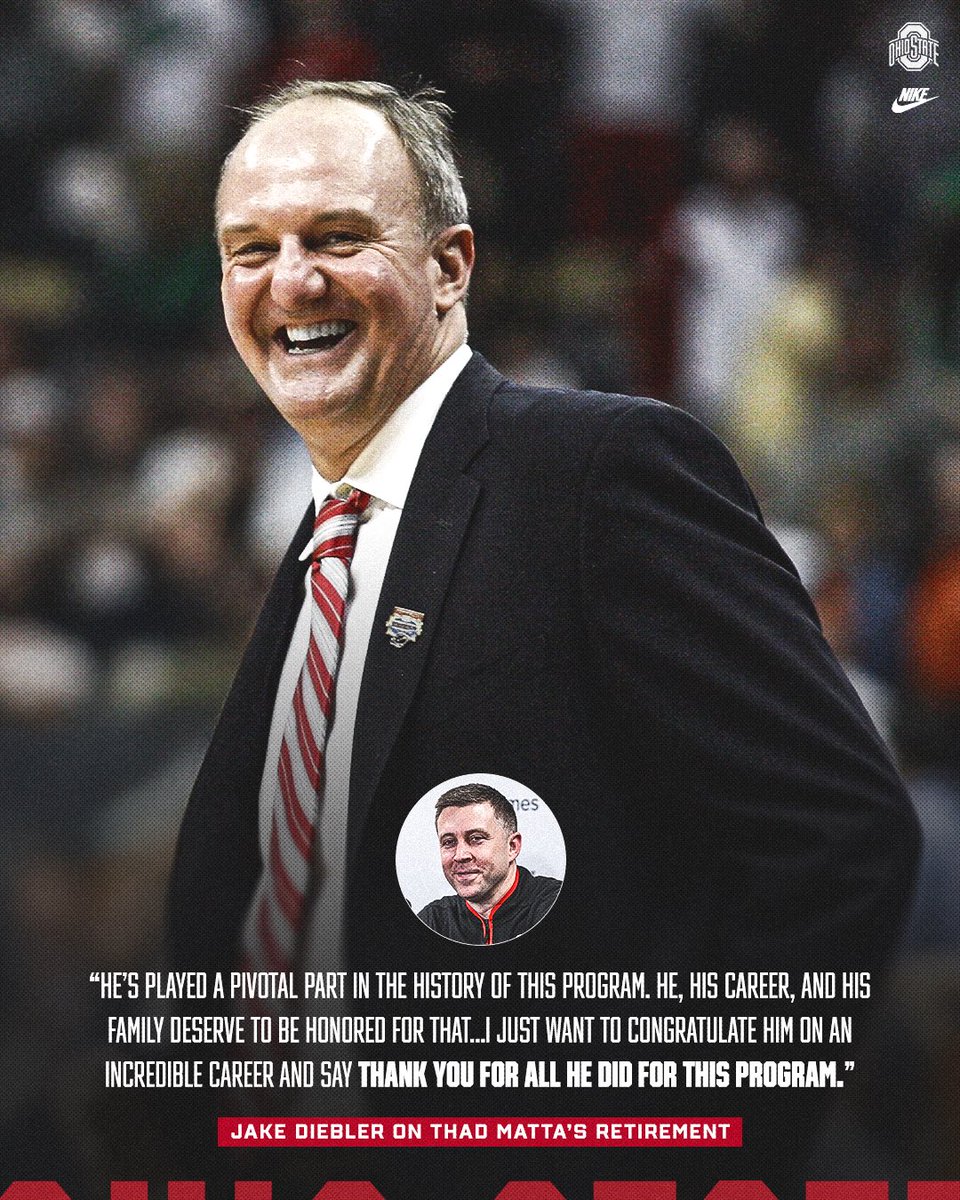
Aren’t enough words to share about the impact Coach Matta’s had on my life and so many others. Honored to have played for him and to continue to learn from him!
Legendary Michigan State coach Tom Izzo said it's been an "honor and a privilege" to face Bruce Thornton the last four years: "We couldn't guard him with a fish net." https://t.co/WcJmcaWaMS
Ohio State’s hiring of Arthur Smith is now official.
Ryan Day: “We are happy to welcome Arthur, his wife Allison and their family to Ohio State. He will bring immediate value to our program and was exactly what we were looking for as we set out to find our next offensive coordinator. His track record in the NFL, experience as a coordinator, play caller and a head coach checked every box during the search. He’ll do a great job in helping our players reach their potential on the field while also connecting with them as people.”
Ohio State has brought back Anthony Schlegel to the strength & conditioning staff, per the OSU faculty database.
Schlegel was a stud linebacker for the Buckeyes in 2004-05 and served on the S&C staff from 2011-14, and again in early 2024.
The “Minister of Toughness” returns!
Agency > Intelligence
I had this intuitively wrong for decades, I think due to a pervasive cultural veneration of intelligence, various entertainment/media, obsession with IQ etc. Agency is significantly more powerful and significantly more scarce. Are you hiring for agency? Are we educating for agency? Are you acting as if you had 10X agency?
Grok explanation is ~close:
“Agency, as a personality trait, refers to an individual's capacity to take initiative, make decisions, and exert control over their actions and environment. It’s about being proactive rather than reactive—someone with high agency doesn’t just let life happen to them; they shape it. Think of it as a blend of self-efficacy, determination, and a sense of ownership over one’s path.
People with strong agency tend to set goals and pursue them with confidence, even in the face of obstacles. They’re the type to say, “I’ll figure it out,” and then actually do it. On the flip side, someone low in agency might feel more like a passenger in their own life, waiting for external forces—like luck, other people, or circumstances—to dictate what happens next.
It’s not quite the same as assertiveness or ambition, though it can overlap. Agency is quieter, more internal—it’s the belief that you *can* act, paired with the will to follow through. Psychologists often tie it to concepts like locus of control: high-agency folks lean toward an internal locus, feeling they steer their fate, while low-agency folks might lean external, seeing life as something that happens *to* them.”