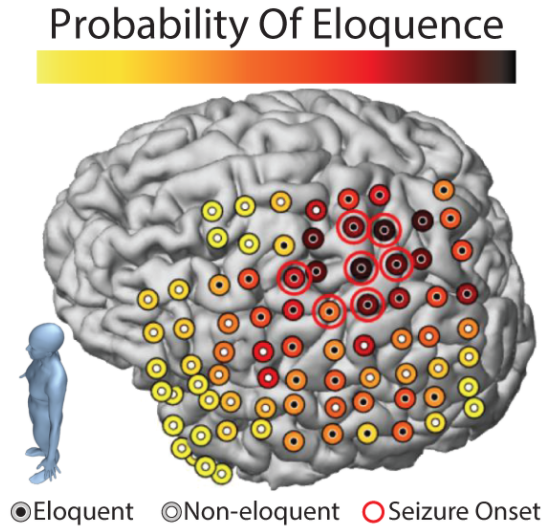
AcademicTwitter friends, are you interested in science & how its results can help improve disease treatment? Then read on to find about our quest to bring fundamental neuroscience into clinical practice for brain mapping in #epilepsy! A Tweeprint 🧵(1/18)
https://t.co/vf8C7Wa42B
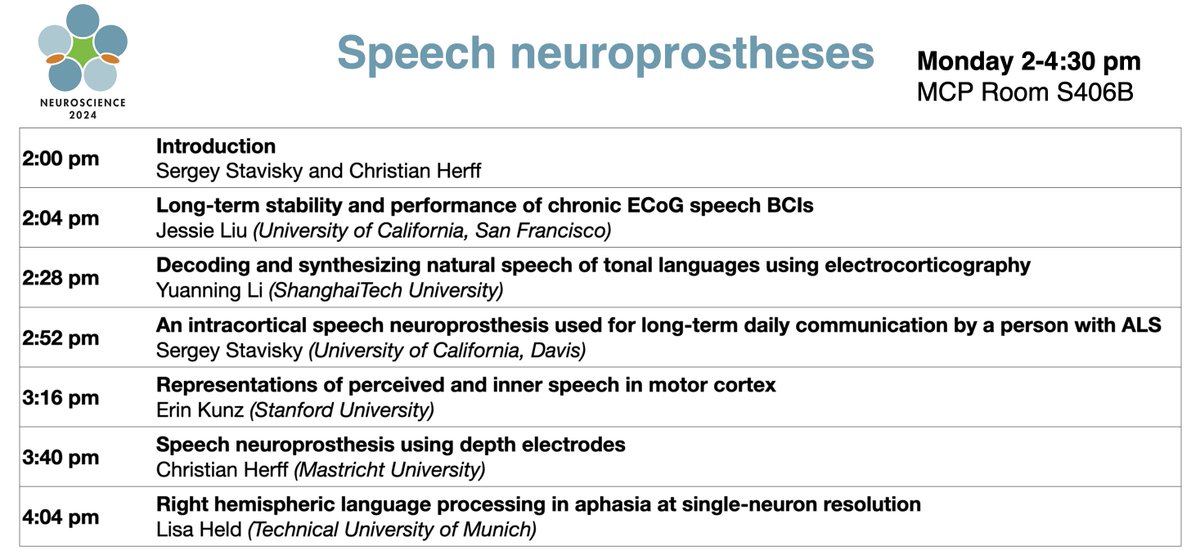
Interested in speech neuroprostheses? Come to the #SfN24 minisymposium organized by @HerffC and I. We have a fantastic lineup chosen to survey the many directions this field can go in: different recording modalities, languages, and behaviors (e.g. attempted vs. imagined speech).
@davidpoeppel @ESI_Frankfurt I am very sorry to hear that, and applaud your honesty and openness, David. This shouldn't be easy being in your position.
Out today in @NatureMedicine, groundbreaking work by Philip Starr MD, PhD, Simon Little MD, PhD (@littleneuro) and colleagues shows that adaptive DBS provides better symptom control than standard DBS in a real-world setting: https://t.co/NRT827NCa6
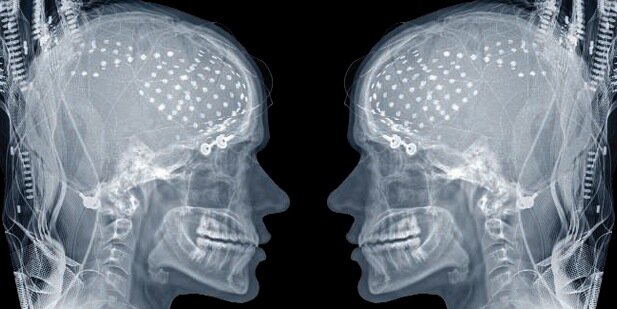
Absolutely! sEEG is great for localizing the seizure onset zone. However, ECoG offers broader spatial coverage, which is crucial for mapping in complex cases where the identification of eloquent areas has higher relevance. This ensures better surgical planning and patient safety.
While sEEG has rapidly become our “go to” option for localization, grids still have a role - particularly in mapping. This is a pt with a left frontal dysplasia radiographically abutting Broca. While you can map with sEEG, imho grids give you greater spatial coverage.
20 years ago today, an extraordinary 24-year-old, unable to move his hands due to cervical spinal cord injury, volunteered to have a tiny sensor placed into his brain so that he could control a computer cursor, his room lights, and a robot arm just by thinking about it.
96% of published findings in psychology are statistically significant. There are 2 options. 1) We study effects with more than 90% power, and more than 90% probability of being true. 2) There is MASSIVE publication bias.
Hint: the answer is 2
https://t.co/IUEafzeW7N
D-4 until the #FWIS2024 International Awards ceremony!
Watch the ceremony LIVE with @FondationLOreal & @UNESCO on LinkedIn:
🗓️ Date: Tuesday May 28 | 7:30 PM CEST
🔗 Livestream link: https://t.co/bDEfdj6kO8
Re-watch last year's ceremony to get a taste of what's to come 👇
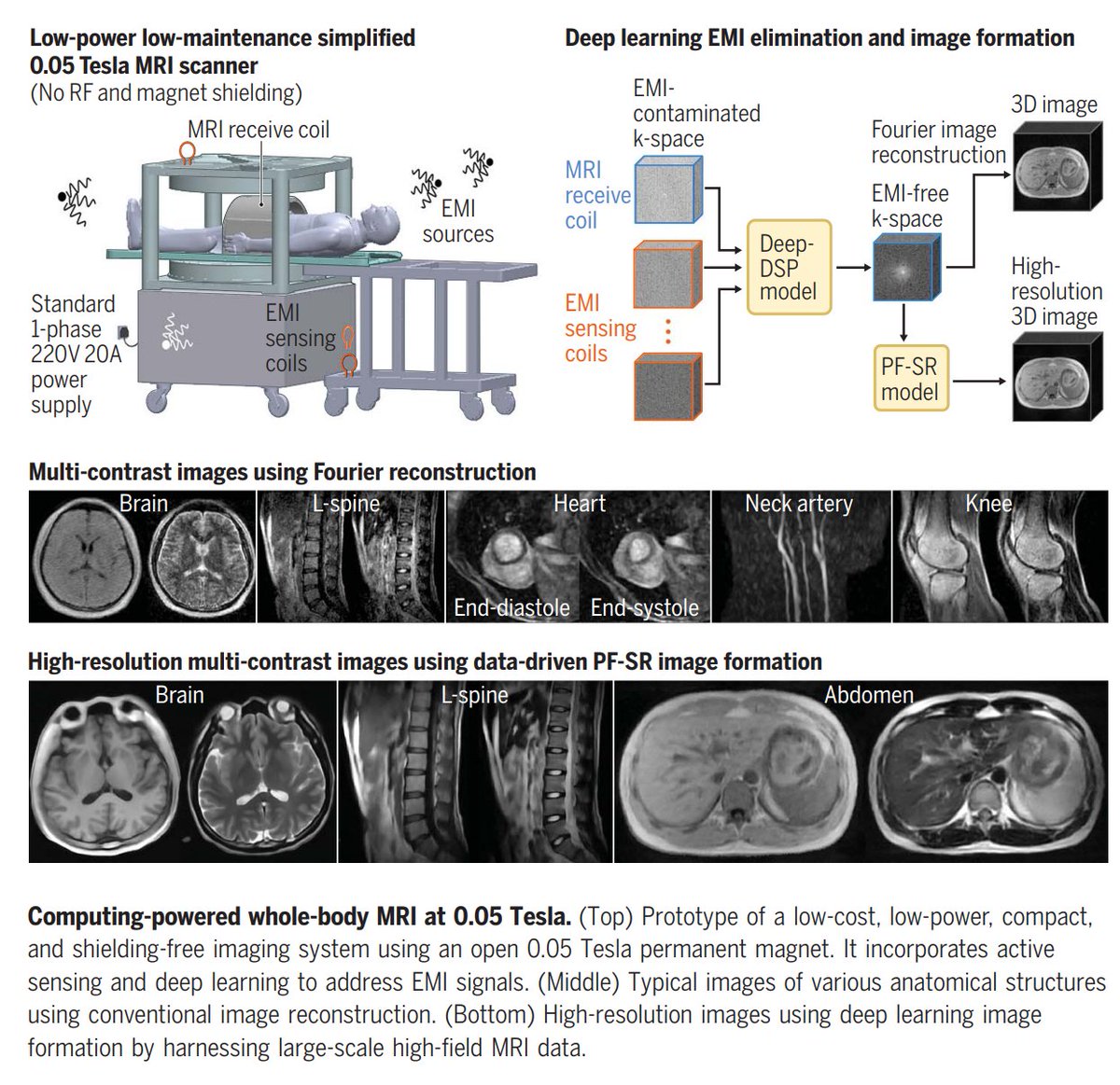
Intriguing paper in this week's Science: a new, much cheaper approach for MRI scanning
It's an MRI scanner that uses a 0.05 Tesla magnet (vs. the current 1.5 - 3 T) and operates at a fraction of the cost (~$22,000 for the hardware), time (<10 minutes), and noise of a current MRI scanner
Unlike current MRIs, the prototype scanner plugs into a standard wall socket, and doesn't need specialist shielding equipment
It uses a deep learning (AI) strategy to improve the low signal-noise ratio that's inherent to lower field strength MRIs
Although the images from the 0.05 T approach aren't as good as from 3 T MRI, they don't seem to be far off
Zhao et al: https://t.co/Fj1C1mWVc5
@Plinz 63% believe AGI could be a reality within 20 years, contrasting with 37% who think it'll take longer. This shows a strong optimism for quicker AGI development than previously thought & what the tweet suggests. #AGI#FutureTech
AI is revolutionizing healthcare, enhancing diagnostic accuracy, & shaping comprehensive care plans through advanced LLMs. Med-Gemini is at the forefront, tackling data complexity with multimodal reasoning. Excited for the future impact! 🚀 #AI https://t.co/LbJNW4wAru