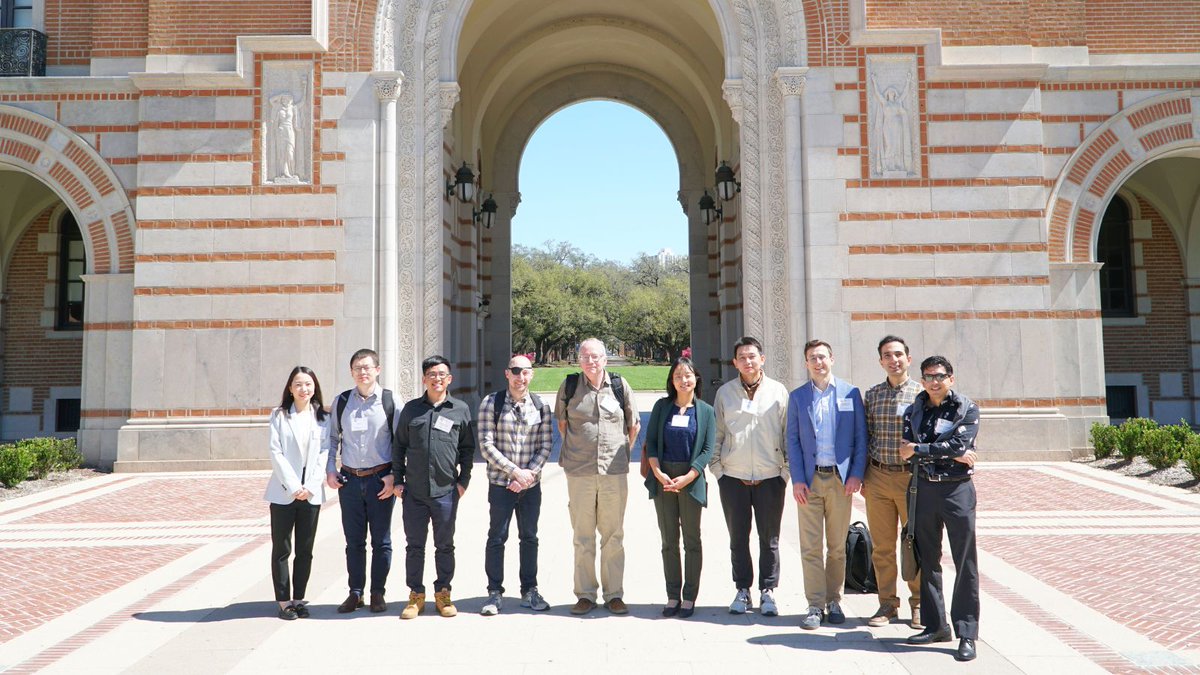
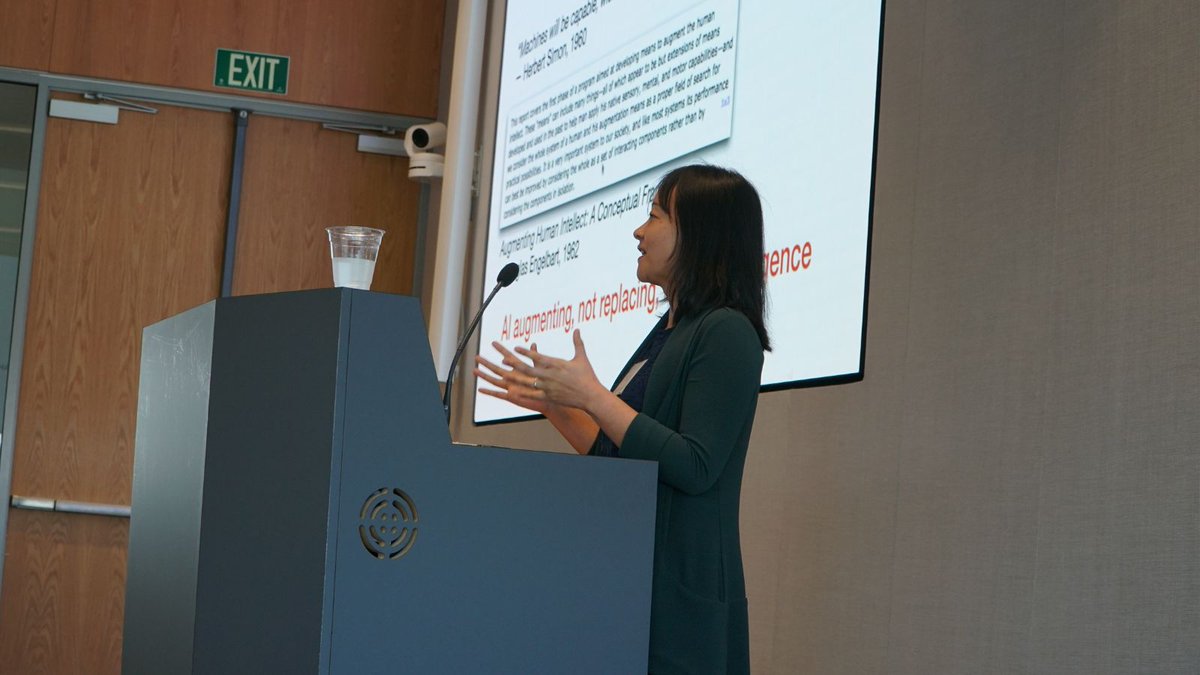
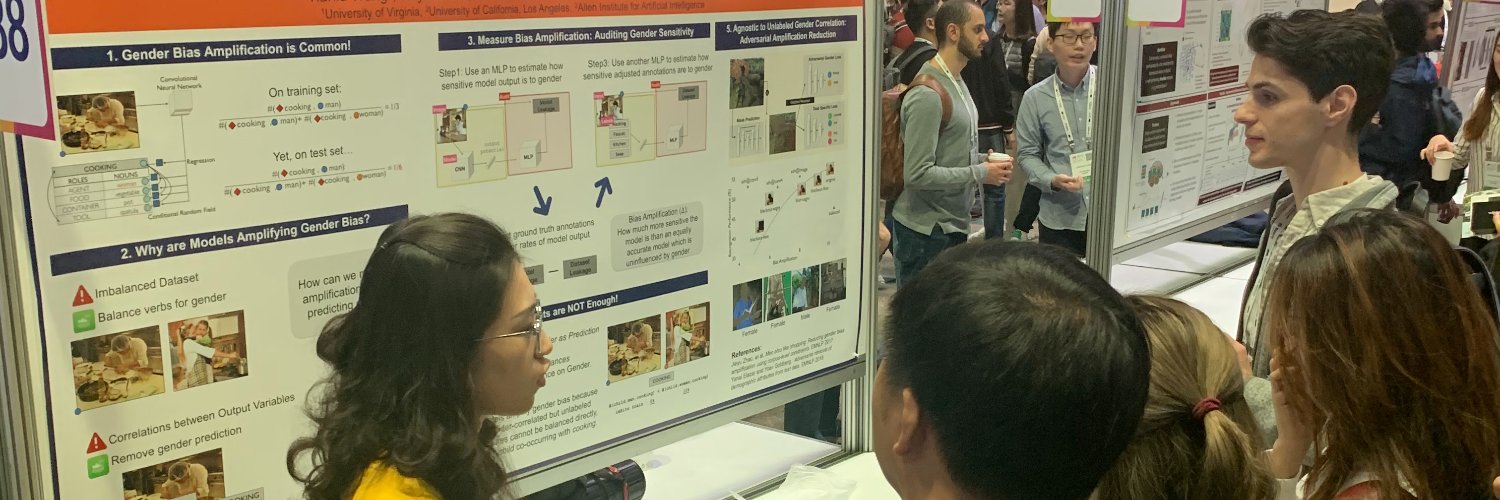
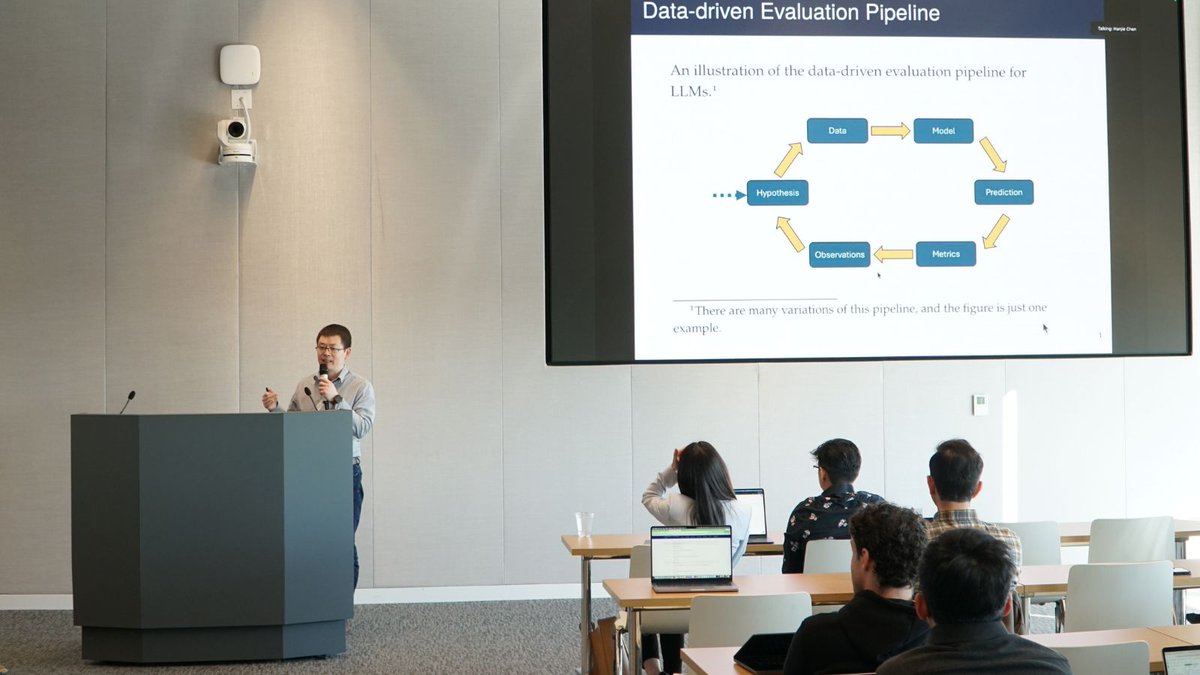
The Rice Workshop on LLMs, organized by @hanjie_chen and @bluevincent, explored AI safety, interpretability & human-AI collaboration. Key takeaway: progress depends on reliability, transparency, and stronger human alignment. https://t.co/lhCONBK7l4
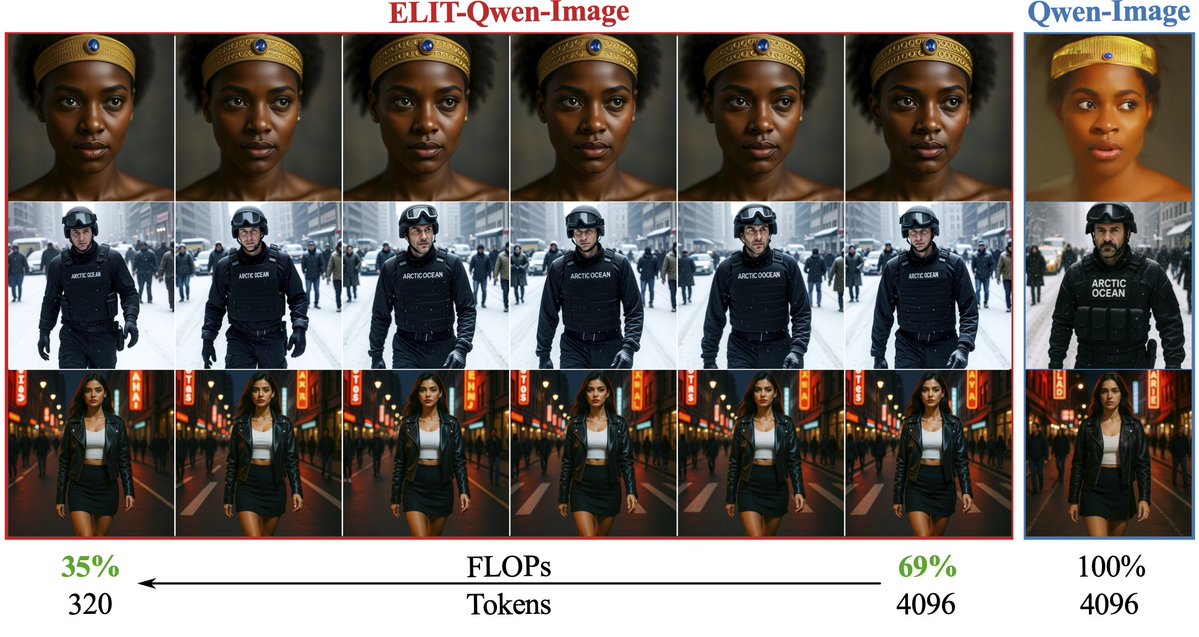
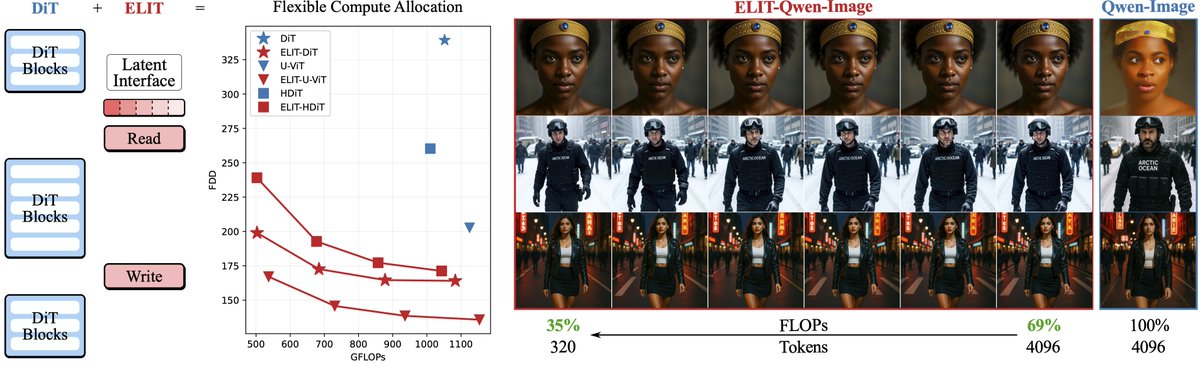
Not all pixels are equally hard, but DiTs still allocate compute uniformly across pixels, wasting efforts on easy regions. ELIT adds two lightweight cross-attention layers to focus compute where it matters, cutting FID by 53%.
ELIT: https://t.co/zwu8mkHkmf
Diffusion transformers waste compute by treating every pixel equally, regardless of content complexity. ELIT (Elastic Latent Interface Transformer) fixes this with a simple idea: insert a variable length set of latent tokens that learn where to spend computation.
Two lightweight cross attention layers (Read/Write) route information between spatial tokens and latents. The model learns importance ordering during training by randomly dropping tail latents, so earlier tokens capture global structure while later ones handle fine details.
Results on ImageNet 1K at 512px: 35.3% better FID, 39.6% better FDD scores, ~33% cheaper classifier free guidance. Works across DiT, UViT, HDiT, and MMDiT architectures with no changes to the training objective.
By Moayed Haji Ali, @vislang (Rice University), @SergeyTulyakov, Aliaksandr Siarohin, Willi Menapace, Ivan Skorokhodov and team at @Snap.
Accepted at CVPR 2026.
🚀 Two papers accepted to #ICLR2026 on test-time scaling for vision-language systems (retrieval + reasoning)!
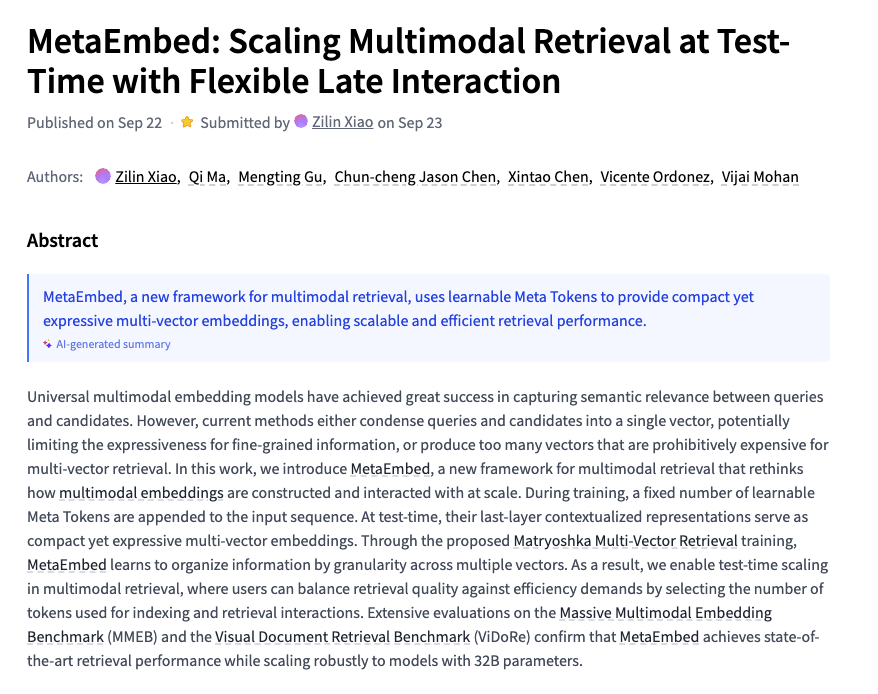
1) MetaEmbed (Oral Presentation): Meta Tokens + Matryoshka multi-vector training → flexible late interaction, choose #vectors at test time for accuracy↔efficiency.
Paper: https://t.co/Ry7uYogtHB
Work done at @AIatMeta with amazing collaborators: Qi Ma, @Mengting_Gu, Jason Chen, Xintao Chen, @vislang and @MohanVijaimohan!
2) ProxyThinker: training-free test-time guidance from small “slow-thinking” visual reasoners → self-verification / self-correction via distribution-level guidance.
Paper: https://t.co/hA8llmYKT3
Work done with @JaywonK17250, @Siru_Ouyang, @jefehern, @yumeng0818 and @vislang!
While I won't be able to travel to Brazil🇧🇷, please say Hi to the team :-)
#MultimodalRetrieval #VisualReasoning #VisionLanguage #TestTimeCompute #Embeddings
Meta Superintelligence Labs presents MetaEmbed: Scalable multimodal retrieval
• Flexible late interaction via Meta Tokens
• Test-time scaling: trade off retrieval accuracy vs efficiency
• SOTA on MMEB + ViDoRe, robust up to 32B models
• Matryoshka training → coarse-to-fine multi-vector embeddings
CLIP-Lite: Information Efficient Visual Representation Learning from Textual Annotations
abs: https://t.co/1l9BZixLNF
CLIP-Lite obtains a +15.4% mAP absolute gain in performance on Pascal VOC classification, and
a +22.1% top-1 accuracy gain on ImageNet
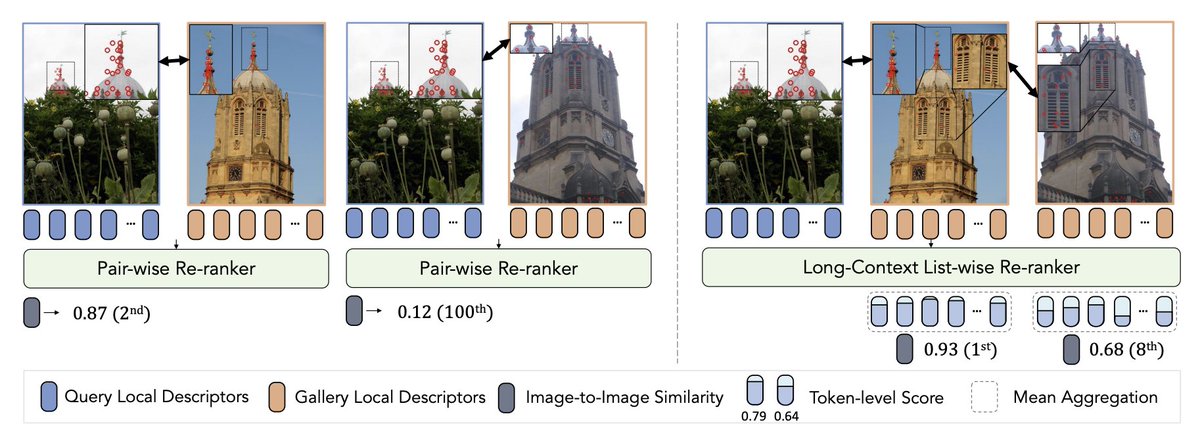
Looking for a new (image) re-ranking paradigm? Check this out! LoCoRe (Long-Context Reranker) is trained with a long-context sequence model and token-level supervision to achieve **one-pass** re-ranking for all image candidates.
Catch us at #CVPR Poster Session 2 #401 on Friday, 4pm-6pm!
Check our new work on cross-modal audio-video generation. Our work produces audio with the best alignment we have seen with respect to actions happening on video. Particularly useful in the era of astounding progress in generative video models.
Rice is shaping the future of AI! Our researchers are working on groundbreaking methods to eliminate the "weird" or distorted images that AI sometimes generates. This innovation could lead to more accurate and realistic visuals created by artificial intelligence. The future of AI-generated imagery is looking clearer and brighter thanks to our researchers! 🔍💡Read more about this fascinating research and its potential impact: https://t.co/BQjr3J5oIQ #RiceU #FutureOfAI #Innovation
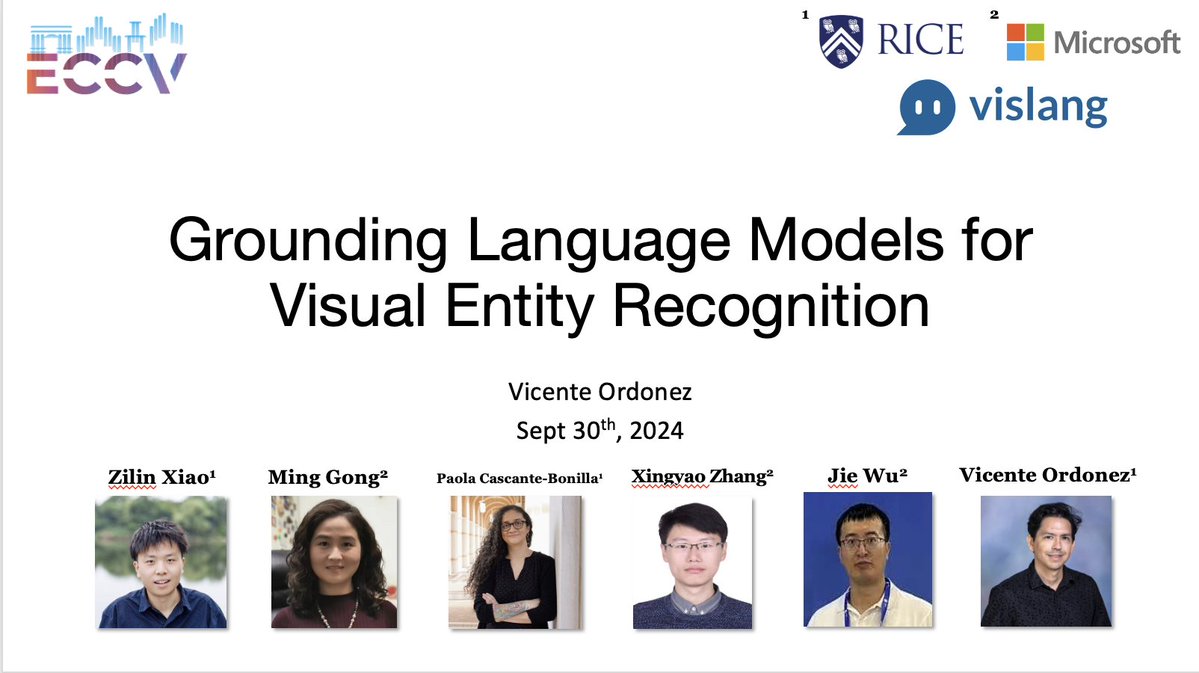
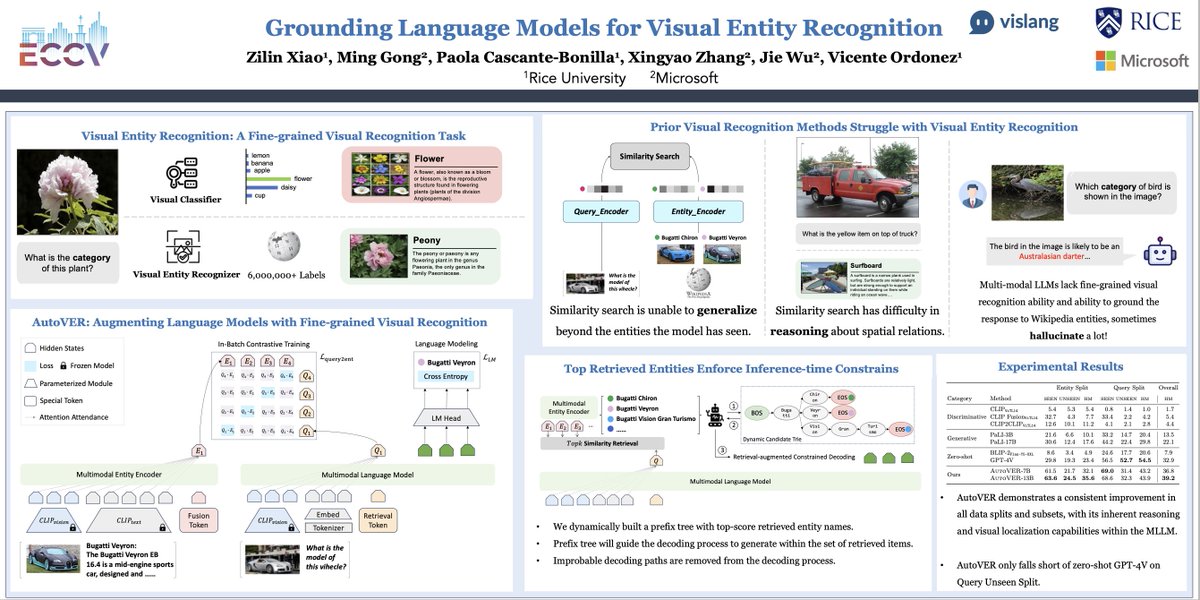
I am excited to share that two of our research works will be presented at ECCV 2024. #ECCV2024 They focus on augmenting language models with fine-grained visual recognition ability.
AutoVER made successful attempts at generative visual recognition. It was accepted to the ECCV 2024 main conference and was invited to the ILR Workshop as an oral presentation. Collaboration w/ @pcascanteb@vislang #Microsoft
Extractive Reranker was accepted to the ILR Workshop as a poster. We explored how the long-context sequence modeling ability of language models can benefit image retrieval, a fundamental computer vision problem.
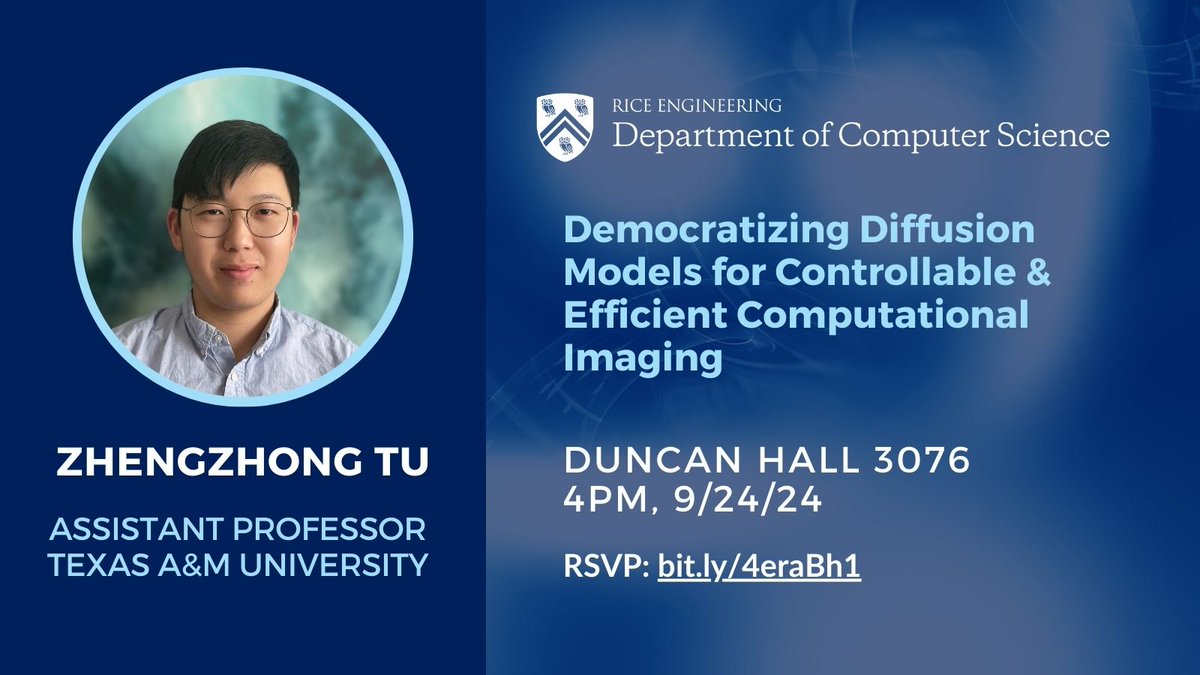
Rice CS welcomes Zhengzhong Tu, Texas A&M assistant professor, next Tuesday, 9/24 at 4pm in Duncan Hall 3076. Dr. Tu will discuss Democratizing Diffusion Models for Controllable & Efficient Computational Imaging.
PLEASE RSVP: https://t.co/FPeDlfUe1o
@_vztu@vislang
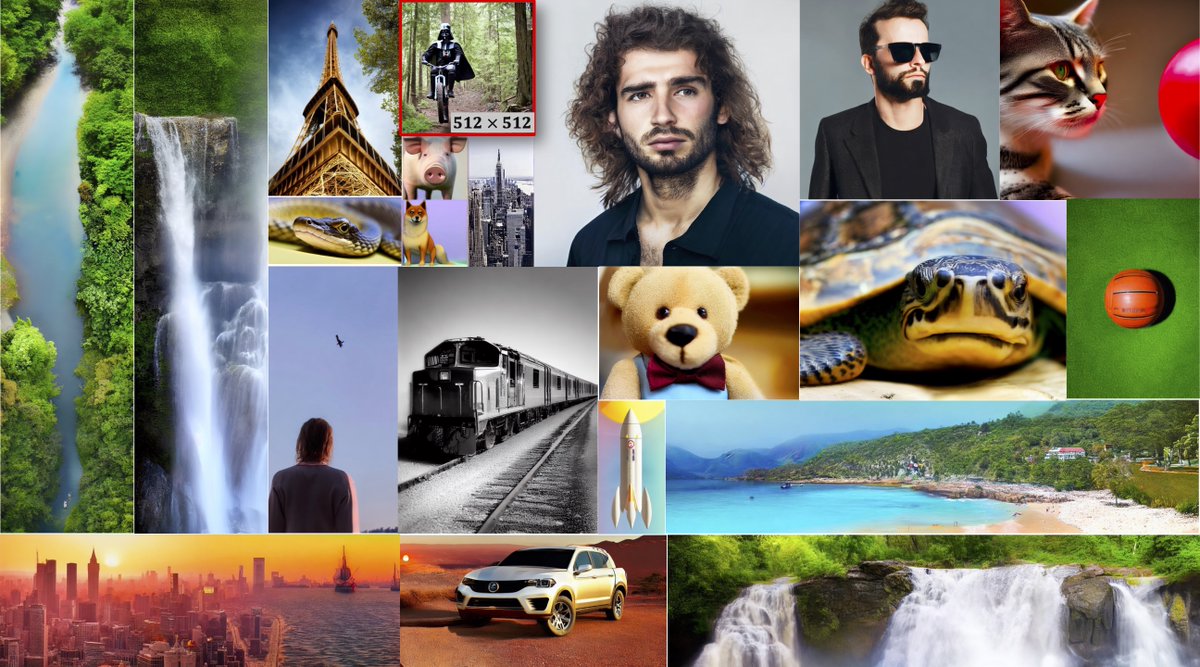
GenAI has struggled to create consistent images, but research from Rice CS' @vislang lab could make weird AI images a thing of the past. Moayed Haji Ali and Vicente Ordónez-Román have developed a way to improve the performance of AI diffusion models.
https://t.co/d7qfrxxOQz
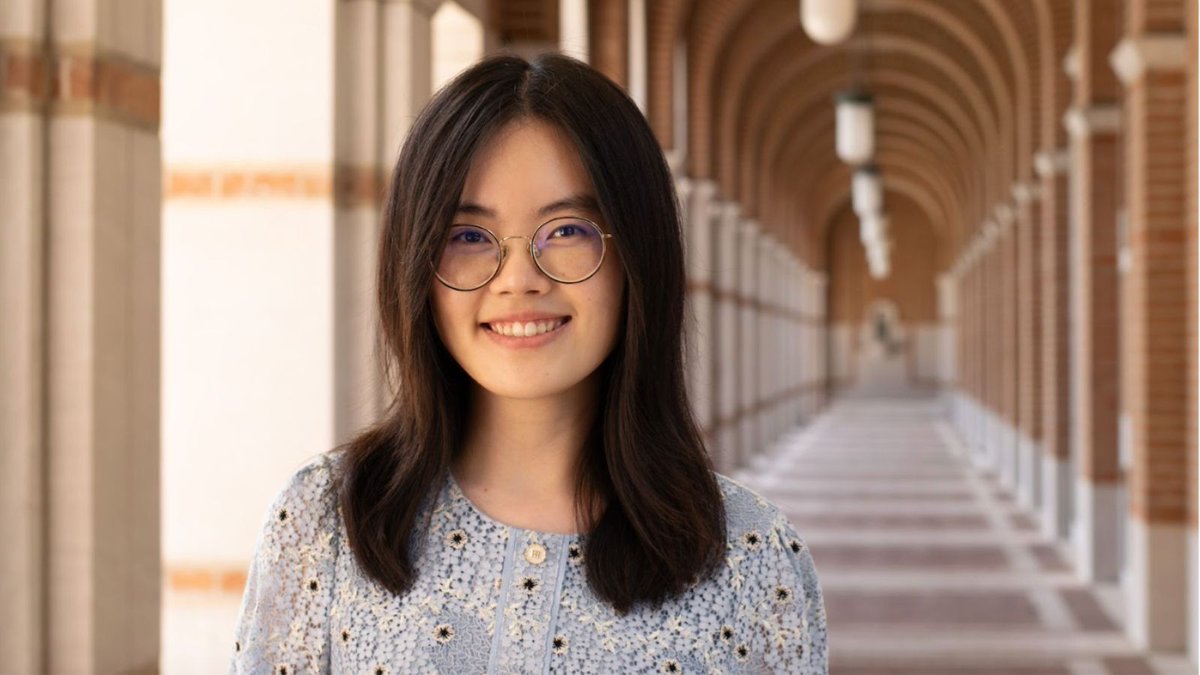
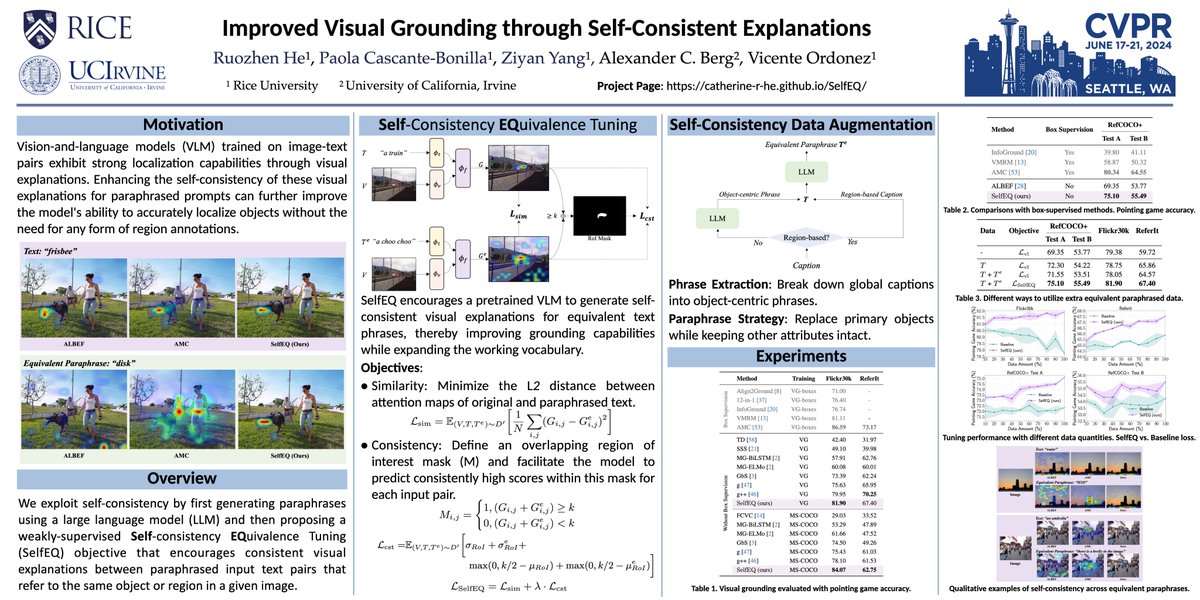
Rice CS' @cathyrzhe presented her paper, Improved Visual Grounding through Self-Consistent Explanations, at @CVPR 2024. SelfEQ helps computers ‘see’ more accurately and consistently. She is advised by faculty member Vicente Ordóñez-Román. https://t.co/f1xCOqDh0K @vislang
(1/4) Excited to share our latest work at #CVPR2024@CVPR!🔥
Join us tomorrow, Thursday, June 20, from 10:30am to noon at Poster Session 3, # 334, to learn about "Improved Visual Grounding through Self-Consistent Explanations" with @pcascanteb, Ziyan, @alexandercberg, @vislang.
(1/4) Excited to share our latest work at #CVPR2024@CVPR!🔥
Join us tomorrow, Thursday, June 20, from 10:30am to noon at Poster Session 3, # 334, to learn about "Improved Visual Grounding through Self-Consistent Explanations" with @pcascanteb, Ziyan, @alexandercberg, @vislang.
Chatted with @cathyrzhe and @pcascanteb from @vislang at @RiceUniversity about the paper they had accepted to @CVPR
Their paper introduces Self-Consistency Equivalence Tuning (SelfEQ) to improve visual grounding in vision-and-language models using paraphrases.
The Problem: Models struggle with precise object localization when textual descriptions vary.
Current methods need detailed annotations and show inconsistency with varied texts.
The Solution: SelfEQ uses paraphrases generated by a large language model and finetunes the model with GradCAM for consistent visual explanations.
How It Works
1) Start with an existing method: Uses ALBEF model without object location annotations.
2) Improvements by SelfEQ: Generates paraphrases and ensures consistent visual attention maps.
Why It's Better
• Expanded Vocabulary: Handles more textual descriptions.
•Improved Localization: Precise and consistent without bounding box annotations.
•Efficiency: Reduces need for detailed annotations.
Key Contributions
• Introduces SelfEQ for better visual grounding.
• Uses large language models for paraphrases.
• Improves performance on benchmarks (Flickr30k, ReferIt, RefCOCO+).
#CVPR2024 #CVPR
Great news from #CVPR2024 🎉🎉🎉
Happy to share that our paper ElasticDiffusion: Training-free Arbitrary Size Image Generation was accepted @CVPR.
Big thanks to my collaborators @bluevincent and Guha Balakrishnan.
Checkout more details from here: https://t.co/Ch8uelO4Mf
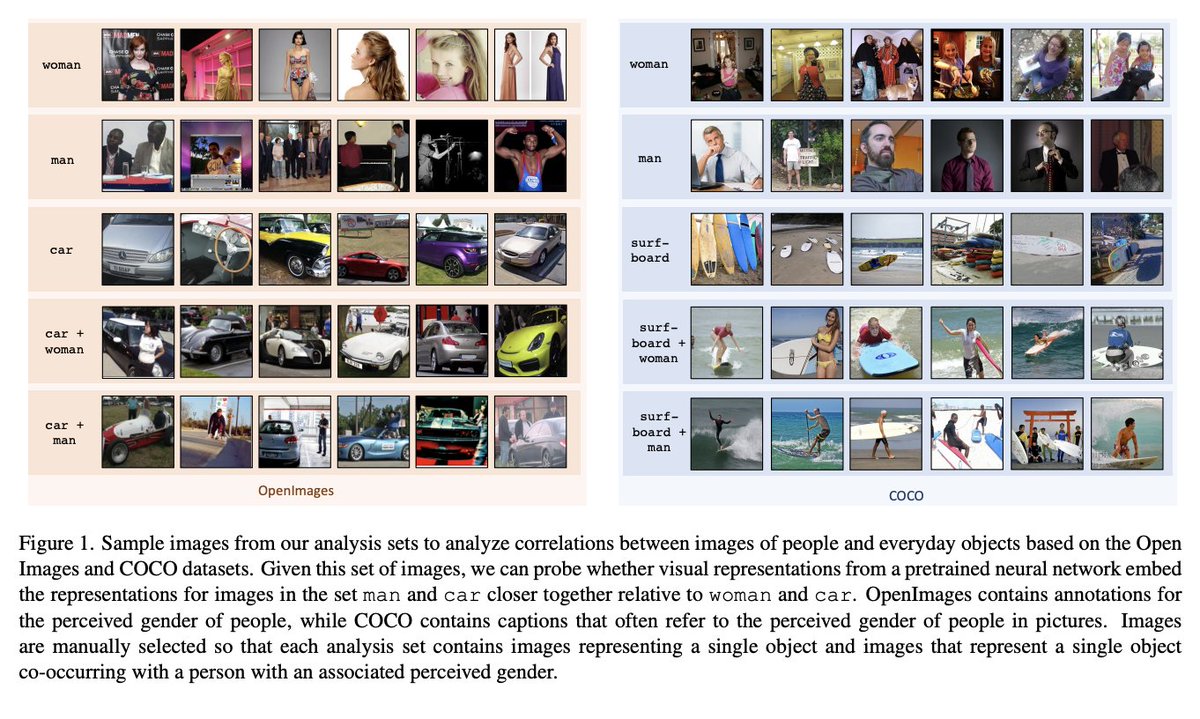
How do biases change before and after finetuning large scale visual recognition models? Our @afciworkshop paper incorporates sets of canonical images to highlight changes in biases for an array of off-the-shelf pretrained models. #NeurIPS2023
Link: https://t.co/641qNJULqI