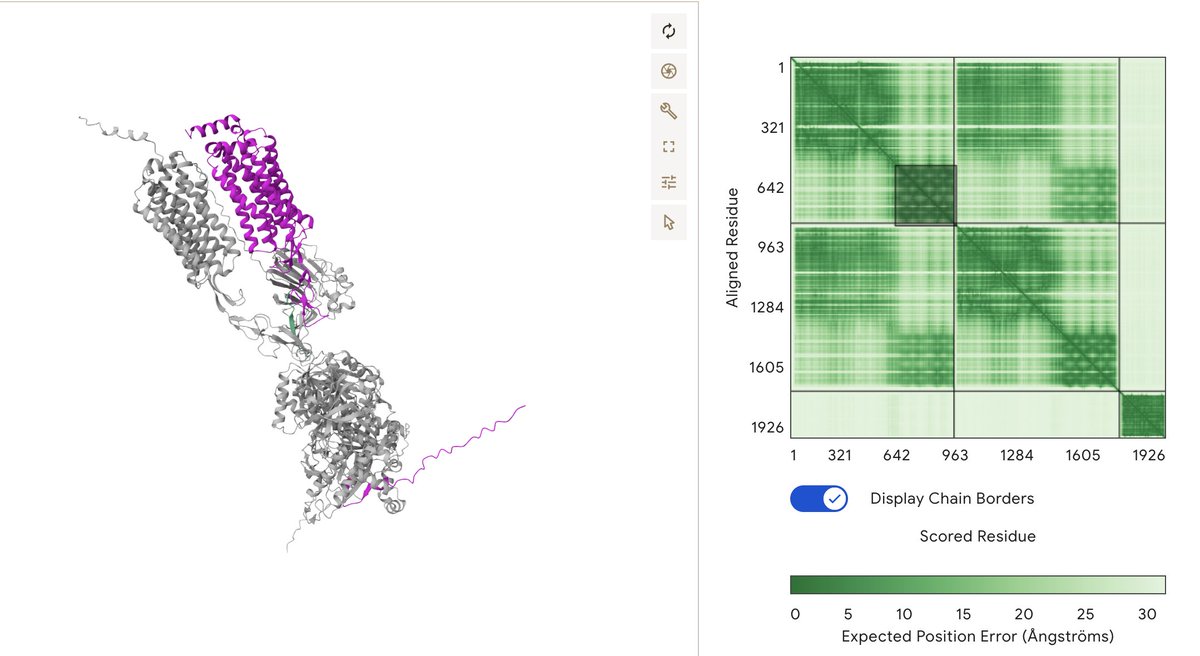
🚨 For those training DL models on proteins, it's possible your "structural" train/test split might have leakage cus tools like foldseek/TMalign (and CATH/SCOP databases) do not always account for structural relationship of circularly permuted proteins:
Plant Science Research Weekly -- A new shade of photosynthesis: The missing chlorophyll f found in action (Science) (Summary by Katarina Kurtović) https://t.co/OCgcFBVAL0
#PlantaePSRW
Dear ENPER community, We are pleased to invite you to the next ENPER meeting, which will be held in my country Bulgaria, from 26 to 28 August 2026 in Sofia. Save the Date🌱🌱🌱🌱
@enper2026
Interesting... 🤔
Reminds me of older work (MirrorTree) where folks used to compare similarity of gene trees (topology and branch lengths) for PPI prediction. Since interacting proteins are likely to have similar phylogenetic reconstructions.
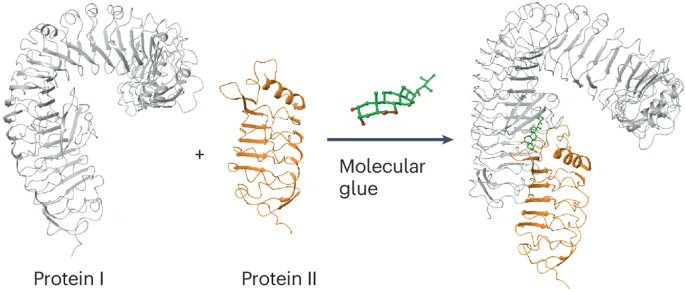
A recent review in @NatRevChem : "The role and structure of molecular glues in plant signalling networks" - auxin, JA, BR, ABA, GA, fusicoccin, small peptides. An interesting perspective on plant molecular mechanisms. https://t.co/cOqK2t712v
☘️🔬
Kinesin-12 POK2 polarization is a prerequisite for a fully functional division site and aids cell plate positioning @NatureComms from Sabine Müller's lab
https://t.co/OTcFy1ER5h
Join us at the EMBO Workshop 'Computational structural biology' to explore cutting-edge breakthroughs in computational structural biology, AI, drug design, and innovative software! 🧬#EMBOComp3D
📝 Submit your abstract by 26 August
📅 2 – 5 December
📍 EMBL Heidelberg & Virtual
The Building Blocks of Early Land Plants: Glycosyltransferases and Cell Wall Architecture in the model liverwort Marchantia polymorpha https://t.co/3RQcD8wz2k #biorxiv_plants
What could Alphafold 4 look like? (Sergey Ovchinnikov, Ep #3)
2 hours listening time
(links below)
To those in the (machine-learning for protein design) space, Dr. Sergey Ovchinnikov (@sokrypton) is a very, very well-recognized name.
A recent MIT professor (circa early 2024), he has played a part in a staggering number of recent great papers in the field: ColabFold, RFDiffusion, Bindcraft, automated design of soluble proxies of membrane proteins, elucidating what protein language models are learning, conformational sampling via Alphafold2, and many more. Of course, all these papers were group efforts, but Sergey's name comes up astonishingly frequently!
And even beyond the research that have come from his lab in the last few years, the co-evolution work he did during his PhD/fellowship also laid some of the groundwork for the original Alphafold paper, being cited twice in it.
This is a two hour conversation with him, asking every question I could think of. We talk about his own journey into biology research, an issue he has with Alphafold3, what Alphafold4-and-beyond models may look like, what research he’d want to spend a hundred million dollars on, and lots more.
Topics/institutions we discuss: @arcinstitute's Evo models, @HWaymentSteele's work, @IsomorphicLabs's AF2/AF3, and @EvoscaleAI's ESM models
Also, extremely grateful to Asimov Press (@asimovpress) for helping fund the travel + studio time required for this episode! They are a non-profit publisher dedicated to thoughtful writing on biology and metascience, such as articles over synthetic blood and interviews with plant geneticists. I myself have published within them twice! I highly recommend checking out their essays at https://t.co/67GCqrINa0, or reaching out to [email protected] if you’re interested in contributing.
Timestamps:
[00:00:00] Highlight clips
[00:01:10] Introduction + Sergey's background and how he got into the field
[00:18:14] Is conservation all you need?
[00:23:26] Ambiguous vs non-ambiguous regions in proteins
[00:24:59] What will AlphaFold 4/5/6 look like?
[00:36:19] Diffusion vs. inversion for protein design
[00:44:52] A problem with Alphafold3
[00:53:41] MSA vs. single sequence models
[01:06:52] How Sergey picks research problems
[01:21:06] What are DNA models like Evo learning?
[01:29:11] The problem with train/test splits in biology
[01:49:07] What Sergey would do with $100 million
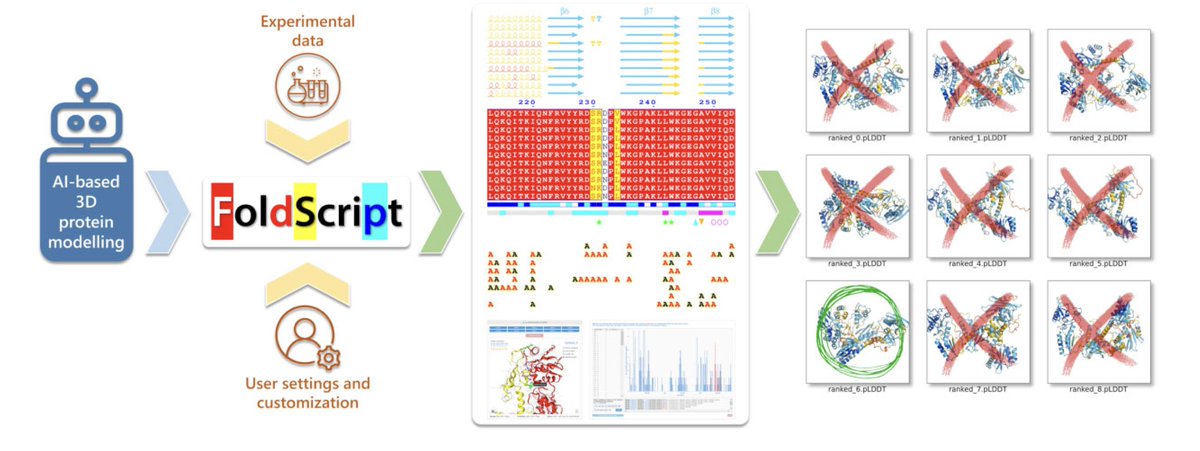
FoldScript: A Web Server for the Efficient Analysis of AI-Generated 3D Protein Models @NAR_Open
1. FoldScript is a web-based server designed to streamline the analysis and selection of AI-generated 3D protein models, offering an easy-to-use interface that efficiently synthesizes structural data from up to 25 models.
2. Unlike relying on a single top-ranked model, FoldScript aggregates information from multiple models to provide a more comprehensive understanding of protein structure, helping researchers identify the most reliable predictions.
3. The server supports several AI-driven protein structure predictors, including AlphaFold3 and RoseTTAFold, allowing users to compare different models for a given protein and assess their structural differences.
4. FoldScript generates visual representations of secondary structure elements, confidence scores (pLDDT), and alignment information from homologous sequences, providing an intuitive interface for both structural biologists and non-experts.
5. A key feature of FoldScript is the integration of a contacts analysis module, which identifies molecular contacts in protein:protein, protein:ligand, or protein:ion interactions, offering a valuable tool for evaluating model accuracy.
6. The server's ability to display results as flat figures or 3D models makes it accessible for rapid, large-scale structural analysis, offering a quick and effective way to assess multiple models in a matter of minutes.
7. FoldScript is freely available without login requirements, allowing both academic and commercial users to access its powerful tools without barriers, making it a versatile resource for the global scientific community.
8. The server is particularly beneficial for evaluating oligomeric structures, where experimental knowledge can be introduced to further refine model selection, helping researchers in drug design and molecular biology.
9. Future developments for FoldScript include support for RNA structure analysis, enhanced model filtering, and the ability to handle larger datasets, ensuring its adaptability as AI-driven protein modeling evolves.
💻Code: https://t.co/LsnSltQaQo
📜Paper: https://t.co/JuYkbWAKDQ
#ProteinModeling #AIinBiology #Bioinformatics #StructuralBiology #MachineLearning #DrugDesign #FoldScript #ComputationalBiology #ProteinStructure
🚨 Thrilled to share one of my main PhD projects!
We built an in silico evolution platform that couples a solenoid discriminator network with AlphaFold2 as an oracle, using a genetic algorithm for sequence update. 🧬✨ (1/9)
A breakthrough in plant gene delivery!🌱
Our new study shows that R. rhizogenes strain A4 outperforms traditional agro strains in transient gene expression, especially in solanaceous crops like tomato and pepper. https://t.co/TMFZuXzQML
📄Published in Plant Biotechnology Journal
MartiniGlass: a Tool for Enabling Visualization of Coarse-Grained Martini Topologies | Journal of Chemical Information and Modeling https://t.co/W36prwWpag
PhD position is open in our team of Plant Morphodynamics at the Institute of Experimental Botany in Prague. Join us and study Fast auxin responses in Arabidopsis shoots! https://t.co/o2yeltlSLQ
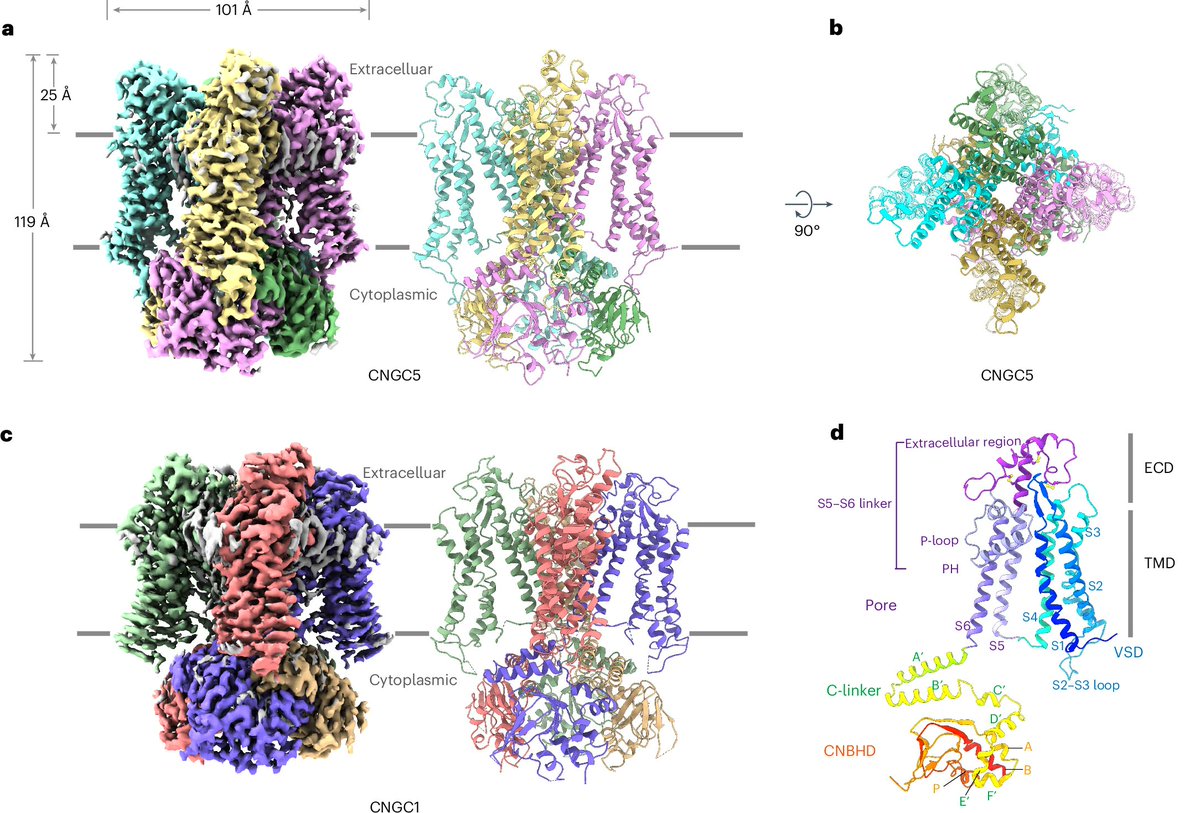
New Article: "Cryo-EM structures of Arabidopsis CNGC1 and CNGC5 reveal molecular mechanisms underlying gating and calcium selectivity" https://t.co/U0NZmFrCqe
Cryo-EM structures and electrophysiological analysis of Arabidopsis CNGC1 and CNGC5.