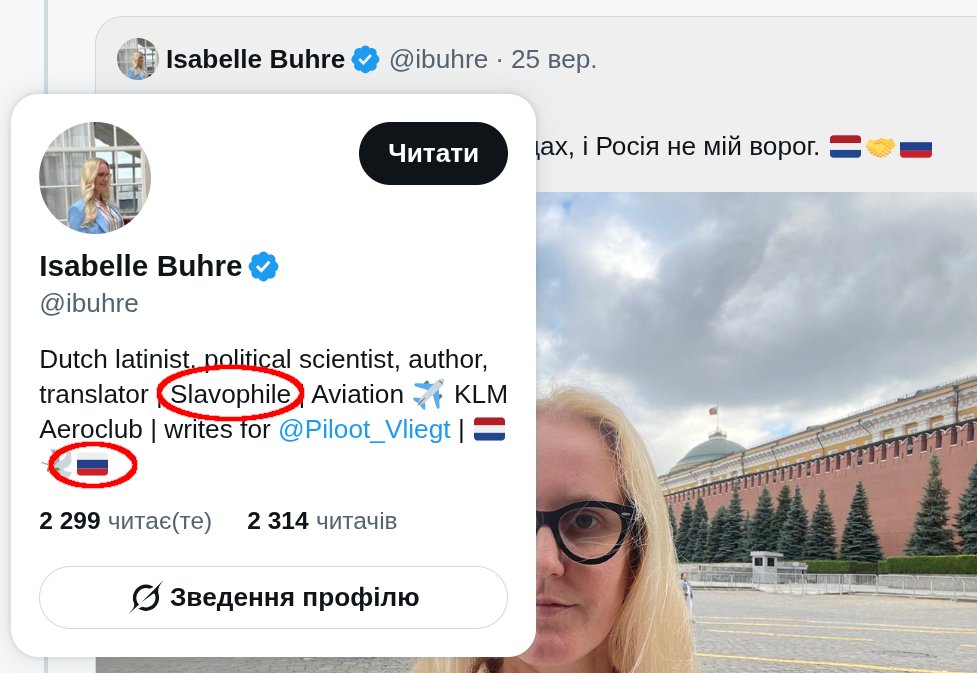
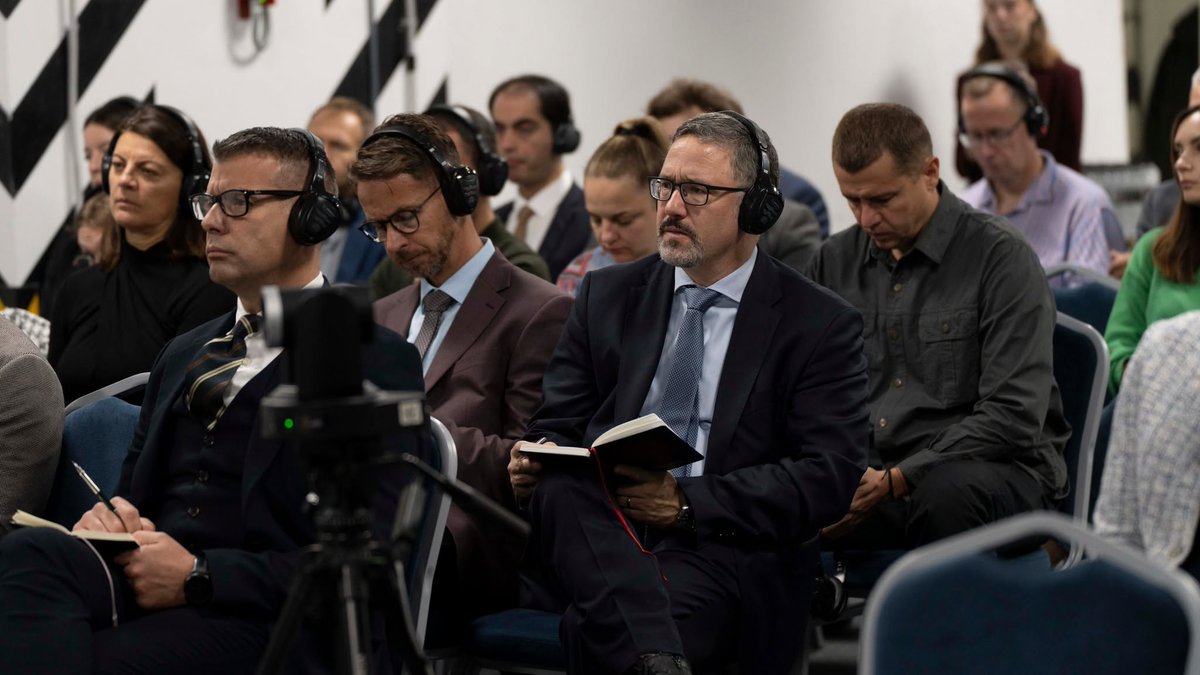
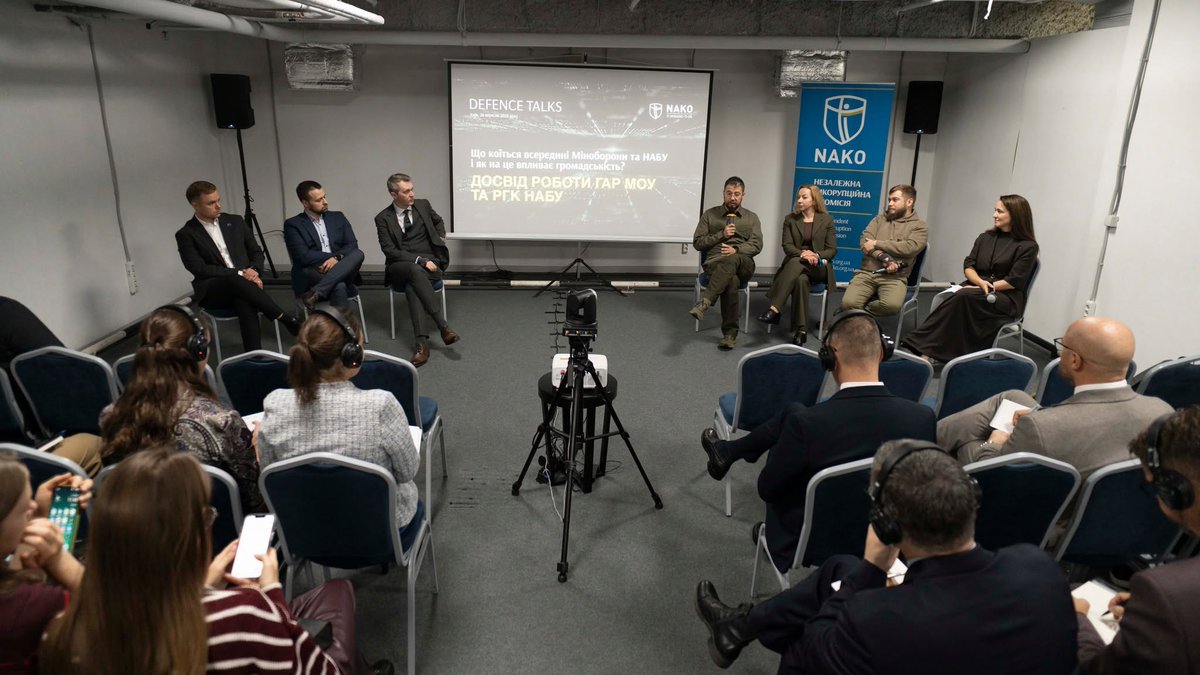
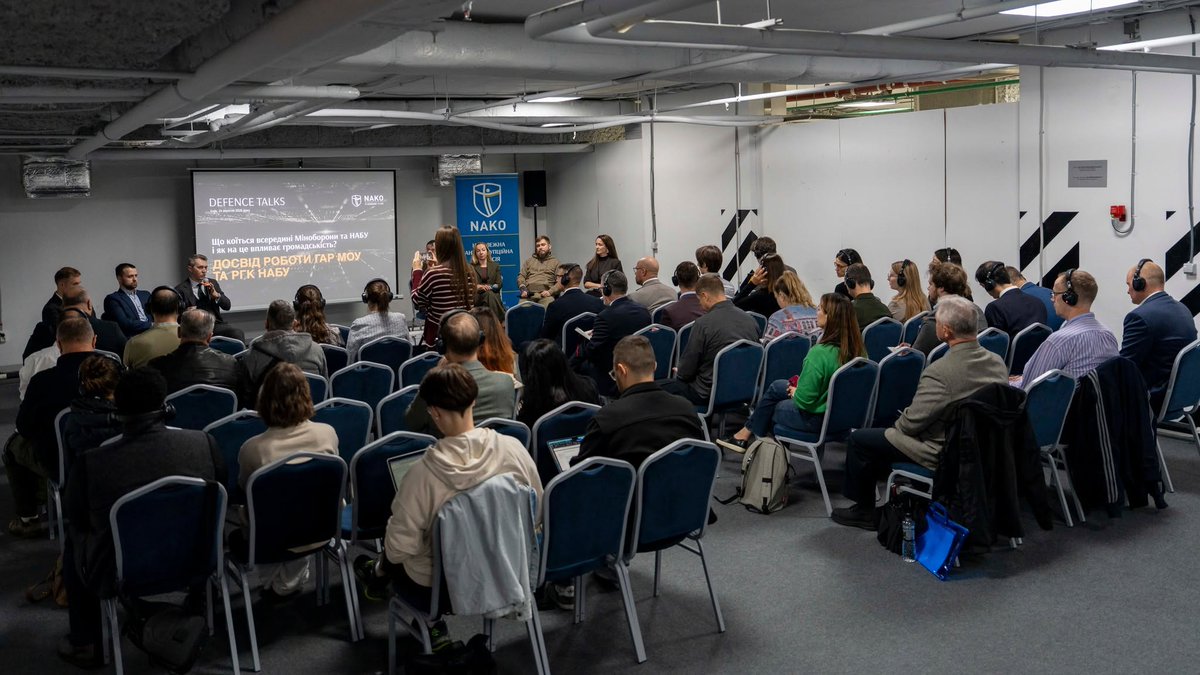
Joined a Defence Talks discussion organized by the Independent Defence Anti-Corruption Committee (NAKO).
We discussed the work of the Ministry of Defence’s Public Anti-Corruption Council and the NABU Civil Oversight Council, and how civil society can strengthen accountability.
Today, we have seen plenty of mockery: a Russian Mi-8 spent 42 seconds inside Polish airspace, yet it was not shot down. Where is #NATO? Where are the security guarantees? But democratic societies do not seek war — especially against an adversary capable of striking their cities with missiles and drones. That is why the psychological threshold between deterrence and going to war is always high.
#Ukraine went through this in 2014. Even after #Russia seized Crimea, Ukraine tried to avoid a major war. In Donbas, that threshold was crossed gradually — as Russian forces began seizing cities and Ukrainian servicemen started dying in combat. Crimea and Donbas became a brutal inoculation that gradually forced Ukraine to understand that this was a war for survival.
Poland, the Baltic states, and other countries on NATO’s eastern flank are also adapting to a new reality. Every Russian provocation will generate debate: Was it a mistake? A test of air defenses? Sufficient grounds to use force? Moscow understands this and has spent years probing where the limits lie and exactly how the other side responds.
Back in 2021, InformNapalm wrote about a remarkably similar episode in our article “Alligators’ flight: how the Russian Armed Forces practically implements information operations against Ukraine during military exercises”. At the time, a Russian helicopter penetrated approximately 50 meters into Ukrainian airspace and immediately turned back. Today, it was a Mi-8, 300 meters into Polish territory for 42 seconds — and Poland’s military command itself says Russia was testing the readiness of Polish air defenses.
We have seen how wars begin — hybrid wars and full-scale ones. We saw it in Crimea and Donbas. That is why we are not laughing at Poland or NATO: no one wants a war except the country that starts one. But Poland and the Baltic states now have something Ukraine did not have in 2014 — and it is not even NATO. They have a country nearby that is already fighting Russia. They can provide it with more weapons and equipment, work with it on modern warfare technologies, train their militaries using Ukraine’s battlefield experience, and acquire knowledge that no peacetime exercise can provide.
Ukraine’s experience gives its allies an important advantage: the opportunity to learn without paying for those lessons in their own blood. Rules and psychological barriers change anyway once war reaches your own home. It is better to change them before it does.
Some 6,000 people — 200 of them children — are right now starving to death in a humanitarian catastrophe orchestrated by Vladimir Putin's Russia.
The town of Oleshky and its surrounding district in the occupied part of Kherson Oblast exist under Russian occupation as a prison — and it is rapidly turning into a death camp.
No one is allowed in or out. The last food delivery was on May 26. Medical supplies are close to non-existent.
https://t.co/rdhvHaVra6
Звернення до українських та міжнародних ЗМІ
Дорогі друзі,
сьогодні я хочу попросити вас про допомогу та привернути увагу до ситуації, яка, на мою думку, заслуговує на широкий міжнародний розголос.
Йдеться про мого друга Генрі @HenryLindo123 , який протягом багатьох років регулярно проводив акції протесту перед Російським домом у Берліні, відкрито висловлюючи свою підтримку Україні та критикуючи російську політику.
Наразі, за його словами, проти нього було подано вже 92 заяви до поліції. Значна частина цих заяв, як він стверджує, пов’язана з конфліктами зі співробітниками Російського дому та містить звинувачення в образах, тілесних ушкодженнях та інших правопорушеннях.
Проблема полягає в тому, що велика кількість заяв поступово формує значний обсяг матеріалів у поліцейській справі Генрі. У результаті він побоюється, що його починають сприймати не як громадянина, який реалізує своє право на мирний протест, а як правопорушника.
Генрі вважає, що таким чином проти нього може використовуватися система правосуддя та адміністративні механізми. На його думку, це може бути частиною ширшої стратегії залякування та тиску на людей, які відкрито підтримують Україну та виступають проти російської агресії.
Особливо тривожним є випадок, який стався з його партнеркою Аннетт. Під час ситуації, пов’язаної із закриттям Російського дому, вона, за її словами, була силоміць відкинута до стіни та отримала травму зап’ястя. За словами Генрі та Аннетт, вони лише хотіли відкрити пляшку шампанського, щоб відзначити закриття установи, і зробити кілька фотографій.
Відео та додаткові матеріали щодо цієї ситуації я додаю нижче.
Але ця історія важлива не лише через конкретний конфлікт.
Вона порушує набагато ширше питання: чи можуть демократичні правові системи використовуватися для тиску на людей, які відкрито підтримують Україну та виступають проти російської агресії?
Ми повинні дуже уважно стежити за тим, щоб право на свободу слова та мирний протест залишалося захищеним навіть у складних і конфліктних ситуаціях.
Тому я звертаюся до українських журналістів, редакцій та медіа:
Будь ласка, зверніть увагу на цю історію. Розслідуйте її. Розкажіть про те, що сталося з Генрі та Аннетт, і, за можливості, поспілкуйтеся з усіма сторонами конфлікту.
Я також прошу передати цю інформацію міжнародним медіа.
Не можна залишати подібні випадки без уваги. Люди, які підтримують Україну та виступають проти російської агресії, повинні мати можливість робити це без страху перед переслідуванням чи залякуванням.
Будь ласка, допоможіть поширити цю історію.
Дякую кожному, хто зверне на неї увагу, поширить інформацію або допоможе донести її до журналістів та міжнародних медіа.
Ось ще посилання на прес-матеріали німецькою мовою. Якщо буде потрібно, можна скористатися Google Перекладачем.
https://t.co/fOPMe96Ybf
https://t.co/I07t0ruHKP
@United24media@U24_gov_ua
🇳🇱🇷🇺Le chaos en cours aux Pays-Bas était prémédité.
Tout le réseau ferroviaire saboté pour paralyser le pays, des portions d'autoroutes noyées de fumée, l'hypothèse de la coïncidence ne tient plus.
Il s'agit probablement d'un entraînement du renseignement militaire russe plutôt que d'une réelle attaque. L'objectif pourrait être de tester les défenses de la société civile si la Russie voulait paralyser le pays pour, par exemple, empêcher l'acheminement de matériel militaire à l'Est de l'Europe.
En effet, en cas d'agression ou de confrontation dans les pays baltes ou en Pologne, l'OTAN devra transporter énormément de matériel lourd à l'autre bout de l'Europe le plus vite possible. C'est pour cela que les infrastructures de transport ont un rôle critique dans la défense du continent.
Si la Russie a des opérateurs sur place capables de paralyser les axes principaux des chemins de fer et des autoroutes, cela peut causer des retards suffisants pour enrayer l'immense machine logistique otanienne. Plusieurs pays pourraient être affectés en même temps.
Imaginons ce scénario : des centaines de drones pénètrent l'OTAN depuis l'Est, des frégates russes menacent la Baltique et le nord de la Norvège, certaines autoroutes et voies ferrées sont inutilisables pendant plusieurs jours... La Russie a la capacité de sérieusement nous gêner.
L'avantage c'est que ce test en cours aux Pays-Bas, si s'en est bien un, permet également d'entraîner le pays à réagir à ce type de crise.
Le chat et la souris.
@Yannegis@SashkoJarchuk@Ostanniy_Cap The Armed Forces of Ukraine saved me, you moron. 🤦🏻♂️ And let me remind you that PL has already received €830 million in EU compensation for these mostly old weapons. And they still want €450 million more.
PS: even Belarus has already shot down Russian UAVs and Romania too(2 pcs)