This one hits different.
Space station goes dark. Tactical team docks, suits up, and steps into pure nightmare fuel — a full-blown xenomorph-style creature tearing through the corridors while the crew fights for their lives in zero-G and tight hallways. The lighting, the creature design, the tension… it all feels like a proper high-budget sci-fi horror short.
Directed by Lion El Aton.
AI is already delivering this level of atmosphere and scale. Hollywood better start adapting fast because the old way of making these kinds of scenes is about to look expensive and slow.
I can't believe I'll be a fan of an AI character and not Dwayne Johnson 😭🤣
🇺🇸 Every time Americans drive across town, something is logging it.
This app maps more than 137,000 license plate readers across the U.S., and not solely where they are, but the direction they’re pointing too.
Flock cameras, Motorola, and the rest of them: Dropped onto one map like a net over the country.
People can zoom into your own street and see which ones have been watching the cars on it... and that’s the part that sits wrong.
They already passed a dozen of these this week, but didn’t know they were counting.
Writer: Val
Gene Kelly didn’t want to sing “Singin’ in the Rain” on The Muppet Show.
Kermit took that as a challenge and made it the plot, coaxing him into it anyway.
It was the last episode they ever filmed, and the last time Gene performed it.
A poignant goodbye to the song and The Muppets
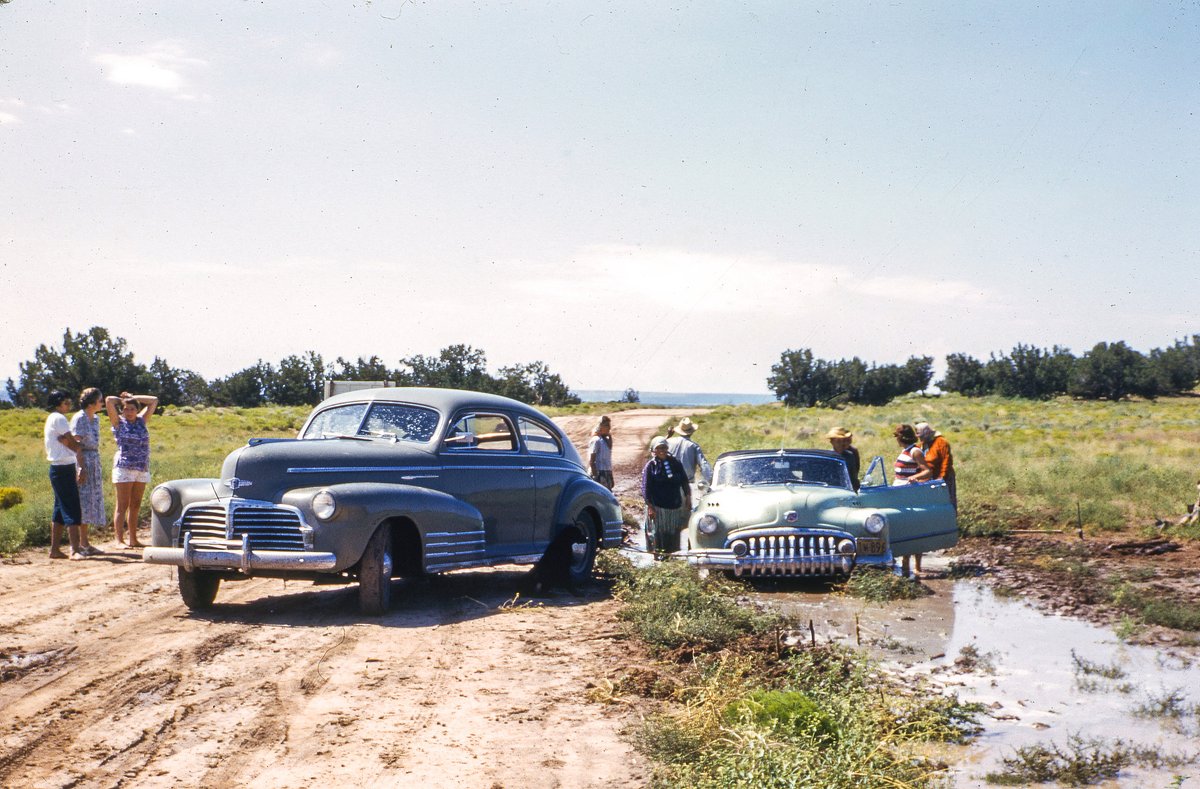
I bought a box of slides in a Los Angeles warehouse for twenty dollars.
Thanksgiving, 2019.
An antique store was emptying an old warehouse. Inside was a pile of Kodachrome that almost went nowhere. The woman selling it said the slides had belonged to a photographer whose house had been liquidated after he died.
The boxes were addressed to Hugh Stevens Bell.
Bell was born in St. Joseph, Missouri, on January 10, 1899. He served in the Navy in 1918, finished Western Reserve University with honors, edited the campus paper, and worked at the Cleveland Museum of Natural History. He wrote for the Cleveland Plain Dealer, Nature Magazine, and the Journal of Geology. In the 1930s he joined the U.S. Indian Service and then soil conservation work. A son was born in Flagstaff in 1936. He did hydraulic research at Caltech and in 1942 published a USDA study on stratified flow in reservoirs.
National Geographic published his photographs along the way.
He lived out his last years in Sierra Madre and died there in 1989 at ninety.
What I found was not a few snapshots. It was a working life in color.
Desert roads. Cars stuck in the mud. Families standing in the sun. Monument Valley. Native communities of the Southwest in the 1940s and 1950s.
Mixed in were the personal frames. His people. His trips. The ordinary days that never make a magazine.
Kodachrome is why these still look alive. The dyes hold. Reds stay red. Skies stay blue. Seventy and eighty years later the film has not faded the way so many other color processes have. You can still feel the heat coming off the dirt.
I scanned them. I put them online. That box is what started my own personal collecting of what I've since learned is called vernacular photography.
Since then I have collected tens of thousands of snapshots, slides and photo albums and organized them into many different digital albums on Flickr.
Everything after that, the estate sales, the lockers, the orphaned pictures, began with the Hugh Stevens Bell Collection, sitting in a warehouse waiting to be thrown away.
Here is one of them.
The full collection is here if you are a fan of the American Southwest you will enjoy this trip back in a time machine:
https://t.co/TmOoHG50Oh
She started by explaining something most travelers fundamentally misunderstand about airport lounges, because the misunderstanding is what keeps them eating $17 sandwiches in the terminal.
"You think airport lounges are for rich people. Business class passengers. Corporate executives. Frequent flyers with gold cards and matching luggage. You think there's a velvet rope and a dress code and a membership that costs thousands of dollars. That's what the door looks like from the outside. That's what keeps most people walking past it."
"In 2026, the reality is completely different. Airport lounges are accessible to anyone holding one of roughly a dozen popular credit cards, most of which regular families already carry for everyday spending. The lounge access is included as a standard benefit. Not a hidden perk. Not a secret upgrade. A benefit listed on the card's own website, described in the welcome packet most people throw away, and sitting in the app most people never download."
"The door isn't locked. It never was. The only barrier between a $54 terminal meal and a free lounge buffet is knowing which card in your wallet opens the door, and most people never check because they assumed the door wasn't for them."
Roughly 45 days into Ukraine's blockade of both the Azov and Black Seas and the collapse of Russia's grain market continues to accelerate.
Russia's 3rd largest industry is facing mass bankruptcies.
My mother called me crying the morning after my wedding. “Please don’t deposit the money your uncle gave you.” I laughed. “Why?” She said, “Because that money isn’t a gift.” I immediately called my uncle. He sounded nervous. “Your mother told you?” I asked what she meant. He refused to answer. So I checked the envelope he had handed me at the wedding. There was $25,000 inside. Underneath the cash was a small handwritten note: “For what your father took from me.” My father had died six years earlier. I had no idea what he could have taken. I confronted my mother. She finally admitted that my father had stolen $40,000 from my uncle before he died. “But why give it to me?” I asked. She looked at me and whispered, “Because your uncle doesn’t want the money back. He wants you to know what your father did.”
Louie Anderson walked onto Johnny Carson’s stage for his first national television appearance and immediately started making himself the punchline.
He jokes about being between meals, trying to fit into California life, going to the beach, the Olympics, camping in Minnesota and growing up with a strict Midwestern father.
The jokes keep coming, but what stands out is how naturally Anderson turns his own insecurities and everyday experiences into material.
Even his family stories become part of the act especially the way he describes hassling his younger brother and getting the classic: Mom, Louie’s looking at me again.
It’s a fascinating early look at a comedian who could take something as ordinary as being overweight, growing up in Minnesota, or dealing with his parents and turn it into a story an entire room could relate to.
And this wasn't a polished greatest hits routine from years later.
This was Louie Anderson introducing himself to a national audience for the first time.
🎬 The Tonight Show Starring Johnny Carson.( November 20, 1984 )
2) Later, during construction of Oxford University's Kendrew Quadrangle in 2008, a mass grave of 35 male skeletons was unearthed. Forensic analysis showed they were men aged between 16-25 who died extremely violently, many stabbed several times before being decapitated...
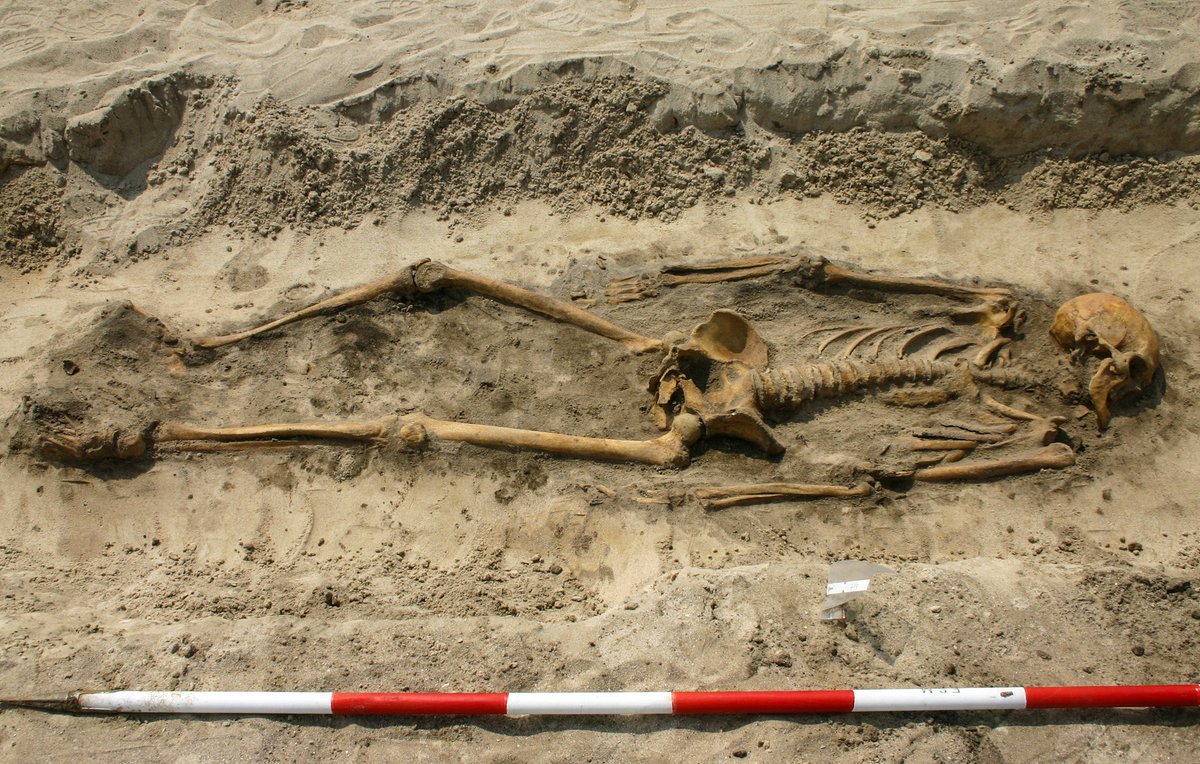
1) The skeleton of a man found in 2005 near the town of Otterup, central Denmark. He had stood 6ft tall and died in his 50's, likely from an infected stab wound in his pelvis. Researchers suspected the man was an elder Viking who succumbed to his injury on returning from a raid..
8) The two Vikings now lie side by side in the National Museum of Denmark, Copenhagen. Norsemen kin - farmers, raiders, settlers? - who died 540 miles apart at the turn of the first millennium.
{End}
kinda trippy how Adam and Eve ate the apple, the forbidden fruit, before the fall of mankind
and now everyone is carrying around a device with them with a bitten apple on the back
🇺🇸🇮🇷 America destroyed one rocket launcher with a single drone, and Iran answered with 515 missiles
Andreas Krieg zeroed in on the mismatch. Washington chose a drone rather than an airstrike, deliberately small, hoping to stop the mine-laying without provoking much.
Tehran replied with a strategic barrage across Jordan, US naval targets and the UAE.
"This is a different regime from the regime that we saw in 23, 24 and early 25"
They no longer wait, and they no longer answer in proportion.
Which exposes the flaw in the periodic-strikes plan Axios describes.
Andreas reads that leak as pressure rather than policy, and warns that telling Iran you'll hit it whenever you please, mid-negotiation, only convinces Tehran the Americans must be pushed out of the region entirely.
His deeper point should worry every Gulf capital.
Iran doesn't aim at Israel because Israel absorbs punishment.
It aims at the Gulf because the Gulf breaks first and picks up the phone to Washington.
A retired Navy captain wrote in Military Times that losing the Bahrain base equals
"losing an aircraft carrier"
Meanwhile Riyadh is quietly seeking $8 billion in new loans.
Fifty years of punishment never bent Iran once.
The only deterrent left is making the Gulf too tough to hurt, and that takes years nobody has.
@andreas_krieg