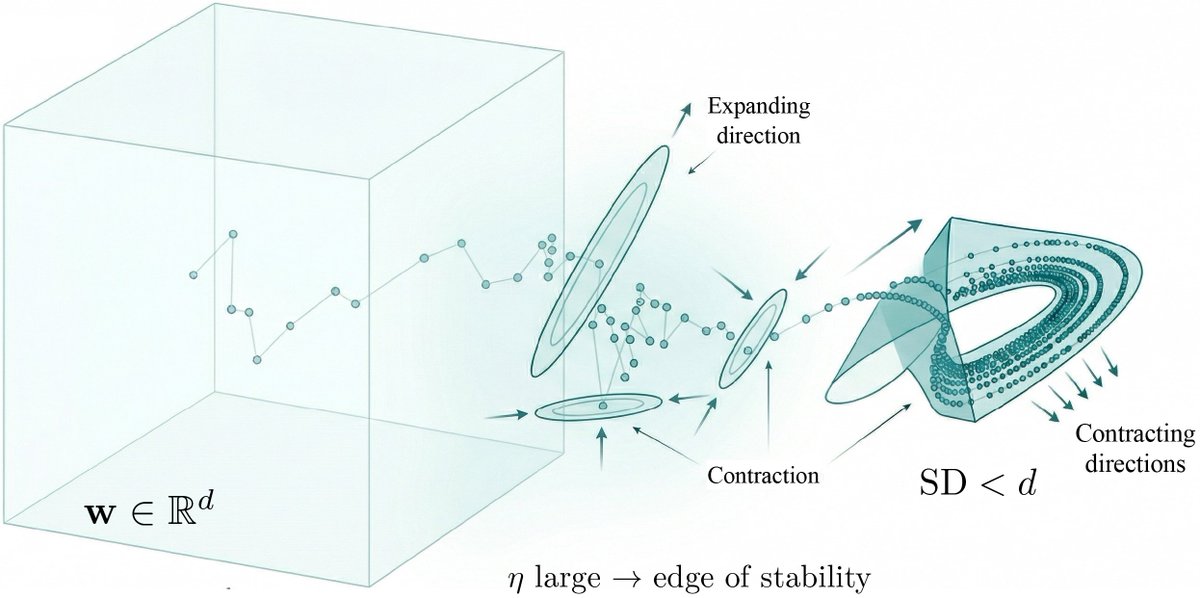
Modern deep networks are often trained at the #EdgeOfStability, a regime where dynamics are locally unstable, nearing chaos. Yet generalization improves, defying the wisdom of classical optimization. We now theoretically explain this central puzzle: https://t.co/yh79EN8EfF. 👇
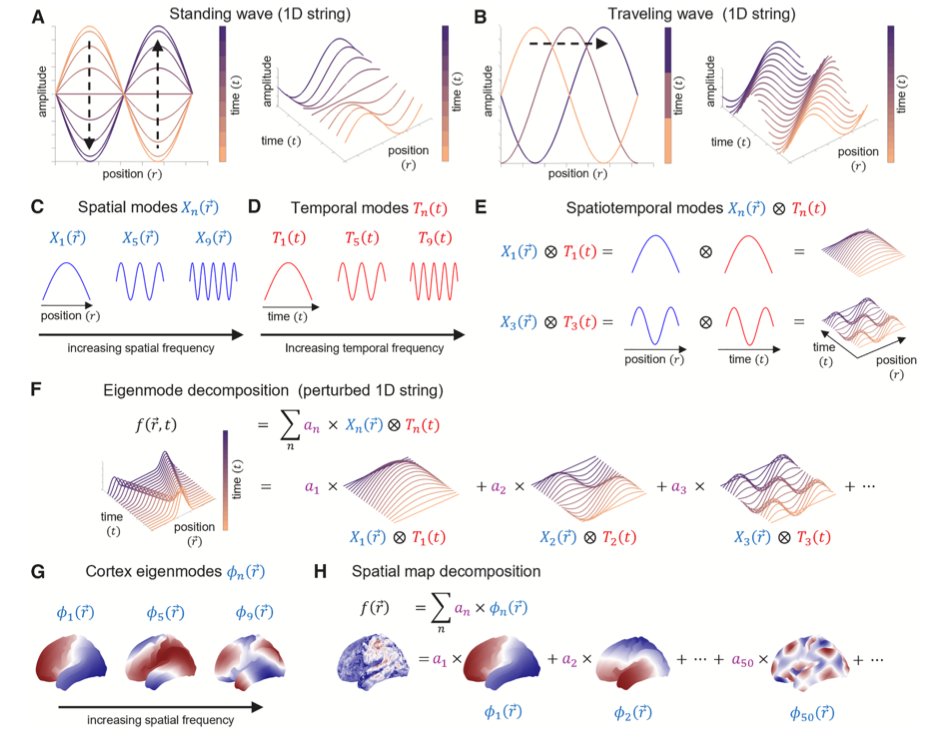
Traveling waves may be how the brain computes, with neural dynamics mirroring changing signals through recurrent wave-like flows.
A Spatiotemporal Perspective on Dynamical Computation in Neural Information Processing Systems
https://t.co/SWKdq6ZCys
#neuroscience
Happy to share my first work as a postdoc!🎉 We show diverse cognition can emerge by retiming stable intrinsic flows. Such flows reconstruct FC, whole-brain gradients, and even 23 task activations via phase alone, unifying resting & task dynamics. #neuroscience#CenterTrends
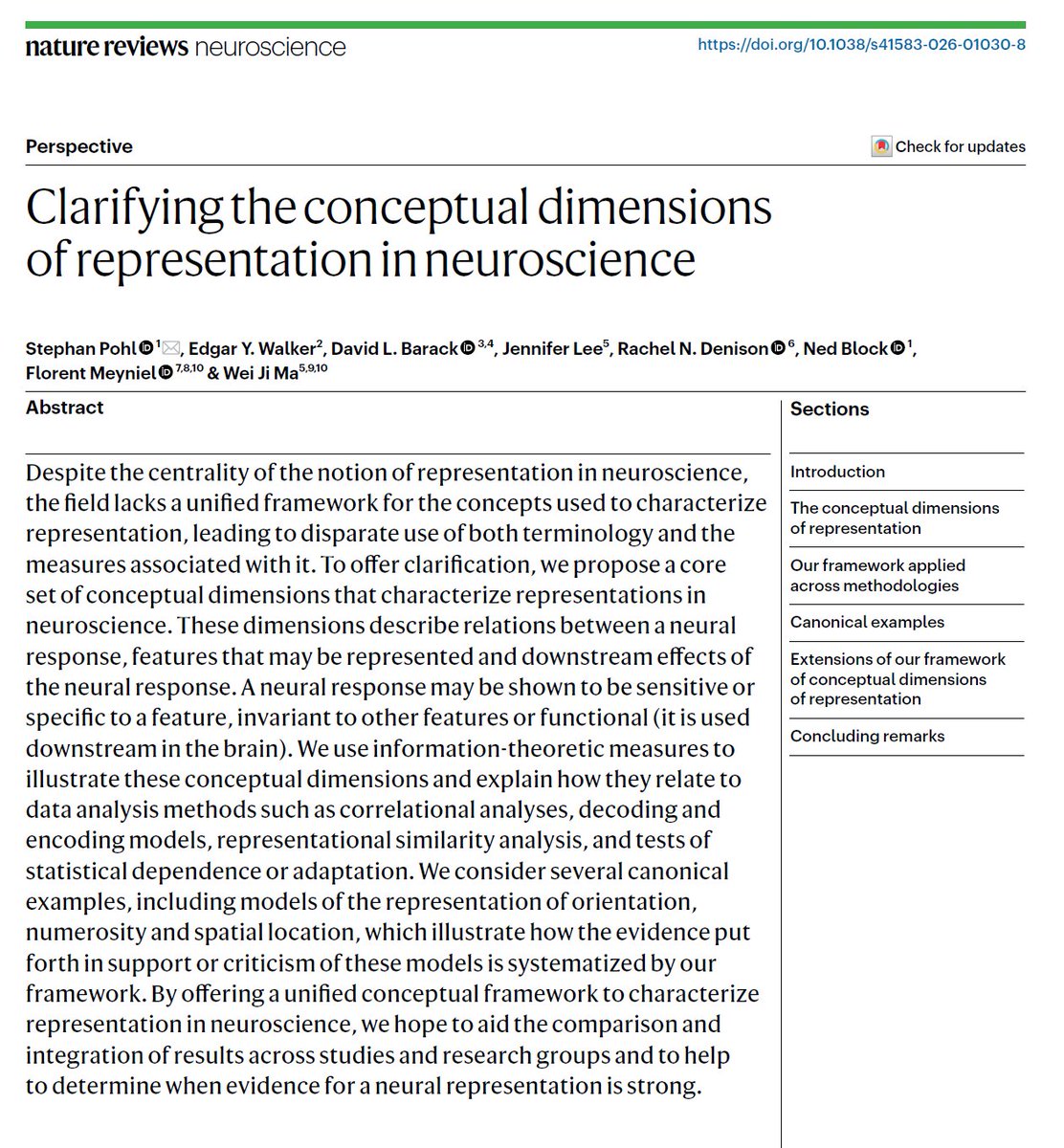
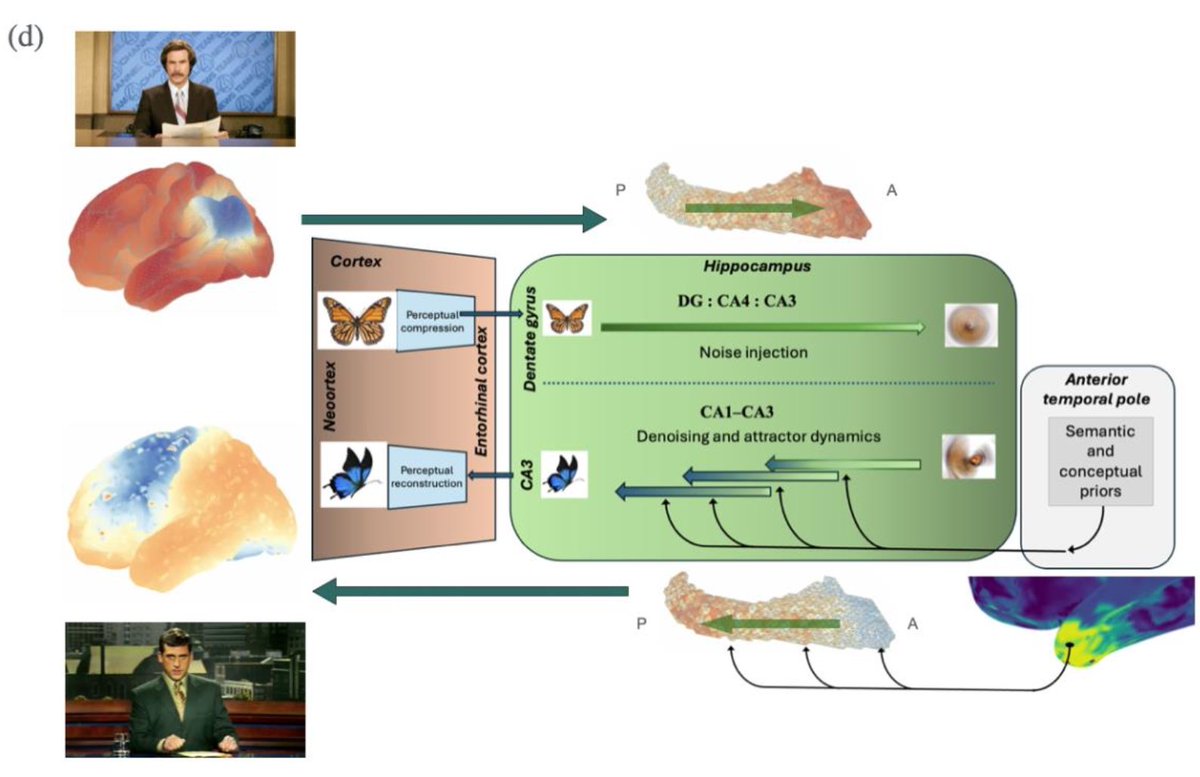
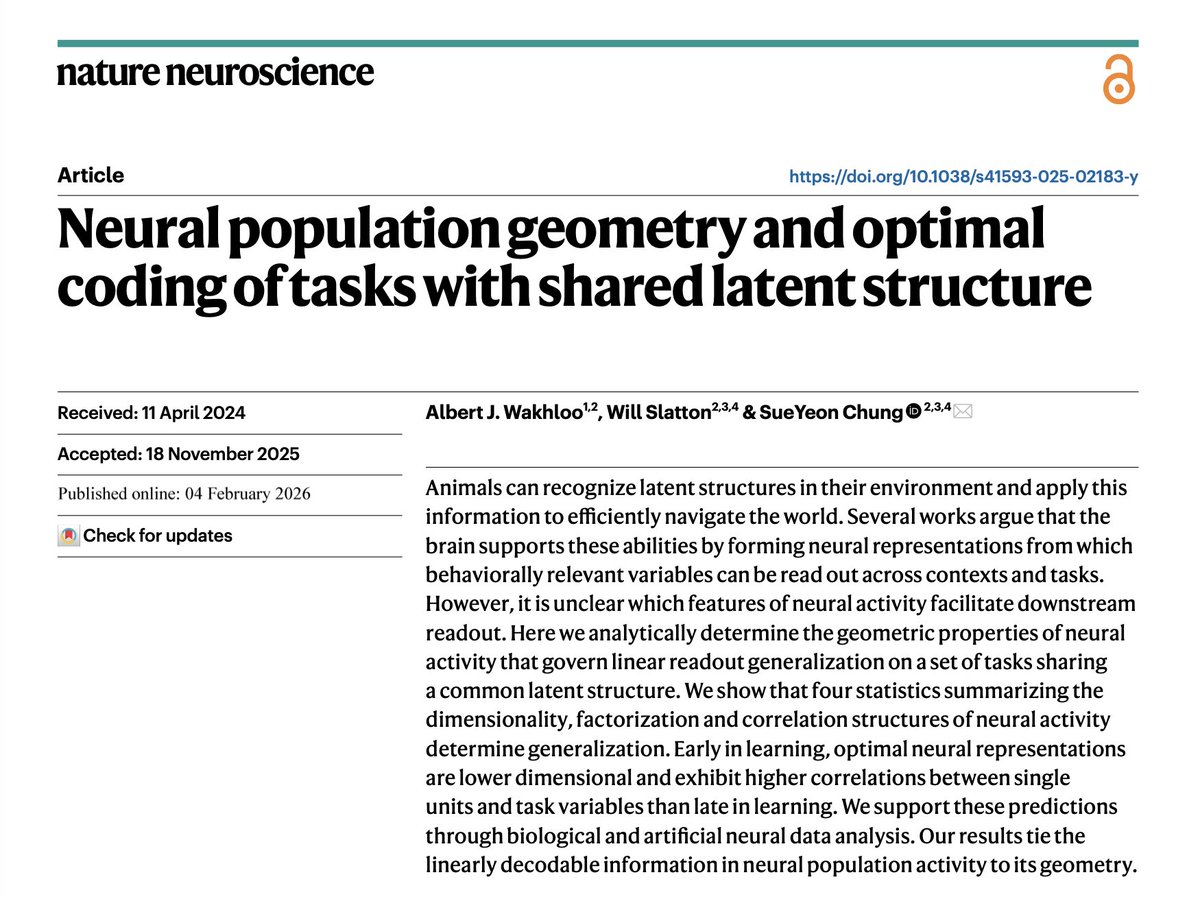
𝗕𝗿𝗮𝗶𝗻 𝗿𝗲𝗽𝗿𝗲𝘀𝗲𝗻𝘁𝗮𝘁𝗶𝗼𝗻𝘀
For those in favor or against, it seems like a good one to discuss in the Neuroscience & Philosophy Salon!
https://t.co/lyIWNym1fp
The McPartland Lab is seeking autistic and non-autistic adults with or without depression aged 18-40 to participate in our study on the effects of non-invasive brain stimulation! Participants can earn up to $250. To learn more, please email [email protected] or call (203) 737-3439.
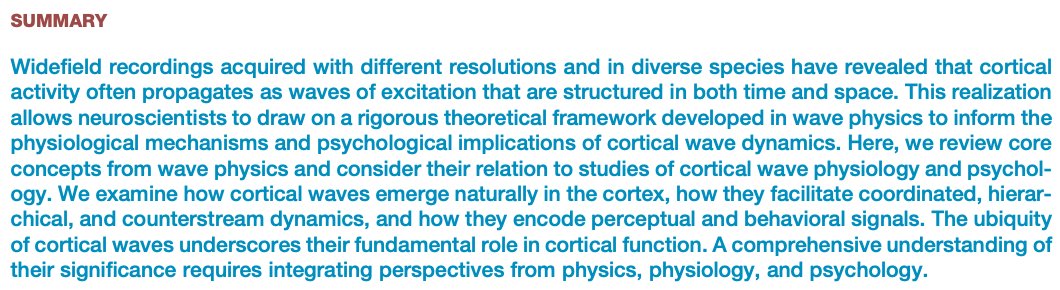
Interested in cortical wave dynamics?
Check out our review on the physics, physiology, and psychology of cortical waves led by J Cruddas with @jchrispang
Out now in @NeuroCellPress
https://t.co/2xxP6hYjaJ
A must-read review. It argues that brain areas are only one of several organizing principles and are not especially central, given their weak correspondence to function. Cytoarchitecture and connectivity are a starting point, not the endpoint
https://t.co/sktaHdBMLN
#neuroscience
🚨first postdoc preprint alert 🚨
We use game theory and reservoir computing to show the brain is not optimally wired for communication or wiring economy because of a third pressure in the trade-off: computational reliability.
https://t.co/P8G6NuBqeA
New at @NeurIPSConf 2025: We are excited to share SING, our algorithm for unsupervised discovery of low-dimensional latent dynamical systems from high-dimensional, noisy observations. 🎶
Thread🧵
This new optimizer can make training giant LLMs both more stable and more precise, even under noise and extreme scale!
Huawei just introduces ROOT, a Robust Orthogonalized Optimizer that tackles two big weaknesses in recent momentum-orthogonalized methods:
- Dimensional fragility (orthogonalization breaks as model size grows)
- Sensitivity to outlier noise
ROOT brings two layers of robustness:
- Dimension-robust orthogonalization via adaptive Newton iterations with size-aware coefficients
- Optimization-robust updates using proximal methods that dampen harmful outliers while preserving useful gradients
According to the authors, ROOT outperforms Muon and Adam variants with faster convergence, higher final performance, and greater stability, especially in noisy, non-convex regimes, pointing toward a new generation of optimizers built for modern LLM scale.
Denoising fMRI data with contrastive autoencoders
Functional MRI is one of our main windows into the human brain—but that window is noisy. Motion, physiology, scanner drift, and other artefacts all mix with neural signals, often in highly nonlinear ways. Classic approaches like CompCor try to subtract noise using signals from “regions-of-no-interest” (CSF, white matter), but they assume a mostly linear relationship between noise and signal, which is rarely true in practice.
Yu Zhu and colleagues introduce DeepCor, a denoising method built on contrastive variational autoencoders. The idea is elegant: feed the model time series from regions-of-interest (gray matter: signal + noise) and regions-of-no-interest (noise-only). The CVAE then learns two sets of latent features—those shared between ROI and RONI (noise) and those unique to the ROI (putative neural signal). To denoise, DeepCor simply zeros out the “shared” latents and decodes the clean time courses.
In simulations, this pays off. Whether signal and noise are mixed linearly or nonlinearly, DeepCor recovers the ground-truth activity substantially better than CompCor—up to around four times closer to the true signal in realistic BrainIAK-based simulations. And because the model works voxel-wise, it can be trained within a single participant, even for relatively short scans.
On real resting-state fMRI from 200 ABIDE participants, DeepCor doesn’t just reduce noise—it sharpens brain networks. Connectivity within known networks increases, spurious correlations between networks drop, and the gap between “within” and “between” connectivity becomes much larger than with standard preprocessing. For studies of individual differences and future precision psychiatry, this kind of learned, participant-specific denoising could be a key step toward more reliable brain biomarkers.
Paper: https://t.co/GJajZyvJ37