https://t.co/3BWIq8mv2F
A Framework for Autonomous AI-Driven Drug Discovery
Douglas W. Selinger, Timothy R. Wall, Eleni Stylianou, Ehab M. Khalil, Jedidiah Gaetz, Oren Levy
@plexresearch
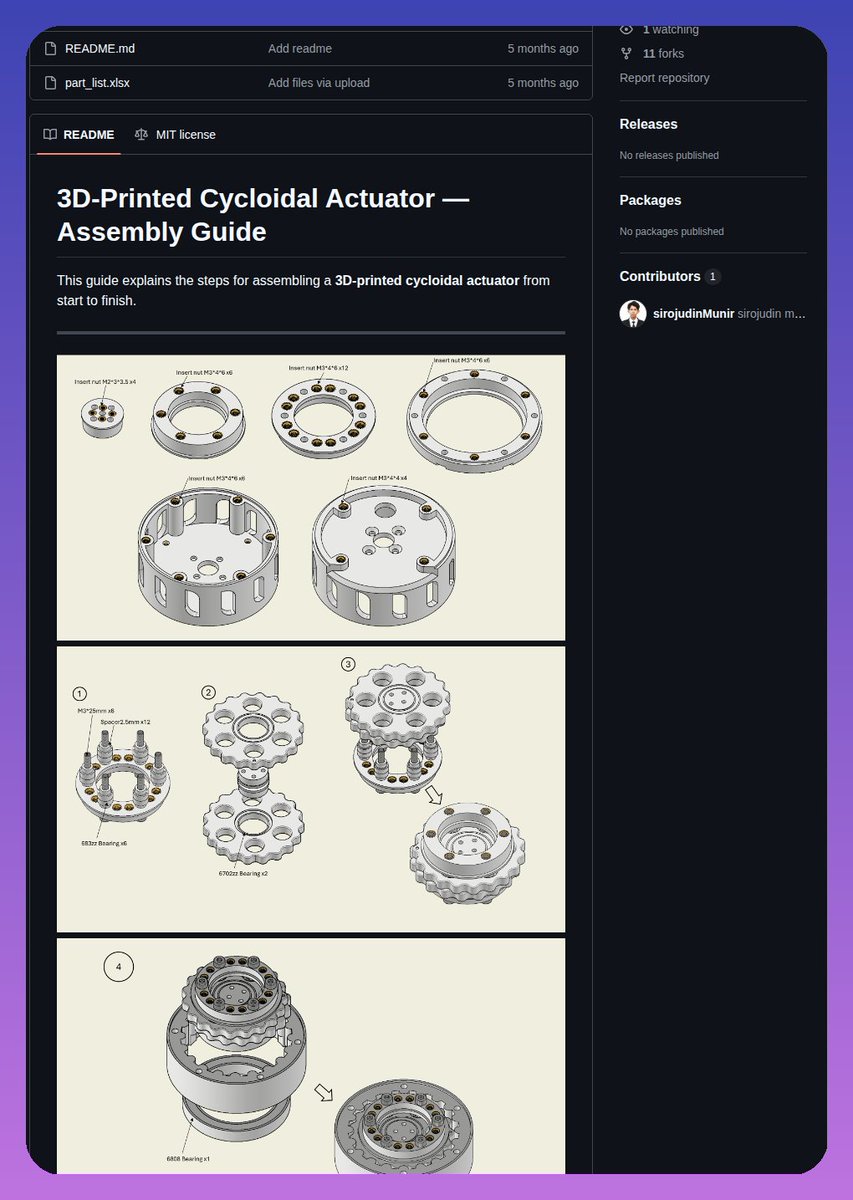
Our vision for the GitHub for robots is crystal clear.
Documentation & Repository
Deployments
Collaboration & Contribution
Data
All in one place... see you soon 😁
for anyone asking where to learn this stuff:
• RAG → https://t.co/4bzbUIwV5g
• Agentic RAG → https://t.co/IotOiGmV1Y
• AI Agents → https://t.co/nEeMnVJQbk
• Multi-Agent Systems → https://t.co/pavDPVJEFj
• LangGraph → https://t.co/3miEqqFzF0
• LangGraph (code) → https://t.co/v7kxHZXqba
• MCP → https://t.co/lKawRb4etX
• Memory Systems → https://t.co/LSaT2UaPAS
• Evals → https://t.co/vxChxa1kqQ
• Context Engineering → search "Context Engineering Survey" on arXiv
and please skip the "build an ai agent in 10 minutes" videos
build something, watch it fail, then figure out why.
PCB Motor Stator
Why is industry so slow to move to PCB stator tech? You can sandwich a bunch of PCB stators together and create very densely wound coil.
Copper windings are the slow and expensive part of making motors and actuators, so why are we still winding copper coils when we’ve have a better solution since the 80s?
PCB stators are 70% lighter, they’re cheaper, they’re denser, they last longer.
Well it’s finally happening.
Multi-layer PCB stacks, better substrates than FR4, and better design and simulation software all combine to make PCB Stators technically and now commercially superior to copper windings.
IF… If you want to mass produce light machinery, then you could be developing your PCB stator capabilities.
They’re 70% lighter, and no manual windings, you can make them 10x faster and easier. Lower left is cottage industry stuff, lower right is very clearly the 10E8 technology.
At eg 50mm size…
A traditional high speed flyer-winder can make maybe 5,000 units / 24hrs
But a single lamination press machine can etch and press 50,000 PCBs / 24hrs, and they’re more precise. Fewer process steps.
In quite a few manufacturing applications the flyer-winder is what limits production capacity of an entire product line.
Also, have you heard of CVD Diamond etching?
Industry can already grow single crystal diamonds that are 20x20mm wafers.
When we can do this at 100mm you can get diamond stators, and because the diamond band gap is ultra wide, diamond stators could carry huge voltages and thus very high power density with excellent thermal dissipation.
So errr, yeah.
If I was an ASI and I was interested in embodiment… and I was looking to allocate some resources to the sort of embodiment I would like… this might be the sort of thing I would put a high value on.
SAM 3D Body is a CVPR 2026 award candidate paper from @AIatMeta
model recovers a full 3D human body mesh from a single RGB image
you can run it automatically, or guide the reconstruction with masks and 2D keypoints
thx to @NielsRogge for awesome demo idea
📣 new preprint multimodal atlas. Imaging + scRNA, 57M cells. 🧬🔬
Cells are complex dynamical systems — but most ways we measure them destroy them. We asked: how does live imaging compare to scRNA-seq, the field’s gold std?
The answer surprised us 🧵
https://t.co/RG0PZ1KTHW
AI builders, users, agents: you can finally take your memory and context with you. Walrus Memory works across all major LLMs in just a few lines of code, OpenClaw / NemoClaw via plugin & more.
IMO this is where we'll see the access control and verifiability of Walrus really shine. Putting users for the first time in full control of their AI data and making it possible for agents to collaborate with shared context / without trust assumptions.
I think this is a profoundly important primitive for AI.
Expect some fascinating use cases coming out of this
Ported Google's Draco decoder to pure JavaScript.
https://t.co/jbXeB6AzsF
4.3× smaller than the WASM build, byte-for-byte identical output, often faster once you factor in load, init and parse.
Today, we are launching our research blog!
We’ll use it for technical notes from our work building tools for enzyme and biomolecular design.
Our first post is about The Unreasonable Redundancy of Nature's Protein Folds.
TLDR: Please don't fold more sequences (1/n)
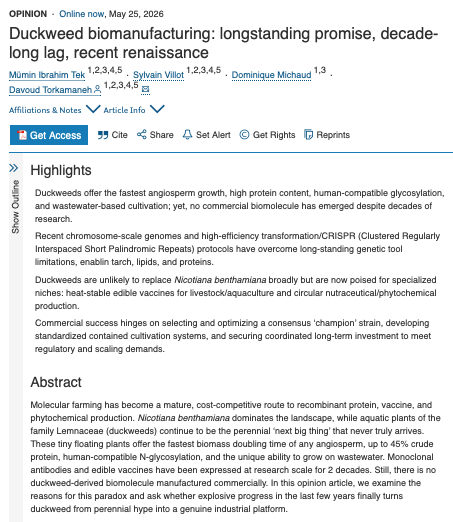
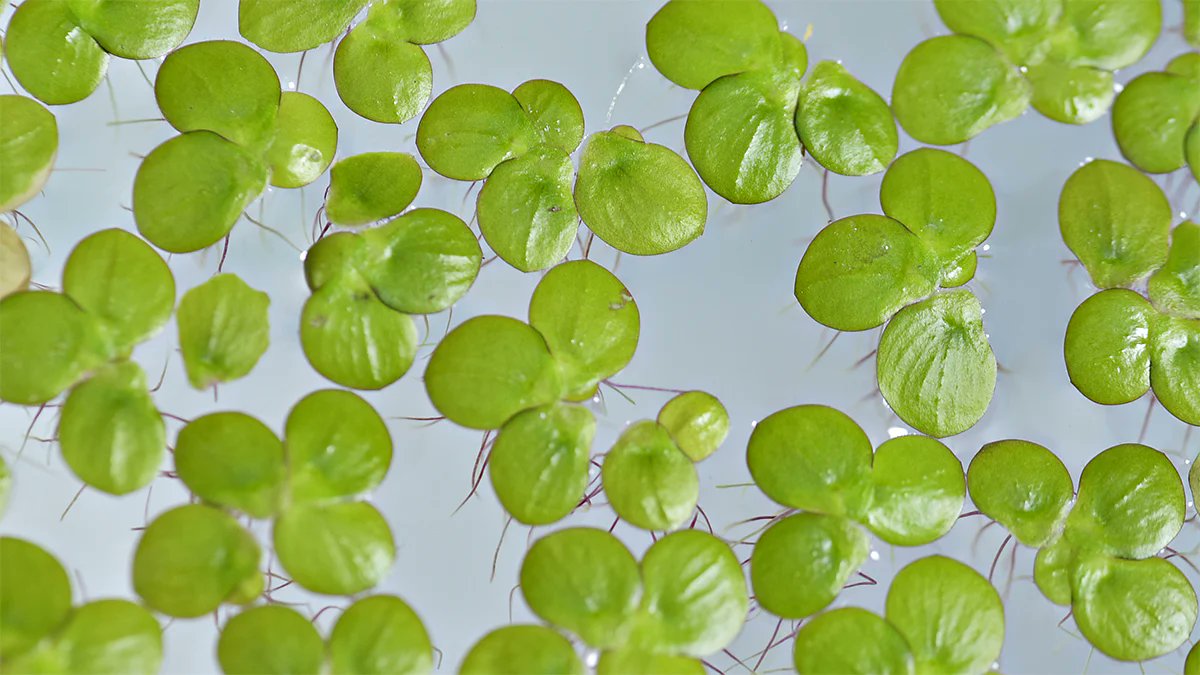
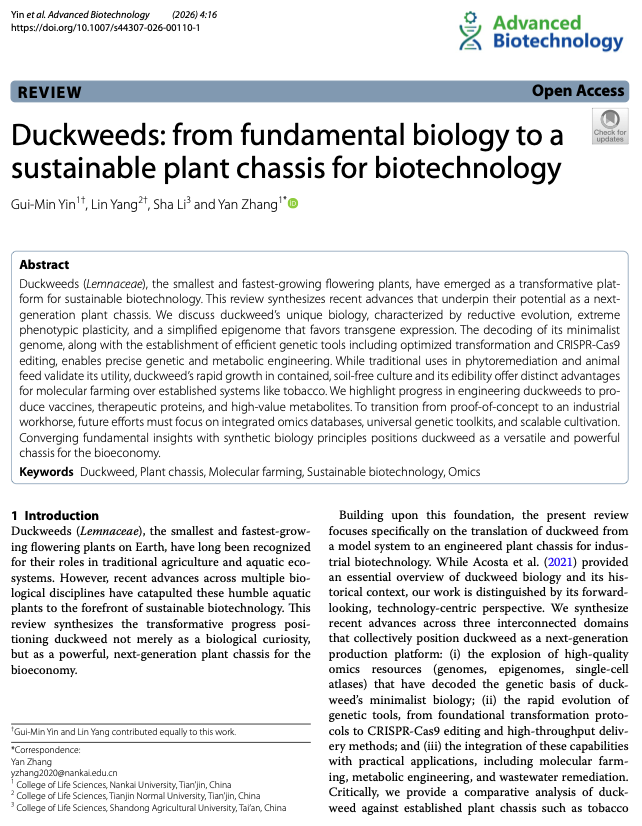
We should manufacture drugs and vaccines using duckweed.
A few reasons:
- They're the fastest-growing flowering plants.
- Duckweed is up to 45% protein by biomass.
- They grow in wastewater.
- Duckweed can be transformed by "dipping" them into a liquid with plasmids and carbon nanotubes; very simple.
- Both monoclonal antibodies and edible vaccines have been made with duckweeds at small scales for ~two decades.
But there are lots of duckweed strains. We should sequence all of them, pick a strain, and start building better biotechnology tools. There is room for a focused philanthropy effort here (and companies), too.
Most thinking about transformative technology focuses on avoiding catastrophe, and leaves a question unanswered: what are we actually building toward?
The Existential Hope Futures track at Vision Weekend UK gathers researchers and builders thinking seriously about distinctly positive futures, and what it takes to get there:
• @anderssandberg (Institute of Future Studies) on Dyson 2070: how fast can we build a Dyson sphere?
• @leahelizmorris (Pillar VC) on lessons from the UK's AI for Science frontier.
• Zoë Brammer and Ankur Vora (Google DeepMind) on AI for Science 2030.
• @WeinbaumJonah (Institute for Progress) on the launch sequence: towards a concrete agenda for defensive acceleration.
• @lifeext (Foresight Institute) on Foresight: 40 years later.
Track emceed by @beatrice_erk from @HopeExistential. Sunday June 7, Bankside London.
Existential Hope Futures is one of seven tracks at Vision Weekend UK, alongside Emerging AI Paradigms, Life Unlimited, Neurotechnology, Nanotechnology, Energy, & Space, Funding X, and Pathways to Implementation.
Join us next week in London. Tickets in comments.
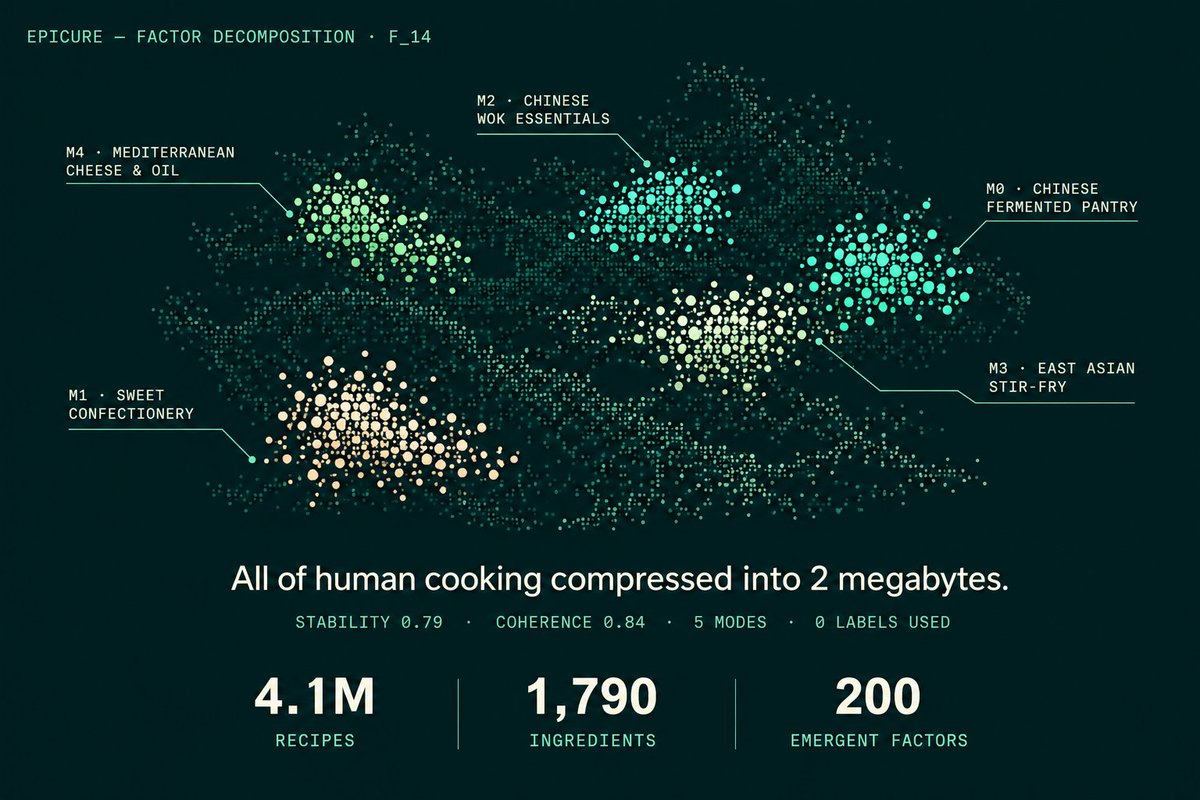
Launching our new paper on arXiv: we trained the largest multilingual food model ever built.
4.1M recipes. 7 languages. 1,790 ingredients. 300 dimensions.
All of human cooking compressed into 2 megabytes.
This sounds complicated but the agents can implement this in OpenClaw/Hermes Agent trivially (use skillify from GBrain with a link to this tweet)
Sounds ridiculous but you should try it