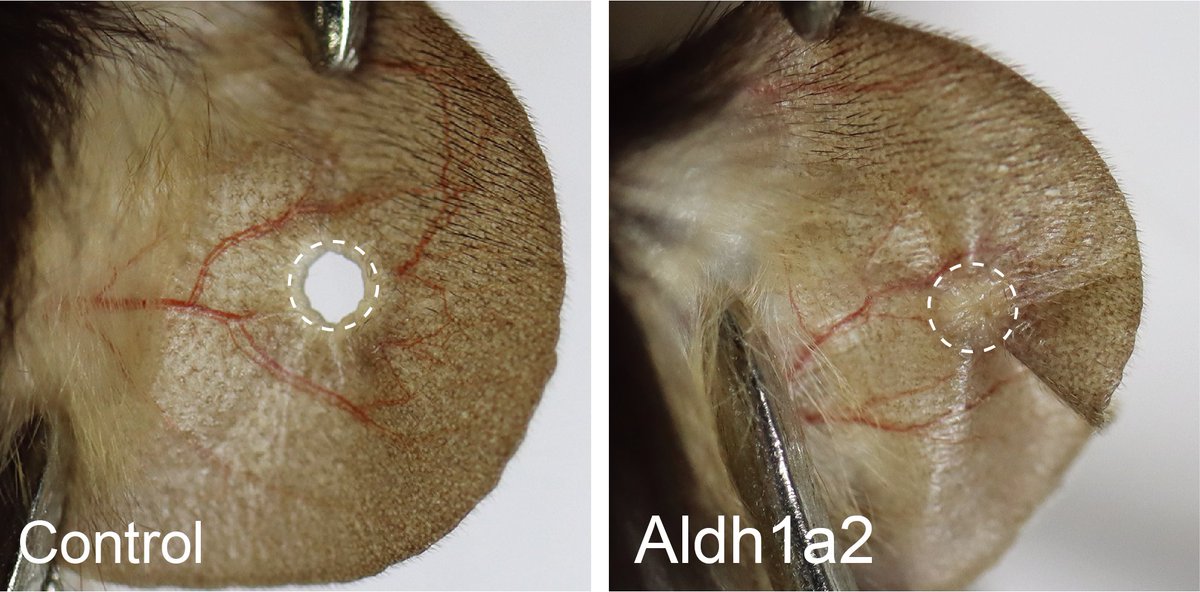
By flipping an evolutionarily disabled genetic switch involved in Vitamin A metabolism, researchers in Science have enabled ear tissue regeneration in mice.
Learn more: https://t.co/zxLoqAzgLc
A nice collaboration with Hua lab: Super-enhancers conserved within placental mammals maintain stem cell pluripotency | Proceedings of the National Academy of Sciences https://t.co/PYRtbuJquF
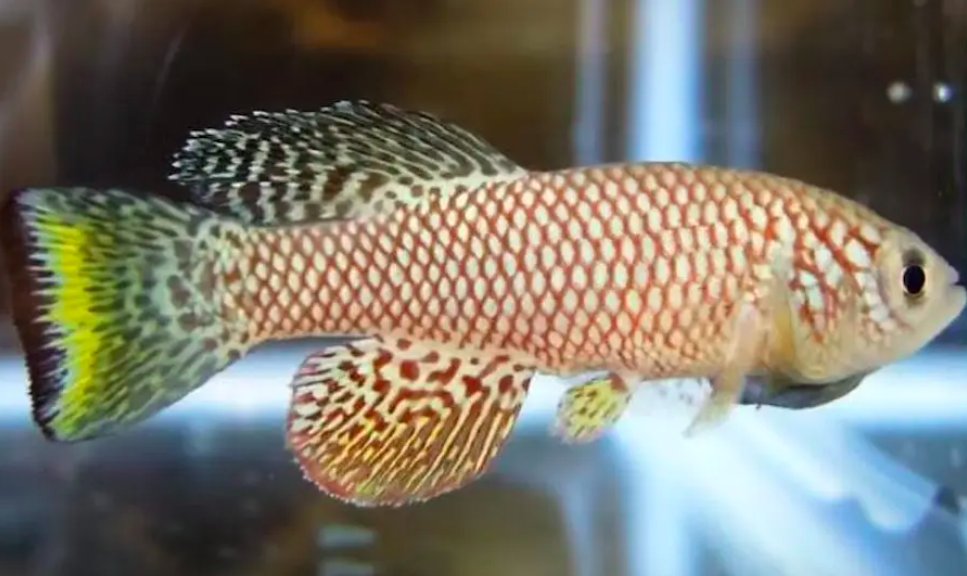
Huge congrats to Andrew McKay for creating an automated feeding system for the African killifish 🐟🐠! This allows high-throughput lifespan and behavior studies and will open possibilities for drug screening for aging!!
Killifish and aging: a thread
https://t.co/Lq1MB1BlMT
Glad to share our latest work showing numerical restoration of zebrafish CMs within 30 days after injury, even in hearts retaining a fibrotic scar. Thanks all co-authors and our collaborator @J_Bakkers. #Dev_Bio_Journal
https://t.co/dHcibm8UAh
Congratulations @chatwithnarendr for your publication in @GenesDev. Seemingly small changes can bring about large impacts on function of proteins and aid in bringing about phenotypic diversity during evolution. @ScienceStowers
Regeneration is an amazing, yet not clearly understood process. We are very excited to announce our next session in which we will talk about the mechanisms underlying this process with @Planaria1 from @ScienceStowers. This work will be presented by @ValeriaEliosa
Today is the day!!! Our DBiT-seq work is out in Cell. This is a fundamentally new approach in this space. It may unlock a wide range of spatial omics technologies. The limit is only our imagination ^_^
https://t.co/AJ2SYJBNI6
Diversification of the killifish genus Nothobranchius has been shaped by Rift tectonics across tropical Africa, a new study based on a molecular calibrated phylogeny and a chrono-biogeographical approach shows.
https://t.co/eFGl5Re5il
In this Review, Soffers and Workman discuss the initial discovery of the canonical SAGA complex, the subsequent studies that have shaped our view, and the latest structural work that provides insights into its function. @jerryleeworkman@ScienceStowers
https://t.co/sLgJ60PLQl
BIG IDEAS @ScienceStowers is back! Harvard geneticist Hopi Hoekstra PhD, will present a virtual seminar titled "Nature's Palette: The biological significance of color" on October 27. The Zoom event is free but registration is required: https://t.co/MA4oRTZwVi #BIGIDEASKC
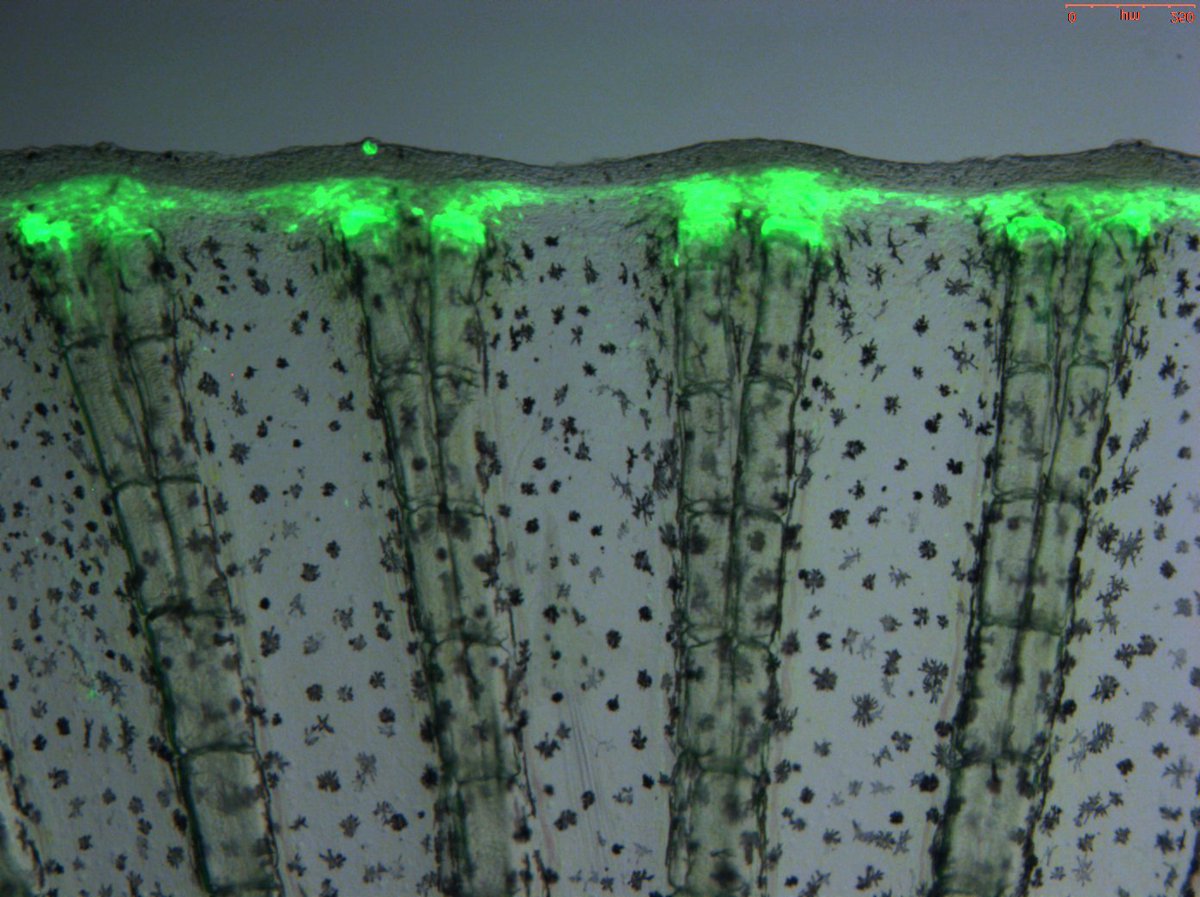
A study in Science suggests that regeneration-responsive enhancers drive a regeneration response programme (RRP) in killifish and zebrafish and that changes in RRPs might have facilitated the loss of regenerative capacity in vertebrates.
A naïve, young PI question: Why is there a bias against proposing forward screens for grants? It seems odd because hunting for genes with functional genomics and verifying function with reverse genetics is generally acceptable. A good screen finds genes based on phenotypes.
HHMI News: A team led by HHMI Investigator Alejandro Sánchez Alvarado @Planaria1 has identified stretches of DNA that promote the regeneration of body parts in some animals. https://t.co/WXLXtffSoI
“The time has come to dispose of the terms “model” and “non-model” systems and adopt instead the more accurate term “research organism”. Our remarkable advances in genome editing, imaging, bioinformatics, high throughput assays and automation demands it.”
Sánchez Alvarado Lab Postdoc Wei Wang, PhD, was first author on a new paper in @ScienceMagazine. In this video, @weiwang0128 discusses the work, which explores genetic mechanisms underlying the uneven distribution of regenerative capacities in vertebrates. https://t.co/EsqUYKwsGi