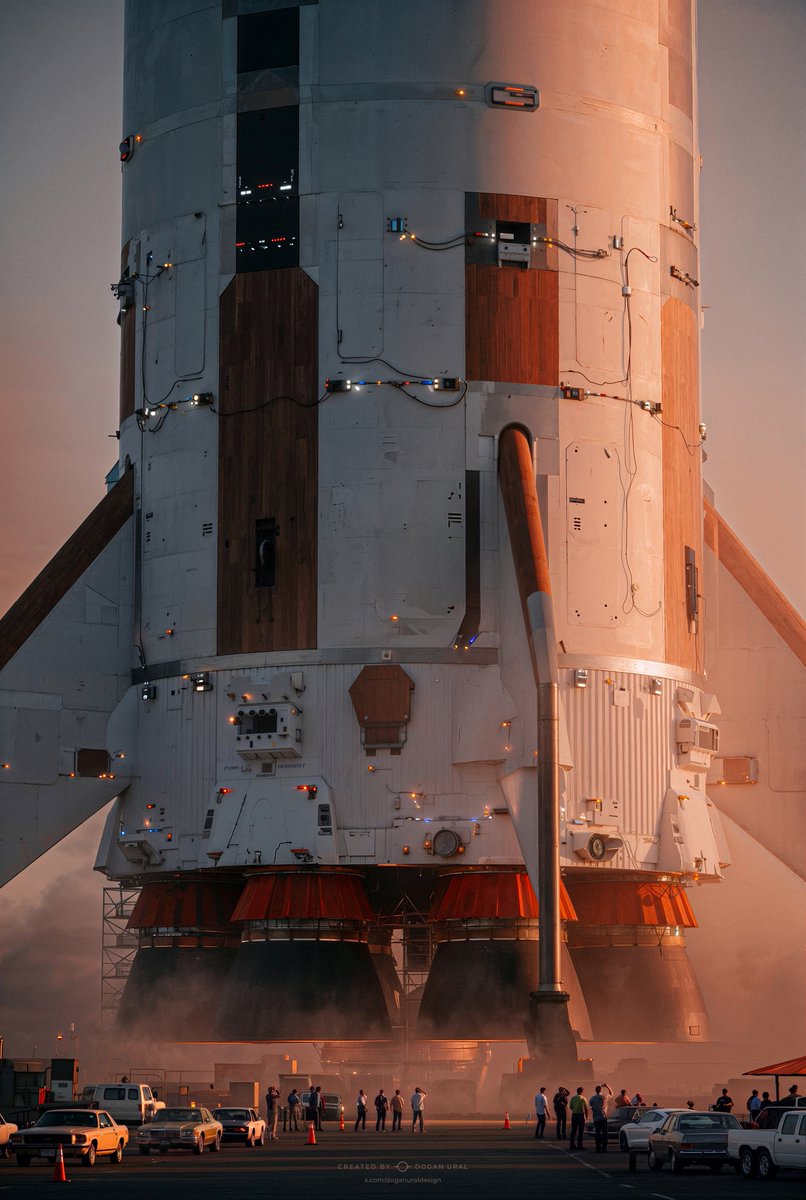
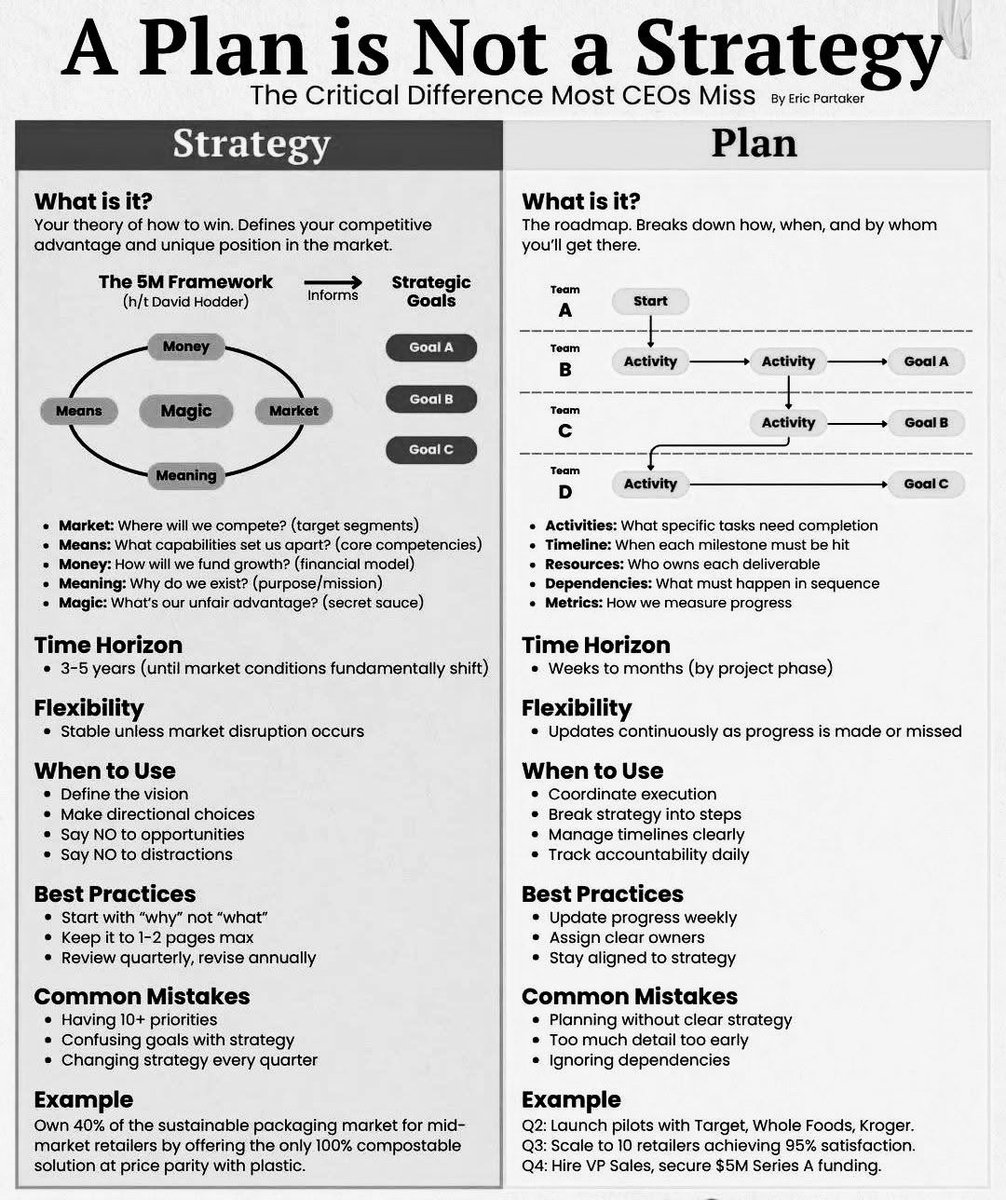
.@tobi says the photo of SpaceX’s Raptor evolution is the “most inspiring picture that exists.”
“That's today’s Picasso.”
“Very few teams can move forward by subtraction.”
“The world belongs to the fast. The people who iterate. The people who adjust. The people who understand what’s costly, what’s unnecessary, and prune away the rest.”
On this day in 1985 Microsoft first announced Excel
Bill Gates unveiled Excel at a joint press conference with Apple's Steve Jobs as it was originally designed for the Apple Macintosh
The Invisible Glass Experiment
Scientists once conducted a fascinating experiment with a pike and an aquarium.
They placed a transparent glass barrier in the middle of the tank. On one side was a large, hungry pike. On the other side swam several small fish.
As soon as the pike spotted the smaller fish, it launched itself forward to attack.
Bang! It crashed headfirst into the invisible glass and was thrown backward.
Undeterred, the pike tried again... and again. Each attempt ended the same way a painful collision. After repeated failures , its head became bruised and some of its scales were knocked loose.
Eventually, the pike gave up. It retreated to a corner of the tank, clearly frightened and defeated.
Then, the scientists quietly removed the glass barrier.
The small fish now swam freely around the entire aquarium some even passing right in front of the pike’s mouth.
But the pike never attacked again.
Even though it was starving, it refused to strike. In its mind, the invisible wall was still there.
A few days later, the pike died of starvation surrounded by abundant food it could no longer bring itself to eat.
This phenomenon is known as the Pike Effect (or Pike Syndrome).
It serves as a powerful metaphor for how repeated failures and setbacks can create invisible mental barriers that limit us long after the real obstacles have disappeared.
I had dinner once with a top physicist and a top computer scientist and asked what they thought the probability was that we were in a simulation.
They answered simultaneously at 0% and 100% respectively. It was like a double-slit experiment, but with humans.
It is hard to communicate how much programming has changed due to AI in the last 2 months: not gradually and over time in the "progress as usual" way, but specifically this last December. There are a number of asterisks but imo coding agents basically didn’t work before December and basically work since - the models have significantly higher quality, long-term coherence and tenacity and they can power through large and long tasks, well past enough that it is extremely disruptive to the default programming workflow.
Just to give an example, over the weekend I was building a local video analysis dashboard for the cameras of my home so I wrote: “Here is the local IP and username/password of my DGX Spark. Log in, set up ssh keys, set up vLLM, download and bench Qwen3-VL, set up a server endpoint to inference videos, a basic web ui dashboard, test everything, set it up with systemd, record memory notes for yourself and write up a markdown report for me”. The agent went off for ~30 minutes, ran into multiple issues, researched solutions online, resolved them one by one, wrote the code, tested it, debugged it, set up the services, and came back with the report and it was just done. I didn’t touch anything. All of this could easily have been a weekend project just 3 months ago but today it’s something you kick off and forget about for 30 minutes.
As a result, programming is becoming unrecognizable. You’re not typing computer code into an editor like the way things were since computers were invented, that era is over. You're spinning up AI agents, giving them tasks *in English* and managing and reviewing their work in parallel. The biggest prize is in figuring out how you can keep ascending the layers of abstraction to set up long-running orchestrator Claws with all of the right tools, memory and instructions that productively manage multiple parallel Code instances for you. The leverage achievable via top tier "agentic engineering" feels very high right now.
It’s not perfect, it needs high-level direction, judgement, taste, oversight, iteration and hints and ideas. It works a lot better in some scenarios than others (e.g. especially for tasks that are well-specified and where you can verify/test functionality). The key is to build intuition to decompose the task just right to hand off the parts that work and help out around the edges. But imo, this is nowhere near "business as usual" time in software.
Here's what's going to happen from here:
-Nvidia will report blowout numbers the next several quarters on the NVL72 product supercycle (a step function up in capability with 72 GPUs in one AI server versus 8 GPUs). It will become one of the largest cycles in technology history, akin to the iPhone versus Blackberry. The clear signs are there in the latest quarter with Nvidia posting its first accelerating revenue growth in two years and triple-digit networking segment growth.
-Google TPUs will be less than 10% of the market for the next few years as the major hyperscaler buyers don't want to support a cloud rival (outside of Meta), while Nvidia's software CUDA/developer ecosystem, TSMC allocation and performance advantages remain strong.
-Most search queries will transition to AI chatbots over the next few years.
-ChatGPT will release a much better model trained on NVL72 Blackwell clusters at Microsoft. Sentiment will shift back to ChatGPT.
-ChatGPT will add digital advertising in its consumer product. The first iteration will not be great. The second version will improve. The third version will work great.
-A significant portion of the digital ad market will move to AI chatbots and AI consumer hardware, away from search ads.
-Google will go from 95% search monopolist to a number 2 or number 3 player in the AI chatbot market, which will dramatically lower its margins over the cycle. Serving the search index was a gold mine. That era will end. Timing is difficult. It may take a while, but it will happen.
-All the talk about AGI and superintelligence is a distraction and a side show. AI adoption and AI progress will accelerate through 2026 as Gemini and Claude Opus proved scaling laws are intact.
Enterprises will unleash massive productivity gains using current technology. Cursor will be the precursor (get it?) of the future. It eliminates tedious work with autocomplete, bug fixing, leading to rapid iteration of new ideas for coding. It enables 40% more productivity.
There will be a Cursor for every vertical. Knowledge workers will become vastly more productive as AI models build upon intuitive understanding of what helps them with proprietary custom data and models.
-But don't they lose money now? Compute performance continues to improve and costs will come down. This is inevitable based on history. Today's loss-making features will become enormously profitable in due time.
Curious to hear your thoughts.
I am unreasonably excited about self-driving. It will be the first technology in many decades to visibly terraform outdoor physical spaces and way of life. Less parked cars. Less parking lots. Much greater safety for people in and out of cars. Less noise pollution. More space reclaimed for humans. Human brain cycles and attention capital freed up from “lane following” to other pursuits. Cheaper, faster, programmable delivery of physical items and goods. It won’t happen overnight but there will be the era before and the era after.
XPENG unveils the next-gen IRON humanoid.
- The robot can be customized to be male or female.
- Soft 3D lattice structures and soft skin are used for human-like body curves.
- The 5' 7" robot has human-like spine movement.
- Next-gen hands use tiny harmonic joints to achieve 22 Degrees of Freedom.
- IRON uses a solid-state battery that is 30% lighter with 30% more capacity.
- He Xiaopeng says they're holding off on household deployment for longer term because the AI needed for it "is very difficult based on the current technology."
- They'll start with commercial use, like robots introducing cars to customers at XPENG stores.
- It is in the R&D stage but will go into mass production in April 2026.
It's obvious that humanoid robots will build and install an infinite number of solar farms and battery packs in ten years...
Which means all energy will be 90% cheaper...
And desalination of water is an energy-intensive process, so that will drop by 90%....
and food production needs labor and water... so that will drop 90%....
The biggest problem humanity might face is that too many people have too much free time!