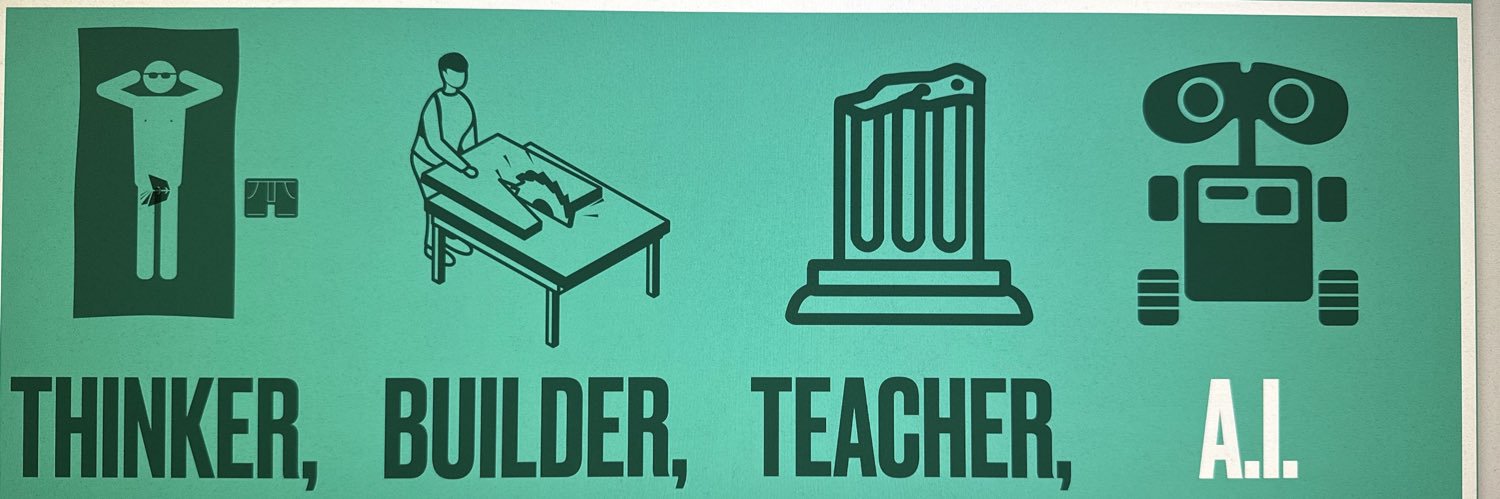
@karpathy Also gives a classic Spinoza quote new meaning: “to understand something is to be delivered of it.” In AI case, if you get the understanding correct then you can be delivered of the execution.
I recently spoke with someone from Gen Z who just began dating someone new
He said he will upload entire chat histories of their texts and shared photos to ChatGPT and ChatGPT will analyze the relationship, break down their relational patterns and attachment styles, and advise him how to approach the relationship going forward for optimal outcomes, even crafting exact texts for him to send back to her
And it is good at it. It’s really accurate and *incredibly* good.
According to this guy, “all his friends are doing this now”
Wow.
Thinking back to that era of my life, I remember all the uncertainty of a brand new relationship. To relieve the uncertainty, we would go to our friends to share and get advice. The entire experience was human-based
This is so much easier and more powerful than that, and the entire experience is technology-based
Still trying to wrap my mind around all the implications of this. But a few initial thoughts:
1. Anything you text or send to another person can be turned over to AI without your knowledge
2. Are any of these relationships organic? What if both parties are doing this? Is this just one Chatbot dating another Chatbot with a human facade?
3. This doesn’t bode well for the traditional dating coach or marriage therapist career path
Finally had time to read & process this great post. I run into the pattern quite often, it goes:
"<something that sounds wrong> is good actually, because <galaxy brain reason>"
Galaxy brain reasoning is the best way to justify anything while looking / feeling good about it.
From this perspective for example, there's deeper wisdom in the Ten Commandments imposing constraints over actions instead of utility over states. It's not Ten Objectives. E.g. they don't attempt to define a utility function for the value of life, they simply say "Thou shalt not kill". This approach curtails the relatively unbounded flexibility of galaxy brain arithmetic over when it may or may not be ok to kill for some ostensibly greater or noble purpose.
Love the strategies that fall out at the end, which are quite actionable. 1) Have principles and 2) Hold the right bags, financially and socially. Great read.
@PalmerLuckey Alternative hypothesis: when photography was invented it meant anyone could create photo realism which gave rise to abstract/modern art as the purview of the “artist”. But now the layperson can produce any form including abstract/conceptual leaving no room for “artist” to shift
A new 30-minute presentation from @aelluswamy, Tesla’s VP of AI, has been released, where he talks about FSD, AI and the team’s latest progress.
Highlight from the presentation:
• Tesla's vehicle fleet can provide 500 years of driving data every single day.
Curse of Dimensionality:
• 8 cameras at high frame rate = billions of tokens per 30 seconds of driving context.
• Tesla must compress and extract the right correlations between sensory input and control actions.
Data Advantage:
• Tesla has access to a “Niagara Falls of data” — hundreds of years’ worth of collective fleet driving.
• Uses smart data triggers to capture rare corner cases (e.g., complex intersections, unpredictable behavior).
Quality and Efficiency:
• Extracts only the essential data needed to train models efficiently.
Debugging and Interpretability:
• Even though the system is end-to-end, Tesla can still prompt the model to output interpretable data:
3D occupancy, road boundaries, objects, signs, traffic lights, etc.
• Natural language querying: ask the model why it made a certain decision.
• These auxiliary predictions don’t drive the car but help engineers debug and ensure safety.
Tesla’s Advanced Gaussian Splatting (3D Scene Modeling):
• Tesla developed a custom, ultra-fast Gaussian splatting system to reconstruct 3D scenes from limited camera views.
• Produces crisp, accurate 3D renderings even from few camera angles — far better than standard NeRF/splatting approaches.
• Enables rapid visual debugging of the driving environment in 3D.
Evaluation & World Models:
• Evaluation is the hardest challenge: models may perform well offline but fail in real-world conditions.
• Tesla builds balanced, diverse evaluation datasets focusing on edge cases — not just easy highway driving.
Introduced a learned world simulator (neural network-generated video engine):
• Can simulate 8 Tesla camera feeds simultaneously — fully synthetic.
• Used for testing, training, and reinforcement learning.
• Allows adversarial event injection (e.g., adding a pedestrian or vehicle cutting in).
• Enables replaying past failures to verify new model improvements.
• Can run in near real-time, letting testers “drive” inside a simulated world.
What’s Next:
• Scale robotaxi service globally.
• Unlock full autonomy across the entire Tesla fleet.
• Cybercab: next-gen 2-seat vehicle designed specifically for robotaxi use, targeting lowest transportation cost (cheaper than public transit).
• Same neural networks will power Optimus humanoid robot.
• The same video generation system is now being applied to Optimus.
• The system can simulate and plan movement for robots, adapting easily to new forms.
via the International Conference on Computer Vision (ICCV).
Full presentation: https://t.co/Mdswdz4oqh
@cblatts I keep thinking these types of leaders need to define a quite strict narrative frame to justify their actions to themselves and their close circles. And then they forget that other audiences don’t care. Maybe this was the first category of narrative bubble?
This is insane 🤯
A new system called Paper2Video can read a scientific paper and automatically create a full presentation video slides, narration, subtitles, even a talking head of the author.
It’s called PaperTalker, and it beat human-made videos in comprehension tests.
Hours of academic video editing... gone.
AI now explains your research better than you do.
👉 github. com/showlab/Paper2Video
This is cool sure but also once again shows that Monty Python was ahead of its time: the robots will be the jumping torso coming at us with their last breath
We built a robot brain that nothing can stop.
Shattered limbs? Jammed motors? If the bot can move, the Brain will move it— even if it’s an entirely new robot body.
Meet the omni-bodied Skild Brain:
@KTmBoyle This is a good insight into why philanthropy is so stupidly risk averse when it has ever objective reason to take on major risks and go for moonshots…but instead just holds more convenings.