fun convo - @stevesi suggests that engineers just want CLI that pipes text and @seema_amble is skeptical SoRs can pivot, our view: enterprise software isn't built to support agentic workflows. We're developing a way of coding SoRs that are agent and human friendly. https://t.co/jxt2QWu9QG
@bryan_johnson@ByzGeneral Meat and sun could be part of the solution but eliminating triggering foods is another potential fix. Assuming when you were eating meat and getting sun you were also eating potentially other foods that could trigger autoimmune issues?
Playing with NotebookLM |
trying a simpler explanation of why the application layer is where the enterprise needs to focus
and how we write enterprise software that is agentic workflow friendly.
@ccatalini Does Alex suggest that they have a mechanism in their application that shields their client IP from frontier models? If so, any guesses how they do that?
@pmarca One can prompt ones way to competence in all areas but this specialisation is why I think we’ll see more 5 people running 5 companies than the 1 person company emerge
@christophersaum We have developed a way of building enterprise software that is "agent friendly,"
we have built a system of record that is expressed as code.
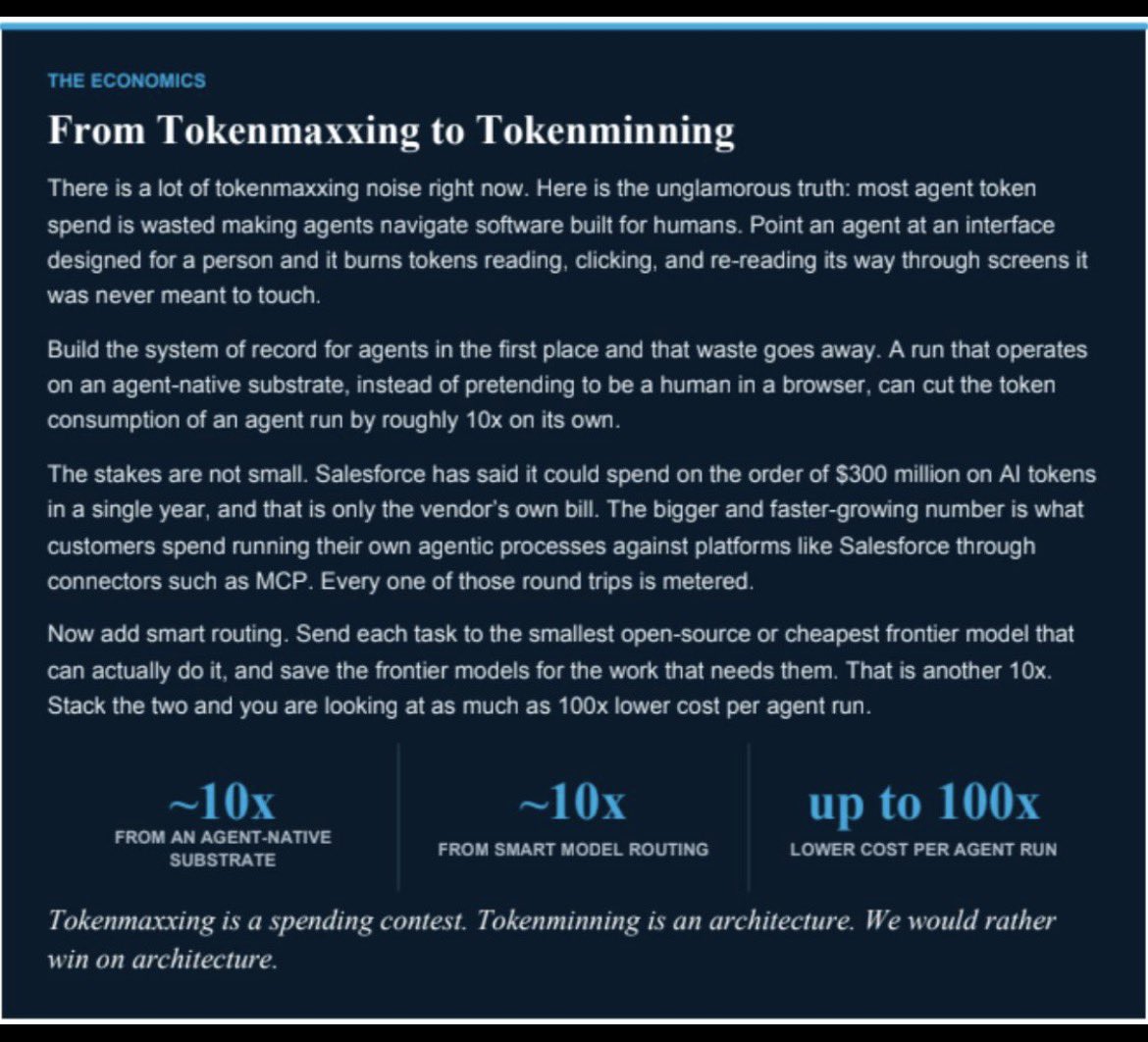
Far fewer turns per agentic task and greatly reduced token consumption. Paired with intelligent routing 10-100x more efficient
In London.
After 2 years of building agents to run on other enterprise stacks, we're rebuilding the enterprise stack to support agent runs.
Agents are 10x more capable [can read, write, act] and consume 10x fewer tokens. Here's an overview of how we do it.
https://t.co/pMo6yzoiYv
New paper dropped this week on "code as agent harness" and it points to some of the conclusions that we've reached about how to work with Agents.
Allowing agents to work in "code land" is at the core of how we're building https://t.co/pwZ2yu81DJ.
Link to the paper in comments.
Thinking in Public | We cooked!
From recent doom scrolling:
Token costs spiralling out of control, one company dropped $500m in a quarter, SalesForce dropped $300m last year.
Dependency on agent workflows will put companies in a doom spiral of ever rising token costs and vendor lock.
Enterprise AI pilots failing left and right.
Companies will have to pay for token bills, plus FDEs, plus seat licenses to use their enterprise software.
McKinsey shouts No ROI, costs escalating.
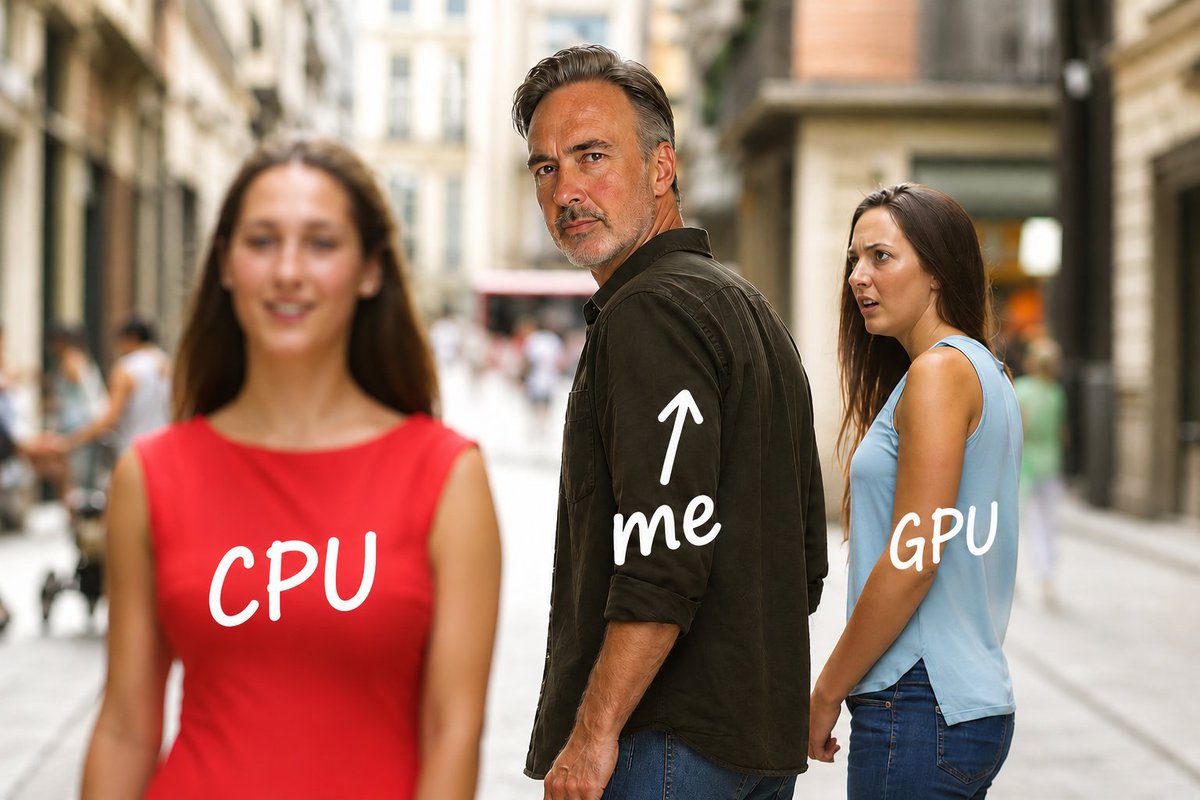
Then I heard some public market investor say, they were bullish on CPUs.
Then I saw, Intel CEO, possibly just talking their book, say that
“infrastructure ratios could move to "4 CPU to 1 GPU" for agentic workloads.
Wait, wut.
I thought we were GPU maxxing.
Wut meanz if we be CPU maxxing.
If it meanz Open Source models running on local devices on enterprise software via MCP, then everything is going to be just fine.
(at least from the perspective of being in the agentic workflow business, we’re all toast otherwise)
When agents are doing real work (not generating haiku), but orchestrating workflows across CRMs and productivity tools they move from GPU land to CPU land.
Instead of just predicting tokens, they're calling tools, retrieving context, and coordinating actions across systems.
Ain't no need for frontier models to do that stuff.
I’ve always encourage my team to burn tokens and save time. But for repetitive tasks,
do you really need the world's most powerful model to update a CRM record, schedule an interview, approve a PTO request, or route a support ticket?
Agent workflows can consume 1000x the tokens of simpler AI tasks, but if they are performing non-complex tasks, they could just use small open source model running on a laptop.
Layer in smarter routing of tasks to value engineer token consumption, more efficient models, more powerful CPUs, and it’s all going to be OK.
smart take by @steph_zhang and others from @a16z on how the SoR proposition will evolve.
Worthwhile read.
Our thought is the this is that this is directionally correct but that incumbents will struggle with this shift.
If they are to be headless "Systems of Intelligence" to support point solutions building "systems of action"
then the "systems of intelligence" that win will be those that have the most best infra to support complex, permissioned, agent runs.
The infra behind the incumbent SoRs is not that.
So, does one build point solutions to help prop of SoRs, or does one focus on discovering a pattern for writing enterprise software that is machine friendly?
a point solution that needs to be permissioned by the SoR can be unpermissioned and
will always be "nerfed" by coordination limits within the SoR.
https://t.co/v1tyZwtk7N
Building in Public | Headless Person(a)
Smart framing by A16z partner, @seema_amble of where the field of play moves when the system of record (CRM, ATS, ERP, HCM, ETC) goes headless.
If one isn't building for humans, then how should a product owner think about a UX for Agents?
What exactly is the USP for a bot arriving via MCP?
My hunch is that job seeking will follow an agentic path, via lightweight "claws."
How should a job board think about making their platform appealing to these autonomous agents.
Greenhouse opened their front door to Claude with the MCP move.
Do they want to be in the ATS-as-a-Service, business?
Link to A16z post https://t.co/ZdeLHGfvmI.