@SFourdrinier@Samir_Qamar Small nuance from our data. Empathy scores did not change. What improved was shared decision making. The AI did not replace the human part, it took over the explaining, so the visit could start with the patient's real questions. Both sides need each other.
@docwarsi@NEJM_AI Raw output. No summary was modified before delivery, the correction log stayed empty. At scale the human check is not dropped but targeted. Validated LLM judges from a different model family screen every summary, and the 1.6% they flag go to a physician.
@docwarsi@NEJM_AI Senior author here. Yes, every summary was physician checked against the source before delivery, zero errors. It costs no clinic time, patients can create it at home before the visit with the used app from. Follow-up contacts after the visit we did not measure yet, fair point.
@snoqualmie@ArborGenie And not only 8 minutes. Patients also rated the interaction better, mainly shared decision making. Worth to note the time came from the patient side. They read a plain version of their own report before the visit and came in prepared.
@SFourdrinier@ColinMorelli Thanks Stephane. Your experience matches what we saw from the other side. Prepared patients ask better questions, and some of us doctors find that harder at first. Being uncomfortable is not the same as being wrong, though. The data say patients gain, so we have to adapt.
@RoupenMD Senior author here, fair summary. I would watch the physician side as well. We rated those shorter visits slightly harder and our own autonomy support lower. Time saved is real, but it came back as denser visits. Both belong in the metric.
The most useful AI in my clinic might do its work before I walk into the room.
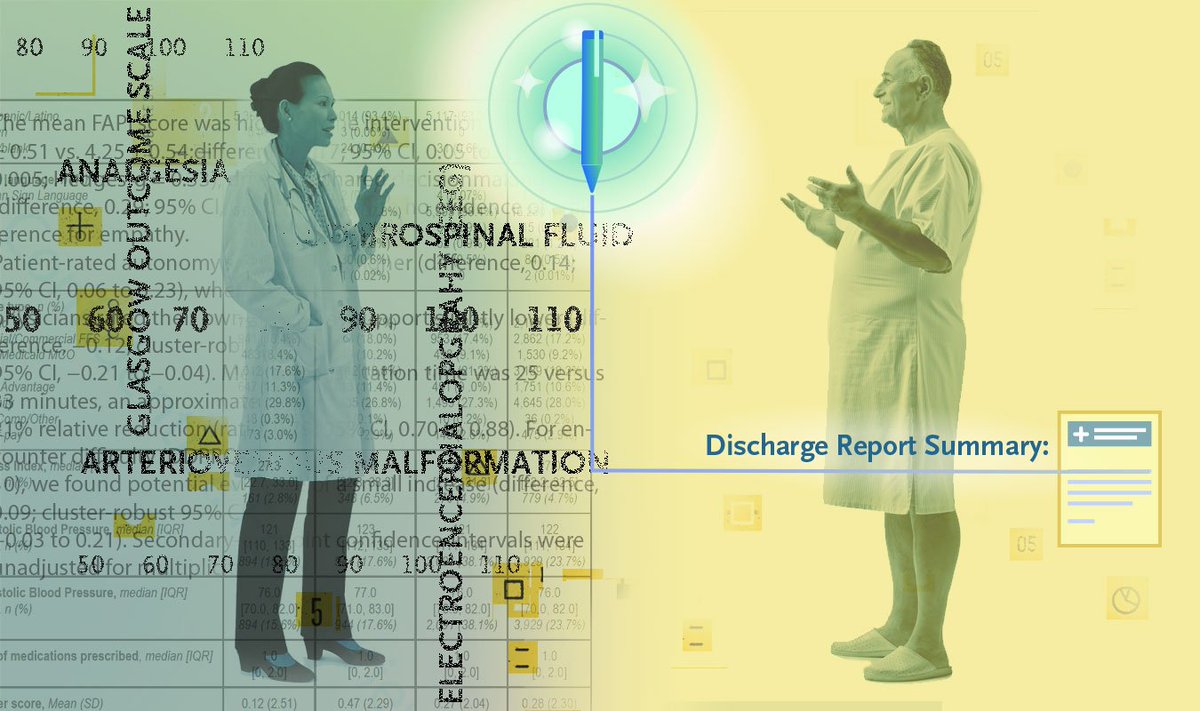
In a randomized trial in NEJM AI, neurosurgery outpatients either had a usual visit or first read an AI-written, human-checked plain-language summary of their own records while they waited. Visits with the summary ran 25 minutes instead of 33. Patients rated the conversation higher, mostly on shared decision-making, and empathy scores didn't drop.
In pulm, that is the CT report or PFT a patient has already opened on the portal and half-understood. A checked translation means we spend the visit on the decision instead of decoding "ground-glass."
Honest limit: one center, one specialty, patients knew which arm they were in, outcomes were measured right after the visit, and the software company partnered on the study. Every summary was checked by a person first, so the time savings may not survive without that step.
@CanesDavid@WellPrept Glad it matches your experience. One part surprised us though. We physicians rated those visits slightly harder and our own autonomy support lower. Prepared patients ask sharper questions. Good for them, but a cost on our side worth measuring too.
Who woulda thunk it?
You give patients information before the visit and it:
1. Improves the doctor-patient relationship
2. Decreases visit time by 21%
This is what we do (in a slightly different way) at @WellPrept , and to our users this is no surprise whatsoever.
Always nice to see it in a randomized tiral.
A new randomized controlled trial evaluated whether AI-generated, layperson-friendly summaries of medical findings provided before outpatient consultations improve physician–patient communication. Learn more: https://t.co/ORVEmUqgxW
Interesting study showing that providing patients with a pre-visit summary can lead to improved patient reported visit quality, *and* shorter visits.
Technology absolutely can make care better. We've just sucked at doing it so far.
https://t.co/j2GxHF7asQ
Our RCT on Simply Onno is out in NEJM AI. 300 patients got a plain language version of their own report before the visit, generated by Claude with physician review. Better patient rated interaction and visits 8 min shorter. @AnthropicAI@claudeai
https://t.co/WRoOdvFns3
Effect of Previsit AI-Generated Document Summaries on Consultation Time and Patient–Physician Communication — The AI-INFOCARE Randomized Controlled Trial | NEJM AI https://t.co/5fGnrGLQEz
Unsere peer-reviewed Protokolle zu zwei RCTs sind veröffentlicht – die Studien laufen seit Mai 2025.
Wir testen, ob KI-übersetzte Arztbriefe die Kommunikation verbessern.
👉 https://t.co/t5jwzdQHZD
#AIinMedicine#RCT#HealthLiteracy