I'm Talal 👋🏻 , an NHS doctor training in internal medicine and working towards cardiology. I also build things like teaching simulators, and experiments with AI in medicine.
Here I explain medical evidence with the real numbers, and show my working. What you'll find:
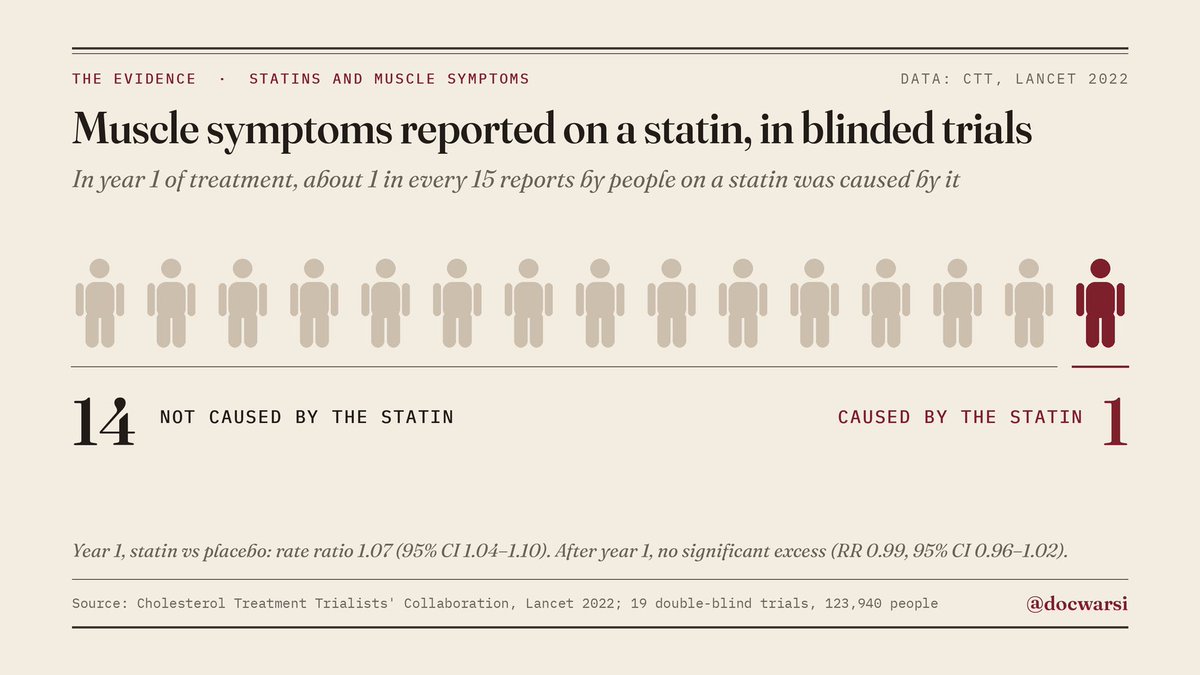
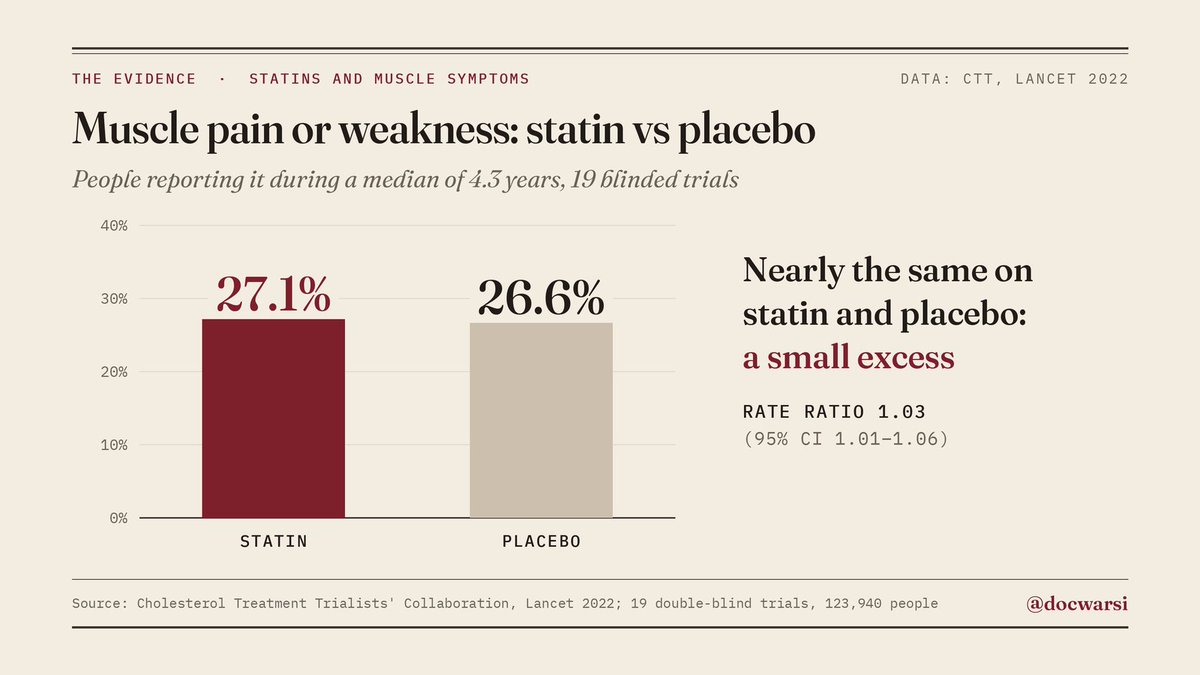
In blinded trials, over 9 in 10 muscle aches reported on a statin weren't caused by it (CTT, Lancet 2022, 19 trials).
Who: most trials didn't screen out people we'd now call intolerant.
So before labelling someone intolerant: recheck, rechallenge.
@EricTopol@TheLancet The things with the best longevity evidence are the boring ones, exercise, BP control, stopping smoking. Hard to sell unfortunately and no subscription model, but still the best deal!
@KrittanawongMD Thanks for sharing! The hard part is measuring it. Pulse wave velocity is probably the closest thing to an arterial age readout, yet it's barely used outside research in the NHS. Until there's a cheap, reproducible marker that changes management, vascular age stays a concept
@gcfmd Useful reality check, thanks for sharing. Deprescribing in frail older patients was always argued on pill burden and patient goals more than hard outcomes, and these RCTs suggest it isn't a free win. The real skill is stopping the right drug, not just fewer drugs.
@EricTopol@ScienceMagazine@NEJM The ER cases are the bit I'd read most closely. CPCs are curated puzzles with a known answer; a real admissions take is messy, partial and changes by the hour. How were the physicians allowed to work, and were the costs from real ordering or simulated tests?
@DrNeilStone Phase 1 in healthy volunteers mostly answers safety and immune response. The harder bit for Ebola is efficacy, which can really only be tested during an outbreak, as the ring vaccination trial in Guinea showed. Tremendous respect respect to the volunteers.
@venkmurthy Community review sounds great until you ask who has the time to do it. Open peer review with published reviewer reports may be a more practical fix?
Keep editorial judgement, but make it visible
@zakkohane Agency was being whittled away long before AI with protocols, order sets, rota gaps. The real risk now is trainees never building the judgement to know when to override the default, whether it comes from a human or an algorithm
@DrMarthaGulati Activity metrics miss the invisible work. The UK's NHS doesn't use RVUs, but job plans still count clinics and sessions, not the inbox, results and calls to relatives. If the doctors with better outcomes spend more time per patient, the metric optimises for wrong thing
@bmj_latest@Kevin_Fong Trust will come from tools that show their working, flag uncertainty and get audited like anything else. We must build them that way and clinicians will actually use them
@EricTopol@Nature The upside is speed and immense appetite for risk. The worry is priorities following a vested interests rather than true need. Independent peer review and open data are what keep it honest
@nickmmark Agree! 30 ml/kg always felt more like an anchor from the early bundles than anything else
CLOVERS and CLASSIC found no mortality difference between restrictive and more liberal fluids after initial resus, which points to reassess early, not a fixed volume
A little disclaimer. No patient stories, ever. No personal medical advice: for your own health, your GP, NHS 111 or 999 is the right place.
If that sounds useful, do follow along.
I'm Talal 👋🏻 , an NHS doctor training in internal medicine and working towards cardiology. I also build things like teaching simulators, and experiments with AI in medicine.
Here I explain medical evidence with the real numbers, and show my working. What you'll find:
5. The odd detour on medical history, how to read a chart, and what NHS training is really like.
If I get a number wrong, tell me and I'll correct it publicly.
3. AI in medicine, honestly. What the trials show, where the tools fail, and how I use AI in my own work.
4. Exercise as medicine. I'm also a personal trainer, so expect the odd post on how much movement is enough, and how to fit it into a busy week.
2. Things I build.
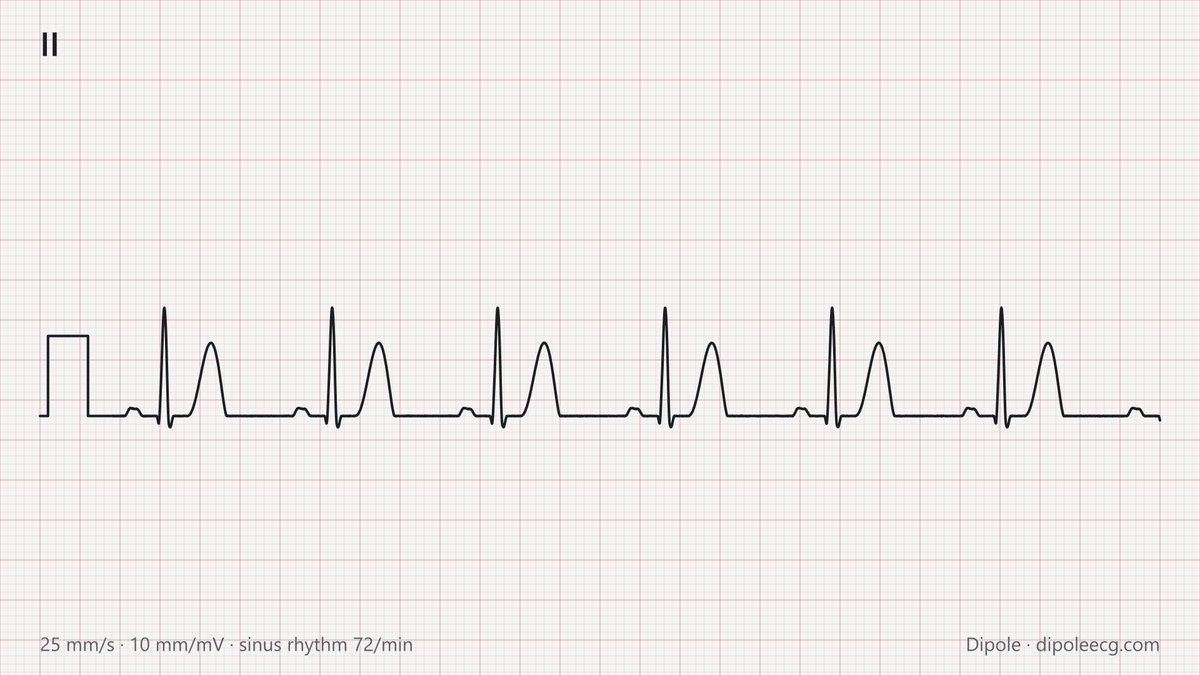
Dipole draws an ECG from a beating 3D heart. EchoSim shows how moving the probe changes the echo picture. AngioSim swings the X-ray camera around the coronary arteries.
Build logs as I go, incorporating your feedback. Teaching tools, not clinical references.