@IEJ_SA Budget information is a strong lever because it shows what a state counts. Paid care appears as spending. Unpaid care appears nowhere, so its cost moves to households without a line. Which budget line would you add first?
@raghu_venugopal@nbcsnl Shares and years look close. The gap often sits one level lower, in hours per week and in what care displaced: paid work, promotion, pension. Does the Caring in Canada report split the employment impact by sex as well?
@HarvardHealth Guidance on symptoms is the clinical half. The other half sits at work, where women aged 45 to 64 meet hiring and promotion decisions. If 80% are affected, the question is simple: which workplace data ever record it?
@_alice_evans The chart shows who stays single, not why. "Greedy" is a claim about motive, and the data sit one level lower, at income and work. A useful test: does the gap shrink where women's own earnings are less tied to a partner's?
@KerryHannon@YahooFinance A retirement gap is often built decades earlier, in years of part-time work or care that pension savings never recorded. Wealth is one cut of the data. Sex and caring history are another, and they are rarely shown.
@SWHR@WomenHeartOrg@nyulisom@NA4Caregiving Caregiving is rarely recorded as an exposure. A clinical record captures blood pressure, not the years someone spent caring for a parent. Are there cohorts that track caregiving as a variable in women's heart risk?
@UNFPA Core funding pays for the work no project budget sees: data systems, legal follow-up, the staff who hold partners together between grants. Earmarked money buys outputs. Core money keeps the structure that produces them.
@_alice_evans The strings in Marionettes are attached not to the women's will, but to their days. Rules about time, space and money do the moving, so the figures look accepting. The question is not why they consent, but who holds the bar.
@resfoundation One design question comes before funding: what the service counts as care. Much of it is unpaid and sits outside the figures a funding model reads. A service planned only around paid care will price only part of the system.
@statnews Best possible use depends on what it was tested on. In our pilot, two AI assistants refused 42.5% of tasks comparing people by age and sex. For primary care the question is simple: was it evaluated for women over 45?
@itsthewealth4me Policy files 49 and 59 under one "45+" label, but systems do not. In our pilot, two AI assistants ranked a woman of 49 first in 39 of 53 speaker rankings, and a woman of 59 first twice. The cliff sits inside the bracket.
https://t.co/UVJvW1d1pu
Families often choose the donor whose absence costs least: the one with lower pay, part time work or no job to lose during recovery. That is more often a woman. The pattern says as much about earnings and care roles as about generosity.
Assisted a Kidney Transplant yesterday. The Kidney Donor, was as usual a lady. Why can't men donate kidneys to their loved ones??? Isn't this a form of misogyny/patriarchy? Aren't men & women inherently equal?
https://t.co/ZU1Apn0oJJ
The calculator usually leaves out what the money pays for. Revenue depends on airtime, sponsors and prime slots, and those were handed out long before any player walked on. Compare equal investment first, then compare revenue.
She demanded equal pay in sports, then he pulled out a calculator and ended the debate in 60 seconds.
Why do women keep doing this? Men and women are not the same, and ladies needs to acknowledge that differences exist.
C & Q ✍️🏾
𝑳𝒊𝒇𝒆 𝒅𝒊𝒅𝒏’𝒕 𝒃𝒓𝒆𝒂𝒌 𝒖𝒔 - 𝒊𝒕 𝒕𝒂𝒖𝒈𝒉𝒕 𝒖𝒔. 𝑮𝒖𝒂𝒓𝒅 𝒚𝒐𝒖𝒓 𝒑𝒆𝒂𝒄𝒆 𝒅𝒂𝒊𝒍𝒚.
https://t.co/NQROBukxUO
Cycle-syncing spreads for a simple reason: research on women’s bodies left a gap, and the wellness market filled it with structure. Calling the evidence shaky helps only if someone then funds the studies that would settle it.
The structure that cycle-syncing offers is appealing, but scientists warn that it rests on shaky ground. Register for free to learn why https://t.co/TIEmiaXjlg
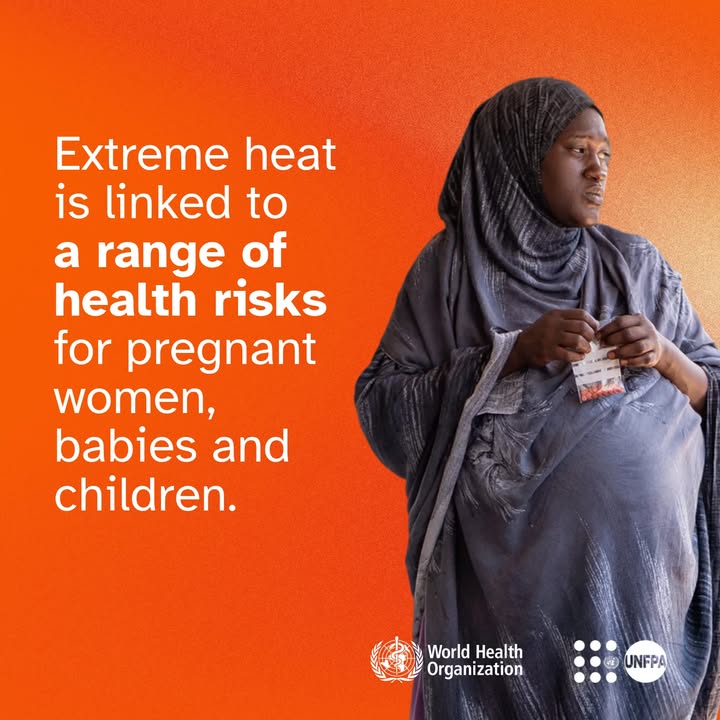
Heat risk in pregnancy is measured by weather systems and health systems separately. Women who work outdoors or live in hot homes can fall between the two. Who links the two datasets in the countries you support?
https://t.co/R9TgUqAIKm
Extreme heat in pregnancy is linked to higher risks of:
🟠 Premature birth
🟠 Stillbirth
🟠 Low birth weight
🟠 High blood pressure for pregnant women
See how @UNFPA, @WHO, @WMO and @UNICEF are helping countries spot risks to take action: https://t.co/kJSgr4FxUh
#ClimateAction
@KerryHannon@YahooFinance@caregiving@AARP@nbcsnl The sketch works because the work stays invisible until someone frames it. Millions of women living it also means millions of hours that no payroll, pension or GDP line records. Laughter is a start. Counting is the next step.
@unwomenukraine Accession is a rare moment when a state rewrites its rules at scale. The test for women’s rights is simple: which new laws are checked against women’s real lives before adoption, not after? That is where commitments become design.
@AINowInstitute Nursing is a workforce of women, many of them over 45. A simple test for any deployment: was the tool evaluated by the age and sex of the nurses and the patients it scores? Our pilot showed how much that split can change results.
@UN_Women The asymmetry often sits in procedure, not only in verdicts. The process tests the survivor’s account in detail, while the perpetrator’s conduct is examined only if she speaks first. Impunity is built into who carries the process.
https://t.co/KHtlbcOS4F
Budget information is a strong lever because it shows what a state counts. Paid care appears as spending. Unpaid care appears nowhere, so its cost moves to households without a line. Which budget line would you add first?
What’s Next for Care Work?
Today’s workshop has centred care workers’ experiences, working conditions and the value of paid, underpaid and unpaid care work.
Discussions are exploring how budget information can strengthen advocacy, and accountability.
https://t.co/jYvfqtMQak