We'll be spending a lot more time trying to understand the outputs of language models. A few thoughts, tips & tricks:
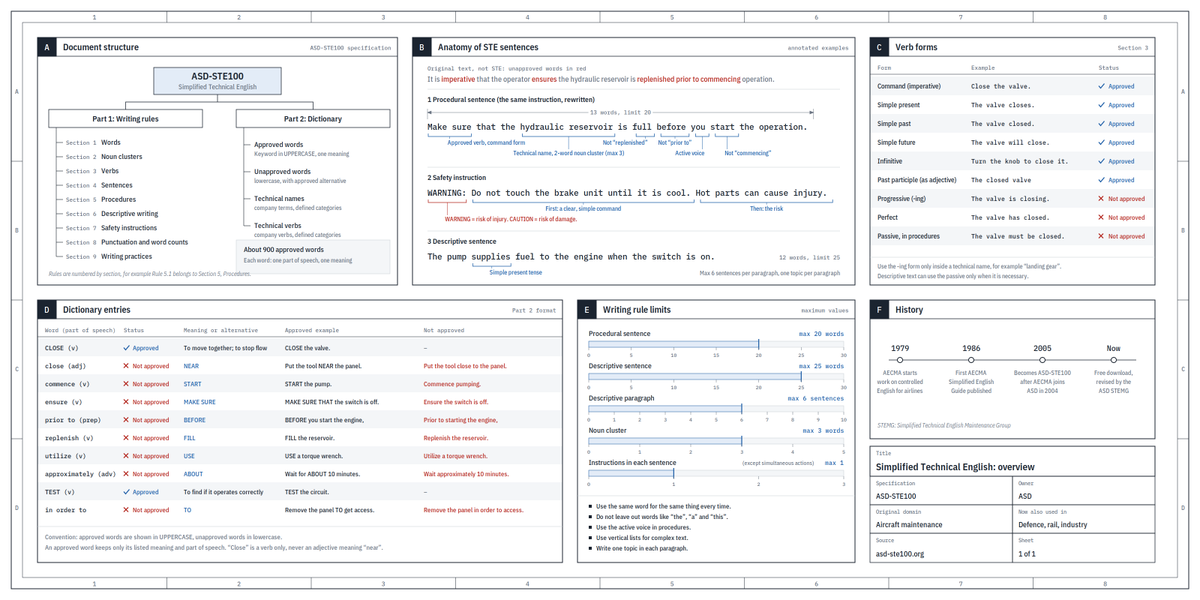
Writing. Something I've had success with: Ask your LLM to explain something in ASD-STE100, it's a controlled language specification originally developed for aerospace maintenance documentation. LLMs well-versed in this language and it comes with heavy constraints on clean writing style that I often find a lot more readable. Sometimes I've tried to soften it a bit e.g. ask for "80% of the way to ASD-STE100" because the spec is quite stringent. But even better:
Diagrams / images. Instead of writing, ask your LLM to create a diagram. These can be a lot easier to process, parse, and understand. But even better:
Web pages. Ask for output "in HTML" to get a beautiful, interactive webpage. LLMs are getting really good at frontend and can create beautiful experiences, animations, etc. But even better:
Explainer videos. The output format I am most bullish on is fully custom / bespoke explainer videos generated on any arbitrary topic. Experiment with things like "Create a 3b1b style video explainer on X. Use my ElevenLabs API key for audio narration". (you'd need an API key for the latter or you can ask your LLM to find you decent free alternatives that use your local compute). This is actually starting to work!
In summary:
- As LLMs get better, they will do more and more of the legwork autonomously, and a lot more of our work will rise up the abstractions into oversight and understanding.
- Luckily, LLMs can help here too because as intelligence and code are increasingly abundant, you can ask for large, custom, discardable software artifacts (e.g. web apps, video explainers) that would have never made sense to create before. Push the boundaries here and you'll be surprised.
🎁Give Away 100 System Design Books🎁
🔹 10 signed physical books (vol1+vol2 +ML, winners get all 3)
🔹 90 1-year ByteByteGo online course
How to participate:
✅ Follow
✅ Like & RT
✅ Subscribe free newsletter: https://t.co/ssb0DDW1rR
⏰ Giveaway ends in 72 hours
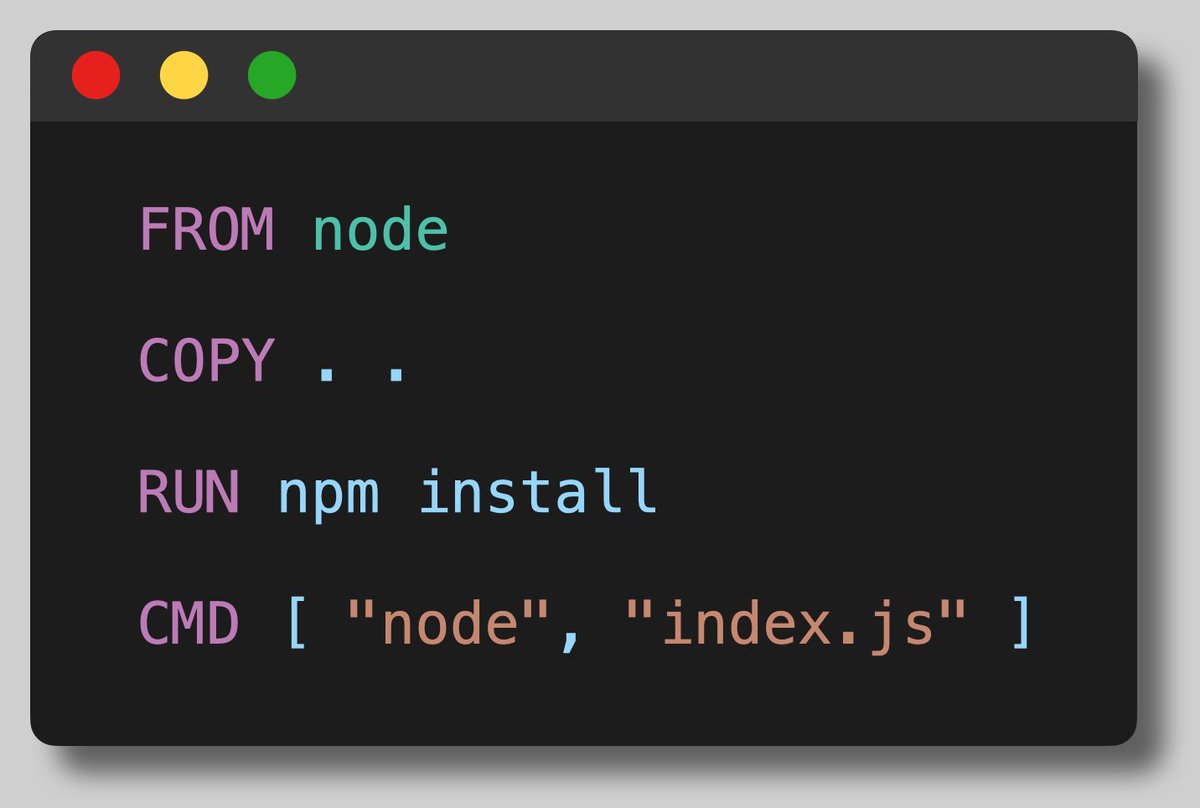
This is a valid Dockerfile for a NodeJS application. It is also a pile of 💩!
We can improve:
- 🔒 Security
- 🏎️ Build speed
- 👁️ Clarity
Follow along as we go from 💩 to 🥇!
(code in alt text)
/1 How does ChatGPT work?
Disclaimer: since OpenAI hasn't provided all the details, some parts of the diagram may be inaccurate. @sama, we would love to hear your feedback.
We attempted to explain how it works in the diagram below. The process can be broken down into two parts.
Free Certification Courses in Data Science with Python from IBM.
Work on real-world problems. Add the projects and Certificate to your resume.
A Thread 🧵👇
Everyone is talking about #ChatGPT & #GPT3, but did you know there were many alternatives?
Here are 10 of them! 🔥👇
1. BLOOM
2. GLaM
3. Gopher
4. Megatron-Turing NLG
5. Chinchilla
6. PaLM
7. BERT
8. LaMDA
9. OPT
10. AlexaTM
@Google@nvidia@Microsoft @DeepMind @Meta@Amazon
My work on the foundations of metamathematics is now a book---that's ready for preorder. All those pictures of metamathematical space (AKA slices of the ruliad) look pretty great in print!
https://t.co/pUQ7DVJNe6
My PhD professors taught me MATLAB during my master's degree.
So I watched 200 YouTube videos to learn Python
96% of them were a complete waste of time.
But these 8 taught me more than all my PhD professors combined: