A billionaire went on stage and explained in 42 minutes how the entire economy works. for free. Wall Street spent the next decade pretending nobody saw it.
he didn't sell a course. he didn't plug a fund. he stood at a whiteboard and drew three lines that explain every crash, every recovery, and every rate decision since 1929.
MBA programs charge $200,000 to teach frameworks he covered in the first 15 minutes. six of the models he drew on that board are still classified as proprietary at three major banks. he gave them away on YouTube.
the part nobody talks about: he predicted exactly what happened in 2020, two years before it played out. interest rates hitting zero, the central bank running out of tools, the money printer. he drew it on a whiteboard in 2018 like he was reading tomorrow's newspaper.
a portfolio manager at a top-five firm told me every new analyst on his desk watches this before they're allowed to open a terminal. not the CFA prep. not the internal training. this one lecture.
40 million people have seen it. almost none of them can name the three forces he draws in the first ten minutes.
it is still free.
When @mickymalka was 24 years old, he met Charlie Munger.
He owned just 1 share of Berkshire, but Charlie told him he was the wealthiest person in the room:
"Charlie looks at me and says, 'You must be very wealthy to be here! I said,
'Actually, no, I only own one share?'
He says, 'You don't get it. You are the wealthiest guy in the room. You have the power of time. All of us here are in our last chapter. You're just starting your time. You will compound for the next 70 years of your life.
So never forget the rule I'm about to tell you: you only need to get rich once.'
And then he says, 'And now I'm going to eat, and just sat down and ate."
Bernard Arnault going direct is remarkable and worth reading in full
The single most impressive thing is that Arnault (personally, not via company spokesman) responds to a major hit piece without at all accepting the role of defendant
He never complains about “biased reporters” or “they ignored our fact check” etc. He instead:
1) Does not flinch. He starts by giving the rebuttal a title: “Thank You.” Not “Addressing Recent Allegations” or whatever but implying the expose has backfired and made him look good.
Eg: “They used to call me The Terminator. I prefer ‘the last royal family.’ It’s more elegant, and probably better for Dior sales.”
Tone stays measured and bemused throughout; it’s giving Logan Roy
2) Lampoons the allegations. His wry humor makes the expose seem silly and theatrical, his tone is like he’s divulging a stupid child.
He opens with, “Apparently I am the head of ‘the last royal family of France’.”
And drops gems like, “At the Arnault family, apparently, we don’t argue, we conspire. We don’t deliberate, we plot. It’s novelistic… What, in an ordinary family, is simply called Sunday lunch becomes, in our case, an intrigue. It’s a matter of vocabulary.”
3) Reframes the whole narrative. From billionaire to steward, from an oligarch pursuing power to a patriarch preserving an institution built by and for others
Eg: “You describe power as though it were a prize to be won. I experience it as a responsibility to be passed on.
The houses entrusted to me are older than I am. Most will outlive me. My role is to hand them on stronger than I found them. That is why I reject the idea of a dynasty. Dynasties exist to preserve privileges. We work to preserve craftsmanship.”
Interestingly, in the very act of doing this Arnault shows how masterful he is at wielding power, and he summons that skill here to make the reporters look like bumbling neophytes
For my first post, I’m sharing a letter @NVIDIA signed on why open models matter.
AI will transform every industry, power every company, and be built by every country.
Open models strengthen safety and cybersecurity, accelerate innovation and diffusion, and enable sovereignty.
The world needs both frontier closed models and frontier open models.
https://t.co/AUKzoQ5Ikb
Kimi's CEO Zhilin Yang:
"everyone's trying to build one smarter agent
many agent hits a wall fast, so instead of making it smarter we just made more - one boss, a thousand workers."
in a 39-minute talk he explains why one agent won't get you to real work.
agent swarms + long context + RL on every sub-agent - that's the fix.
bookmark this ↓
Joe Blitzstein, Harvard statistics professor:
"Jane Street pays $600K for people who can do one thing in their head: compute the expected value of a bet before they take it. I teach it free at Harvard. skip it and you're the casino's favorite customer."
this free lecture holds the entire "edge" every casino and every fund quietly runs on, and the man teaching it put his whole Harvard probability course online for free, where millions have watched it.
at the board it's simple. expected value is every outcome times its probability, added up into one number that tells you what a bet is worth on average. the roulette wheel sits at minus 5.26 percent, so every dollar you push across the table is worth about 94 cents back to you and the rest to the house. it never changes and it never has to. that's the whole "edge", minus the marketing.
expectation goes back to Pascal, Fermat and Huygens in the 1650s. it has been free for almost 400 years. same point as my casino piece above: the house wins because its number is positive and yours is negative, trade after trade.
the calculation is free and every fund runs it on every position. what they cannot sell you is the honesty to compute your real edge instead of the one you wish you had. that is the number that actually decides who goes broke, and no course can make you face it.
It’s happening folks… things accelerated more in the last 30 days from a dozen players than in the last year
Open Source models are compounding
Frontier Models are refining
When open source hits robotics, self driving and life sciences things are going to get wild
2026 will be the year it happened
WERE AT AGI IN 2026
SUPER INTELLIGENCE IS 2027-28
ITS GONNA GET VERY STRANGE
Sam Altman: "You can identify founders who have a chance at creating a $10 billion company. With practice."
Then he shared the experiment that proved it. YC funded 20 teams of strong founders without ideas.
All 20 failed.
> real founders generate new ideas every week, not one big one
> execution speed between meetings predicts success better than anything on paper
> a founder improving fast over 2 months he's been right ~10/10 times on this signal
> the core four: obsession, focus, frugality, love
everyone screens for intelligence. almost nobody screens for slope.
which one would you bet on?
This is concerning. For the first time, a Chinese model Kimi K3 has taken #1 on the Frontend Code Arena and is scoring at or near the frontier on other benchmarks.
Meanwhile America is tying itself in knots: politicians and bureaucrats are banning new data centers, piling on state regulations, and pushing for new federal agencies to pre-approve frontier models.
This is how you lose the AI race. The rest of the world won’t play by our rules if we bog ourselves down. Permissionless innovation is how America won the internet and became the technological envy of the world. We can do it again with AI -- while addressing risks in a targeted way -- or we’ll watch our lead evaporate.
Big news: Kimi-K3 by @Kimi_Moonshot is now #1 in the Frontend Code Arena with 1679 pts, surpassing Claude Fable 5.
This is a 17-place jump from Kimi-k2.6 (#18 -> #1).
In Frontend, Kimi-K3 ranked #1 in 6 of 7 domains: Brand & Marketing, Reference-Based Design, Data & Analytics, Consumer Product, Simulations, and Content Creation Tools, landing #2 only in Gaming behind Fable 5.
The full model weights will be released by July 27.
Congrats to the @Kimi_Moonshot team on this major milestone!
Today we're shipping screen-aware dictation.
First, we built a speedy speech-to-text (very fast, ~450ms).
But, many products do this!
So we went further. Now dictate using your screen as context. In Claude Code, it writes the prompt. In G-Mail, it replies in your voice.
Demo:
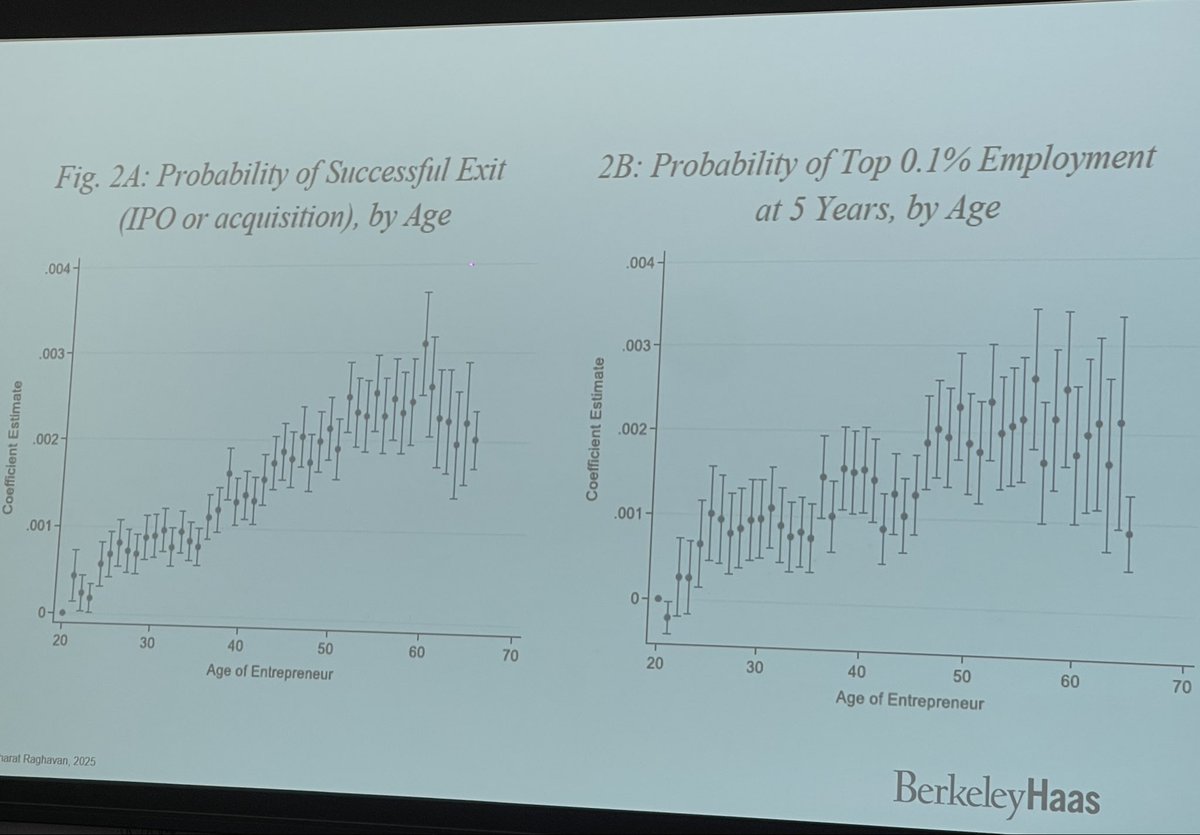
@GJarrosson we talked about this in a class at berkeley. that research showed the odds of having a successful exit actually go up as you get closer to 40 and then keep going up, peaking in your 50s.
I have spoken at 100 of the best educational institutions in the world.
So many ask: “how do I get into VC?.”
I say the same thing; send me three deals per day for 90 days. Simple.
Not one person did this. Not one.
Until I went to speak at LSE and one incredible student (@NiallKiely20VC) promised me he would.
I brushed it off believing he would be like all the rest who gave up after 7 days.
Everyday he persisted. His founder recommendations got better and better. He became a part of the team without even joining.
Immensely proud to welcome Niall to 20VC for his first week. He earned this with everyday and every founder recommendation.
Hustle, persist and never give up.