When Tel Aviv Sneezes, Washington Coughs: Somaliland and the New Grammar of Power
In international politics, recognition is rarely an act of idealism. It is a declaration of interest. Israel’s recognition of Somaliland is not an isolated diplomatic gesture; it is a strategic tremor whose aftershocks are already being felt in Washington, the Gulf, and the wider Horn of Africa.
For three decades, Somaliland has existed in a diplomatic purgatory—stable, democratic, and self-governing, yet denied recognition in deference to a fictional Somali unity that survives only on paper and foreign subsidies. Israel’s decision punctures this illusion. It reframes Somaliland not as a secessionist anomaly, but as a strategic asset in one of the world’s most contested corridors: the Red Sea–Gulf of Aden–Bab el-Mandeb axis.
When Tel Aviv moves, Washington recalibrates, not because of subservience, but because interests converge. The United States has long struggled with the contradiction at the heart of its Somalia policy: pouring resources into Mogadishu while insecurity metastasises, even as Somaliland quietly builds institutions, conducts elections, and denies space to extremist networks. Israel’s recognition forces an uncomfortable but necessary question in Washington: why is stability being punished while failure is endlessly rewarded?
The path forward will not be theatrical. The CIA will not announce itself, nor will policy arrive wrapped in slogans. Instead, the shift will be bureaucratic, incremental, and deniable. Somaliland will be folded into counter-terrorism architectures, maritime security frameworks, and congressional briefings. USAID and defence planners will expand engagement without using the word “recognition,” until recognition becomes the least controversial option left.
The United Arab Emirates plays a significant role as an accelerator. Through ports, logistics, and capital, Abu Dhabi turns Berbera into a geopolitical fact. In global politics, concrete and cranes often speak louder than communiqués. Once trade routes, naval logistics, and energy corridors run through Somaliland, the map adjusts itself.
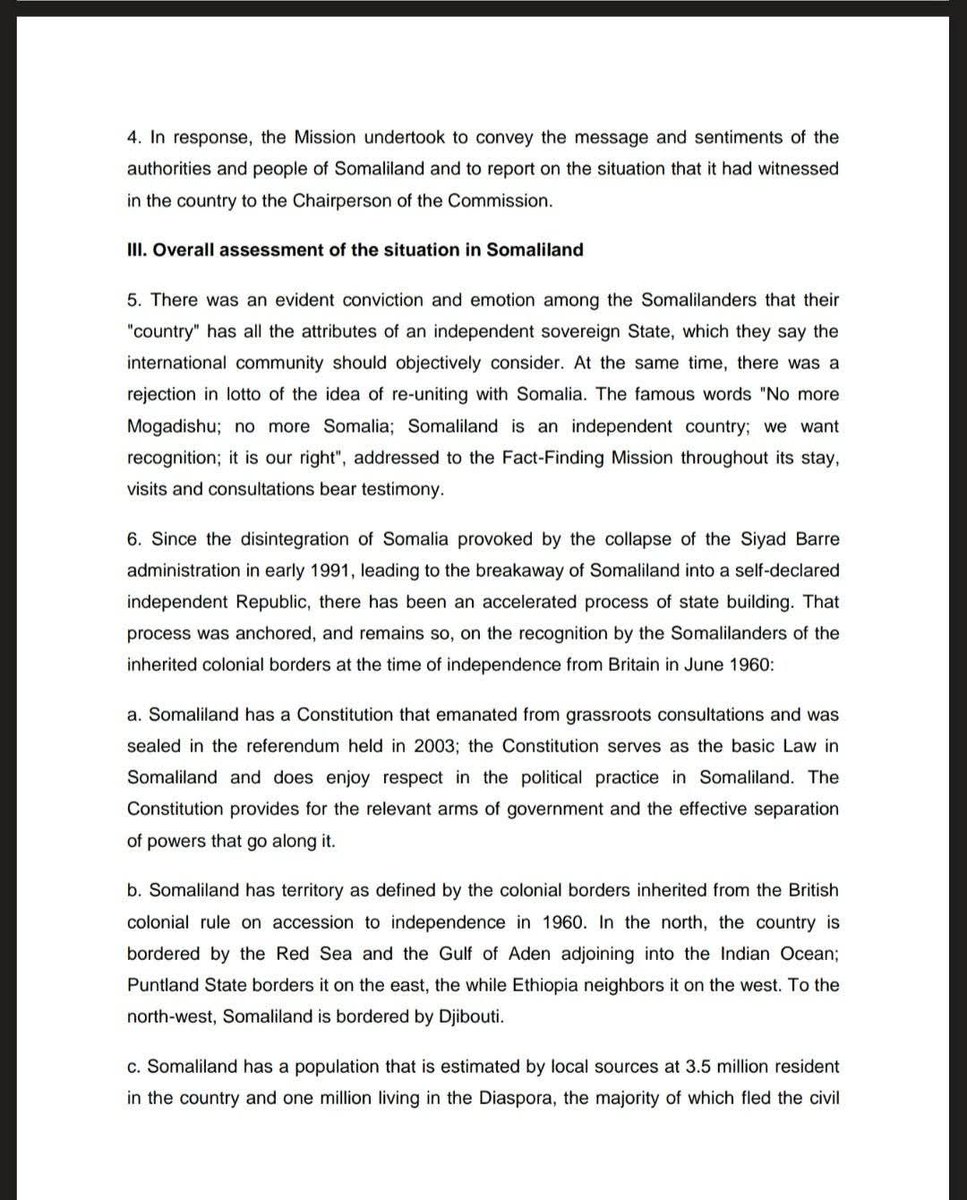
This is how power operates in the twenty-first century. Sovereignty no longer emerges solely from colonial borders or African Union dogma, but from functionality, security, and relevance. Institutions follow reality; they rarely create it.
Opponents will cry precedent. However, precedent already exists in the cases of South Sudan, Eritrea, and Kosovo. What they fear is not fragmentation, but the collapse of a long-maintained lie—that borders matter more than people, and that diplomatic comfort should outweigh empirical governance.
Somaliland’s recognition, if it comes, will not be a gift. It will be an admission—long overdue—that the international system can no longer afford to ignore functioning polities in favour of failed abstractions.
When Tel Aviv sneezes, Washington coughs. But when reality asserts itself, even empires must eventually listen.
@_AfricanUnion@IGADsecretariat@Osint613@IsraeliPM
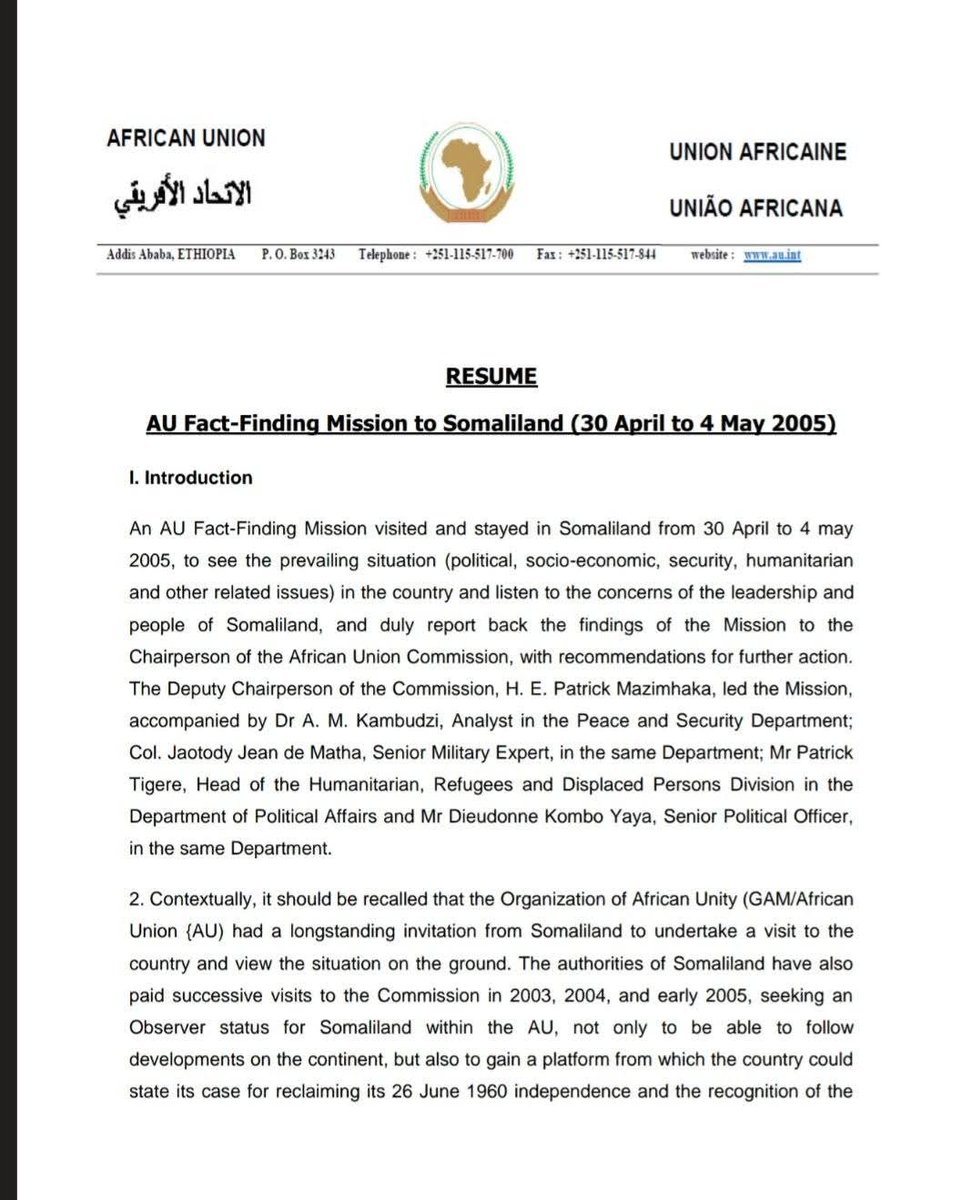
This is the hypocritical duality of the @_AfricanUnion in 2095 these are the findings and now they are in the far right. This is due to the idiot chairman from Guelle dictatorship republic. @i24NEWS_HE@IsraelMFA@SecRubio
Serious foreign policy must be rooted in reality. The UK’s policy on Somaliland requires urgent reconsideration. Our statement ⬇️
@YvetteCooperMP@JennyChapman@CPJElmore
At the UNSC, #Somaliland’s genocide under Siad Barre’s dictatorship was raised before the world. While #Somalia’s Amb denied the genocide, both the current and former Presidents of Somalia have publicly acknowledged it. History and official admissions speak for themselves.
The same government with different perspectives and false Commentary on the #SomalilandGenocide in Siyad Barre's regime. Is it the head of states who are are liers or the so called ambassador?
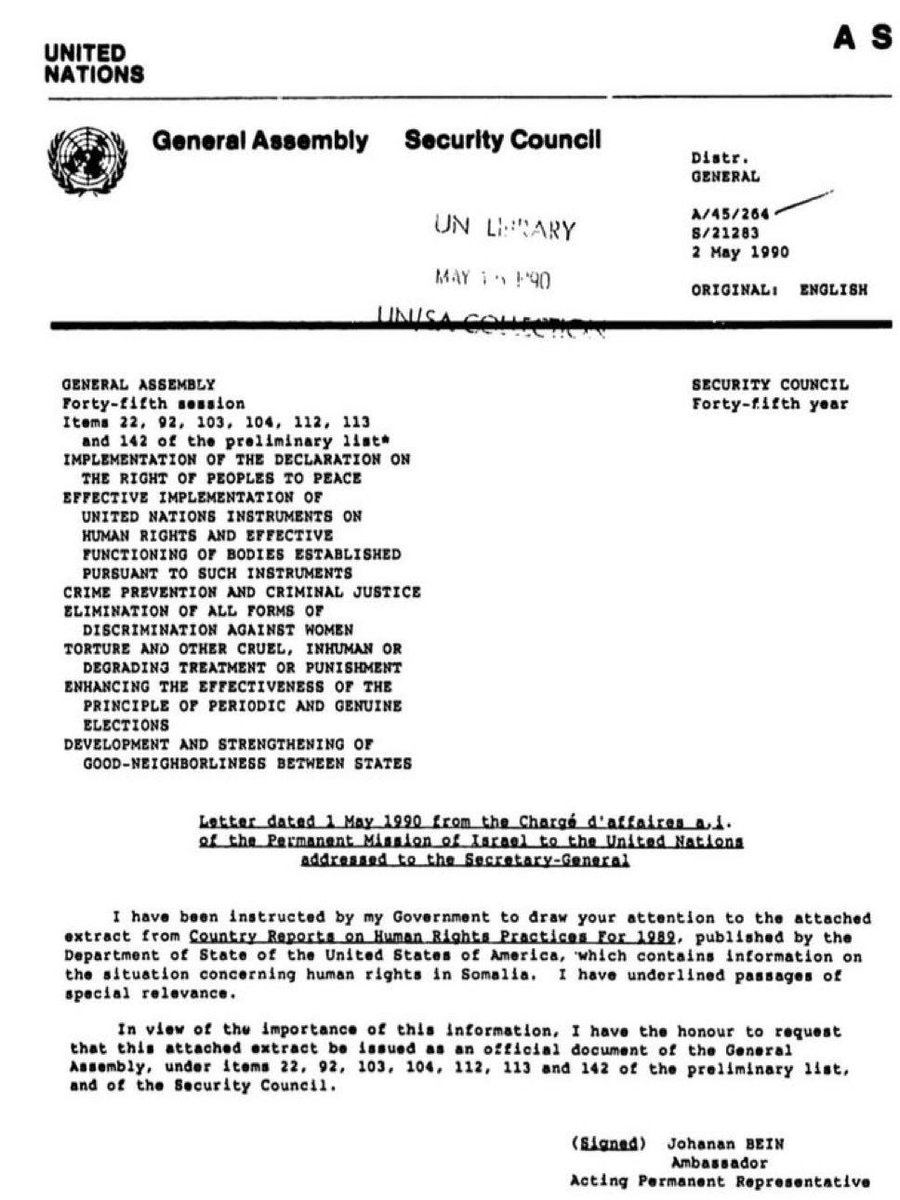
@dannydanon, Israel’s Ambassador to the United Nations said:
“When the Somali regime, led by Siad Barre, carried out a massacre against the people of Somaliland, the world remained silent. But Israel did not."
He added "In 1990, Israel raised its voice at the United Nations, warning the Security Council about the massacre in Hargeisa. Even when it was neither convenient nor diplomatically beneficial, Israel chose conscience. This is what moral leadership looks like.”
Did you know? Somaliland was the first East African country to gain independence—before regretfully joining Somalia.
First & Early African Independence Dates:
• Somaliland — June 26, 1960
• Madagascar — June 26, 1960
• Somalia — July 1, 1960 (inherited the UN seat originally granted to Somaliland)
• Tanzania — Dec 9, 1961
• Rwanda — July 1, 1962
• Burundi — July 1, 1962
• Uganda — Oct 9, 1962
• Kenya — Dec 12, 1963
• Mauritius — March 12, 1968
• Comoros — July 6, 1975
• Seychelles — June 29, 1976
• Djibouti — June 27, 1977
• Eritrea — May 24, 1993
*Somalia never gained independence as a separate colonial state. It inherited—and still occupies—the UN seat originally granted to the independent State of Somaliland in June 1960, a status added without a lawful, ratified union and maintained through international inertia.
Your Excellencies @DannyDanon@michaelgwaltz as the UN Security Council convenes its emergency session on this matter, The Republic of Somaliland respectfully encourage you both to reference these historical facts and Israel’/ US leadership in upholding realities on the ground while fostering regional peace.
Thank you for your commitment to principled and fact-based diplomacy.
🧾Receipt.⬇️
A powerful🔥 statement from Somaliland’s Minister of Presidential Affairs @khadarlooge, we will not tolerate anyone here serving or showing leniency toward failed state of #Somalia, nor attempting to oppose the will of over 6+million #Somalilanders.
I'm hearing that massive celebrations are planned for today (Sunday) in Somaliland following
Israel’s recognition of Somaliland as an independent sovereign state.
This video was taken in Hargeisa, the capital city of Somaliland. Thank you @AbdiJeeni
Israel's historic recognition of Somaliland as a sovereign state, just announced today, cracks open a highly strategic region: direct access to Berbera port, enhanced Red Sea security amid lingering Houthi threats, countering Iranian influence, and reliable diversification of Ethiopia's trade routes away from Djibouti.
Eyes on the next moves: The UAE, with its deep investments and military presence in Berbera, and the Trump administration, appear primed to follow. Pure transactional realpolitik: strategic footholds in exchange for recognition.
Backlash from Somalia, Egypt, and Türkiye is already fierce, but the momentum is shifting geopolitical alliances irreversibly. In 2025 and beyond, geographic location and choke points outweigh traditional sovereignty claims.
This shows that Mogadishu administration uses AS and other extremist groups for their interests. Read in between the lines and see how they collaborate with those groups.
Somalia’s desperation shows again. Since 1993, Mogadishu has failed to find peace. Somaliland built peace on its own, kept ISIS & Al-Shabaab out, secured its seas, and faces constant sabotage from Somalia. The world knows who is truly capable. #SomalilandRecognition#Africa
Somalia’s desperation shows again. Since 1993, Mogadishu has failed to find peace. Somaliland built peace on its own, kept ISIS & Al-Shabaab out, secured its seas, and faces constant sabotage from Somalia. The world knows who is truly capable. #SomalilandRecognition#Africa
The Somali Region (in 🇪🇹) crisis reveals President #Mustafe Cagjar’s misuse of state power to favor his Ogaden #clan, causing nearly 100 deaths.
The #FDRE Gov.t must intervene to protect civilians, hold perpetrators accountable, & promote inclusive governance.
#SomaliRegion