Our review summarizing the field of the genetics of the human proteome is now published in @NatureRevGenet I would suggest pay attention to Figure 3b https://t.co/3ZfiQNSkJw
Our paper on genomic privacy risk in GWAS results is now published in @eLife as a Reviewed Preprint: https://t.co/mllwnFCZac Omics era is challenging our intuition — when you release many sets of summary statistics from the same samples, you may be leaking individual genotypes!
Unlock the complexome → better, mechanism-aligned biomarkers.
🗓️ Nov 18, 9–10 AM ET | Speaker: Dr. Xia Shen
🔗 https://t.co/26k7htB6u2 #ProteinComplexes#Proteomics
The main messages are: 1) State-of-the-art tool LAVA is prone to false positives, whereas HDL-L offers consistent inference; 2) HDL-L provides local genetic correlations that agree more with genetic colocalization; 3) HDL-L reports more solid results in real data applications.
Our new method HDL-L, high-definition likelihood for local genetic correlation analysis, is now published in @NatureGenet: https://t.co/hQdjxoetnw. The method enables unbiased and fast evaluation of genetic correlations at various genomic segments.
Excited to share our work published in Nature Human Behaviour! 🚀 We conducted a GWAMA study on 12,000+ individuals, analyzing 184 neuro-related proteins for genetic links and causal effects on mental health. https://t.co/muwxLvEELD
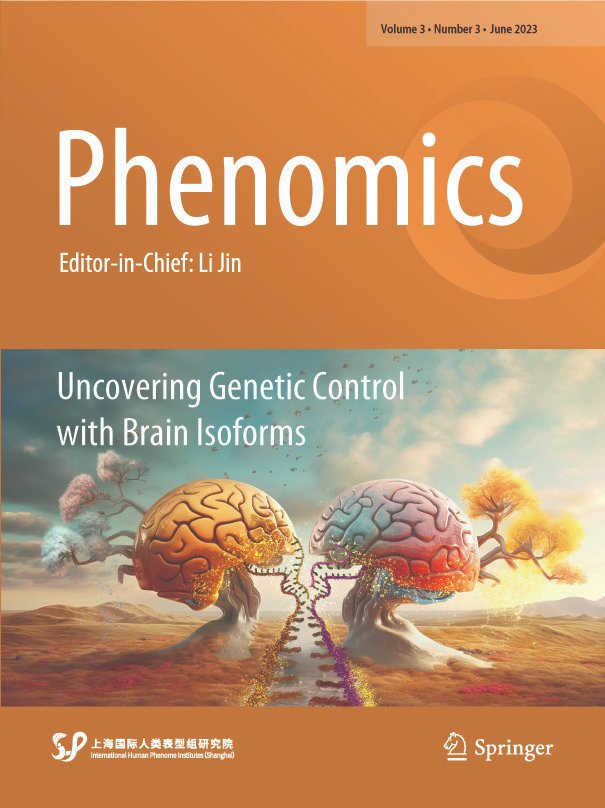
This cover displays our paper last year, awarded the most beautiful cover of the journal @Phenomics_J , emphasizes the importance of shifting the paradigm from gene expression to isoform expression, which is particularly important in the brain: https://t.co/kk4XZmn6DA
@KejunYing P-value is a meaningless number. Whether this means anything statistically depends on the context and the design of the experiment. What is being tested? Is there any replication or hypothetical replication? Overall, what is the overall scientific story being told?
3. We validated 13 combinations of protein targets and diseases or side effects with available drugs, suggesting hundreds of re-purposing and new therapeutic targets for diseases and comorbidities.
Our SCALLOP Consortium Neurology & Neuro-Exploratory proteogenomics paper is now on
@medrxivpreprint: https://t.co/dbGdj33xm0 We conducted genome-wide association meta-analysis (GWAMA) for 184 neuro-related proteins in up to 12,500 individuals.
2. We also found multiple proteins with potential causal effects on neuro-related traits as well as complex diseases such as hypertension, high cholesterol, immune-related disorders, and psychiatric disorders.
Today, we’re introducing a new model that eliminates accept/reject decisions.
By publishing every paper with eLife reviews as a Reviewed Preprint, we plan to restore autonomy to authors, ensuring that they will be judged by what, not where, they publish. https://t.co/OAsiOVFStI
Ting’s paper is out. @TingQi2 Leveraging a powerful new method and large datasets, we established a comprehensive genetic regulation map of RNA splicing, which helped to reveal a distinct and essential role of RNA splicing in common traits and diseases. https://t.co/eXxHNIl3WD
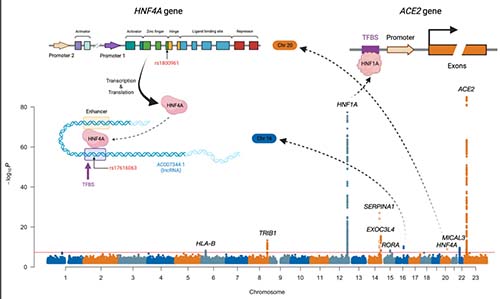
To summarize: We provide a comprehensive genetic landscape of the human ACE2 protein. ACE2, a protein sitting on our cell membranes, is essential for cardiovascular disease risk and at the same time happens to be the coronavirus receptor.
Our SCALLOP Consortium GWAS of the ACE2 coronavirus receptor is now published in Circulation @CircAHA: https://t.co/0gsonIG6og Thanks to the 1st authors @YangZhijian1997 and @ErinMcD46 for their hard work and all the contributing cohorts for making this joint effort possible.🥳