Electricity Act, 1910
Electricity theft can generally take place in two ways. The first is direct theft, where an illegal connection or “kunda” is made to the electricity line. The second is by tampering with or interfering with the electricity meter.
When electricity theft is detected, WAPDA issues a detection bill.
If the theft is committed directly from the electricity line, the detection bill can be challenged before the Civil Court.
However, where the allegation is that the electricity meter has been tampered with or manipulated, the detection bill cannot be challenged before the Civil Court. In such a case, the proper forum is the Electric Inspector.
2016 YLR 267
PLD 2012 SC 371
Supreme Court has directed the executive to take steps to add a separate column in the Nikahnama regarding the husband's title or the title of any other person over the property to be given in dower.
https://t.co/d5Sr6G8ltU
Upholding the government decision regarding the ban on imports of books from India and Israel, the Federal Constitutional Court (FCC) has held that the right to read is not absolute and may be subject to restrictions as imposed by law, including those justified on grounds of foreign policy.
https://t.co/iteuXMH7Yi
Supreme Court has emphasised the utility of deterrent punishment in criminal cases, stating that such punishment maintains balance with the gravity of the wrong done by a person and also makes an example for others.
https://t.co/Q7ZWBuhrFS
#OnThisDay in 1803, Marbury v. Madison was decided. This case established the principle of judicial review in the United States, meaning that courts have the power to strike down laws, statutes and some government actions that are in conflict with the U.S. Constitution.
Supreme Court held that a suspended civil servant is entitled to receive full salary and other service benefits during the period of suspension, declaring that suspension does not sever the employer-employee relationship nor extinguish contractual rights.
https://t.co/MLa37foAuv
Supreme Court has directed the police in the provinces and in Islamabad shall ensure that no reference to caste, tribe, biradari, conversion status or any classificatory or derogatory expression is mentioned with the names of complainant, accused persons, victims or witnesses in FIRs, arrest memos, recovery memos, investigation reports, challans or any other records.
https://t.co/sImQlwOwFr
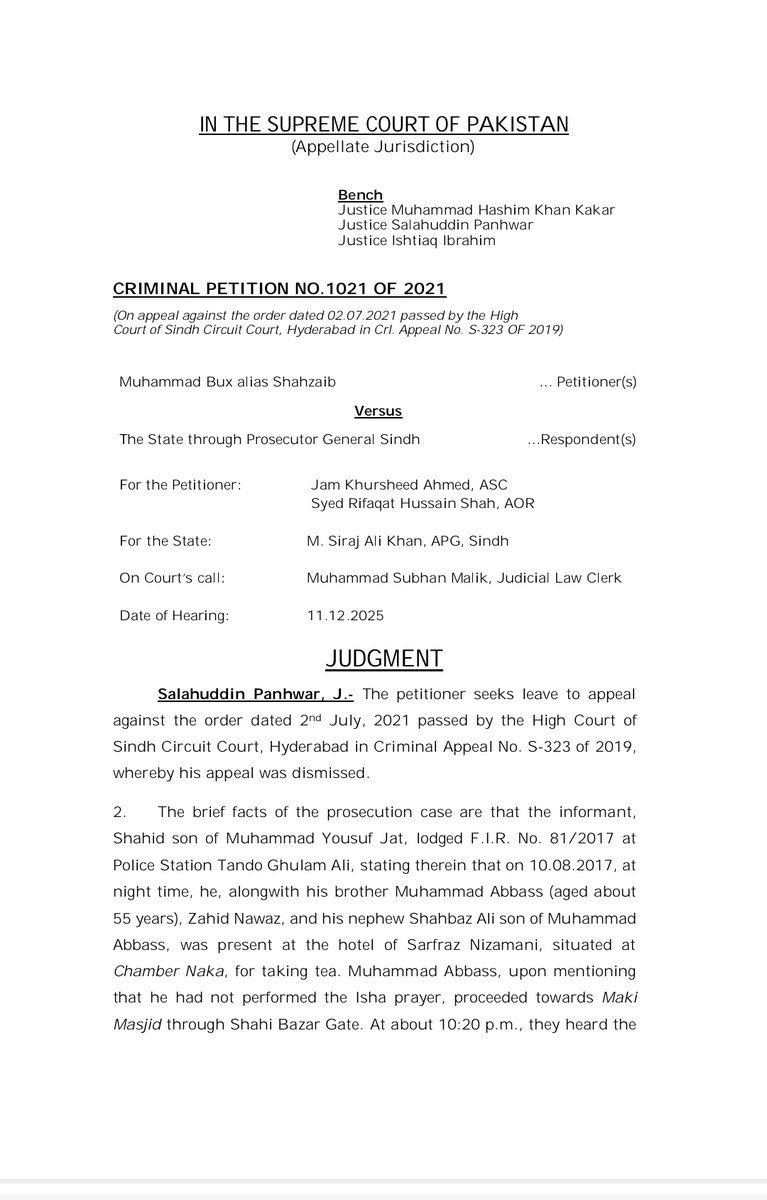
Supreme Court has prohibited the use of the phrase “Bakhidmat Janaab SHO” in applications addressed to police officials, describing it as a remnant of the colonial era.
The verdict, authored by Justice Salahuddin Panhwar, observed that such language reflects an outdated mindset inconsistent with the role of public servants in a modern democratic system.
The issue was raised during proceedings when a Judicial Law Clerk, Muhammad Subhan Malik on Court's call, pointed out the widespread practice of addressing station house officers with the said phrase. He explained that “Bakhidmat” translates to “at service of”, adding that “it is not the citizen in service of the SHO, but the SHO in service of the citizen.” The Judicial law clerk further highlighted that the terms Complainant and Informant are often used interchangeably, even in FIR matters, a practice the Court termed incorrect.
Agreeing with the submission, the judgment authored by Justice Salahuddin Panhwar observed that from now on, the for addressing the SHO, "Janaab SHO" is sufficient. The Court further observed that the term Complainant would only apply to a person filing a private complaint under Section 200 Cr.P.C, while the person lodging an FIR would be regarded as an Informant.
The 19 page verdict also barred the use of the term “Faryaadi” in police proceedings, observing that it conveys the impression of a citizen seeking mercy rather than exercising a legal right. It noted that the word, of Persian origin, refers to one who cries for help.
In addition, the Court interpreted Section 201 of the Pakistan Penal Code, warning that police officers delaying the registration of FIRs could face prosecution under the provision. The judgment observed that delay in registration hampers the timely commencement of investigation and may result in the loss or deterioration of vital forensic evidence.
The judgement is announced on Jan 30, 2026.
The LHC has held that a husband cannot be prosecuted for rape of his wife unless the pronouncement of divorce takes legal effect in accordance with the mandatory requirements of the Muslim Family Laws Ordinance (MFLO) 1961.
https://t.co/GP1tAPBSUs
A claim of maintenance by dependent parents against their sons, being a family dispute rooted in family obligation, squarely falls within the domain of "family affairs" & is therefore well within the jurisdiction of the Family Court. 2025LHC6358 #FamilyLaw
"The train, which was inaugurated by Federal Minister for Railways Hanif Abbasi at 5.30pm derailed around 7.30pm near the hilly tracks of Sohawa with a loud crash."
https://t.co/8CHUr6lY1r.
2025LHC5942:Justice MARafiq expressed his concerns about absence of required statutory provisions,thus it is high time that legislatures should thnk of a wayout by introducing some statutory provisions in law relating burden of proof on the husband for the death wife in his house
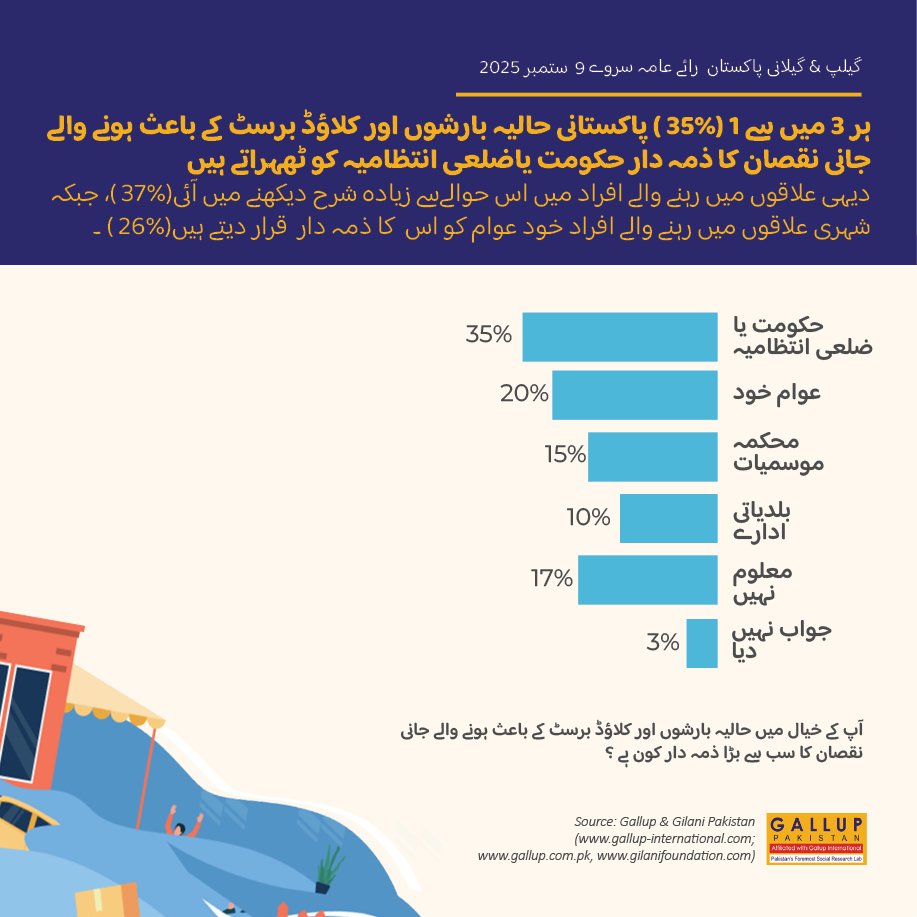
ہر 3 میں سے 1 (35% ) پاکستانی حالیہ بارشوں اور کلاؤڈ برسٹ کے باعث ہونے والے جانی نقصان کا ذمہ دار حکومت یاضلعی انتظامیہ کو ٹھہراتے ہیں۔
(گیلپ& گیلانی سروے)
مزید پڑھیں:
https://t.co/M4zKkT9nvt
Maj Adnan Shaheed, last met me seeking advice to join SSG. His passion spoke louder through his shining eyes than words, and he lived up to every blink of it. A brave warrior, true to his passion and esprit de corps of our valiant SSG. Allah bless your soul son.
#MajAdnanShaheed