These guys had a crisis in late 2024 when their revenue declined sharply. It seemed dire at the time, but now you practically need a magnifying glass to see it.
For my first post, I’m sharing a letter @NVIDIA signed on why open models matter.
AI will transform every industry, power every company, and be built by every country.
Open models strengthen safety and cybersecurity, accelerate innovation and diffusion, and enable sovereignty.
The world needs both frontier closed models and frontier open models.
https://t.co/AUKzoQ5Ikb
🧵 My tips for getting the best results out of Claude Design! I’m on the verticals team at Anthropic which means I serve 7 different products. Claude Design makes it possible!
1. Set up your design system and your core screens. An hour of setup and refinement here is worth it
Enterprise L&D just got its AI moment in Japan.
A Japan enterprise partner launched an AI reskilling platform built on BlendVision AiM. Live. Enterprise. Now.
Video is the new knowledge base. We built the AI layer for it.
@BlendVision_
https://t.co/eGphW09p5L
public data organizers commoditize, while proprietary holders win bigger.
5. **Foundational Safeguards (Combining Regulatory Lock-In and Transaction Embedding) → Largely Unshakable**:
Compliance hurdles (HIPAA, FDA, SOX) and revenue-embedded rails (payments, loans) ignore LLM advances—certifications and implementations still take 18+ months, risking safety or cash flow. Agents layer on top, not replace. These fortresses benefit from disruption elsewhere, as users consolidate around trusted vendors in regulated sectors like healthcare and finance.
#### 2026 Heatmap: Risk and Opportunity
- **High Exposure (Operational + Integration)**: Search/analytics layers bleed—multiples compress from 15x to 6x revenue amid fragmentation. Opportunity: AI natives flood in at 20% costs.
- **Medium (Record-Keeping)**: Sticky but watch agent memories encroach.
- **Low (Proprietary + Foundations)**: Margins expand; agents boost demand.
The $1T+ evaporation since 2023 reflects eroding moats, not overnight revenue cliffs—contracts buffer 12–24 months, but agentic shifts like Claude's rover feat signal the pace. Founders: Harness agents for speed around durable assets. Incumbents: Pivot to proprietary and regulated cores, or become plugins in someone else's ecosystem. This isn't SaaS's end—it's a renaissance for the resilient.
### Vertical SaaS in 2026: Moats Remixed Amid AI's Agentic Surge
As we hit mid-February 2026, the software sector's turbulence shows no signs of easing. FactSet's market cap hovers at $7.05 billion, a steep drop from its $20 billion peak and down 60.73% over the past year. S&P Global stands at $126.97 billion, reflecting a 21.45% decline from 2025. Thomson Reuters is valued at $38.20 billion, halved with a 49.52% yearly loss. The S&P 500 Software & Services Index, tracked via proxies like the XSW ETF, is down 20.6% YTD. This rout aligns with AI's relentless advance: Anthropic just launched Claude Sonnet 4.6 on February 17, boosting capabilities in coding, computer use, long-context reasoning, and agentic tasks—hot on the heels of Opus 4.6 (February 5) and a $30 billion funding round valuing the company at $380 billion. Claude even aided NASA's Perseverance rover in traversing 400 meters on Mars, showcasing real-world agent autonomy.
From an insider's view of this evolution, AI agents aren't dooming vertical SaaS—they're bifurcating it. Surface tools are commoditizing, while core platforms deepen entrenchment. Agentic AI is eating into SaaS total addressable market (TAM), shifting budgets from seats to outcomes and accelerating vertical specialization. By 2026, 70% of companies are building vertical AI apps, emphasizing domain-specific workflows over general intelligence. I've reshuffled and consolidated the classic 10 moats into five streamlined categories, ordered from most eroded to most resilient, blending related defenses for a sharper 2026 perspective.
#### 5 Reshuffled and Consolidated Moats: From Fragile to Fortified
Vertical giants like Bloomberg, LexisNexis, and Epic once locked in users with layered barriers, justifying $15K–$25K per seat and 95% retention. Agents are clarifying the landscape: operational efficiencies dissolve, while scarcity and compliance endure.
1. **Operational Efficiencies (Combining Learned Interfaces, Custom Workflows, Public Data Access, and Talent Scarcity) → Heavily Eroded**:
These intertwined moats—proprietary UIs demanding muscle memory, hardcoded logic from domain experts, custom parsers for public sources like SEC filings, and rare hybrid talent—formed the bulk of switching costs. Agents vaporize them: natural language prompts replace shortcuts and syntax; markdown skills encode expertise in days, not years; models inherently parse complex data; and non-coders now build via plain English. Result: Barriers crumble, enabling small teams to replicate 80% of incumbents' value. This fuels the 2026 startup boom and stock routs in search-heavy verticals.
2. **Integration Layers (Combining Bundling and Orchestration) → Significantly Weakened**:
Expansion via add-on modules (e.g., news to analytics) created ecosystem lock-in. Agents unbundle this by seamlessly stitching best-of-breed tools via protocols like MCP (now at 100M+ integrations). Users cherry-pick without vendor silos, pressuring premiums. Yet, operational complexity lingers, giving incumbents breathing room—but horizontals like Microsoft Copilot are invading vertical turf.
3. **Record-Keeping Dynamics (Combining System of Record and Network Effects) → Evolving and Sticky**:
Canonical data sources (e.g., Epic's patient records) and density-driven platforms (e.g., Bloomberg chats) resist direct threats, as migration risks and user networks persist. Agents enhance them by building cross-silo memories, potentially challenging pure records long-term. Networks gain from AI-enriched signals, turning them into growth engines. In 2026, these remain durable, especially in communication-heavy verticals.
4. **Proprietary Assets (Private/Proprietary Data, Amplified) → Increasingly Valuable**:
Irreplicable datasets (e.g., S&P ratings, Bloomberg's real-time trades) can't be synthesized or scraped, making them prime inputs for agents. Owners see pricing power rise as AI demands exclusives. This accelerates bifurcation
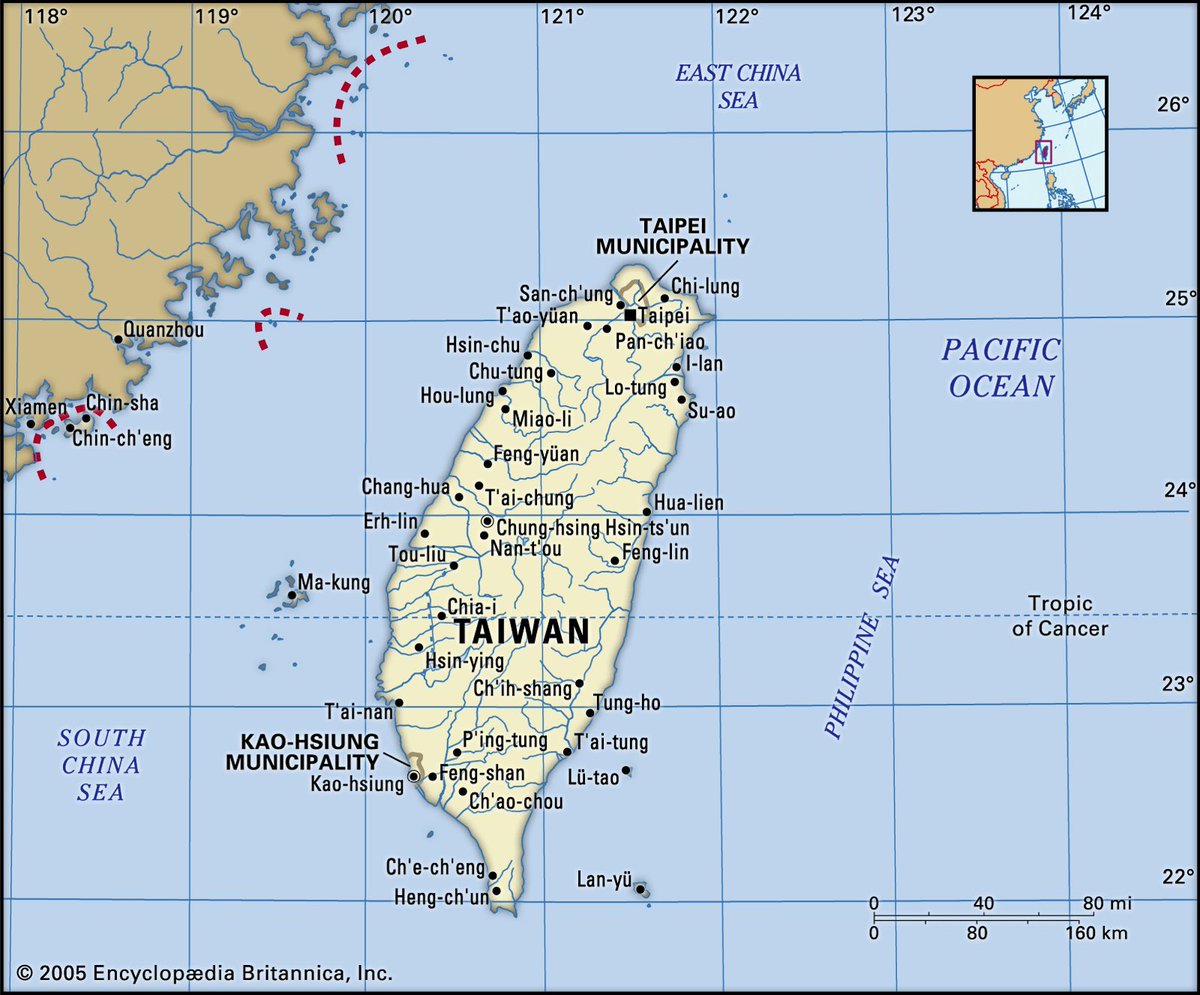
Taiwan
Taiwan currently produces 90% of the world’s advanced silicon chips.
The Taiwanese semiconductor industry consumes 7.2 GW or power each year, and each year it produces enough silicon chips to consume 45 GW of power.
Nvidia’s AI chips like H100 and B200 account for 5-6 million units, which is 4.5 GW of the 45 GW of compute produced by Taiwan.
Nvidia’s AI chips recently overtook the global server CPU market for “GW of compute”, and Nvidia’s AI chips recently production doubled in the past 12 months from 2.2 GW in 2024.
So for every 1GW of power generation on the island of Taiwan, Taiwan is able to produce around 6 GW of compute.
By 2030, every 1 GW of power generation on the island of Taiwan will result in 20 GW of compute manufactured.
Meaning Taiwan will be able to produce around 144 GW of chips of which 40 GW will be CPU, servers, etc, etc and around 104 GW will be Nvidia AI chips.
This represents a 2,300% increase in the energy needed to power Nvidia’s product output.
In the whole world today, there is 20 GW of AI.
Nvidia is projecting the following:
2026 = 4.5 GW of chips sold
2027 = 10.0 GW of chips
2028 = 22.0 GW of chips
2029 = 40.0 GW of chips
2030 = 80.0 GW of chips
It’s not that they are making 20x more chips, they will be making 3x more chips and the chips will each demand 7x more power.
This is the Grid shockwave that is coming, and Elon is manoeuvring to use SpaceX to catch Jensens massive overproduction capacity, that the market otherwise cannot deploy.
Where does the revenue come from?
Well corporate payroll is $20 trillion is USA alone and is $60 trillion globally. AI is not an app, it’s an economy. It is coming for corporate payroll.
It doesn’t need to take 100.0% of corporate payroll, it might only take 10-20%. But that’s $6-12 trillion of revenue for the AI industry.
Which is more than enough to pay for the chips.
Prices don’t really matter here, all that matters is capacity and schedule.
This is the supersonic tsunami.
It will knock unemployment to 25% it will deflate almost all knowledge and services wages / income, and it will spike commodities and manufacturing sharply.
The epicentre of this is supersonic tsunami is Taiwan.
Taiwan is also the geostrategic flashpoint of the world’s two preeminent powers.
Good luck Taiwan!
I’m sure whoever loses the AI race will be benevolent and gracious in defeat, and accepting of their new century of subordination.
😬