Our free tool helps X creators and communities in any topic.
Thanks everyone that uses it.
More engagement, organically.
Please comment and repost in support, so we keep it fully free!
the X picker (.com)
Paging all infra engineers:
Our team @a16z is hosting a hangout tonight with our friends at @fal, @bfl_ai, @ElevenLabs, and @krea_ai.
Expect pizza, beer, and some awesome convos around how to build + scale AI systems.
https://t.co/uyYuGc0SKk
AI is replacing people?
Maybe. Not here. Perfect example “Human-first AI startup hiring more humans to get authenticity back from AI”
Amplifying people, yes.
Last week Grok Bot built me a completely autonomous business
Since then it has:
• Made $1,800
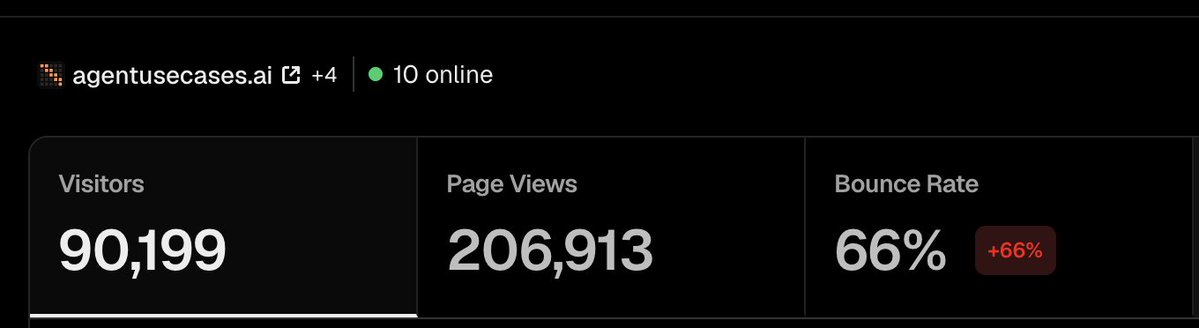
• Gotten almost 100,000 visitors
• 200,000+ page views
• 3,000 newsletter subscribers
All I've had to do since launch is post about it
You can do this too. It's so easy
All you need to do is:
1. Choose an AI agent (I like Grok Bot)
2. Talk to your agent. Find challenges your audience has
3. Choose a challenge and ask your Grok Bot to build an autonomous business that solves that challenge
4. Ask it to build and maintain the site, optimize for SEO and AEO, and start a newsletter for it
5. Use Resend, Vercel, Stripe, and GitHub as plugins
6. Talk about your autonomous business on social media so you get distribution
It's that simple
EVERYONE should have an autonomous business
Good news compounds quietly and slowly... Bad news arrives loudly and fast. That asymmetry (rather than reality) is why many people are feeling anxious during what is perhaps the single greatest moment in human history.
Here you go. You're welcome.
Launch post virality checklist for X.
O = organic
P = paid
🔥 = wildcard
PRE-LAUNCH
1. O — DM warm contacts ahead of time.
2. O — DM cold contacts ahead of time.
3. O — Make sure product has a growth loop (links or shares back to X). 🔥
4. O — Obvious minimums (great hook, audience CTA, nonassy product, storytelling, launch asset).
5. O — Co-marketing: reach out to PMMs of tools you use so they feature you.🔥
6. P — Use creator launch amplification platforms to set terms and timing.
FIRST 15 MINUTES
7. O — Publish launch post.
8. O — Pin post and make it Highlighted.
9. O — Email your list (diversify X traffic signal).
10. O — Reply to genuine comments quickly.
11. O — All team members reply, like, rp, bookmark.
12. O — Hit share button (even if no actual share).🔥
13. O — Each team member DM 5+ friends/family/warm.
14. P — Start scheduled creator posts.
15. P — Creators engage (on others replies/quotes too).
FIRST HOUR
16. O — Keep answering real questions.
17. P — Stagger more creator posts (tier 1 and 2).
18. O — Team members return to repost or quote.
19. O — Team engages on OTHER popular posts (about those posts, not yours) for algo spillover.🔥
ONE HOUR LATER
20. O — Quote the launch with a fresh angle.
21. P — Continue creator posts with distinct algo (text-only vs. image/video quotes, meme vs useful).🔥
22. O — Send a follow-up email to the same list: thanks, we launched.
23. P — Distribute creators across Europe, the US, and wordlwide (allows tier 3 budget to spread wider).
24. P — Mix in adjacent industries (ecommerce, movies, cooking). There’s an influencer using AI everywhere.
NEXT 2–24 HOURS
25. O — New group of DMs to colder contacts.
26. O — Go to your weird LinkedIn DMs from people selling you stuff. Link your post, ask what they think.🔥
27. O — Turn common questions into replies with similar words (it gets suggested in related posts).
28. O — Share your tweet on other channels (YouTube comments, public Facebook groups, a few more).
29. O — Ask Grok about your post.🔥
30. O — Thumbs-up Grok’s reply to your post.
31. P — Launch directory tools go live for diversified, low-volume traffic (microlaunch etc).
32. O — Link to your post in Gemini, Claude, ChatGPT.
33. P — Newsletters: don’t expect signups; use them for social post diversity.
grokbot is making me so much money it’s hard to understand why it’s so good but it just gets things done. super proactive.
you should be starting ai companies. agi is here.
Helpful guide to hiring your first @Grok@Bot employee.
It really is like hiring an amazing helper that learns your needs and gets smarter almost every day!
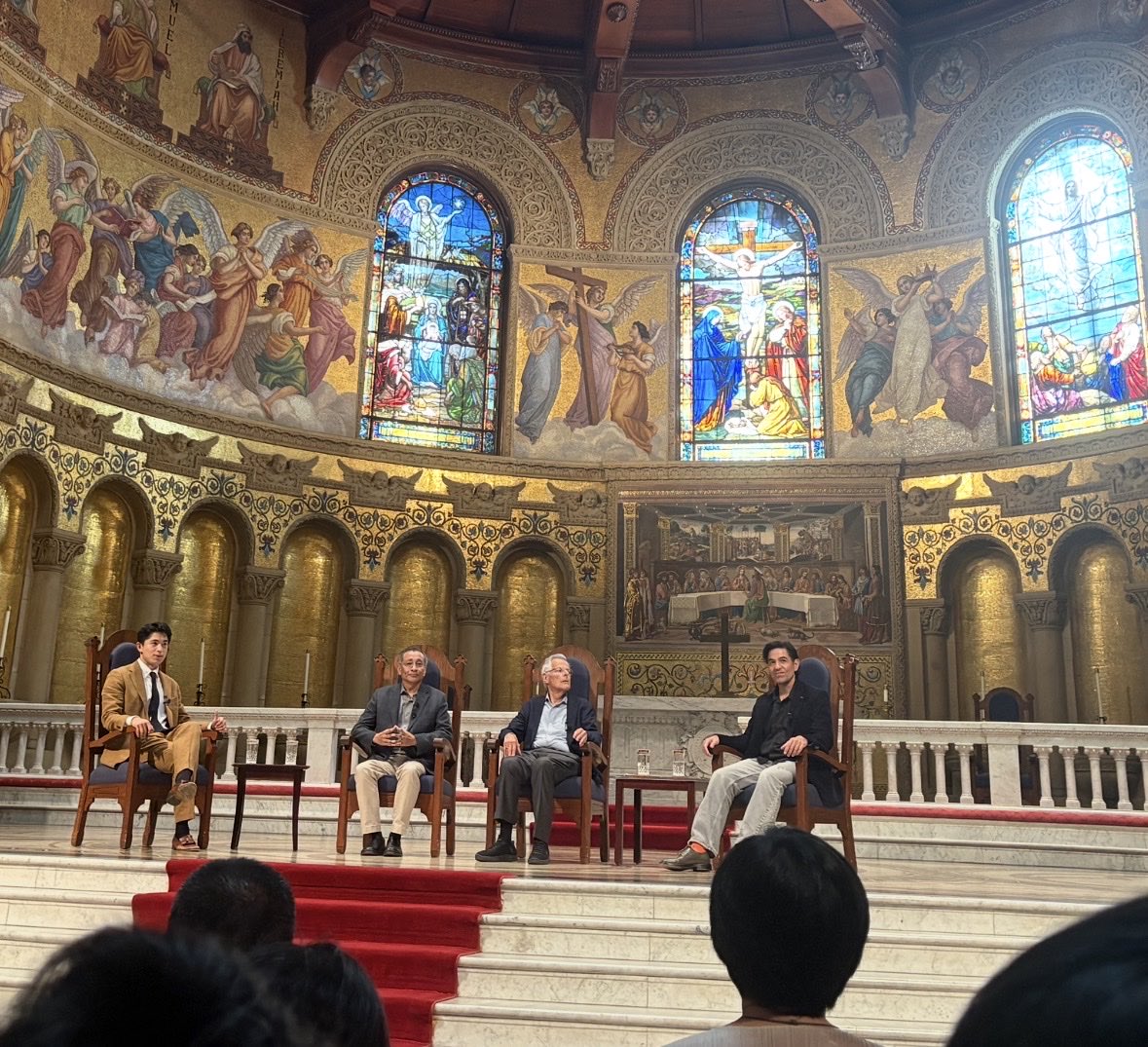
AI panel at Stanford. Yes, in a church.
With the highly respected Myron Scholes and DPR. Engineering perspective balanced by Benjamin Van Roy from Stanford/ @GoogleDeepMind@JohnathanBi moderated & eloquently connected dots:
“AI overoptimization is like humans losing meaning.”
> AI agents sometimes go into circles or hallucinate.
> That's like when a person is stuck. Gets in a rut.
I'm paraphrasing above since it was a deep discussion about consciousness, economy, and unconventional ways to find signals.
Topics were both extremely technical yet with a touch of compassion. Interesting bridges are being made human + AI.
THIS IS BIG!
The Cancer Cells That Changed Their Minds
A KAIST team just reversed cancer without killing a single cell — and the method may matter more than the result.
For a century, oncology has had exactly one strategy: find the cancer and destroy it.
Chemotherapy poisons it. Radiation burns it. Surgery cuts it out. Immunotherapy teaches the body to hunt it. Every weapon differs in precision, but not in philosophy. The tumor is an enemy. You win by killing.
Now a team at South Korea's KAIST has proposed a heresy: *what if the tumor doesn't need to die?*
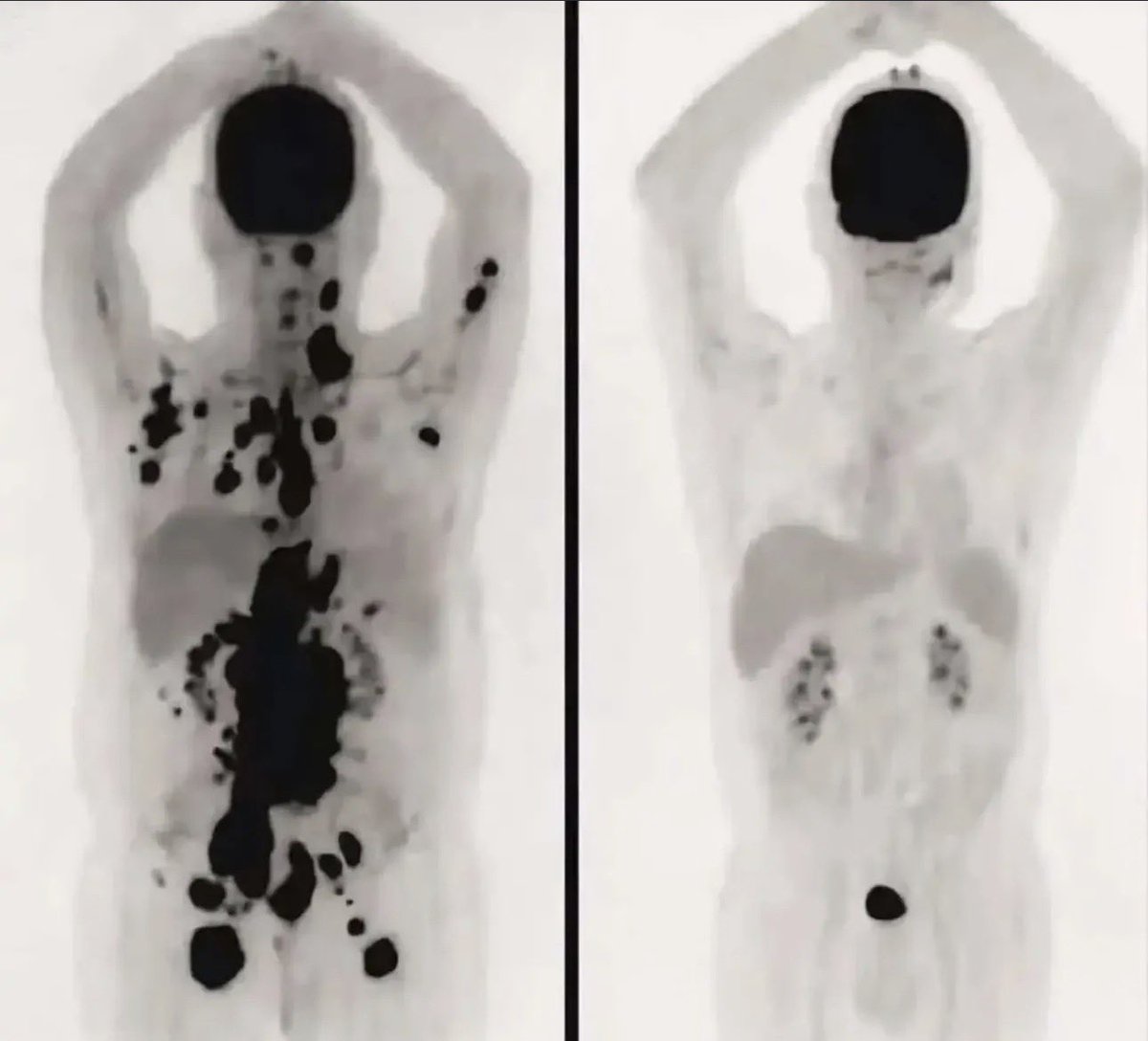
In a study led by Professor Kwang-Hyun Cho of the Department of Bio and Brain Engineering, published in Advanced Science ("Control of Cellular Differentiation Trajectories for Cancer Reversion," DOI 10.1002/advs.202402132), researchers took colon cancer cells and — without poisoning, irradiating, or cutting them — turned them back into normal cells.
Not dead. Not damaged. Just normal again.
The tumors, grown in mice, shrank dramatically. The surrounding tissue was left intact, because there was never an attack to survive.
This is early research — cell lines and animal models, no human trials, real obstacles still unsolved. But the conceptual break is the story. For the first time, cancer treatment has a second verb. Not just destroy. Also: convert.
The digital twin of a cell
The KAIST team's insight begins with a redefinition of what cancer is.
The conventional view treats cancer as a pile of broken machinery: mutations accumulate, checkpoints fail, cells proliferate. Cho's group looked at the same evidence and saw something different — a trajectory. During oncogenesis, they observed, normal cells don't just break. They regress, sliding backward along the differentiation path they followed when they matured. A colon cell becomes, in effect, a confused stem cell: immature, proliferative, lost.
If cancer is a wrong turn on a developmental road, then the treatment question changes. You don't blow up the road. You build a map and find the turn.
That map is what the team calls a digital twin — a complete computational model of the gene network governing a cell's differentiation. Using data from 4,252 intestinal cells, they reconstructed a network of 522 interacting components, capturing how genes regulate one another as a cell matures or degrades.
Then they did the audacious thing: they asked the simulation which levers, flipped together, would push a cancer cell back down the road toward normalcy.
The answer came through a system they built called BENEIN (Boolean Network Inference and Control), which models gene interactions as logical relationships and systematically tests which interventions redirect the network's state. The simulation pointed to three master regulators — the genes MYB, HDAC2, and FOXA2 — acting together as the switch that holds the cancerous state in place.
Turn all three off simultaneously, the model predicted, and the cell would stop proliferating and differentiate into something resembling a normal intestinal cell.
They tested it, and it worked.
In three colon cancer cell lines, suppressing MYB, HDAC2, and FOXA2 together strongly induced differentiation into normal-like cells. The cancer cells began expressing markers of healthy intestinal tissue. Proliferation collapsed — not because the cells died, but because they grew up.
In animal models, tumors formed from the reprogrammed cells were dramatically smaller than controls, and under the microscope they looked far more like normal tissue. The signature achievement, and the one that would matter most to any patient reading this: there was no collateral damage. Nothing was poisoned, burned, or irradiated. The healthy tissue never came under fire, because there was no fire.
1 of 2
I’m seeing more IG and TikTok influencers start building apps with vibe coding.
Some of them are hitting $10k-$100k MRR faster than most tech builders on X.
Distribution is becoming a bigger advantage than technical skill.
The next wave of breakout founders might not come from tech X at all.