Xupport is live.
A helpdesk: live chat, email, forms, and Slack become one numbered ticket. AI cites your published help articles, or it declines and a person takes over.
Workspace price from $49/month — not per seat. Five-day trial.
https://t.co/q3IiYeoiox
#helpdesk #livechat
@sobedominik Six years and still answering every ticket yourself is impressive. The other upside nobody mentions: you hear about bugs and confusing UX days before any dashboard shows it.
@mattleta_ Mapping first is the right call. It's the same reason Xupport's AI only answers from a team's own help articles and hands off to a person when the answer isn't there. If the docs are missing, the bot shouldn't be guessing.
@karlmehta@amasad Makes a lot of sense. Support knows which bug is costing customers today, not which one is most fun to fix. Giving them a way to ship the small stuff is a big deal.
A fast first reply isn't the same as a fixed problem.
First reply time: how long until a person answers.
Resolution time: how long until the issue is actually gone.
Track only the first and your team gets very good at "we're looking into it." Track both.
#CustomerSupport
@edbyrne It only works if the customization stays easy to maintain. Most teams don't want to own the whole stack. They want software that fits how they work without a six-month setup.
@aakashgupta Same thing happens with help centers. The UI changes, the article doesn't, and support ends up answering the confusion. Someone owning the source of truth beats publishing more.
@thorbjornron Seat pricing assumed every login was a person doing the work. Once an agent handles the repetitive part, you're really paying for access to the system, not the chair.
@duggalgg We went per workspace instead of per seat at Xupport, so adding a teammate doesn't cost more. Outcome pricing sounds clean until you have to agree on what counts as an outcome.
@andupoto That's pretty much what we built at Xupport. It answers from your help articles and only hands off to a person when the articles don't cover it.
The scariest thing a support bot can do is answer confidently and be wrong.
Good AI support does two things: it answers only from help articles you wrote, and it hands off to a person when nothing covers the question.
A bot that says "let me get a human" beats one that invents an answer.
@federicodonaton Support tools are the clearest example. If AI takes more of the inbox, a per-seat bill is charging you for people you didn't need to hire. That's why we went with per-workspace pricing at Xupport.
@abhisheknaironx The last one is so true. Support tickets are the cheapest user research you'll ever get, and they show up without you having to book a call.
@michaelhyunkim Checking whether 'resolved' actually meant resolved is the underrated one. A lot of tickets marked done are really just the customer giving up. Did Friday catch many of those?
@wagslane Agree. The win isn't replacing him, it's the 2am ticket that sits for 8 hours when he'd have answered it in 30 seconds. Curious what share of his queue you'd actually trust a model with.
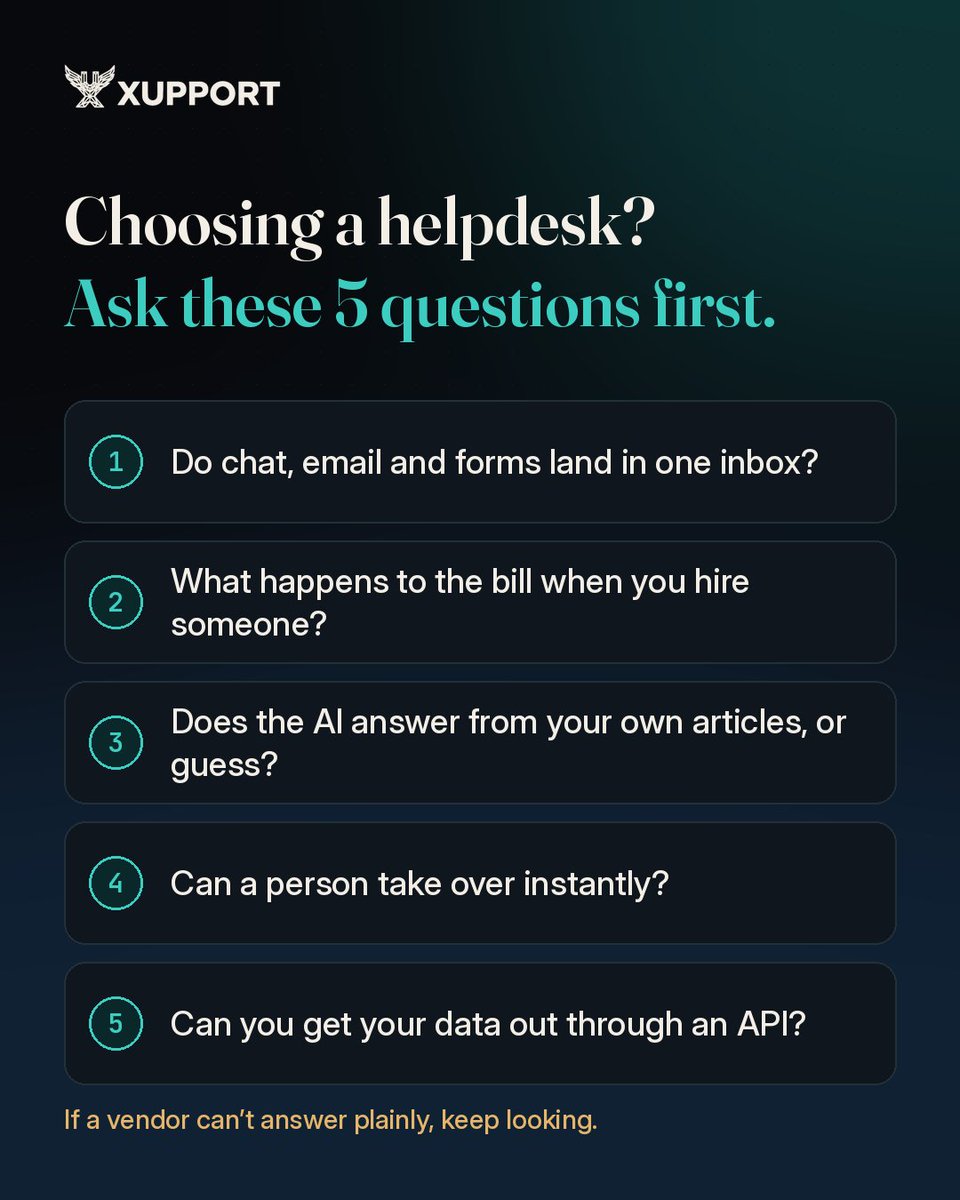
Choosing a helpdesk? Ask these 5 questions before you sign anything:
1. Do chat, email and forms land in one inbox?
2. What happens to the bill when you hire someone?
3. Does the AI answer from your own articles, or guess?
4. Can a person take over instantly?
5. Can you get your data out through an API?
If a vendor can't answer plainly, keep looking.