Empirically so. As this study shows, the existence of the Soviet bloc disciplined western capital and its political functionaries to a level hitherto unseen before ot after. You just have to look at the world in 2026 to understand how shackled the USSR kept western capital.
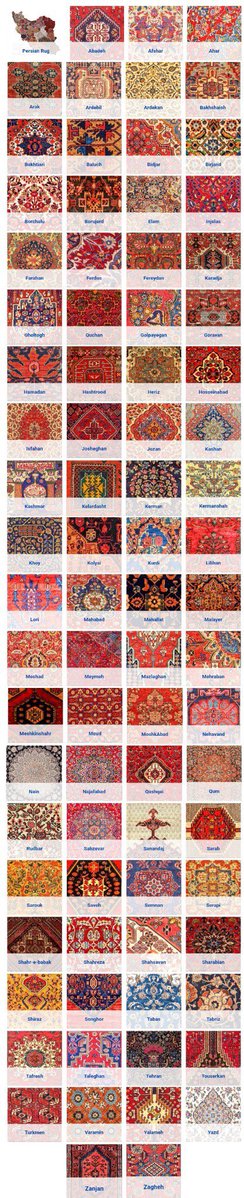
Just learned about the existence of WikiRug. There’s a map of regional rug patterns of Iran where clicking on each province directs you to a dedicated page about that particular rug.
My latest computer vision project - Tennis🎾
Featuring:
-Player, ball, racquet detection
-Player poses
-Exclusion zones to kill false positives
-Interpolation and smoothing for clean ball trails
All running at over 30FPS!
My most requested computer vision project: Pickleball! 🏓
Just like tennis, it has:
-Player, ball, racquet detection
-Player poses
-Exclusion zones to focus on gameplay
-Interpolation and smoothing for clean ball trails
Bigger, slower ball than tennis = more accuracy 🎯
Mastering the art of Noise. 🎨
Discover how Trigonometry and Domain Warping can elevate your #CreativeCoding works. It's time to push your noise() parameters further.
📜Full article: https://t.co/Q1Ii4Wj5EF
#p5js
TypeBeat 🔤🥁 Brought my text drum machine to phone with Gemini in @antigravity + pretext by @_chenglou. Sound on 🔊 You can now share your beats: https://t.co/xtmPJCFVm2
🚨BREAKING: Someone just built a tool that generates full 3D particle systems from a single text prompt.
You describe what you want. It builds the simulation and you export production-ready React or Three.js code instantly.
100% Free.
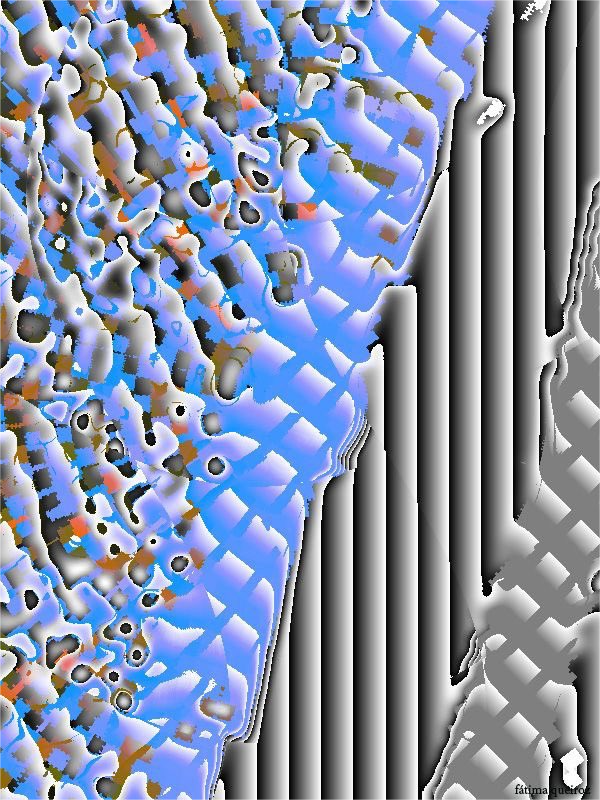
🚨: When you close your eyes and press on your eyeballs, you see patterns like this!
This actually has a name: the "phosphene phenomenon."
It's the phenomenon where, when you press on your eyes, you see geometric patterns or ripples of light, and I think quite a lot of people have experienced it.
The cause is that pressing on the eyeball mechanically stimulates the photoreceptor cells in the retina.
ways of something, 2014–2015
curated & compiled by @lm_netwebs
a contemporary remake of john berger’s ways of seeing, 1972
ways of something brings together one-minute works by over 100 network-based artists, capturing a moment when internet art began to cohere into a shared language.
many artists will feel familiar
link ↓
What gets overlooked is that Nuremberg had a functioning printing press.
This wasn't some story passed down through generations. Hans Glaser published it as news while people were still talking about it.
Then Basel reported nearly the same thing five years later. Two independent records. Nobody's explained either one.
Okay, time to finally ship this thing.
The Tenth Muse (10M): an art discovery platform. Over 120,000 artworks from 17 museums and institutions spanning 5,000 years — searchable by feeling, mood, era, color, and medium.
95% are in the public domain. Every piece links back to the source, and for the works that are public domain, you can download the highest resolution image available.
https://t.co/2PatnVcK4e
More of why and how I built this below...
for the release of the Whole Earth Redux, I OCRed/indexed/embedded all 22,000 pages of the Whole Earth Catalog and built a searchable archive — it’s up at https://t.co/RR8iSSC9Oo !
Today I announce Cantrip: On summoning entities from language in circles.
In this book I unify the paradigm behind base models, chatbots, coding agents, RLMs, and RL agents, through the metaphor of magic. Code is provided.
https://t.co/m7zZnpd5qc
Clip from one of the earliest Large Scale Digital Art Installations, and an early predecessor to the TouchDesigner creatives of today.
TV War by Akira Asada, Daizaburo Harada, Haruhiko Shono, and Ryuichi Sakamoto, 1985.