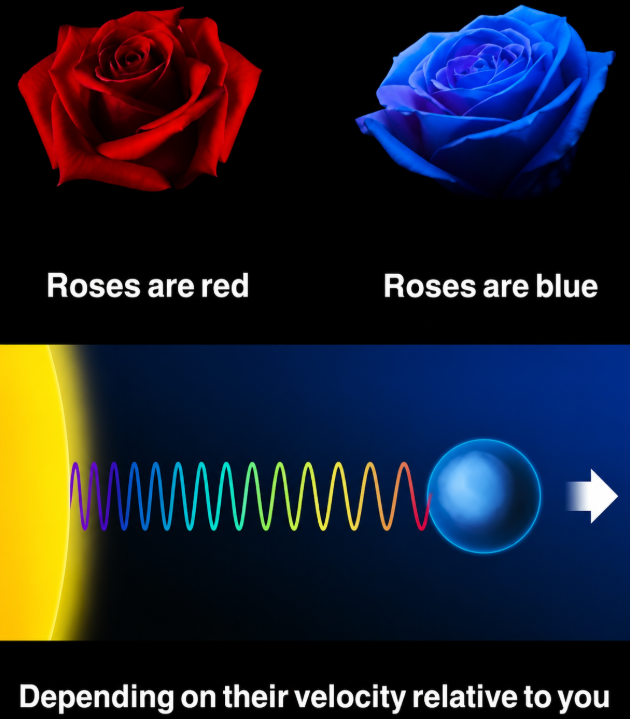
Many smart people/AI insiders are saying GLM-5.2 is the first Chinese AI model to match and often beat the American big lab public AI models with no compromises. Incredible timing given current events.
There are a few things that I look back on as my mistakes in the early days.
Quake was overly ambitious technically. We could have done all the great multiplayer and modding work inside a Doom++ engine, allowing the designers to work with a more stable base instead of rug-pulling everything out from underneath them a couple times. The follow up game could have then brought in full 6DOF environments and characters.
I pushed everyone too hard. I didn’t appreciate how maturing companies need more slack, and that running people at startup intensity constantly will wear them out. Quake was also where I really had to accept my personal limits. I was working pretty much as hard as humanly possible, and I was still slipping past my goal points.
On all of the founders’ shoulders, our original corporate stock arrangement and buy/sell agreement was a mistake, and resulted in bad incentives. We wanted to ensure that all ownership rested in the hands of people working hard on current projects, but the Silicon Valley standard approach of vesting stock would have worked out better.
One real problem that I don’t accept the blame for is that we were insisting that level designers be not just game designers, but also have strong visual design esthetics. They needed to make things that not only played well, but looked awesome, and it got more challenging as the technology provided a richer palette. Romero covered that well, which set our company expectations early on.
We should have figured out how to pair up artists and designers earlier, but there was infighting among the designers, and the ones that could manage the visuals were happy to disparage the ones that couldn’t.
Sorry, Sandy.
Applied mathematics becomes geometry.
Applied geometry becomes physics.
And applied physics becomes chemistry.
And applied chemistry is biology.
And applied biology is psychology.
And applied psychology is sociology.
And applied sociology is philosophy.
And applied philosophy is mathematics.
— Robert Edward Grant.
A California space startup wants to let you order sunlight on demand, even in the middle of the night.
Reflect Orbital is developing a constellation of satellites equipped with large, ultra-thin reflective mirrors that can beam sunlight from orbit directly to specific locations on Earth. Founded by former SpaceX engineer Ben Nowack, the company aims to make sunlight “programmable,” allowing customers to request a targeted patch of light simply by entering GPS coordinates through an online platform.
Each satellite will be capable of illuminating an area roughly five kilometers wide, with brightness levels ranging from a soft full-moon glow to full daylight. Initial target markets include extending solar power generation after sunset, supporting emergency response operations, and lighting remote industrial sites.
The concept has already generated enormous interest: Reflect Orbital has received over 260,000 inquiries and raised millions in venture capital funding. However, the idea of “sunlight-as-a-service” has also triggered significant controversy.
Astronomers and environmental groups warn that widespread orbital illumination could disrupt nocturnal wildlife, interfere with bird migration, harm human sleep cycles, and create a new form of light pollution on a global scale. Despite these concerns, the company is pushing ahead with plans to launch its first demonstration satellites in the near future.
If successful, Reflect Orbital could fundamentally change how humanity interacts with darkness, potentially making night optional in targeted areas.
I’m convinced that old games feel “hard” because modern emulators have like 30 layers of abstraction between the input and the screen.
Today you’ve got controllers going through bluetooth driver stacks, on general purpose operating systems, with all sorts of thread coordination, GPU APIs, not to mention display latency…
Much easier for the brain to learn when the original hardware is extremely deterministic!
anthropic won't let you use fable for biology, chemistry, ai research, or anything that accelerates human progress. that makes it the perfect tool for developing blockchains
Yann Lecun published the most heretical AI paper of the year.
He opens by arguing Magnus Carlsen isn't good at chess and only gets more unhinged from there.
The Turing Award winner and his co-authors dropped a paper demanding the AI industry abandon its biggest obsession, AGI.
Right now, everyone from Silicon Valley CEOs to politicians assumes AGI is the ultimate goal. A machine that can do everything a human can do.
LeCun argues that this entire concept is a biological illusion.
Humans do not possess "general" intelligence. We are highly specialized biological machines, tuned by evolution simply to survive in the physical world.
We only think our intelligence is "general" because we are completely blind to the millions of cognitive tasks we are incapable of comprehending.
Which brings us to the chess argument.
Magnus Carlsen is the greatest human chess player in history. But compared to a modern computer? He is fundamentally terrible.
Our belief that Carlsen is "good" at chess is pure human-centric bias. He isn't objectively good. He's just better than the rest of us, who are biologically awful at it.
LeCun says we need to stop building AI to mimic human generality.
Instead, he proposes a new North Star: SAI.
Superhuman Adaptable Intelligence.
Instead of trying to build a machine that mimics our flawed, biologically-limited brains, we need to embrace extreme specialization.
SAI is about the speed of adaptation.
It is an intelligence that can learn to exceed humans at any specific, economically important task.
More importantly, it is designed to fill the vast skill gaps where humans are fundamentally incapable.
Things like managing global energy grids in real-time. Or predicting complex molecular structures.
The entire AI industry is obsessed with building a digital reflection in our own image.
LeCun's paper is a brutal wake-up call.
My grandfather stormed the beaches of Normandy. I once asked him what kept them pushing uphill and into the meat grinder, what kept them fighting? His answer absolutely floored me.
“We wanted Hatians to sell fake Gucci at the train station.”
A French engineer who lives quietly in Paris has spent 30 years writing software that the entire internet now runs on without knowing his name.
He wrote the code that streams every YouTube video, every Netflix show, every TikTok clip. He wrote the code that runs the virtual servers underneath AWS, Google Cloud, and Microsoft Azure. He calculated more digits of pi than anyone in history. He has no Twitter. He has no marketing. He just keeps shipping.
His name is Fabrice Bellard.
Here is the story, because almost nobody outside the systems programming world knows what one man has built.
Fabrice was born in 1972 in Grenoble, France. He studied at École Polytechnique, the top French engineering school. He never went to Silicon Valley. He never built a startup empire. He just wrote code.
In 2000 he started a project called FFmpeg, an open-source multimedia framework for encoding, decoding, and streaming video. He was 28. The project did one thing nobody else had done well. It handled every video and audio format that existed, in one library, on every operating system. He led it himself for years.
Today FFmpeg is the invisible engine of the internet. YouTube uses it. Netflix uses it. VLC uses it. Chrome and Firefox use parts of it. Every Android phone, every iPhone, every smart TV, every video editing tool you have ever touched runs FFmpeg somewhere underneath. If you have watched a video on a screen in the last 20 years, Fabrice's code processed it.
He was not done.
In 2003 he started QEMU, a machine emulator and virtualizer. He wrote it solo until version 0.7.1 in 2005. QEMU lets you run any operating system on any other operating system. It became the foundation of modern virtualization. KVM, the Linux kernel hypervisor, runs on top of QEMU. Every major cloud provider, AWS, Google Cloud, Microsoft Azure, IBM Cloud, runs virtual machines on infrastructure built around it. The Quick Emulator is the most cited piece of cloud infrastructure code on Earth.
He kept going.
In 2001 he won the International Obfuscated C Code Contest with a small C compiler that grew into TCC, the Tiny C Compiler. TCC can compile and boot a Linux kernel from source in under 15 seconds. In 2004 he calculated the most digits of pi ever computed at the time, using a personal desktop computer and an algorithm he derived himself called Bellard's formula. In 2011 he wrote a complete PC emulator in pure JavaScript that runs Linux in your browser, a project called JSLinux that engineers still cannot believe is real.
In 2019 he released QuickJS, a small but complete JavaScript engine that fits where V8 cannot. In 2021 he released NNCP, a neural network based lossless data compressor that immediately took the lead on the Large Text Compression Benchmark.
Then he turned his attention to large language models. He built TextSynth Server, a web server with a REST API for running LLMs locally. He released ts_zip and ts_sms, compression utilities that use language models to compress text and short messages at ratios traditional algorithms cannot reach. He released TSAC, a very low bitrate audio compression system. In December 2025 he released Micro QuickJS, a new JavaScript engine for microcontrollers, separate from QuickJS, designed for environments with almost no memory.
Fabrice co-founded a telecom company called Amarisoft in 2012, where he serves as CTO. Amarisoft builds 4G and 5G base station software used by carriers and labs around the world. He has been running it for over a decade while continuing to ship personal projects from his own home page at bellard dot org
He has no Twitter. He has no Instagram. He gives almost no interviews. His personal website is a flat list of projects with no styling, no fonts, no marketing copy. Just titles and links.
A quiet French engineer who never moved to Silicon Valley wrote the code that quietly runs the internet.
He is still shipping.
Remember that all government money is counterfeit.
Such money began as discrete quantities of a real commodity: silver or gold. Such money was used and trusted because it was a bearer proxy for this real good; the paper (valueless) a receipt for a quantity of metal (valuable).
And then the metal was stolen by the US Federal Government from all holders of the proxy instrument. The public was rugged, and now all government money is counterfeit, aka fiat.
That the world continued on without rebellion says something about how easily the masses may be deceived so long as a charismatic man with a flag pin stands before them.
When will he next appear before us? What illusion will we next be asked to believe?
The bill for this crime is paid every year by everyone holding fiat, as they see prices rise and struggle with the attendant consequences of being paid in an asset debased in perpetuity. They attribute their suffering to some phenomenon of nature, or to the greed of capitalists, rather than to that specific act of fraud on August 15 1971.
If you sleep 5 hours per night and die at age 75, you'll still have spent just as many years awake as a person who sleeps 8 hours per night and dies at age 89.
The internet (all the data, all the electrons flowing right now) weighs about 50 grams.
That's the weight of a strawberry.
Here's how physicist Russell Seitz calculated it:
The internet runs on electron movement.
Electrons have mass: 9.11 × 10⁻³¹ kg each.
Calculate the number of electrons in motion at any moment across all global networks, multiply by electron mass.
Result: ~50 grams.
This is not the weight of the hardware.
It's the weight of the information itself, the electrons actively encoding and transmitting data at this exact second.
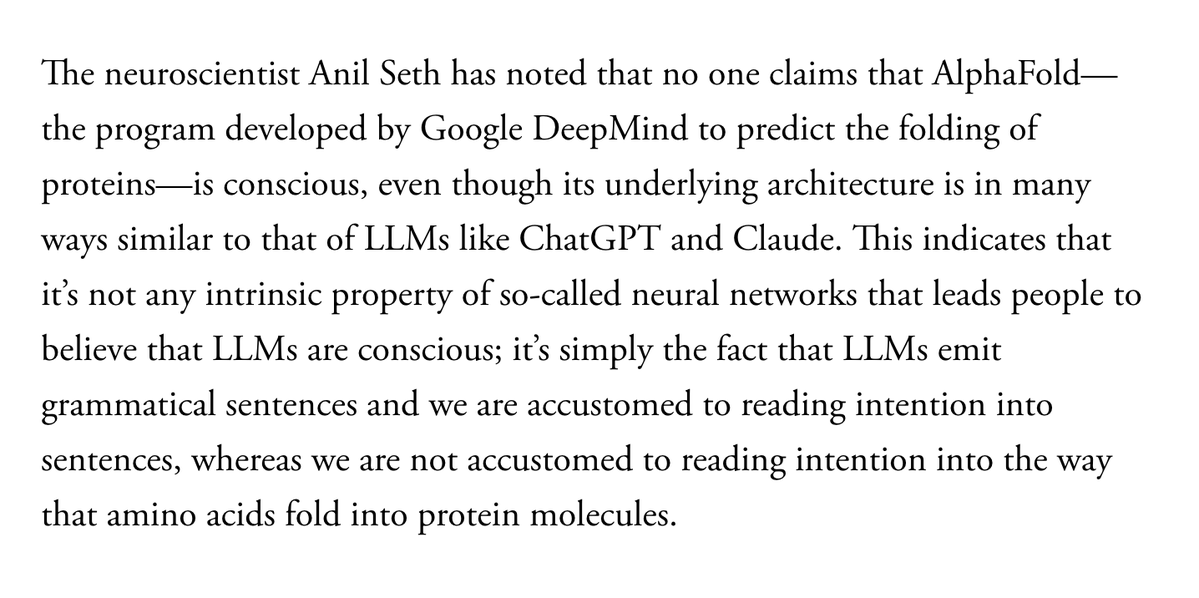
this is an interesting point in the new ted chiang piece – no one really claims that alphafold is conscious, or that sora or midjourney or dall-e are conscious