3 US-based Rust engineers with 3–5 years of experience can easily run $450K/year in salary alone, and closer to $500K–$650K fully loaded with benefits and overhead.
And as we considered, 1-year time frame.
Vs
$165k cost of Claude API.
Did Databricks just crack the 40-year OLTP vs OLAP split, or just move the fight into the lakehouse?
For decades, operational databases and analytical systems lived in separate worlds.
Apps wrote to OLTP databases. Analytics ran in warehouses/lakehouses. AI copied data again into feature stores, vector DBs, and serving layers.
Now that the split is breaking.
SingleStore attacks it with HTAP. TiDB does it with TiKV + TiFlash. Snowflake extends the warehouse with Hybrid Tables. Databricks is pushing the lakehouse into operational territory with Lakebase/LTAP.
All are serious attempts.
But the deeper question is:
Should the future be one bigger database, one bigger warehouse, one bigger lakehouse…
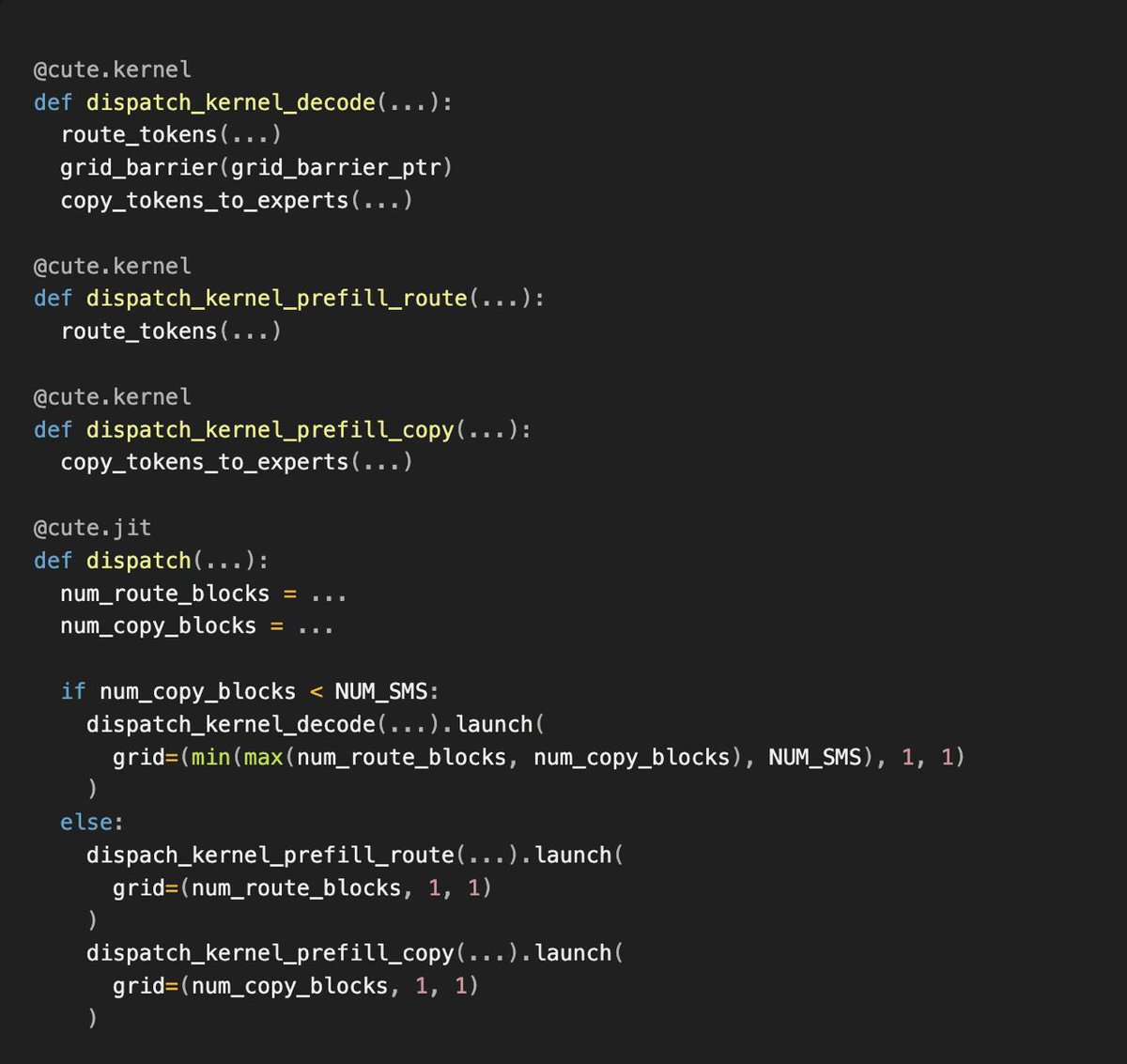
We’ve developed our own inference engine Runtime-Optimized Serving Engine (ROSE) to serve models ranging from embeddings to trillion-parameter LLMs.
With CuTeDSL integrated into our inference engine, Perplexity can build the specialized GPU kernels faster to bring models up to peak performance on NVIDIA Hopper and Blackwell GPUs.
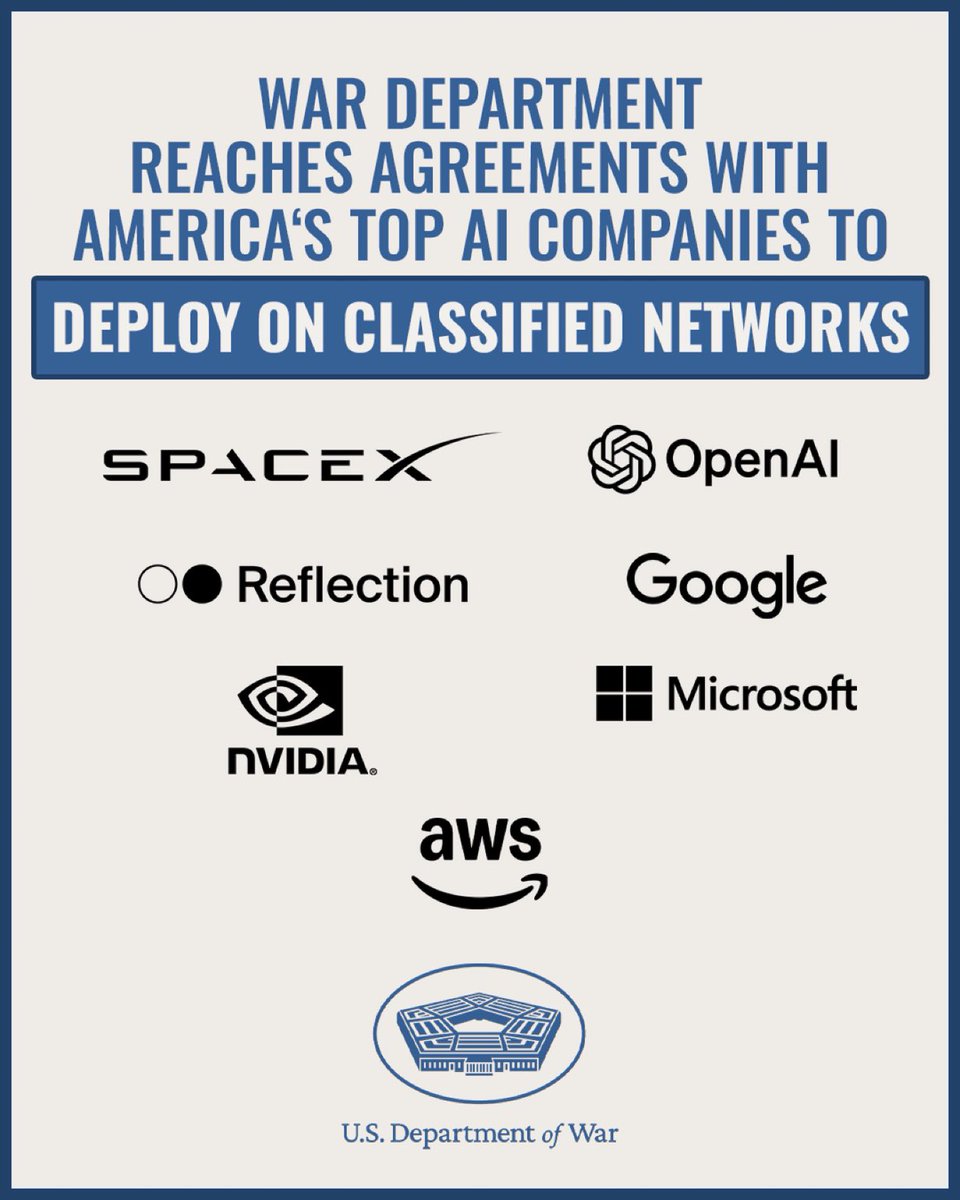
Reflection AI is a relatively low-profile AI company/start which is included in the US war department agreement:-
>founded in 2024 by Misha Laskin and Ioannis Antonoglou, both former Google DeepMind researchers
>Misha Laskin previously worked on Google DeepMind’s Gemini project and reward modeling
>raised $2 billion in October 2025, bringing total funding to about $2.1 billion
(valued at $8 billion after that round)
>originally focused on autonomous coding agents, then expanded toward open frontier AI
>backed by Nvidia, Sequoia, Lightspeed, and other major investors
>aims to build an open alternative to closed frontier labs like OpenAI and Anthropic
I’m honest:
just an hour ago, we 5–6 founders were debating the future of SpaceX, and the consensus was all about visionary founders and Cursor going past a $100B valuation.
I took the contrarian view that it may ultimately get acquired instead at this stage.
SpaceXAI and @cursor_ai are now working closely together to create the world’s best coding and knowledge work AI.
The combination of Cursor’s leading product and distribution to expert software engineers with SpaceX’s million H100 equivalent Colossus training supercomputer will allow us to build the world’s most useful models.
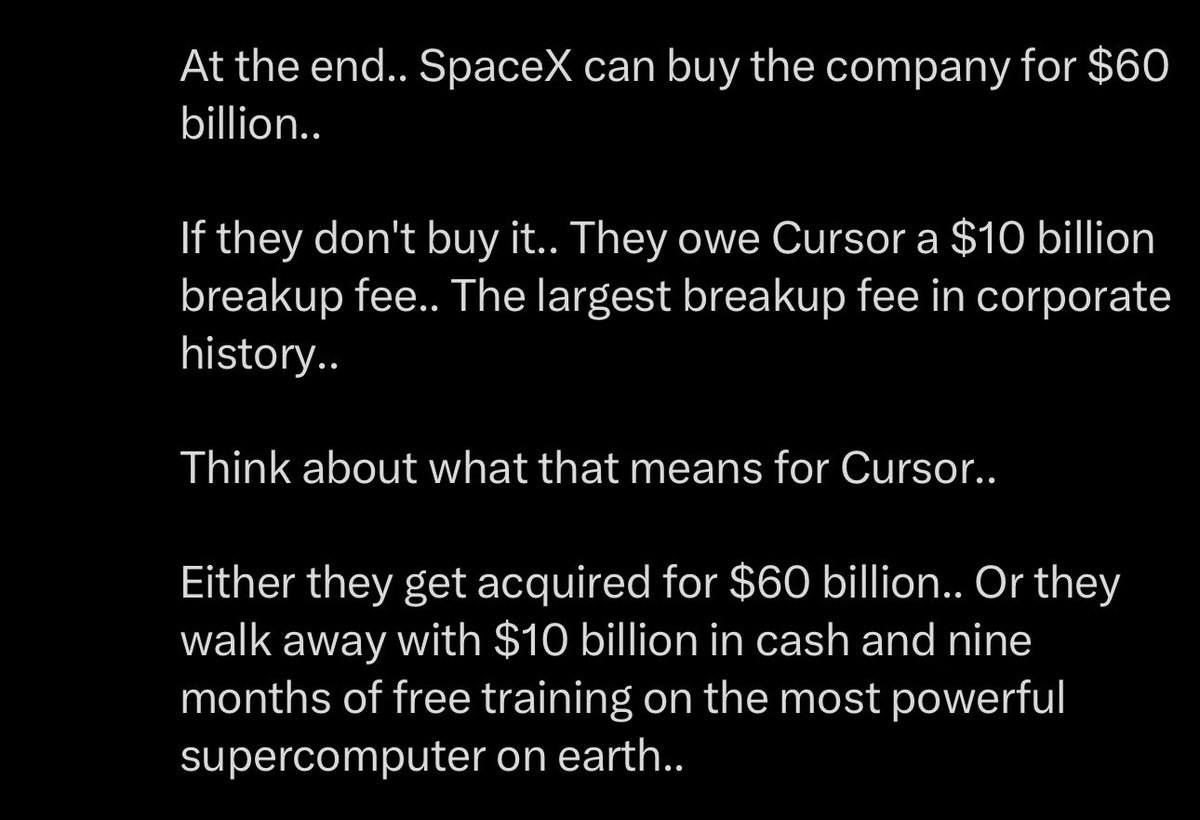
Cursor has also given SpaceX the right to acquire Cursor later this year for $60 billion or pay $10 billion for our work together.
If you were looking for a sign that the "peaceful coexistence" between AI labs and specialized software is over, this week gave it to you in HD.
Mike Krieger, Anthropic’s CPO (the guy who co-founded Instagram), just walked away from his board seat at Figma.
Three days later?
Anthropic drops Claude Design.
The news hit the wires on April 14: Krieger was out at Figma. On paper, it was a standard "no-conflict" resignation. But in tech, you don't leave the board of the most successful design tool in history unless you’re about to build its replacement.
If Claude can generate the prototype, write the React components, and test the user flow in one environment, the "moat" around traditional design software starts to look more like a puddle. Figma isn't going anywhere tomorrow it’s still the king of precision but the entry point for new projects has officially shifted to the prompt bar.
Introducing Claude Design by Anthropic Labs: make prototypes, slides, and one-pagers by talking to Claude.
Powered by Claude Opus 4.7, our most capable vision model. Available in research preview on the Pro, Max, Team, and Enterprise plans, rolling out throughout the day.