My contribution to the political ideologies debate, inspired by recent posts by @TheWorthyHouse and NS Lyons.
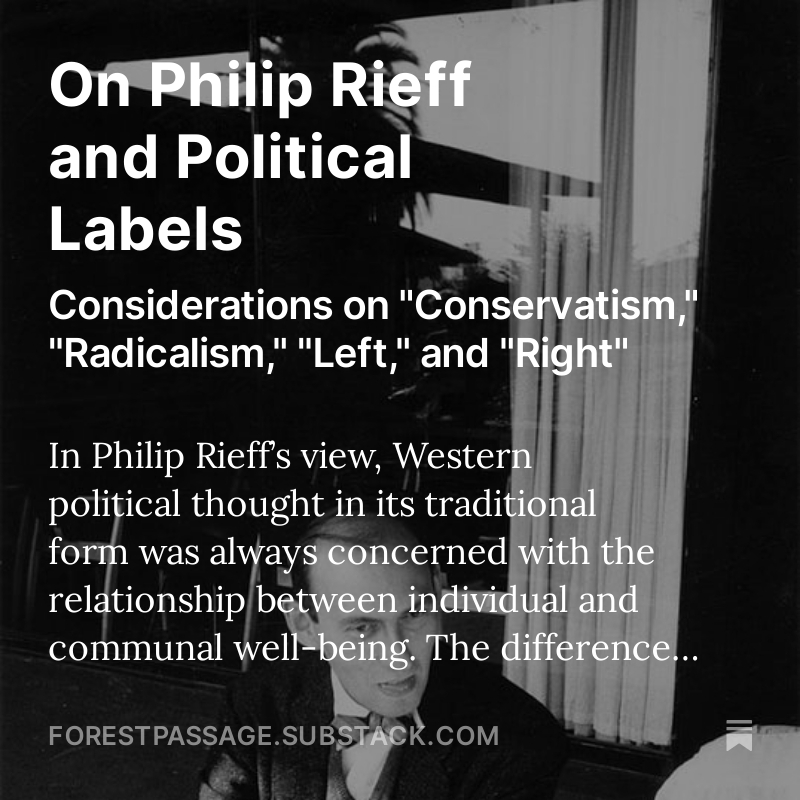
With special attention to Philip Rieff, I claim:
1. Western political thought was always concerned with the relationship between individual and communal well-being.
Vico, “The New Science”
1. Myth and “rational thought” are not opposites but are to be found on a continuum;
2. The human sciences are vastly morally superior to the natural sciences (yes, duh, but I like his argument best);
3. “Relativism” is far more noble and complex than its detractors suggest.
What book or books changed the way you think?
Not just a “great read” but I mean a book that actually rewired your assumptions, habits, decisions, or worldview for the better.
What was it and what are 3 takeaways that stuck with you?
@SWGoldman Probably the latter. But this may be my own subjective opinion. Having spent a good part of a decade there (MA 2011; PhD 2021), I also felt that the change was much more sudden. There was no “long march,” the transformation just “happened.”
That’s sort of what Walter Benjamin says in Critique of Violence. He says that for both the Jews and the Greeks, the concept of law is inextricably tied to an act of violence. The Jewish example he uses is the Korach episode. (I don’t remember the Greek mythology story he refers to.)
Plutarch’s Lives emphasizes the failure of the Greek polis — how the Greeks *lost* their greatness and freedom
Broadly, we can say Plutarch emphasizes the two options available after the failure of the Greek polis:
1.) Alexander, or
2.) Caesar
THAT is why both are invaluable
@malmesburyman Philip Roth’s American Pastoral is actually a very interesting examination of American postwar life, especially of the 60s, literally and figuratively.
@NPinkoski “The great men in history are those whose own particular aims contain the substantial will that is the will of the World Spirit.” - Hegel, Introduction to The Philosophy of History
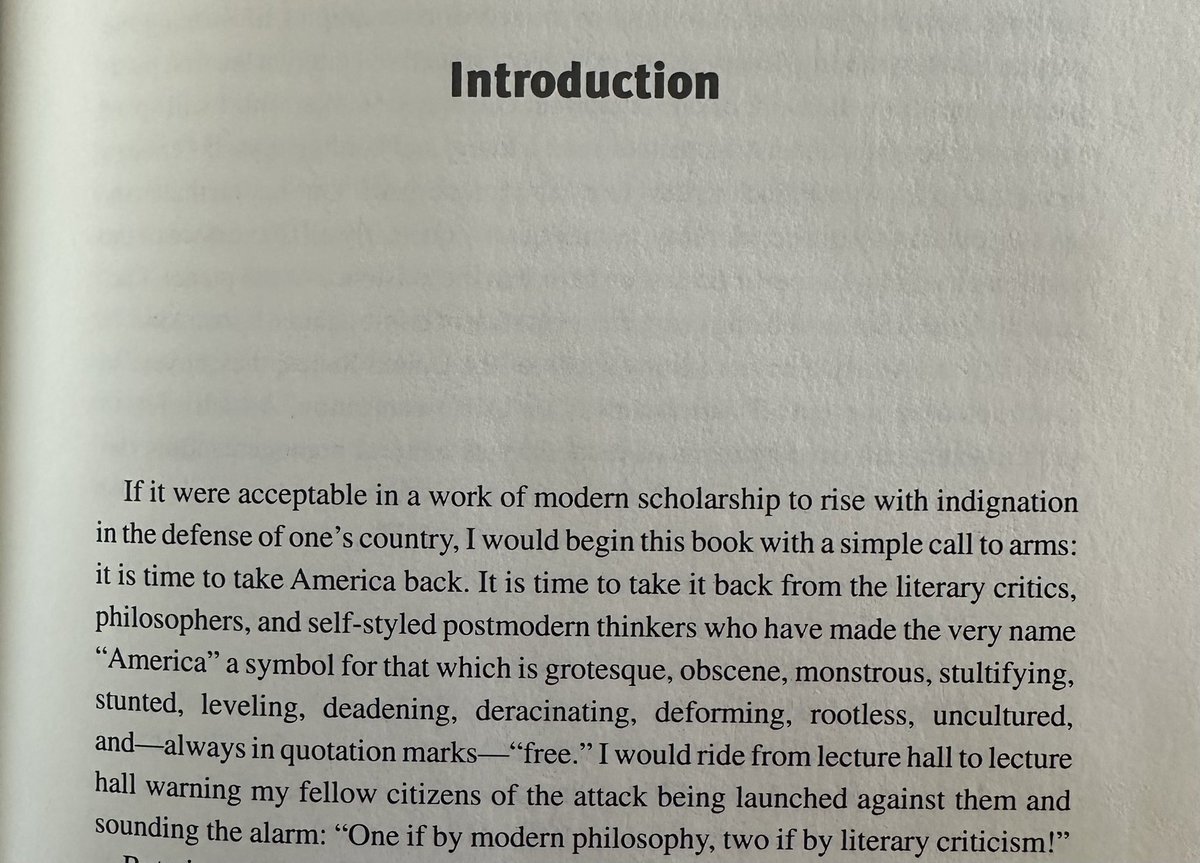
Rousseau is not just the “totalitarian” of the Social Contract, but also the father of numerous classical American tropes: the self-sufficient individual (from Natty Bumppo to Thoreau and Huck Finn); Nature vs. Civilization (all these heroes as well as the Cowboy); and the small pastoral community (this is one place where his influence on Tocqueville, e.g., is undeniable). A true American Conservatism will thus encounter Rousseau not only as foe (e.g. Nisbet) but also as intellectual forebear.
Feeling unrested may be sleep apnea but could also be related to jaw alignment and mouth breathing. As a first step, I would recommend trying mouth tape, and if you would like to pursue this direction further, perhaps seeing a good Cranial Sacral person. In addition, I have been practicing TM for years. It really helps with regulating the transitions between night and day. Hope that helps!