📢New preprint alert📢
When Crowds Fail: Predicting Failures in Collective Wisdom through Discourse Cues
We used psychologically-informed feature extraction from texts to predict wisdom of the crowds in geopolitical forecasting (using @metaculus forecasts). In a pre-registered analysis on a hold-out, our model was able to predict Wisdom of the Crowds failures pretty well (r = 0.535). This cool work was led by Maayan Pe'er, see link in first comment.
@aviadsanders דת היא לא כסות ליצרים נמוכים יותר. בתוך פוליטיקה, דת היא אידיאולוגיה שמסבירה את המציאות ושואפת לערכים בצורה קוהרנטית. לכן יש דו��קא משמעות וכוח הסברי רב לתוכן הדתי עצמו. אנשים לא הורגים אחד את השני סתם כי הם 'חיות', אלא הורגים ונהרגים למען מטרות 'נעלות', סימבוליות, אנושיות.
ארה"ב-איראן: פערים בתרבות האסטרטגית
ויטקוף סיפר השבוע שטראמפ מתקשה להבין למה איראן לא נכנעת תחת הלחץ הצבאי הכבד? מקסים. באמת למה איראן לא "זורמת" עם ההיגיון של ארה"ב במו"מ?
השבוע התפרסם גם מאמר מצוין ב-@ForeignPolicy שמסביר את פערי התפיסות. מביא את עיקריו כאן כשירות לציבור.
>>
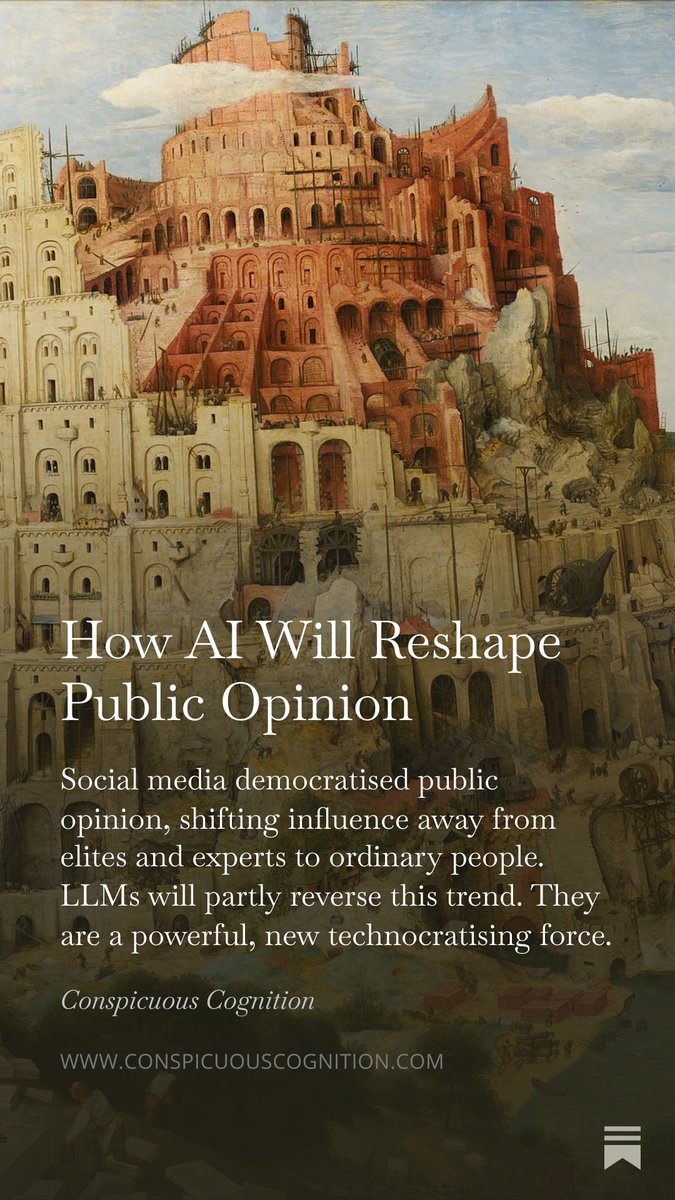
New essay! When it comes to thinking about the impact of LLMs like ChatGPT, Claude, Gemini, and even Grok on public opinion, I argue that they function as a kind of anti-social media.
Whereas social media has been democratising, epistemically diverging, engagement-optimised, and performative, LLMs are "technocratising", epistemically converging, accuracy-optimised, and polite.
https://t.co/rPGQdkfGLS
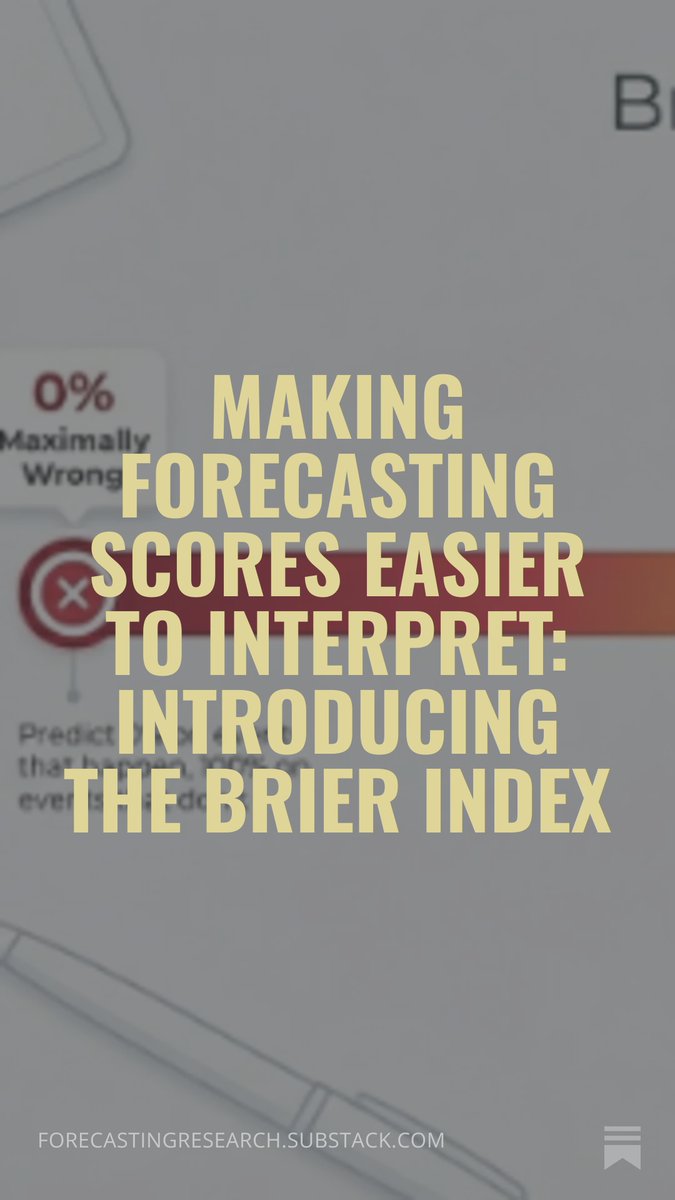
The Brier score is the standard metric for evaluating forecasting accuracy. But it has a major drawback: it’s difficult to interpret and communicate.
For example, superforecasters have a Brier score of 0.086 on ForecastBench, our AI forecasting benchmark.
Technically, this means that on average superforecasters are “0.086 squared probability units from the truth.” Confused? You’re not alone.
We propose a simple fix: the Brier Index. 🧵
תחרות הניבוי השנייה של מבט-על - "מבט לסוף השנה" - יצאה לדרך!
חושבים שאתם יודעים מה צופן העתיד? ענו על שאלות, נמקו - ואולי תזכו בפרסים!
התחרות פתוחה עד יום שישי 07/11. פרסים יינתנו גם על הסברים מנומקים בהזנת התחזיות ובתגובות בפורום. פרטים והרשמה: https://t.co/2w9CI7yvFY
האם ניתן לחזות את העתיד באמצעות בינה מלאכותית? בהנחיית @Michael_Gilead, פיתחתי יחד עם @yshemesh תשתית שמאפשרת למערכות AI לדמות תהליכי חשיבה של מומחים, וכך לחזות תרחישים גאופוליטיים.
https://t.co/Twvg3r2e7f
כתבה השער של מוסף סופ"ש של הארץ עוסקת בעולם הניבוי הגיאופוליטי ובמחקרים שלנו (@Professologue, @yshemesh, מעיין פאר, יהונתן קפלן, הילה שיניצקי). הכתבה של גדעון לב מאוד מעניינת באופן כללי, ומדווחת על תמורה היסטורית משמעותית שאנחנו נמצאים במהלכה.
https://t.co/GndGJAn4Sh
Authors: @Michael_Gilead, @Professologue, and Avi Gammoran. We thank @metaculus and @tamaybes for their collaboration. We thank @mattansb for consulting on statistical methods and Hilla Shinitzky for her involvement in the development of the study. 8/8
New paper out 📢
Can we tell which forecasts to trust?
Studying superforecasters and platforms like @metaculus and @Polymarket shows that accurately predicting the future is achievable through a combo of good cognitive practices and proper incentives. The problem? 1/8
The results reveal a gap between perceived and actual forecasting competence. They show how social instincts (=following charismatic leaders) can undermine our pursuit of accurate beliefs, and highlight the need for accountability systems essential for learning whom to trust. 7/8