WHO appeals for protection of the health system from further attacks and degradation of its capacity
Once again, nowhere is safe in #Gaza.
WHO is gravely concerned about the resumption of hostilities, including heavy bombardment in Gaza, and reiterates its appeal to Israel to take every possible measure to protect civilians and civilian infrastructure, including hospitals, as per the laws of war.
We have seen what happened in northern Gaza. This cannot be the blueprint for the south. Gaza cannot afford to lose another hospital as health needs continue to soar.
As more civilians in southern Gaza receive immediate evacuation orders and are forced to move, more people are being concentrated into smaller areas, while the remaining hospitals in those areas run without sufficient fuel, medicines, food, water, or protection of health workers.
WHO and other partners are less able to provide support, given dwindling access to our supplies or any assurance of safety when we move supplies or staff.
This morning WHO was contacted with advice to move as many medical supplies as possible from a warehouse in Gaza, situated in an area ordered to be evacuated. Access to storage could become challenging over the coming days due to ground operations.
Intensifying military ground operations in southern Gaza, particularly in Khan Younis, are likely to cut thousands off from health care – especially from accessing Nasser Medical Complex and European Gaza Hospital, the two main hospitals in southern Gaza – as the number of wounded and sick increases.
Lack of access would also limit WHO’s ability to deliver aid to these hospitals.
About 1.9 million people, nearly 80% of Gaza's population, are estimated to be internally displaced. Recent evacuation orders cover 20% of Khan Younis and localities east of Khan Younis, which prior to the hostilities were home to nearly 117 000 and 352 000 people, respectively.
In less than 60 days, the number of functioning hospitals has dropped from 36 to 18. Of these, three are only providing basic first aid, while the remaining hospitals are delivering only partial services. Those able to admit patients are delivering services well over their intended capacities, with some treating two to three times as many patients as they were designed for. The 12 hospitals that are still operational in the south are now the backbone of the health system.
On a recent visit to Nasser Medical Complex in Khan Younis, the WHO team described the situation inside as catastrophic, with the building and hospital grounds grossly overcrowded with patients and displaced people seeking shelter. The emergency ward is overflowing with patients. There is a shortage of health workers compared to the overwhelming needs. Those who are available have been working non-stop and are exhausted. Many patients are being treated on the floor. Bed capacity has been overwhelmed. Patients and families sheltering at the hospital are scared for their security.
Disease surveillance systems are hampered, but syndromic surveillance has noted increases in infectious diseases, including acute respiratory infections, scabies, jaundice, diarrhoea, and bloody diarrhoea. Shelters in the south are also reporting cases of acute jaundice syndrome, a worrisome signal of hepatitis.
From 7 October to 28 November, WHO recorded an unprecedented number of attacks on health care: 203 attacks on hospitals, ambulances, medical supplies, and the detention of health-care workers. This is unacceptable. There are means to protect civilians and civilian infrastructure, and they should be instituted.
The only viable solution is a sustained ceasefire.
Note to editors:
On 3 December alone, 349 people were killed and 750 injured according to reports from the Ministry of Health.
According to the Ministry of Health, the bed occupancy rate at operational hospitals stands at 171%, while in the intensive care units the occupancy rate is up to 221%.
Currently, there are 1000 patients and thousands of people sheltering at the 350-bed Nasser Medical Complex, and 1000 patients and an estimated 70 000 people sheltering at the 370-bed European Gaza Hospital. Both hospitals are three times beyond their capacity.
As of 3 December, per Ministry of Health reports, more than 15 899 people have died, over two-thirds of them women and children. An additional 42 003 people, also mostly women and children, have been injured.
"We are nearly sure that we are alone now. No
one hears us... The problem is to be sure that we can evacuate the neonatal patients because we have
about 37 to 40 premature babies."
Dr Mohammed Obeid, surgeon at Al-Shifa hospital, shares his testimony from today⤵️
🔴GAZA UPDATE
In the past 24 hrs, hospitals have been under relentless bombardment. Al-Shifa hospital has been hit multiple times. Our teams & patients are still inside.
Again, we urgently call to STOP ATTACKS on hospitals & for an immediate CEASEFIRE⤵️https://t.co/68YLaoZ5Ob
Happy to be re-sharing a blog piece I wrote for @LSEMiddleEast on water shortages in Southern Iraq, including #Basra. The piece looks at the country's shortages from both a political and environmental perspective. #water#iraq#turkey#hornwort#middleeast
A #woman activist and #medic , Dr Riham Yaqoob, was shot dead today in #Basra in south #Iraq , where #Iran-backed militias have been targeting protesters and critics. Iraqi activists are living in fear as assassinations are becoming increasingly frequent
My street is drenched in darkness. All the windows are blown out and all people inside seem to have left. But one neighbor left a candle in his empty living room and I cannot explain how much calm its small light keeps lending me.
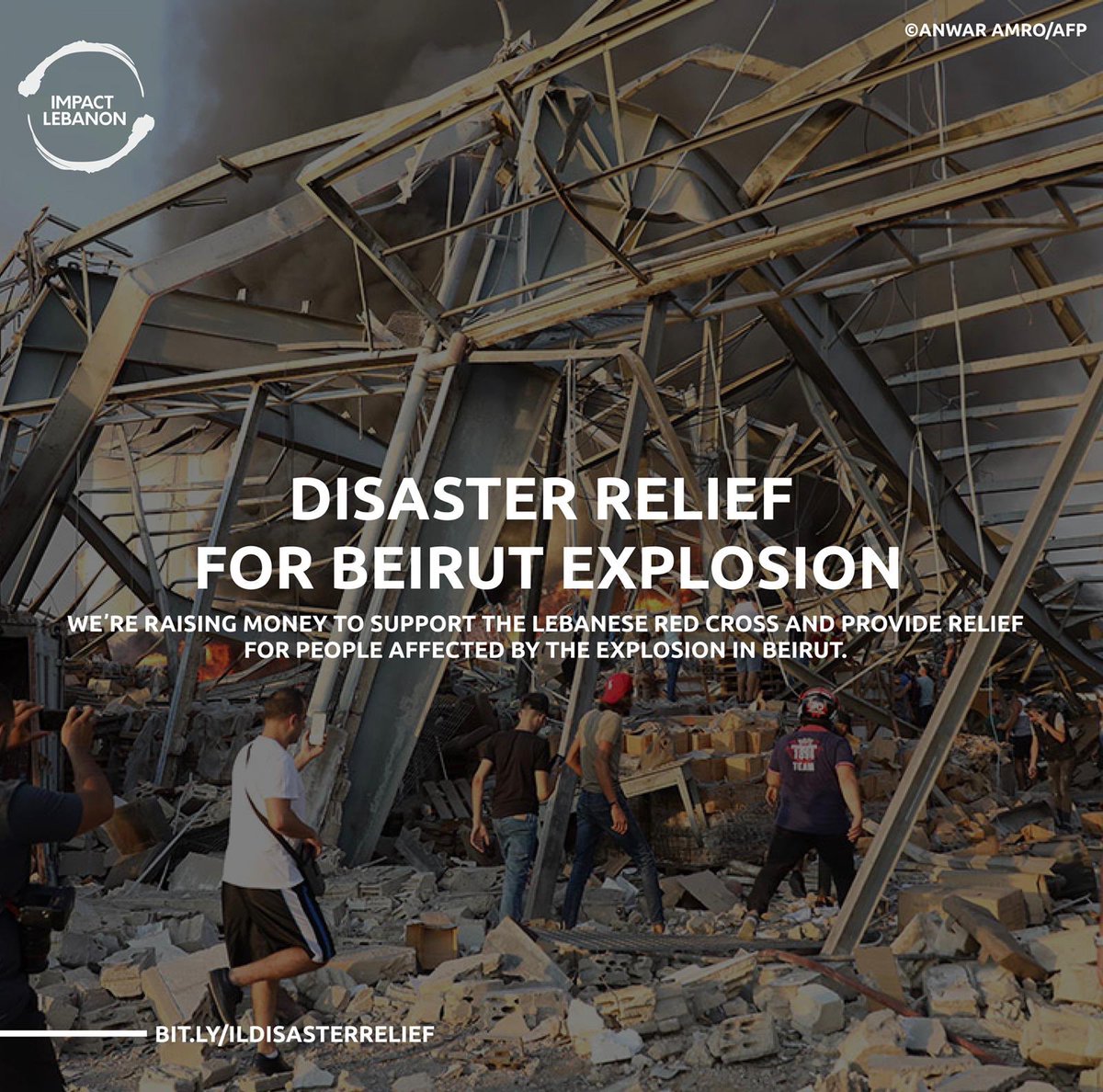
ATTENTION: We are calling on the world, our friends, our fellow Lebanese in the diaspora to DONATE to help us provide disaster relief. We will update the page to provide exact details on how your money will be spent. Donate here: https://t.co/eER5BZs8jG #بيروت
New GWF! Water resources stewardship: Change, extremes, and equity. Anne Lausier & Shaleen Jain, University of Maine. A new framework drawing explicit attention to equity across multiple elements. https://t.co/ciu35pqTeR
I wrote a short, practical guide on why you should prepare for COVID-19 and how. Forget the doomsday talk and the "prepper" subculture with all its snake oil. You should prepare *now because it's the best thing you can do to help everyone else. Here's how:
https://t.co/NFInPm6ezw
#IraqProtests denounce the attack on Iraq’s sovereignty and the breach of international laws and reiterated their refusal of any external influence, Iranian or American. My take on the current crisis for @washingtonpost @monkeycageblog
#نريد_وطن
https://t.co/xuTkDO5GZX
"The gap was not only incomprehensible to the older ruling class but presented the biggest threat to the status quo" - Let's not forget the real Iraqi protesters amid the chaos. My latest for @TheAtlantic https://t.co/ND0by9DFy3
My piece-or rather the piece of wonderful Iraqi women I spoke to.
Thanks @Independent for giving them a platform
I spoke to the women risking their lives to join the Iraq revolution – and this is what they want https://t.co/KCSanLy1IP
"I want you to glance at the chart and, even without reading it, have some sense of the subject in order to make it memorable." https://t.co/PirDHk7i2Z
Over 100 Iraqis have been killed and 1000s injured by their own security forces simply for exercising their right as human beings: demanding basic services like clean water & electricity, and a govt that supports them. #Support_the_Iraqi_People
"Every time Iraq began to unravel, it was women who worked the hardest to stitch it back together."
@HannahAllam on survival, heartbreak and finding laughter in a war zone.
https://t.co/vgTxy8tAF1
Toni Morrison's Playing in the Dark has remained one of the most memorable & influential works of writing for me. Rest in peace & power, the unforgettable Toni Morrison, the Teacher, the Writer, the Leader, the Narrator of Truth who encloses and inspires a revolution in her words
Vinson Cunningham remembers what it was like to read Toni Morrison in high school: “We were reading her even when we weren’t, because we read everything else with her somewhere in mind.” https://t.co/FppDrgpmfP