We'll be spending a lot more time trying to understand the outputs of language models. A few thoughts, tips & tricks:
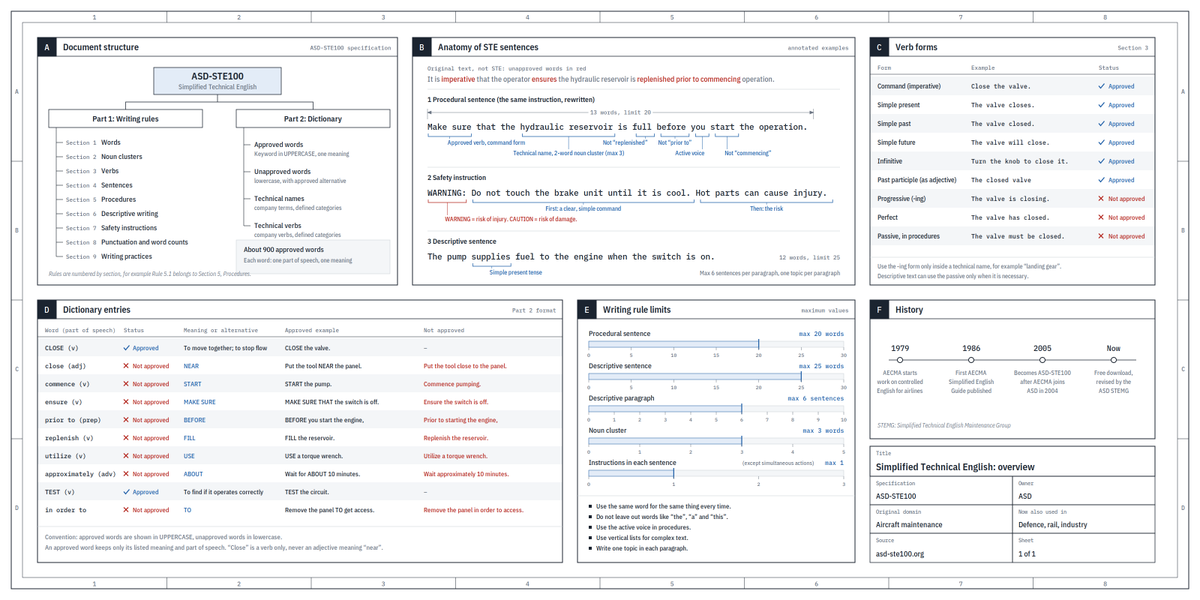
Writing. Something I've had success with: Ask your LLM to explain something in ASD-STE100, it's a controlled language specification originally developed for aerospace maintenance documentation. LLMs well-versed in this language and it comes with heavy constraints on clean writing style that I often find a lot more readable. Sometimes I've tried to soften it a bit e.g. ask for "80% of the way to ASD-STE100" because the spec is quite stringent. But even better:
Diagrams / images. Instead of writing, ask your LLM to create a diagram. These can be a lot easier to process, parse, and understand. But even better:
Web pages. Ask for output "in HTML" to get a beautiful, interactive webpage. LLMs are getting really good at frontend and can create beautiful experiences, animations, etc. But even better:
Explainer videos. The output format I am most bullish on is fully custom / bespoke explainer videos generated on any arbitrary topic. Experiment with things like "Create a 3b1b style video explainer on X. Use my ElevenLabs API key for audio narration". (you'd need an API key for the latter or you can ask your LLM to find you decent free alternatives that use your local compute). This is actually starting to work!
In summary:
- As LLMs get better, they will do more and more of the legwork autonomously, and a lot more of our work will rise up the abstractions into oversight and understanding.
- Luckily, LLMs can help here too because as intelligence and code are increasingly abundant, you can ask for large, custom, discardable software artifacts (e.g. web apps, video explainers) that would have never made sense to create before. Push the boundaries here and you'll be surprised.
We have a Stitch MCP. We have a Stitch SDK. But, we don't have a Stitch CLI. Well, not until now.
Introducing the @google/stitch CLI:
🔷 Connect to your local coding agents
🔷 Generate screens and design systems
🔷 Send a local dev server snapshot to Stitch
Do it all without leaving the terminal or better yet, ask your favorite harness like @antigravity 😎
Learn more 👇
آنتروپیک https://t.co/GtrHGrDx7N بهعنوان هاب جدید توسعهدهندههایی که با Claude کار میکنن راه افتاده.
داخلش قراره مطالب فنی عمیقتر، راهنماهای Claude Code و API، تجربه و ترفندهای تیمهای سازنده Claude و حتی Easter Eggهای مختلف منتشر بشه.
پیشنهاد میکنم کانال تلگرا��مون هم سر بزنید : https://t.co/Wqaie3UysF
Today we’re introducing Gemini 4 Argon.
It delivers frontier performance in complex workflows across real-world software engineering, knowledge work, and cybersecurity defense with an industry-leading 1M token output limit.
I’m going to share some of the features I’ve built into DocTree.
First: Mark My Place 📍
Save your position anywhere in an article. When you return, DocTree takes you right back to it—no scrolling around to remember where you stopped.
https://t.co/wbPtXw1o7p
@ImanOracle میشه از تجربه های که داشتی هم بیشتر بگی مثلا چه مدلی و چرا انتخاب کردی و چطوری فاین تیون و انجا�� دادی روش یا تاگرت و پروژه چی بوده؟ قبل و بعدش هم بزاری ...
یه قابلیت جدید به https://t.co/wbPtXw1o7p اضافه کردم که خودم خیلی دوستش دارم 🎬
قبل از شروع هر مقاله، یه ویدیوی کوتاه ۳۰ ثانیهای با صدا، تصویر متحرک و زیرنویس میبینید تا سریع دستتون بیاد قراره چی یاد بگیرید.
تصویر مقاله تو doctree یه محیط ارزشمند برای یادگیری میشه✍🏼
💭 این پست واسه کسیه که حاضره سه ساعت تو اینستا باشه، اما ده دقیقه کارش رو انجام نده...
📌 سوفی لیروی (Leroy) یه مقاله به شدت کاربردی داره به اسم: ”چرا اینقدر سخته کارم رو انجام بدم!“ که تو اون مفهوم مهمی رو بررسی میکنه به نام پسماند توجه یا (Attention Residue)…