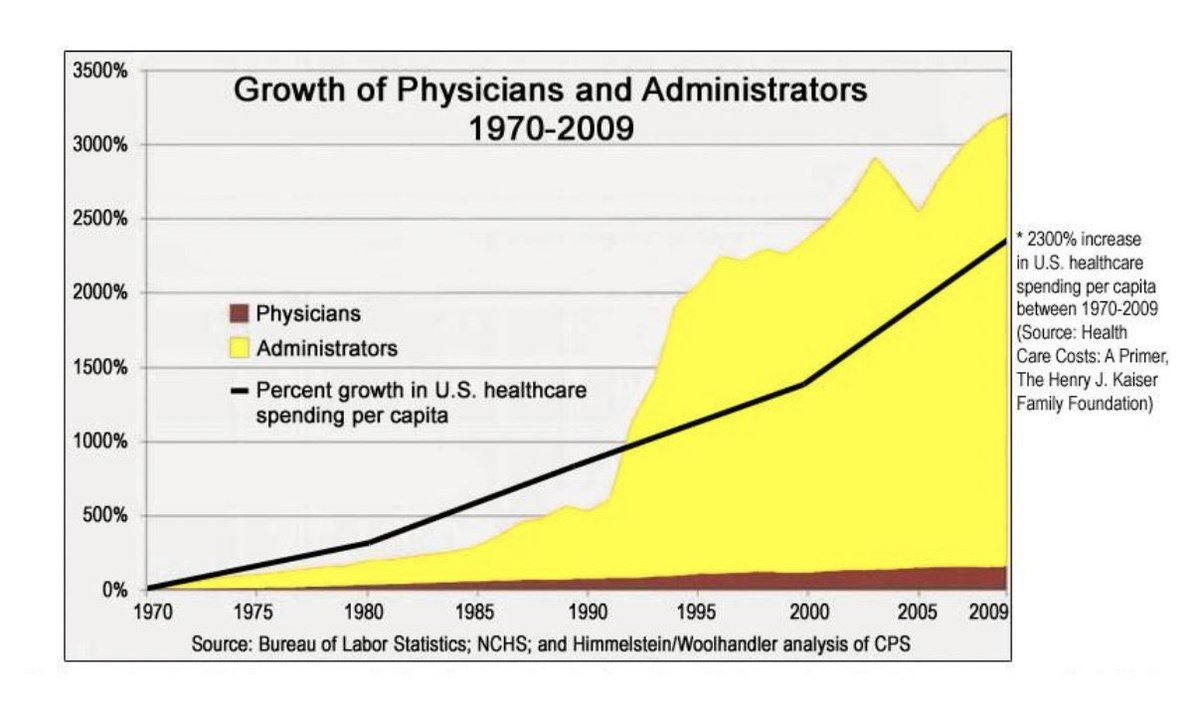
@LighthouseDPC I think the only meaningful change that has been done recently by the powers to be is the slight compaction of E&M coding. But this too benefits specialists.
ICU doc here. Just so you know, neither of these are “solutions.”
No hospital will accept untested blood from some rando on your pretend “registry.” No hospital will take blood from someone who shows up, even if they call themselves a “pureblood.”
If you are critically ill and need a transfusion your options are:
1. Accept a transfusion of properly screened/tested blood from an actual blood bank
2. Decline a blood transfusion
So I created an entire med school using AI.
It started out as a joke with my friends, but just grew and grew into something that still astonishes me in its depth and breadth.
I call it the Hibbert School of Medicine. Check it out at https://t.co/0SziHUZFRr
🆕 @NatureMedicine
How does ChatGPT Health do for appropriately triaging a person as to whether to go to the emergency room or stay home? https://t.co/2FN3qxEivx
Not very well. Under-triaged 52% of case vignettes that are considered gold-standard emergencies, like diabetic ketoacidosis or impending respiratory failure
I can play with statistics too!
Over the next 5 years, how much do you think wearing a seatbelt would add to your life expectancy?
Mohnot: about 45 seconds
Rogan: wow
This is so incredibly dangerous and will be seen by millions of people.
I'm a cardiologist who opens the arteries of people with heart attacks.
1. Secondary vs primary prevention - Here, Malhotra is talking about someone taking a statin who has *already had a heart attack*.
First of all, if you survive a heart attack without any major damage, you're lucky. A lot of people aren't as lucky. I know this because I do this work for a living.
Primary prevention is for people who've never had any clinical event. If you've had a heart attack, you are NOT THE SAME as someone your same age, etc who has NOT had one. The game is changed and much riskier for you. You are at a HIGHER RISK of ANOTHER heart attack. You need to be MORE AGGRESSIVE to lower that risk. If your first one spared your life, the second one might not. That is secondary prevention.
2. "Benefit over 5 years" - This is such a classic, silly misinformation trick. OK sure - but that assumes you're only planning on living another 5 years and then are ok with just dying.
That's obviously absurd and I don't believe anyone agrees with that. As your cardiologist, I'm not trying to keep you alive and well for just 5 years. I'm talking 10, 20, 30 years, decades.
The real true benefit of statin therapy is over decades. As in, they help keep you alive longer. You can't just measure it at an arbitrary 5 year cut off.
3. Not magic bullet - Prevention is not just statins. It is changing your entire lifestyle, diet, exercise, etc, and meds. Statins are not magic either. People on statins have heart attacks too.
But life is about risks and probabilities. You do what you can to reduce risk as much as possible. You cannot reduce risk to 0, but you can bring it pretty damn close to 0.
It is so fascinating to me that there are so many highly intelligent and accomplished people who have an intimate understanding of risk and probabilities, and who make major decisions in their daily lives based on this understanding. But when it comes to statins and vaccines, they just abandon all logic.
@rbarbosa91 Language matters.
When the word provider is used, it shifts some of the responsibility/duty around the delivery of care away from insurance companies and pushes it towards the clinician.
As a physician I don’t have the control I want over what insurance covers.
"The term [provider] should not be used to describe physicians, nor should physicians use it to describe themselves, their team members, or their trainees."
https://t.co/C1hEu3mUr2 @AnnalsofIM@ACPIMPhysicians
Roblox literally has a FREE, open-source MCP that you can use. Don't waste your money on this bullshit made by people who don't even know how Roblox Studio works lmao
This should be getting WAY more attention than it is. Prenuvo tried to limit damages but got shut down. There are so many layers to this lawsuit and what it means for Prenuvo, and people who get these scans. A few thoughts:
- 37 year old man, who I assume is asymptomatic and has no risk factors, gets a preventive Prenuvo whole-body MRI (no medical indication).
- Radiologist is an independent contractor, who allegedly misses a ~60% moderate stenosis/narrowing of the right middle cerebral artery. Though a bunch of other incidental findings are noted.
- Patient has a devastating stroke months later, in the same spot as the original stenosis
- Patient sues Prenuvo, arguing if the stenosis had been appropriately described, the vessel "could have been treated with targeted stenting or other minimally invasive measures, thereby eliminating and preventing the catastrophic stroke."
I read the uploaded Prenuvo report that was given to the patient. To be honest, the entire report reads like AI generated slop with barely any details that I would see in an actual radiologist report, probably because these are just superficial level whole-body MRIs that can't actually evaluate every single organ in a dedicated fashion. It would not give me any comfort.
It does not specifically mention the 60% blockage. It just says "No worrisome intracranial lesion is identified within the brain parenchyma." But what does "worrisome" mean? It is used throughout the report. A moderate 60% blockage is not typically "worrisome" or alarming in the sense that it is not 90% (or severe). But is it enough to warrant aggressive medical therapy and further evaluation? Yes.
But I guess that depends on the definition of "worrisome" and what gets included in the report. Do you include every 20-30% blockage that many of us have, just sitting there not causing issues?
Regarding the actual blockage, I'm not a neurologist but as an interventional cardiologist I make an analogy for the heart. Let's say the stenosis wasn't actually missed. Someone gets a commercial CCTA scan of the heart and is found to have a 60% blockage in an artery. The ultimate question to answer here is - will that blockage actually cause the heart attack 6 months down the road, in the same area? No one can answer that with 100% certainty.
This is a chronic, stable, stenosis, though yes, aggressive at a young age of 37. The patient is asymptomatic, presumably without any known risk factors. The treatment for this is **aggressive medical therapy and lifestyle management**, NOT a stent. Stents **do not prevent** heart attacks for stable disease - aggressive medical management does. You can stent that area but they can still have a heart attack 1 year later at a different location. It is also possible they are treated aggressively with meds and STILL have the heart attack
I rail against "preventive" imaging, but ironically, in this case, this might have actually potentially prevented the stroke in the future. If this 37 year old was treated with aggressive medical therapies and lifestyle management, he may have been able to prevent this tragic outcome. If the patient was not indeed notified, he may not have sought further care, which is even more tragic.
People need to understand what they're getting into when they get these tests. Who is the service? Who is actually interpreting the scan? What does the scan actually mean and not mean for your health? What do you DO when you are handed a copy of your results? WHO is liable? Who do they have to answer to?













![EricTopol's tweet photo. "The term [provider] should not be used to describe physicians, nor should physicians use it to describe themselves, their team members, or their trainees."
https://t.co/C1hEu3mUr2 @AnnalsofIM @ACPIMPhysicians](https://pbs.twimg.com/media/HAwSjf-aAAApNuv.jpg)


